Chronic wounds in diabetic patients such as foot ulcers are cause of more than 80 percent of the lower leg amputations because of wound healing problems.
The macrophages in the arginine and proline group showed less cytokine stimulation and pro-inflammatory activity than the other groups, reported by French researchers. Rats on both high protein diets had better nitrogen balance than those on the standard diet. However, the wounds of the rats on the ARG+PRO diet showed more new blood vessel growth on day 5. New blood vessel growth is an essential part of wound healing as the blood vessels supply nutrition and oxygen to growing tissue.
Arginine and Proline are amino acid that plays a role in cell division and protein synthesis. Therefore, sufficient amounts of these must be obtained from the diet. Arginine is an amino acid your body requires to make urea, which eliminates poisonous ammonia from your body. It alters to nitric oxide within the blood, which calms down blood vessels and instigates the body to produce protein.
Peanuts are also loaded with amino acid. |
Good dietary sources of these amino acids are listed below, make sure you have them in one form or the other in your diet.
 Red Meat:
Meats of high biological value remain the best source of proteins and all the amino acids, including arginine.

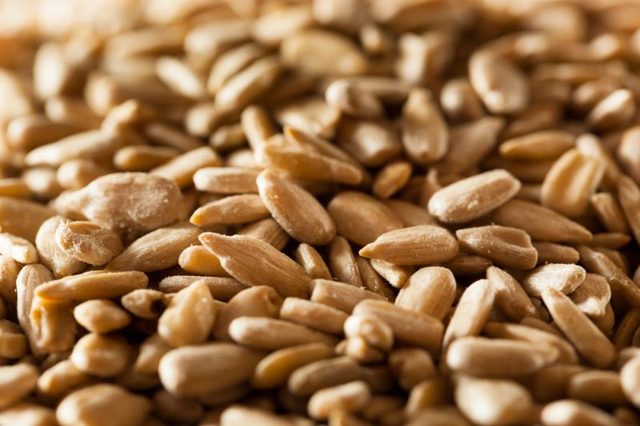
 Seeds & Nuts: They are probably the richest sources of arginine, containing from about 1 to 3 g of arginine per 100 g. The best nut sources of arginine are peanuts (3.1 g per 100 g), almonds (2.5 g per 100 g), walnuts (2.3 g per 100 g), hazelnuts (2.2 g per 100 g) and cashews (2.1 g per 100 g). Other nuts that are rich in arginine include Brazil nuts, pistachios and pecans. Try adding sesame seed to your salads and pasta.
 Gelatin: The highest amount of Proline is in Gelatin, dry powder, unsweetened which is 12 g of Proline/100g gelatin.
 Cheese: contain 4g proline/100 g of parmesan cheese. Low fat cottage cheese contains 3986mg of proline/ 200 calorie serving
 Beef: meat and by product, lungs contains 3607mg of proline/ 200 calorie serving. Beef flank steak contains approximately 1,200 mg of L-arginine for every 3.5 ounce portion, as stated by the traditionalovern.com.
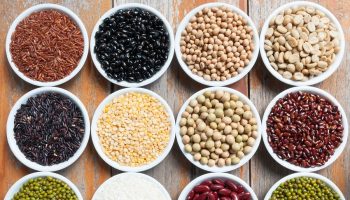
 Spinach & lentils: Frozen spinach has an arginine content of 3.3 g per 100 g, while lentils have about 2.1 g of arginine per 100 g of the raw vegetable.
 Whole Grains: wheat germ, another protein-rich plant food, contains high amounts of the collagen precursor proline, says WHFoods.com. Oats contain elevated amounts of the amino acid, with 1.206 mg per 3.5 ounce portion of oat flakes, and 1.142 in similar portion of puffed oats.

 Sea Food: A 200-calorie serving of crabs, shrimps or lobsters typically has from 3.6 to 3.8 g of arginine. Fish with the highest content of arginine are tuna (1.7 g per 100 g) and salmon (1.2 g per 100 g). Some sources have placed the arginine content of tuna as being even greater than that of chicken and pork. Shellfish is also an excellent resource of L-arginine, along with shrimp supplementing 1,776 mg for every 3.5 ounce portion, and scallops for 1,223 mg.
 Soya: A 200-calorie serving of soy protein isolate has more than 4 g of arginine. Quite surprisingly, 100 g of tofu has only 600 mg of arginine, even if it is principally derived from soybeans.
 Eggs: According to WHFoods.com, amongst animal foods, egg whites are particularly high in proline, on the other hand, a raw egg yolk contains 1.10 g of arginine per 100 g (a raw egg white contains 0.65 g per 100 g).
The protein contents of these foods typically show higher ratios of arginine and proline compared to other amino acids.
NOTE: Pregnant and nursing women must stay away from consuming a diet loaded with L-arginine and must not also ingest supplements of the amino acid.
For more Input:
Disclaimer
The Content is not intended to be a substitute for professional medical advice, diagnosis, or treatment. Always seek the advice of your physician or other qualified health provider with any questions you may have regarding a medical condition.