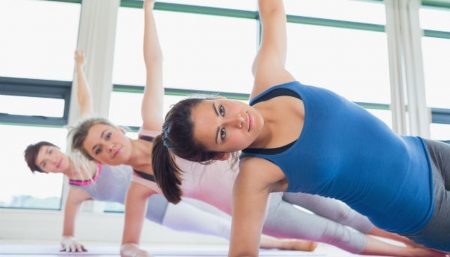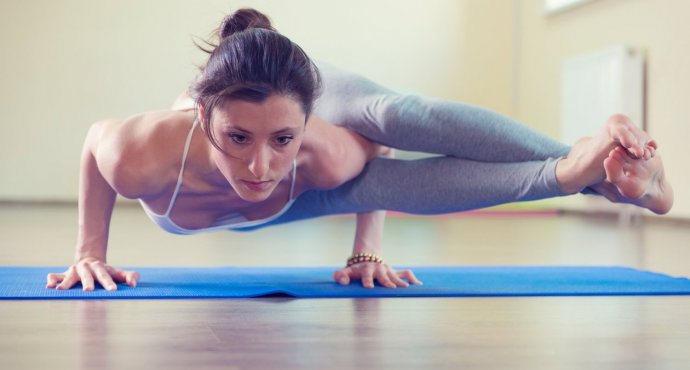
Core strength and stability is increasingly recognized as a vital part of fitness. The muscles of the ‘core’ are primarily those of the trunk and pelvis. The core muscles stabilize the spine and effectively move the body with varying loads. If the trunk muscles are weakened, then posture and movement can be affected significantly. The core muscles are necessary for effective transfer of energy from large to small muscle groups – especially when performing sports-specific movements.
1. Pelvic Tilts
Area of Focus: Core muscles
Starting Position: Lie flat on your back, knees bent, both feet on the floor, and hands at your side or behind your head.
The Move: Rotate your pelvis up and toward your rib cage, pushing the small of your back against the floor. Then let your pelvis rotate back to its normal position so your lower back comes off the floor. Repeat.
|
TRAINER’S TIPS Don’t lift your buttocks off the floor instead of rotating your hips. This is a subtle movement. You are using your stomach muscles to rotate your pelvis toward your rib cage to put it in a tilt. |
2. Pelvic Rock
Area of Focus: core muscles
Starting Position: Lie flat on your back, knees bent, both feet on the floor, and hands at your side or behind your head.
The Move: Rotate your pelvis backward toward your rib cage, pushing the small of your back against the floor. Then rock your pelvis forward so your lower back gently arches. Repeat.
|
Feel your deep inner muscles initiate the movement. Hold each position for a count of one. |
3. Pelvic clock
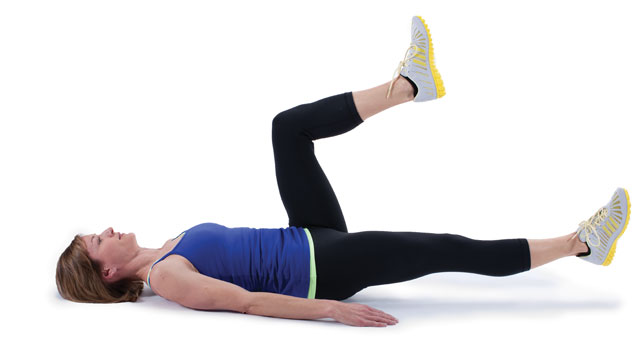
Area of Focus: core muscles
Starting Position: Lie flat on your back, knees bent, both feet on the floor, and hands at your side or behind your head.
The Move: Imagine that your pelvis is a clock, with twelve o’clock toward your feet, six o’clock toward your chest, three o’clock to your right side, and nine o’clock to your left side. Work your way around the clock, gently hitting all twelve numbers, then repeat in the opposite direction.
|
TRAINER’S TIPS Don’t lift your buttocks off the floor instead of rotating your hips. Be precise with each number. This may be frustrating at first, but you will gain better control with practice. Breathe. When the movements are small, it is easier to forget to breathe and to hold your breath. |
4. Tummy Tucks
Area of Focus: Transverse Abdominals
Starting Position: Get on all fours, knees under your hips and hands under your shoulders.
The Move: Inhale, then, as you exhale, draw your belly button toward your spine. Inhale and repeat.
|
TRAINER’S TIPS Focus your mind on pulling your abs up and in. Find a steady rhythm with your breathing. Focus on pulling in your lower abs at your belly button. |
5. Vacuum Pumps
Area of Focus: Transverse Abdominals
Starting Positions: (1) On all fours. (2) Kneeling, hands at sides, heels on buttocks, and back straight. (3) Standing, legs slightly bent and hands on thighs.
The Move: Exhale all the air from your body and suck your abdomen up and in as far as you can. Hold for 10 seconds. Relax and repeat.
|
TRAINER’S TIPS Focus your mind on pulling your abs up and in. Each starting position will get progressively harder, all fours being the easiest and standing the hardest. Start out holding each exhalation for 10 seconds and gradually work up to 30 seconds. |
6. Roll-Ups
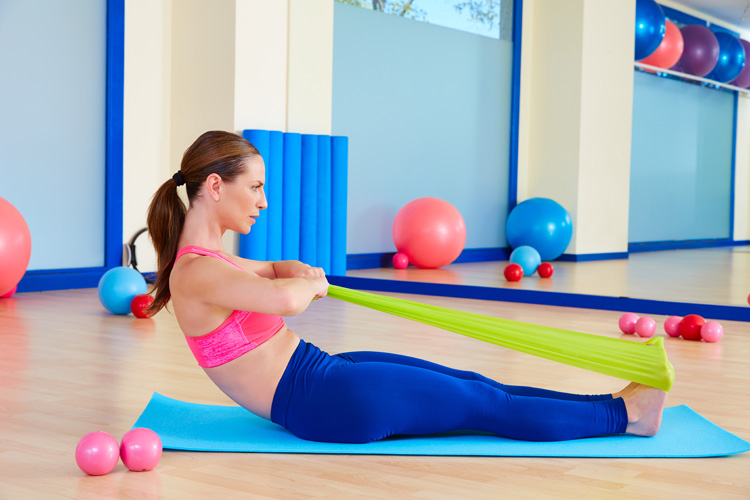
Area of Focus: upper and lower abs
Starting Position: Lie flat on your back, arms at your sides and legs extended straight out.
The Move: Roll up vertebra by vertebra until your hands extend out to your toes. Roll back down to the starting position and repeat.
|
TRAINER’S TIPS Keep reaching forward with your arms and keep your heels on the floor at all times. Squeeze your buttocks together. Let your vertebrae, one by one, follow your arms up and forward. Keep your neck lengthened throughout the movement. Start the upward movement from the top of your spine and start the downward movement from the bottom of your spine. Exhale as you roll up and inhale as you roll down. |
7. Low Twists
Area of Focus: upper and lower abs and oblique
Starting Position: In a seated position on the floor, knees bent and feet flat, hold a medicine ball or weight plate and extend it out in front of you. Then lean back, putting tension on your abs.
The Move: Twist your torso to the left as you lower the ball down to your hip, then extend the ball out and in front of you. Rotate back to the right, bringing the ball up and over your legs, then down to your hip, extending the ball out and in front of you. Keep alternating sides.
|
TRAINER’S TIPS Find a rhythm in bringing the ball or weight over your knees, then down and out to the side. Focus your mind on feeling your abs. Keep your neck lengthened. Keep your inner core activated to protect your lower back. |
8. Air Pumps with a cross
Area of Focus: upper and lower abs and oblique
Starting Position: Lie flat on your back with your hands behind your ears and your legs extended, knees over your hips, and your lower legs slightly bent.
The Move: As you curl your torso up, simultaneously bring your left shoulder and right knee toward each other. Then extend your right leg. Repeat the movement to the opposite side. It’s as if you were pedaling a bicycle in the air.
|
TRAINER’S TIPS Focus your mind on feeling your abs do the work. Keep your neck lengthened. Keep your spine in neutral, being careful not to arch it. Extend your lower leg out as you lower your torso. |
9. Double Air Pumps
Area of Focus: upper and lower abs and oblique
Starting Position: Lie flat on your back with your hands behind your ears and your legs extended, knees over your hips, and your lower legs slightly bent.
The Move: As you curl your torso up, simultaneously bring both knees toward your chest. As you lower your torso down, extend your lower legs up and out. Repeat.
|
TRAINER’S TIPS Focus your mind on feeling your abs do the work. Keep your neck lengthened. Keep your spine in neutral, being careful not to arch it. Find a rhythm in bringing your shoulders and knees together and extending your lower legs as you lower your torso. |
10. Wood Chops: High Cable
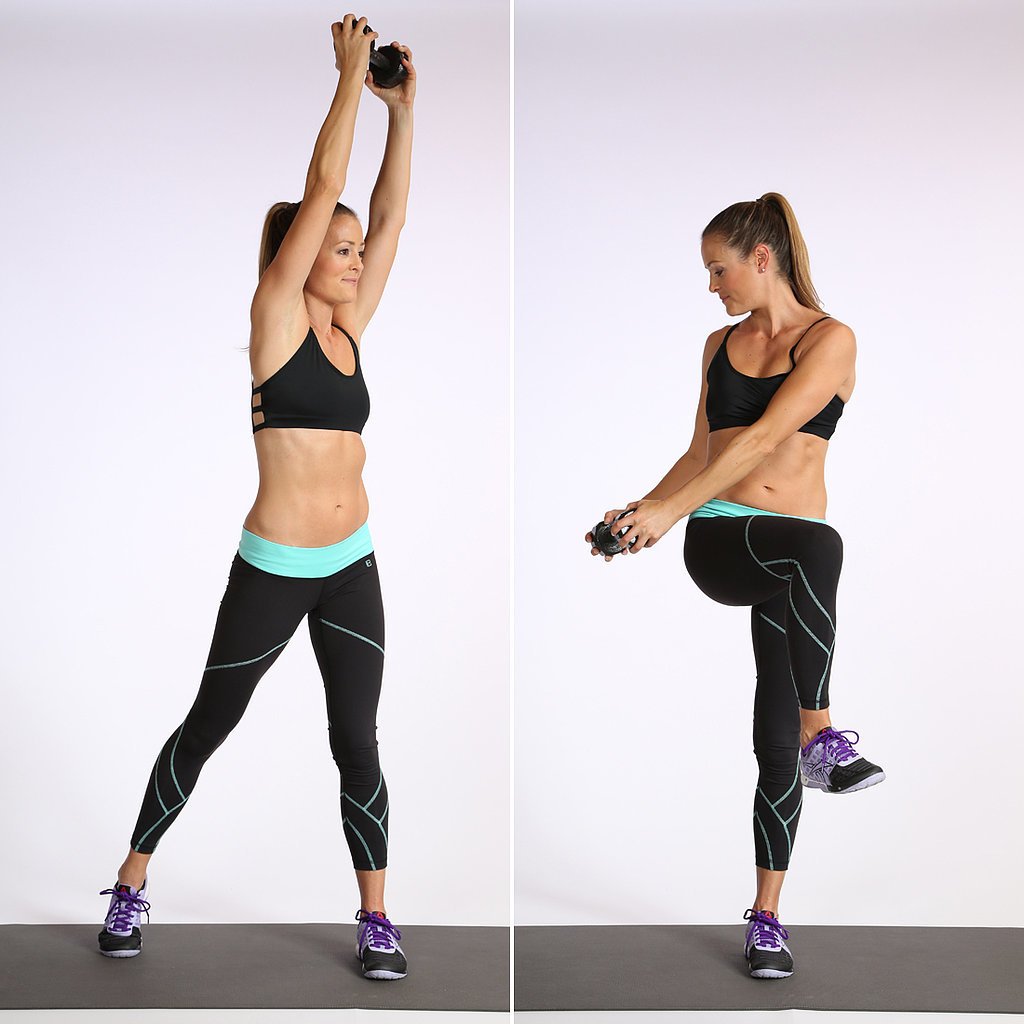
Area of Focus: Upper and lower abs and oblique
Starting Position: Stand with your right side facing the weight stack. Grab the handle attachment from the high cable pulley with both hands and bring it to your left shoulder.
The Move: Rotate and lower your right shoulder toward your left hip. Return to the starting position and repeat to the opposite side.
|
TRAINER’S TIPS Train both sides. Use a light weight. Focus your mind on feeling your abs do the work. Keep your hips facing forward. Initiate the movement from your abs-don’t pull with your arm. |
Since there are several different trunk, back and pelvic muscles that make up the ‘core’, it is important to perform a variety of exercises that target these muscle groups.
Related Links
- Building Core Strength & Stability
- Core Strengthening
- Strategy for building muscle mass and muscle density
- The Secret To Well Toned Abdominals Muscles
Disclaimer
The Content is not intended to be a substitute for professional medical advice, diagnosis, or treatment. Always seek the advice of your physician or other qualified health provider with any questions you may have regarding a medical condition.