The human body functions best when it is balanced in every area. When one area is out of balance the entire body is effected. Women’s hormones are delicate and can be thrown off balance by almost anything, including stress, illness, vitamin deficiencies and overload of negative outside factors.

One such hormone is Progesterone- secreted primarily by the ovaries in females. Smaller amounts are produced by the adrenal glands, the brain and glial cells.
Progesterone and estrogen are the two primary female hormones and work in close synergy. The synthesis and secretion of estrogens is stimulated by follicle-stimulating hormone (FSH), which is, in turn, controlled by the hypothalamic gonadotropin releasing hormone (GnRH). Progesterone production, on the other hand is stimulated by luteinizing hormone (LH), which is also stimulated by GnRH. The key is knowing when estrogen becomes the dominant hormone and progesterone is deficient. There are very few women that are deficient in estrogen. Most are deficient in progesterone.
| Estrogen causes breast stimulation – progesterone protects. Estrogen increases body fat – progesterone uses fat for energy. Estrogen causes fluid retention – progesterone is a natural diuretic. Estrogen increases blood clotting – progesterone normalizes it. Estrogen decreases sex drive – progesterone restores it. Estrogen increases risks of breast cancer – progesterone helps prevents it. |
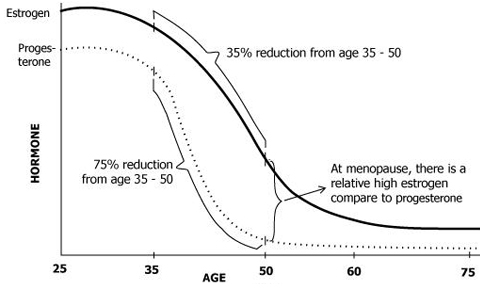
Usually, between 42 and 52 years of age, the follicles become less responsive to FSH and LH. They begin to secrete less estrogen. Ovulation and menstruation become irregular and finally cease. This cessation is called menopause. More than 50% of women over 35 years of age have symptoms of high estrogen overload. During menopause estrogen decreases by 40-60% whereas progesterone decreases by 90%. As a result of the change in hormonal levels women can suffer a variety of symptoms associated with menopause. For example, symptoms can include hot flashes, night sweats, dizziness, weight gain, anxiety, mood swings and sore joints.
Problems related to or affected by excess estrogen and deficient progesterone in women are:
- Weight gain secondary to insulin resistance.
- Fibrocystic breast disease
- Certain types of PMS
- Migraines
- Menstrual disturbances–irregular and heavy bleeding.
- Endometriosis, the uterine tissue disorder, which is helped by the use of estrogen blockers.
- Fibroids, a sign of excess proliferative capacity of the uterus, which may not be balanced with sufficient progesterone.
- Ovarian cysts
- Breast Cancer
Looking at the picture, progesterone calls for attention to restore a healthy estrogen-progesterone balance.
The question that is left to be answered is- How to boost Progesterone- naturally?
- One way would be to slow down excess estrogen consumption found in our food supply, personal care and household products, pharmaceuticals, plastics, pesticides, insecticides, HRT, birth control pills etc. Avoid hormone-fed animal foods, high sugars and fats, highly refined, processed foods, caffeine, alcohol, food additives, preservatives and colours. Foods and drinks that contain caffeine should be removed from the diet. Dr. Michael Lam, who specializes in natural healing, reports on a study that involved measuring caffeine consumption and estrogen levels. The result of the study was that even only one cup of coffee per day could increase estrogen levels, and more than four cups of coffee raised the level 70 percent higher than the one cup level. Dr. Lam also states a study that showed a reduction in estrogen levels of women who gave up a diet full of high carb and high fat foods in exchange for a plant centered diet that was low in fat. Avoiding sugars, fatty and processed foods and opting for fresh, whole fruits and vegetables and nuts is one way to reduce estrogen dominance (livestrong.com). Xenoestrogens, estrogens from environmental sources, are found in pesticides, plastics, detergents and even perfumes.
- Increase fibre intake, choose natural or organic whole foods, hormone-free animal products, foods rich in antioxidants and omega-3, liver supporting foods, plenty of water. Dr. Ronald Hoffman of New York states that a high fiber diet will decrease blood estrogen levels. Since excess estrogen leaves the body by way of the bowel, if stool remains in the colon the estrogen will be reabsorbed. Some foods that are high in fiber and make great additions to the diet are celery, apples, berries, oatmeal, nuts and seeds and any kind of bean. Studies have reported women who shifted to a diet high in fibrous foods, fruits, and vegetables, experienced a significant drop in their estrogen levels.
- Monitor intake of Phytoestrogens, to avoid disparity in estrogen and progesterone levels. Soy, flaxseed, red clover, black cohosh, chaste berry, dong quai. Hormonal imbalances can be avoided by controlling consumption of isoflavones. With the wide variety of foods available to the average consumer in a grocery store, there is no point in ingesting more than four to six ounces of these products a day.
- Maintain your liver health, to flush out excess estrogen. The liver works as a filter that cleans harmful substances from the blood stream and sends them for elimination, including excess estrogen. When the liver works too hard and can not function properly, toxins build up in the system, including estrogen. Foods that aid in liver detox are lemons, limes, spinach, leafy greens and Brussels sprouts. While the cruciferous vegetables such as Brussels sprouts and broccoli help with liver function, they also contain higher amounts of phyto-estrogens, so vary your vegetable intake and have cruciferous vegetables every other day.
- Go strictly Organic: When selecting fruits, vegetables and even lean meats, seek out organic sources. Organic foods are not grown or raised with pesticides or added hormones, so they give the liver a break by not adding extra toxins or estrogens into the system. When purchasing meat or milk, make sure it states that it is organic and “hormone free.” If you purchase food that you are not certain is organic, be sure to wash it first to rinse any pesticide residue from it. Organic fruits and vegetables naturally contain compounds called sterols that exhibit “progestogenic effects,” meaning they counter balance the effects of estrogen in the body.
- Quit Smoking- A recent study of postmenopausal women who smoke showed that they have higher androgen and estrogen levels than non-smoking women, with sex hormone levels being highest in heavy smokers. According to Judith Brand, MSc, of University Medical Center Utrecht in The Netherlands and lead author of the study “The observed increase in sex hormone levels with cigarette use suggests that tobacco smoke, apart from its direct toxic and carcinogenic effects, may also influence chronic disease risk through hormonal mechanisms. The good news is that the effect of cigarette smokingappears reversible, as an almost immediate reduction in sex hormone levels was seen in women who quit using cigarettes.” So the good news is that it is never too late to stop smoking in order to minimize your risk.
- Weight loss– In case you are overweight or have been careless lately, target optimum body weight. Excess body fat results in conservation of estrogen. This may be why overweight women are at lower risk for osteoporosis; conversely, they are at higher risk of breast and uterine cancer.
- Exercise– Research shows that physical activity curtails overproduction of estrogen. Fat cells promote estrogen production. Regular moderate to severe exercise has also been shown to reduce a woman’s chance of developing breast cancer, which indicates it regulates estrogen levels and promotes better removal of excess estrogen. Long-term exercise also means that you will have stronger bones and a lower risk of osteoporosis than non-exercisers. However, if taken too far, exercise can abolish periods altogether, resulting in the dangerous condition of Female Athletic Triad.
- Learn ways to manage stress– Stress control is solutions to lower estrogen. Stress, either physical or emotional, can prompt the body to produce more estrogen than normal. Dr. Ben Kim lists chronic stress as a key cause of estrogen dominance. He writes, “When a person experiences chronic physical and/or emotional stress, his or her body will begin to convert progesterone into the stress hormone, cortisol…the point is this: stress can lead to a depletion of progesterone, which creates the same condition of estrogen dominance that a woman experiences when she has too much estrogen in her system.” There are a variety of effective stress management techniques that can be employed to provide relief and prevent an estrogen related physical reaction from occurring. Such techniques include practicing yoga, meditation, taking up a hobby like painting or playing an instrument, or caring for an affectionate pet.
- Look for natural progesterone- to balance the side effects of unopposed estrogen. A properly formulated natural progesterone cream is the natural safe choice over synthetic progesterone (progestins). The Mexican wild yam (dioscorea mexicana) is one documented natural food source related to progesterone hormones. According to the American College of Obstetricians and Gynecologists, “Progesterone from diosgenin, extracted from Mexican yams, is identical to the natural progesterone of the human ovary or placenta.” The body of a hormonal imbalanced person needs to be fortified.
- Get hormone levels checked and discuss proper estrogen metabolism with your healthcare practioner- In order to make an informed diagnosis, the physician needs information about your serum estrogen and progesterone levels.
Note: This information is equally important for teenage girls and women in their 30’s to prevent the pitfall.
For more:
- Hormones Role & Effects
- How Smoking Can Increase Estrogen Dominance After Menopause
- http://linda-beadle.suite101.
- http://www.progesteronetherapy.com/
Disclaimer
The Content is not intended to be a substitute for professional medical advice, diagnosis, or treatment. Always seek the advice of your physician or other qualified health provider with any questions you may have regarding a medical condition.