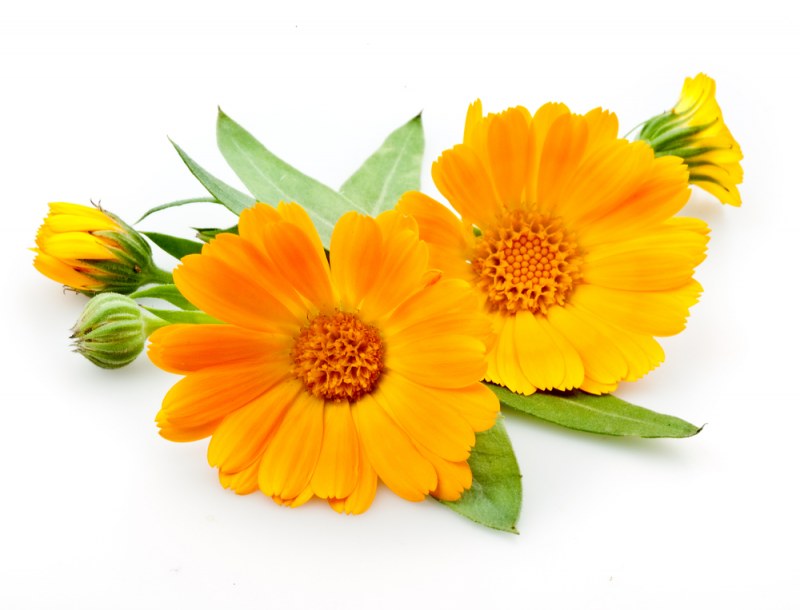
Parts Used – Flower head.
Uses
Therapeutic properties Calendula is antiseptic. Some constituents are antifungal (particularly the resins), antibacterial, and antiviral. The herb also astringes the capillaries, an action that explains its effectiveness for cuts, wounds, varicose veins, and various inflammatory conditions.
Skin remedy Calendula is above all a remedy for the skin, providing effective treatment for most minor skin problems. Calendula is used for cuts, scrapes, and wounds; for red and inflamed skin, including minor bums and sunburn; for acne and many rashes; and for fungal conditions such as ringworm, athlete’s foot, and thrush. Calendula is very helpful for diaper rash and cradle cap, and soothes nipples that are sore from breast-feeding.
Digestive disorders Taken internally, calendula infusion or tincture helps inflammatory problems of the digestive system such as gastritis, peptic ulcers, regional ileitis, and colitis.
Detoxifying Calendula has long been considered a detoxifying herb, and helps to treat the toxicity that underlies many fevers and infections, and systemic skin disorders, such as eczema and acne. Calendula is also considered cleansing for the liver and gallbladder and can be used to treat problems affecting these organs.
Gynecological uses Calendula has a mild estrogenic action and is often used to help reduce menstrual pain and regulate menstrual bleeding. The infusion makes an effective douche for yeast infections.