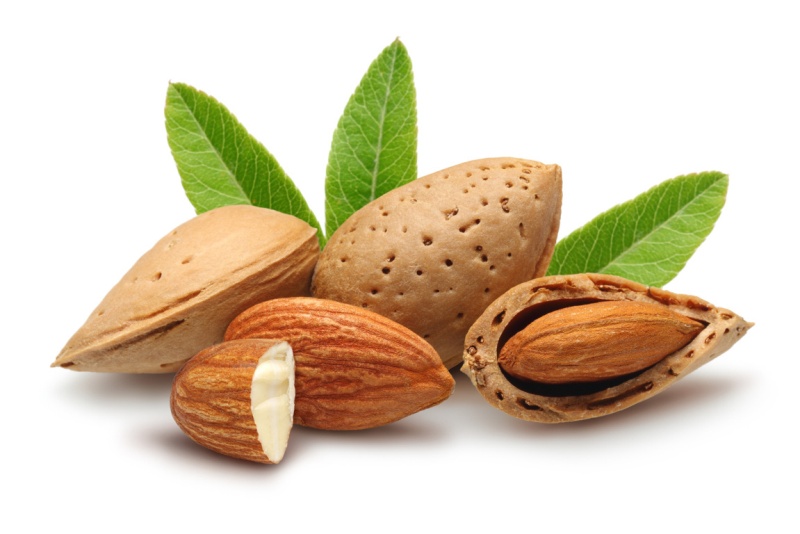
Ground almonds are used extensively in face masks and as washing grains. It is good for nourishing and cleansing. A handful of almonds could significantly lower your ‘bad’ cholesterol levels, say doctors in Canada.
Almonds are loaded with protein, fiber, calcium, magnesium, potassium, vitamin E and other antioxidants and phytochemicals. Almonds have been shown to promote good health, especially when they are part of a healthful diet consisting of fruits, vegetables, and low fat whole grain products.
According to one study, almonds are a well balanced food. They contain the right kind of fats-monounsaturated and some polyunsaturated, so they help lower low-density lipoprotein (LDL), the bad cholesterol, while not touching the high-density, or good cholesterol levels.
One ounce of almonds contains 35 percent of the daily intake of vitamin E. Vitamin E is believed to protect the body’s cells from cancer, heart disease, and aging.
Since almonds contain calcium, potassium, and magnesium, they also help prevent osteoporosis and regulate blood pressure. The folic acid in almonds is believed to help lower levels of homocystein, the amino acid that is thought to contribute to the buildup of fatty plaque in the arteries. And studies have shown links between nut (especially almond) consumption and lower risk of cancer, diabetes, Alzheimer’s disease, and other chronic illnesses.
In a study, after 24 weeks, patients on the moderate-fat diet containing almonds had achieved a greater reduction in weight/BMI (-18 percent vs. -11 percent), waist circumference (-14 percent vs. -9 percent), fat mass (-30 percent vs. – 20 percent) and systolic blood pressure (-11 percent vs. 0 percent). Both groups experienced lower glucose and insulin levels. But medication requirements for individuals with type 2 diabetes decreased more steadily in the low-calorie almond diet than the low-calorie complex carbohydrate diet. One possible explanation for the effects observed in Dr. Wien’s study is that the fat in almonds may not have been completely absorbed. This is consistent with a study published in 2001 that concluded that the cell walls of almonds act as a physical barrier to the absorption of fat. The fat is then excreted from the body, thereby failing to contribute calories.
In a nutshell, almonds are an excellent source of fiber, vitamin E, zinc, selenium, copper, potassium, phosphorus, biotin, riboflavin, niacin and iron. Almonds are the most nutritious of all nuts. So enjoy delicious almonds. They promote good health!