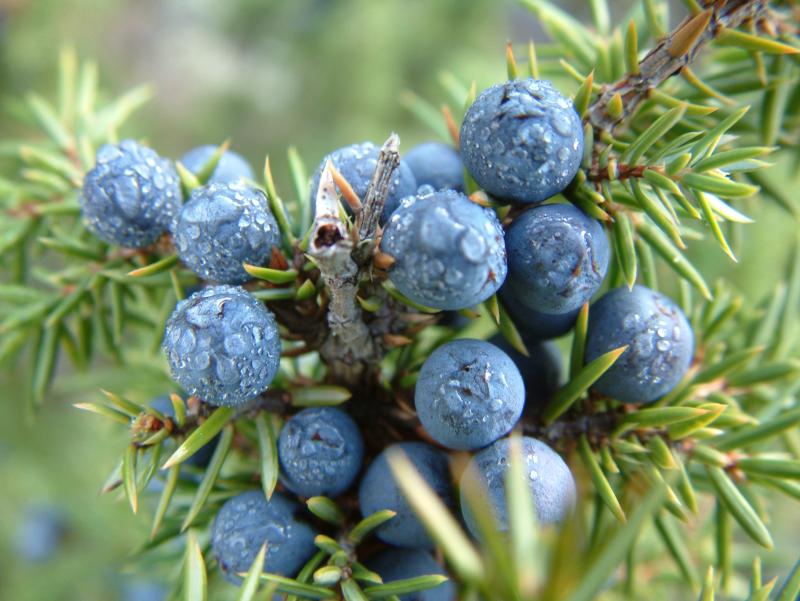
(Botanical name: Juniperus communis)
It is an evergreen tree, grows mainly in the plains regions of Europe as well as in other parts of the world. The medicinal portions of the plant are referred to as berries, but they are actually dark blue-black scales from the cones of the tree. Unlike other pine cones, the juniper cones are fleshy and soft.
The volatile oils in juniper cause an increase in urine volume and in this way can theoretically lessen edema;20 however, there is no clinical research that yet supports its use for people with edema.
Aside from being used as the flavoring agent in gin, juniper trees have contributed to the making of everything from soap to perfume. 1 Many conditions have been treated in traditional herbal medicine with juniper berries, including gout, warts and skin growths, cancer, upset stomach, and various urinary tract and kidney diseases. Juniper contains bitter substances, at least partly accounting for its traditional use in digestive upset and related problems.
The Swedes traditionally used juniper berry extracts topically to treat wounds and inflamed joints. Juniper tar has been used occasionally in combination with other plant tars to treat psoriasis of the scalp. Test tube studies show that juniper berries can inhibit prostaglandin synthesis, which suggests that the traditional use for easing arthritis pain may have some scientific basis.
Warning- Excessive applications (greater than the amounts listed above) may cause kidney irritation. People with either acute or chronic inflammation of the kidneys or kidney failure should not use juniper. Juniper should not be taken for greater than four weeks without first consulting a healthcare professional. One report suggests that people with diabetes should use juniper cautiously as it may raise glucose levels. Pregnant women should avoid juniper until further information is available, as it may cause uterine contractions.