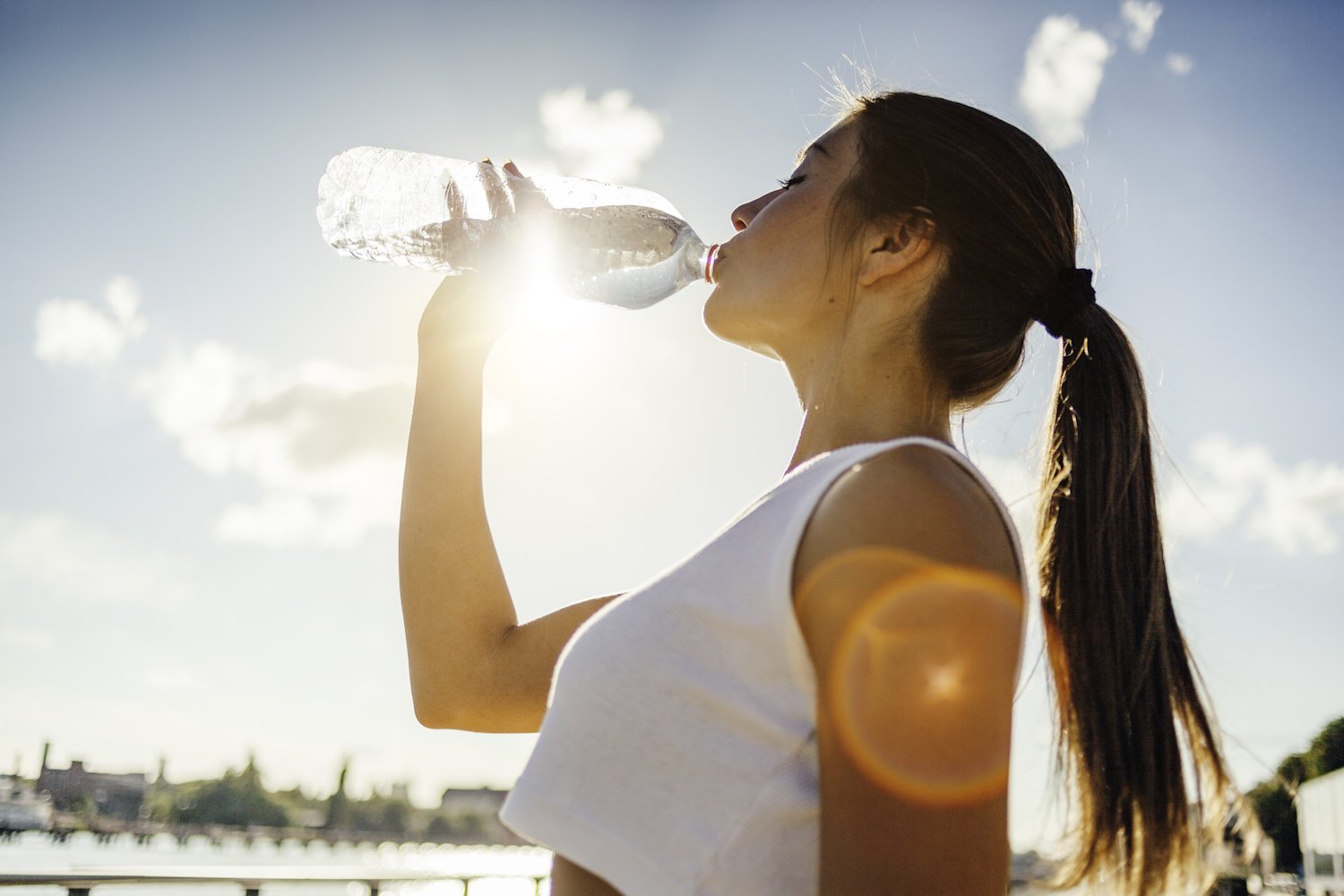
A recent study looked at how drinking cold water affects hermoregulation and performance in three areas:
- Endurance (bicycle time to exhaustion),
- Strength [a 60 percent of one-repetition maximum (1RM) bench press to exhaustion], and
- Power (a single broad jump).
Key to Better Hydration
Colder water (39° F) is better for both performance gains and for keeping you and your clients going longer in hot conditions. And this applies to both before and during the exercise session, particularly for longer workouts.
An article published in Nutrition Reviews, Eric Goulet (2012) asserts that hydration strategies are more important when endurance exercise exceeds one hour. Athletes should stay hydrated to avoid body-weight losses greater than 3 percent of starting weight, and should drink approximately 5-10 mL/kg of body weight.Previous studies have demonstrated that it only takes a 3 percent reduction in body weight for performance to be significantly decreased.
Daily water intake:
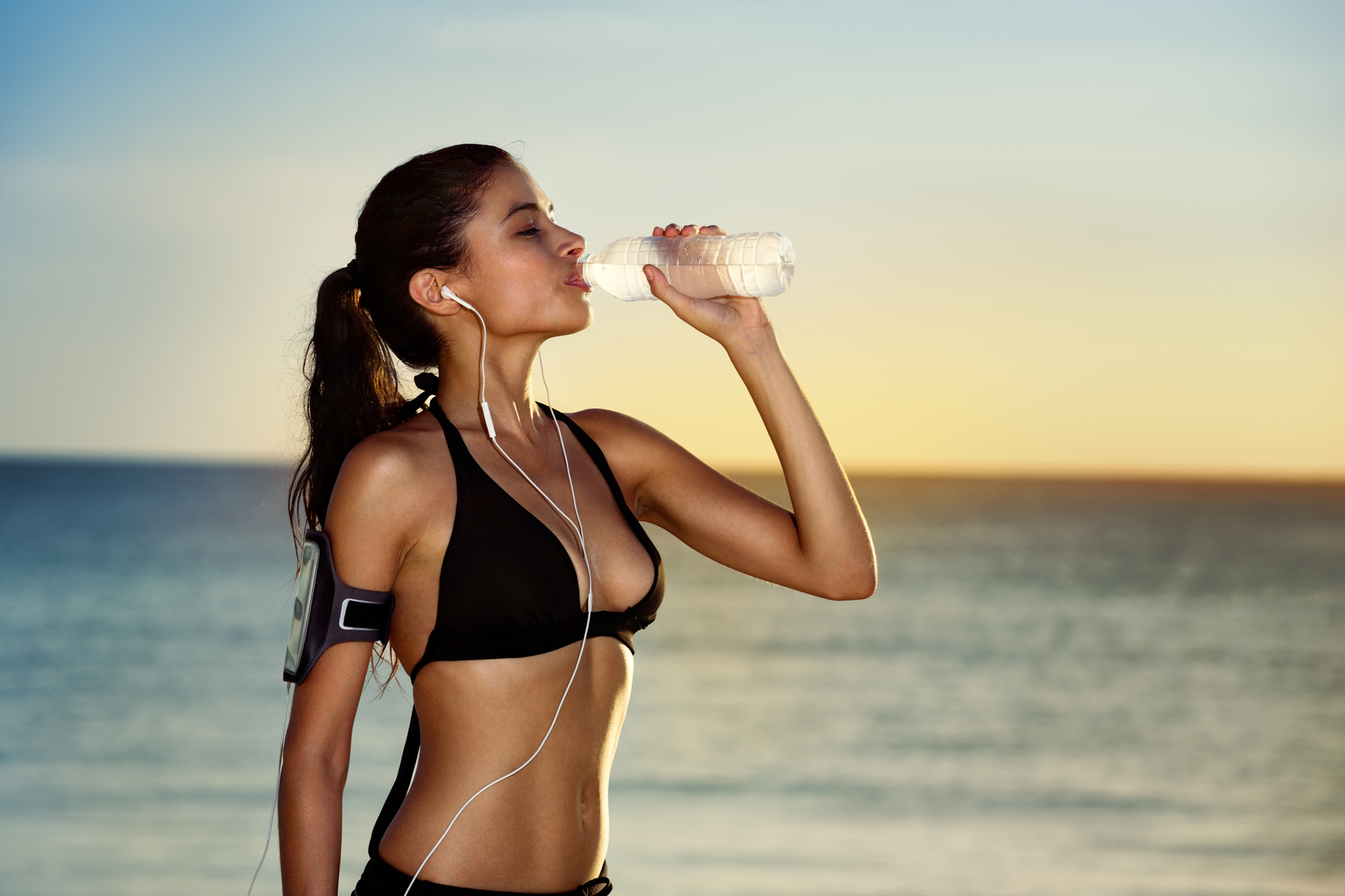
To maintain normal, adequate hydration, a simple calculation of bodyweight, multiplied by 0.55 will equal the amount of water a women should drink in ounces on a daily basic. For example, a women who weighed 110 lbs, should drink 60.50 oz. (110 x .55) of water every day. If you are indulging in strenuous activities which involve more sweating, such as long-distance running or exercising in extreme heat, the water amount should be increased by multiplying the bodyweight by 0.66.
Type of Fluid
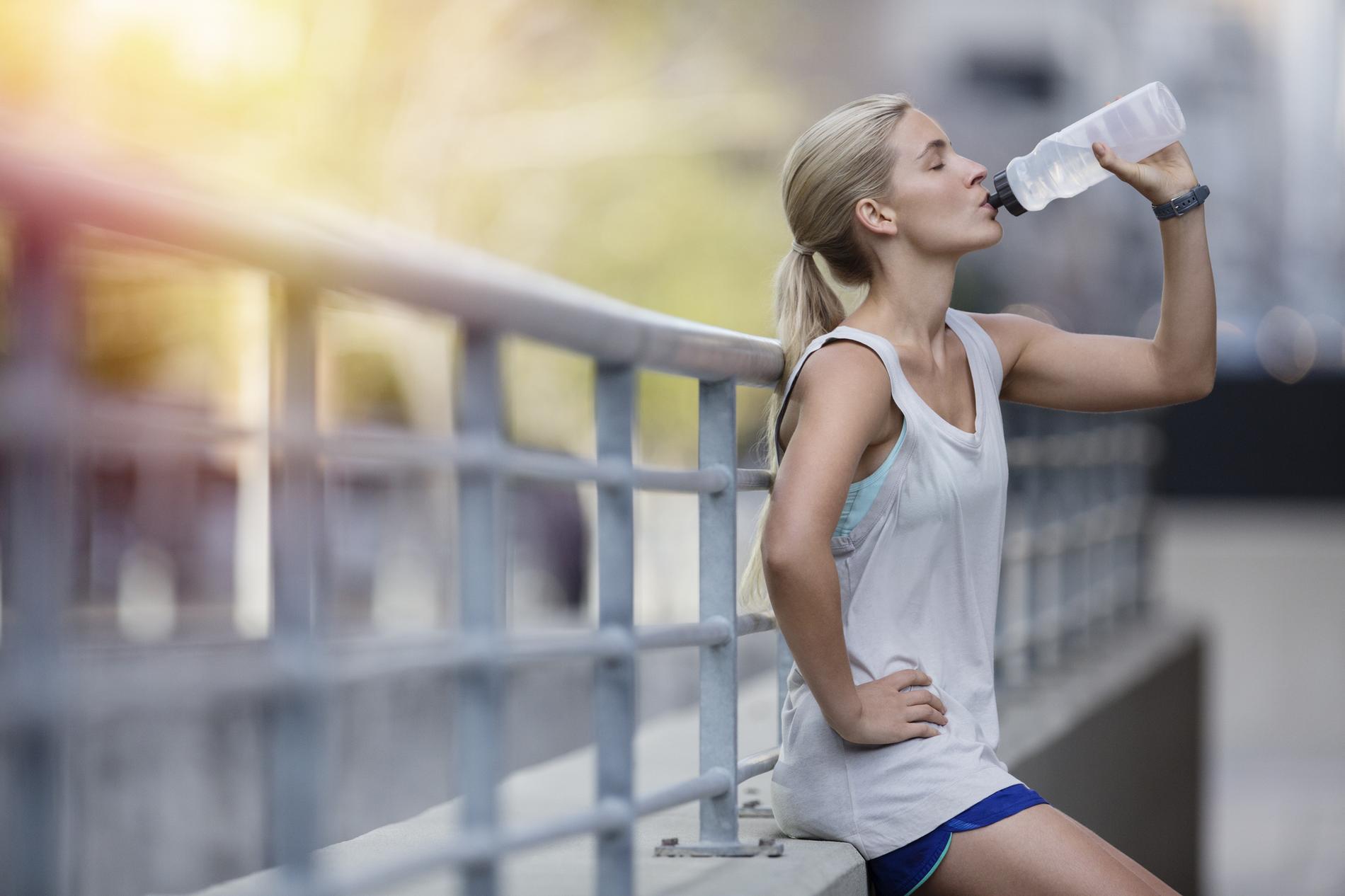
The type of fluid one uses to hydrate should be based, at least in part, on the duration of the event.
The American Council on Exercise advises pre-loading with an electrolyte solution two hours before an endurance event or long-duration workout, and then switching to water immediately before starting. Be careful not to hydrate to the point of getting stomach cramps, which is often a spasm of the thoracic tendons. If the event or workout lasts less than an hour, water is all that is needed. If the event is 60 to 90 minutes in duration, then some electrolyte replacement is advised. If the event goes into the 90- to 120-minute range, electrolytes and carbohydrates should be replenished. And, if the event or workout exceeds two hours, you probably need to consider utilizing all the previously mentioned items, plus some amino acids, particularly branched-chain amino acids, especially if glycogen depletion is likely (Antonio and Stout, 2008).
Remember, to keep your cool during hot and heavy workouts, keep drinking cold fluids about every 15 to 20 minutes.
Ref:
Disclaimer
The Content is not intended to be a substitute for professional medical advice, diagnosis, or treatment. Always seek the advice of your physician or other qualified health provider with any questions you may have regarding a medical condition.