Scientific review
confirms safety of black cohosh for menopausal women
(University of New Mexico-August 6, 2003)
A report in the journal
Menopause provides reassurance of the safety of black cohosh (Cimicifuga
racemosa) as a treatment for women experiencing menopausal symptoms.
 The finding is based on
the most comprehensive review of black cohosh safety data to date and
provides welcome news for women seeking alternatives to hormone replacement
therapy (HRT).
The finding is based on
the most comprehensive review of black cohosh safety data to date and
provides welcome news for women seeking alternatives to hormone replacement
therapy (HRT).
"This paper should
reassure health professionals that they can safely recommend black cohosh to
their menopausal patients who cannot or choose not to take HRT," said lead
author Tieraona Low Dog, MD, clinical assistant professor at the University
of New Mexico Department of Family and Community Medicine and advisor to the
NIH Center for Complementary and Alternative Medicine. "Well-studied,
non-estrogenic symptom management alternatives help address individual
women's symptoms, health profile, and personal preferences."
The comprehensive
evaluation published in Menopause included pre-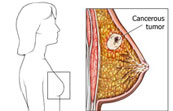 clinical and clinical
research in estrogen-sensitive populations, including women at risk for
breast cancer and breast cancer survivors, as well as human cell lines most
relevant to breast cancer. The evaluation is a review of evidence of the
safety of black cohosh in humans, in contrast to a study presented in July
2003 at the American Association for Cancer Research (AACR), which studied
the effects of black cohosh in mice with breast tumors.
clinical and clinical
research in estrogen-sensitive populations, including women at risk for
breast cancer and breast cancer survivors, as well as human cell lines most
relevant to breast cancer. The evaluation is a review of evidence of the
safety of black cohosh in humans, in contrast to a study presented in July
2003 at the American Association for Cancer Research (AACR), which studied
the effects of black cohosh in mice with breast tumors.
The paper is the first
to review all published literature pertaining to pre-clinical and clinical
safety of various forms of Cimicifuga, as well as the U.S. Food and Drug
Administration and World Health Organization adverse event reporting
systems, monographs, compendia, internal unpublished data from a major
manufacturer, foreign literature, and historical, anecdotal reports. The
majority of the research that has been conducted, and is reviewed in this
article, used the isopropanolic extract of the herb. Many other black cohosh
products use different extracts that have not been as well studied.
"As menopausal women
increasingly turn to alternatives, scientific evaluation of the safety and
efficacy of the products is very important," said Margery Gass, MD,
professor of Clinical Obstetrics and Gynecology at the University of
Cincinnati College of Medicine and president of the North American Menopause
Society.
In addition, the most
studied commercially available formulation, RemiFemin Menopause (GlaxoSmithKline
Consumer Healthcare), has been shown in recent studies to have no effects on
hormone levels or the growth of specific cell lines associated with some
cancers, according to the pharmaceutical company. Unlike soy and red clover,
which have weak estrogenic effects, RemiFemin is the only major alternative
treatment for menopause symptoms that is non-estrogenic, the company says.
Human clinical trials,
uncontrolled reports, and post-launch evaluations of over 2,800 patients
demonstrate a low incidence of adverse events with black cohosh (5.4%). Of
the reported adverse events, 97% were minor and did not result in
discontinuation of therapy, and the only severe events were not attributed
to Cimicifuga treatment. The report notes that, though low overall, adverse
events associated with black cohosh may be dependent on the specific herbal
preparation.
"I advise patients to
rely on a trusted manufacturer and avoid combination products, whose safety
has not been studied," Dr. Low Dog added. This article was prepared by
Biotech Week editors from staff and other reports.
©Copyright 2003, Biotech Week via NewsRx.com & NewsRx.net

