fitness news
 ,
,
Font size Women’s Health
Frequency of symptoms, determinants of severe symptoms, validity of and cut-off score for Menopause Rating Scale (MRS) as a screening tool: A cross-sectional survey among midlife Nepalese women
– Reported, January 16, 2012
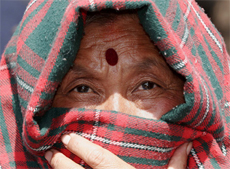 Majority of Nepalese women live in remote rural areas, where health services are not easily accessible. We determined the validity of Menopause Rating Scale (MRS) as a screening tool for identification of women with severe menopausal symptoms and cut-off MRS score for referral.
Methods
A cross-sectional survey was carried out between February and August, 2008. Trained health workers administered MRS and a questionnaire to 729 women (40 to 65 years) attending health screening camps in Kaski district of Western Development Region of Nepal. Information about demographics, menopausal status, and use of hormone replacement therapy (HRT), chronic disease, self-perceived general health and reproductive history was also collected. Menopausal status was classified according to the Staging of Reproductive Ageing Workshop (STRAW). We calculated rates of menopausal symptoms, sensitivity, and specificity and likelihood ratios of MRS scores for referral to a gynaecologist. We also carried out multivariate analyses to identify the predictors for referral to a gynaecologist for severe symptoms.
Results
A total 729 women were interviewed. Mean age at menopause was 49.9 years (SD 5.6). Most frequently reported symptoms were, sleeping problems (574, 78.7%), physical and mental exhaustion (73.5%), hot flushes (508, 69.7%), joint and muscular discomfort (500, 68.6%) and dryness of vagina (449, 61.6%). Postmenopausal women (247, 33.9%) and perimenopausal (215, 29.5%) women together experienced significantly higher prevalence of all symptoms than the premenopausal (267, 36.6%) women. MRS score of =16 had highest ratio for (sensitivity + specificity)/2. Women who reported urogenital symptoms [OR 5.29, 95% CI 2.59, 10.78], and self perceived general health as poor [OR 1.29, 95% CI 1.11, 1.53] were more likely to be referred to a gynaecologist for severe menopausal symptoms. While women reporting somatic [OR 0.72, 95% CI 0.63, 0.82] and psychological [OR 0.86, 95% CI 0.74, 0.99] symptoms were less likely to be referred.
Conclusion
MRS may be used as a screening tool at a cut-off score of =16 with least misclassification rate. However, its utility may be limited by woman’s general health status and occurrence of urogenital symptoms.
Menopause is a condition caused by the depletion of ovarian function followed by cessation of menstruation in women. Modern medicine has significantly prolonged the life span of humans and most women spend one-third to half of their lifetime in post- menopause . Information about menopausal experiences among different racial and ethnic groups is important for healthcare personnel to provide appropriate and specific interventions . It has been shown that menopausal symptoms vary according to racial groups. For instance, studies have reported that somatic and psychological symptoms are less frequent among Asian women as compared to Caucasian women . Further, menopausal symptoms may also vary according to menopausal status. Vasomotor, sexual and psychological symptoms are more frequent among perimenopausal and postmenopausal women .
During menopause, women often experience some symptoms which may affect their daily activities. In recent years, studies have shown that menopausal symptoms may affect health-related quality of life . Menopause Rating Scale (MRS) which is a health related quality of life (HRQOL) scale was developed in the early 1990’s in Germany . Since then, MRS has been well accepted internationally and has been translated into several languages taking international methodological recommendations into consideration . Use of MRS in Turkish language has been validated and also used as an instrument to assess the frequency menopausal symptoms among middle aged women in eastern Malaysia, Northern India, Sri Lanka and Ecuador . MRS has a potential of being used as a screening tool to identify those women in need of referral to higher level for severe menopausal symptoms. Such use of MRS would be more appropriate in remote and rural areas of Nepal. In rural Nepal, health care facilities are less accessible to women due to geographic, cultural and social barriers. In such settings, the community health workers may administer MRS to identify the women who are in need of secondary or tertiary level care for severe menopausal symptoms. Therefore it is important to test the validity of MRS as a screening tool. We aimed to determine the frequency of menopausal symptoms among rural Nepalese women; to test the validity of MRS as a screening tool for identification of severe menopausal symptoms; and to determine the cut-off MRS score for referral to specialist consultation.
Response rates and demographic characteristics
During the survey period, 1179 women attended the health screening camps. When the eligibility criteria were applied 18 women were either pregnant or were lactating, one woman had received treatment for a genital malignancy and one woman had reached premature menopause (i.e. before 40 years of age). Ninety four women had undergone treatment for chronic psychiatric illness of whom, 62 were chronic alcoholics. Thus 1065 eligible women were invited to participate in the survey interview but 336 women declined to participate. The main reasons for refusal were the need to return back home quickly or non-comprehension about the nature of interview to be carried out. We interviewed 729 women giving a response rate of 68.5% (729/1065). Demographic characteristics of the women are shown in table ?table1.1. Mean age of the women interviewed was 49.9 years (SD = 5.6). Median age was 49 years (lower quartile i.e. Q1 & upper quartile i.e. Q3 were 46 and 53 years respectively). Mean age of the women according to menopausal status (classified according to STRAW) were as follows: premenopausal 45.1 years (SD = 2.78), perimenopausal 49.14 years (SD = 2.01), postmenopausal 55.67 years (SD = 5.6). Majority (88.6%) of the women were currently married. Of these, 574 (78.7%) women were living with their husbands. The women we interviewed were mostly illiterates (468, 64.9%) and mainly housewives (528, 72.4%).
Credits:Neena Chuni and Chandrashekhar T Sreeramareddy
Department of Obstetrics and Gynaecology, Manipal Teaching Hospital, Manipal College of Medical Sciences, Pokhara, Nepal
More information:http://www.ncbi.nlm.nih.gov/pmc/articles/PMC3126771/?tool=pubmed
– WF Team
