fitness news
 ,
,
Font size Women’s Health
Women Abusing Sleeping Pills
– Reported, February 6, 2012
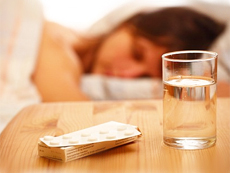 ORLANDO, Fla. (Ivanhoe Newswire)–Physically exhausted but mentally wide-awake. Its what insomniacs experience nightly. The problem hits 40 million Americans. Women are more likely to have it than men, and those sleepless nights can lead to a dangerous, potentially deadly problem.
Initially they work extremely well and so you think youre safe, Alesandra Rain, a former sleeping pill addict told Ivanhoe. Unfortunately they turn on you pretty rapidly. That little innocent sleeping pill became something that was quite dangerous and nearly took my life.
Alesandra rain started taking prescription sleeping pills after a bad car wreck and a wrecked marriage.
I think between the pain and the stress of the divorce, I just wasnt able to sleep, Rain said.
Soon she was hooked, taking 60 Ambien and 240 other sleep meds every month – mixing them with hundreds more pills for pain and depression.
And by the end I was on 1,000 pills a month, Rain added.
She said her skin turned gray, and her health diminished. If she didnt break the habit
Id be where Michael Jackson is, and Heath Ledger and Brittany Murphy and Anna Nicole, no question. If it can happen to me, it can happen to anybody, Rain confessed.
A study by the National Sleep Foundation found 30 percent of American women use some sort of sleep aid at least a few times a week. Other research shows 84 percent of new moms experience insomnia. Sleep psychologist, Dr. Kimberly Justice says just being a woman makes you more prone to sleep problems. From menstruation to pregnancy to menopause
All of those things can add to sleep disruption, Kimberly Kirkpatrick Justice, Ph.D., a licensed psychologist told Ivanhoe.
The American Academy of Sleep Medicine recommends using hypnotics like Ambien, Lunesta or Sonata only once or twice a week, for a few weeks.
The reality is that many of these women are using those medications much more long term you know, months to years, Justice said.
Like cocaine and crystal meth, you can build up a tolerance to sleep meds.
So, in order to get the same effect you actually have to increase the dosage, Justice said.
That can lead to an overdose, and mixing the drugs with alcohol is dangerous too.
It could be deadly, absolutely, Justice said.
You should also avoid grapefruit and grapefruit juice while on sleep meds. The fruit can make the drugs absorb into your bloodstream faster and cause over sedation. So whats the safest way to get a good nights sleep?
“So the general rule is that we use our bed for sleep and sex only, Justice added.
Dr. Justice says problem sleepers should not read, watch TV or think about their troubles in bed.
Our bed is supposed to be a cue for drowsiness and falling asleep. When we get into this anxious cycle what happens is bed becomes a place and a cue for staying awake and being anxious, and worrying, Justice explained.
Quit the caffeine at 4 pm. Stay off your computer, iPad, and smartphone around bedtime. The light can mess with your melatonin and make it tough to get to sleep. And if you think a shower will help you relax, Dr. Justice says think again.
Showering and bathing can actually be pretty alarming, Justice said.
Her best advice, remember the 20-20 rule. If you cant sleep, get out of bed for 20 minutes.
Do a calming activity in a low light environment, Justice said.
Then, get back in bed for 20 minutes if youre still awake try it all again! For Alesandra, rehab was the answer to her sleeping pill problem.
I wished I had been hooked on heroin. I would have been through it a lot quicker. What started as my biggest mistake in life, heading down this path, has turned out to be this most enormous gift, that I wouldnt change for anything, Rain concluded.
She now runs her own non-profit helping others from around the world overcome their prescription addictions. Dr. Justice says after a person quits taking sleeping pills there is a period of withdrawal called insomnia rebound where the insomnia gets worse. She says its important women know that will pass. After you beat a sleeping pill addiction you can get back to a normal, restful sleep cycle.
FOR MORE INFORMATION, CONTACT:
Kimberly Kirpatrick Justice, Ph,D & Akinyemi Ajayi, MD, D, ABSM
The Womens Sleep Center
(407) 898-2767
