The word “pratyahara” means “removing indriyas from material objects”. Pratyahara is the stage at which an adept learns how to control the “tentacles” of consciousness that are called “indriyas” in Sanskrit.
We experience this world with the help of five sense organs, namely
- Eyes
- Ears
- Nose
- Tongue
- Skin
These sense organs are bound to experience external world when they come in contact with it. We have very little control on them. Pratyahara teaches you to overcome bondage of the five sense organs. It asks you to restrain the sense organs from taking their respective experiences. You will be surprised to know that all of us have experienced Pratyahara at some point in our lives. Assume that you are reading an interesting story. You are so engrossed in the story that you forget that somebody is knocking the door. Only after the visitor knocks 3-4 times you come “out” of the story. When you are absorbed in the story it is as if your ears forget their job. This is Pratyahara though at a very gross level. Let me give you another example so that you can sink in the concept. Suppose that you are watching an interesting movie on TV. Your eyes and ears are totally stuck to the screen. Your mother calls you from kitchen but you simply don’t hear her voice. Some time later your friend comes to you see you. You don’t notice him unless he pats on your back. This is Pratyahara too.
One way to begin to understand pratyahara on a experiential level is to focus on a familiar yoga pose, savasana, the corpse pose. This pose is done lying supine on the floor and is the practice of deeply relaxing. The first stage of this asana is about physiological relaxation. In this stage, as one becomes comfortable lying on the floor, there is first an awareness of the muscles gradually relaxing, then the breathing slowing and finally the body generally letting go of tension. While delicious, this stage is only the beginning of the practice. In the second stage of savasana there is a sense that one is withdrawing from the external world without loosing contact with it. This is an experience of pratyahara.
How to achieve the stage of Pratyahara consciously?
There are several practices.
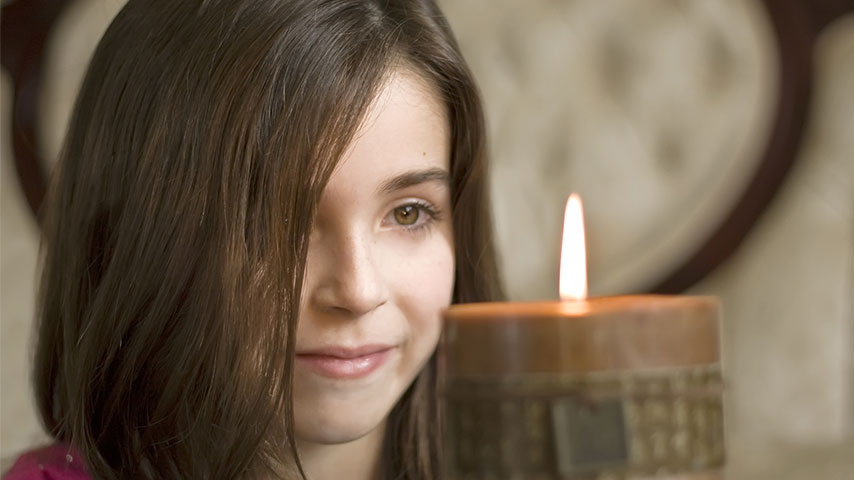
Trataka : meditation of third eye
Trataka is a very good technique to induce Pratyahara. In the practice of trataka an object is gazed at until its subtle form manifests in front of the closed eyes. The point of concentration is usually a symbol or object which activates the inner potential and can absorb the mind. The symbol most commonly used is a candle flame, because even after the eyes are closed, the impression remains naturally for some time, and then antaranga (internal) trataka can easily be performed. The purpose of focusing the eyes on an external object is to arouse the internal vision and make it absolutely steady by stopping the eye movements.
As your practice develops you will find that for the period of practice you tend to get absorbed in the act. You see only the flame of the candle and nothing else. You are unaffected by external sound. Even if a mosquito bites you when you are sitting for Trataka you will not notice it!
Ajapa Japa
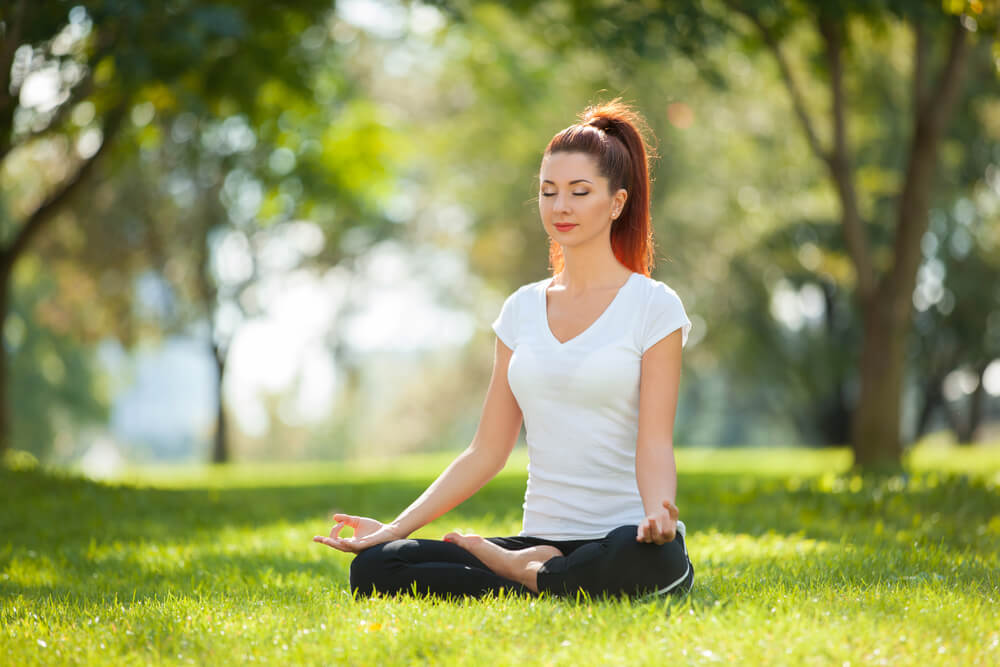
The second practice for Pratyahara is Ajapa Japa. Ajapa Japa refers to focusing your awareness on breathing. It is also called as Soham Japa. It is called Ajapa because breathing is something that we do automatically. We never need to consciously inhale and exhale the air. The technique to perform Ajapa Japa is as follows:
- Sit in any meditative posture with spinal column and head straight
- Close your eyes
- Affirm your mind not to allow random thoughts trouble you
- Gently move your attention to your breathing
- As you inhale feel the imaginary sound Sooooo…
- As you exhale feel the imaginary sound Haammmmm…
- Feel the current of air brushing your nasal walls
- Try to feel its fragrance (if any)
- Let your breathing be rhythmic
- As you inhale your abdominal wall will be pushed forward and as you exhale it is pushed slightly inwards
You will not believe me but after some practice this technique gives tremendous joy and calmness. It is as if your sense organs have taken a halt. During initial stages you can use rosary (japa mala) to count your breath. Once your practice is matured this is unnecessary. Ajapa Japa is a complete practice in itself.
Shambhavi Mudra
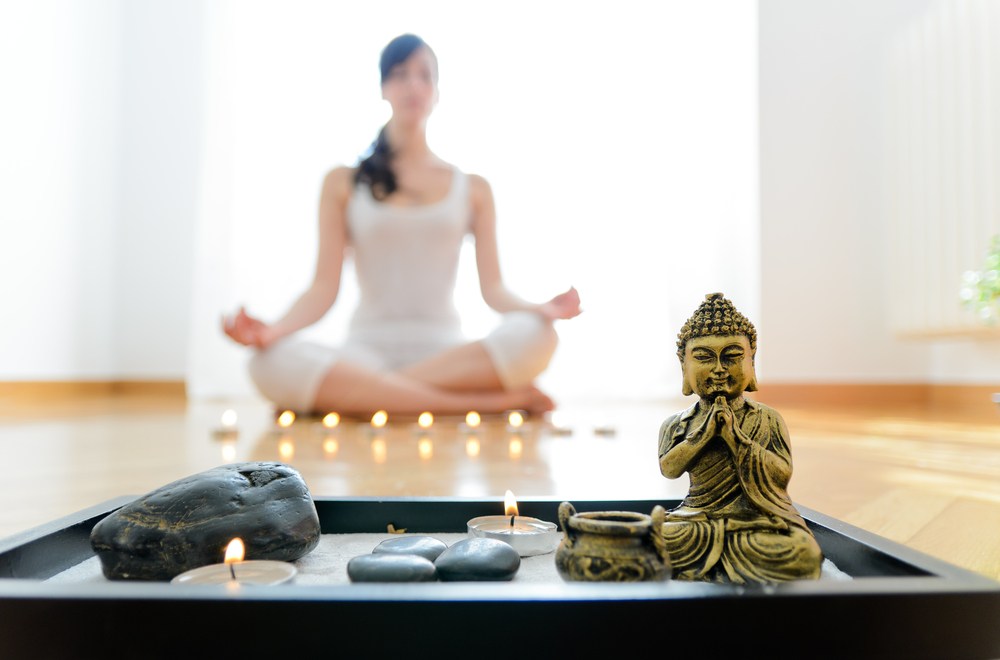
Shambhavi Mudra is actually an advanced practice. People suffering from any eye diseases should consult doctor or experienced Yoga teacher before practicing Shambhavi Mudra. The technique to perform this mudra is as follows:
- Sit in any meditative position with spinal column and head straight
- For few minutes practice Ajapa Japa
- Slowly open your eyes
- Turn your eyes slightly upwards as if you are looking at the eye brow center. DO NOT PUT ANY STRAIN ON YOUR EYES.
- Keeping the eyes open in this fashion move your focus on breathing as in Ajapa Japa
- Maintain this position as much as comfortable
In the above practice you may replace Ajapa Japa with Mantra Chanting (say Om). Do not worry if you cannot fix your gaze at eye brow center. It is important to keep the eyes open and focus your attention on Ajapa Japa or Mantra Japa. If you find it difficult to turn the eyes upwards you can maintain them in half closed position.
Once your sense organs are under control you will find that your spiritual progress is hastened. You can then perform higher sadhanas easily. Often people directly jump to higher practices and then complain that they didn’t get any benefit. It is important not to hurry. Each of us is different in terms of body and Karmic constitution. There can’t be any rigid timeline for individual spiritual progress. Keep practicing sincerely and one day success will come.