Name any beauty treatment, from exfoliating to detoxification to massaging, and it’s a fairly safe bet that it can be of some use to the waist. A flabby waist can have countless different causes. Dietary factors can lead to bloating or water retention, as can hormonal issues surrounding your menstrual cycle or menopause, or just plain old middle-aged spread.
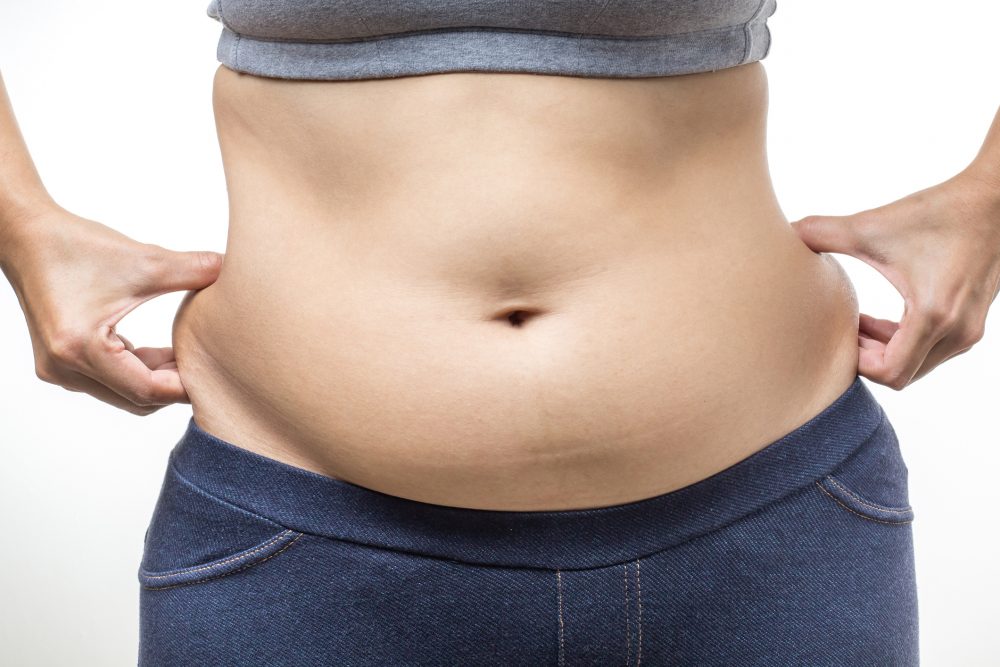
Shaving inches off your middle makes your clothes fit better and your curves more shapely – just ask the corset –wearing ladies of the 18th century. Thank goodness we’ve got a modern alternative to help us to achieve a slimmer-looking body.
- Lymph massage, that deep-tissue drainage system, can be of use to the waist. It claims to keep your midriff firm and toned by encouraging the dispersal of pockets of fatty tissue and keeping circulation-hindering toxins on the move (your lymphatic system holds 80 percent of your body’s antioxidant capacity). It can also work wonders for bloating, water retention and tenderness caused by PMS. But do remember that not all massages include the abdominal region as a matter of course – it’s particularly unusual in those billed as ‘stress relieving’- though it’s fairly easy for your therapist to incorporate some sort of abdominal massage element if you’d like.
- If it’s serious waist-trimming you’re after, there are specially designed treatments that have taken regular massage a step further. Detox wraps started life as beauty solutions to thecellulite problem, but have become so popular that they’ve now graduated to the waistline, too.
All detox wraps involve the same basic components. First, massage your body (with a lotion) and exfoliate it too. The scrub and the lotion will be removed with flannels. Next, you may be given a short series of massage strokes, using detoxifying oil. After this, the ‘detoxifying’ paste will be applied. Sometimes it’s a clay – which is particularly good at drawing out and absorbing impurities – and sometimes a gel. Clays are more likely to be applied warm, to aid circulation, but sometimes gel formulations are applied ice cold. The cold treatments have the advantage of an immediate tightening effect to the skin, although advocates of warm treatments say the effects last longer.
Next, the treated areas will literally be ‘wrapped’ like a parcel in muslin, tin foil or PVC wrap and left to lie there for anything up to an hour – the truly beauty savvy can combine a wrap with a manicure to make use of every available minute. Afterwards, you’ll be cleaned off using flannels or taken to a shower. Effects can be impressive – you can sometimes measure the results in inches – but will last only for a few days. A course of ten treatments over a five or ten-week period naturally gives even better results, but are most worthwhile if you combine them with a small measure of ‘detoxifying’ in your lifestyle, too. For example, the boost in circulation and drainage system means drinking too much caffeine or alcohol is inadvisable, especially in the first twenty-four hours after your treatment.
AT-HOME WAISTLINE WHITTLERS
If you haven’t the time or money for a salon treatment, here are some at-home tips to help shift that stubborn midriff fat:
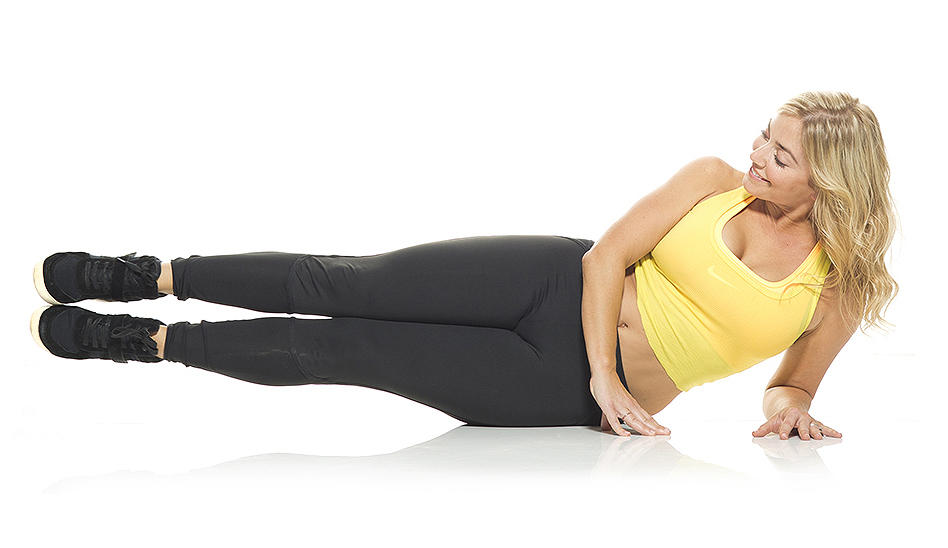
- A few drops of geranium essential oil in your bath will ease bloating.
- Body brushing in an upward motion along the curves of your waist (from hip to chest) will stimulate circulation.
- You exfoliate your legs, arms and back – don’t forget your stomach. Use a gentle scrub with altra-fine grains and rub in circular motions all over your middle. If you can stand it, remove the scrub with a freezing cold water-soaked flannel.
- If you use a cellulite cream, there’s no reason why you can’t dab a bit onto your tummy, too. Use firm, upward strokes from the top of your pubic area up to your navel. Don’t be too firm though – you don’t want to upset the complicated mass of fatty tissues that lie beneath.
- Believe it or not, a fake tan gives the illusion of slimmer contours (in the same way that we find darker clothes more slimming). The natural smoothness of our tummies (rarely exposed to sunlight) makes applying fake tan here a dream.
SURGICAL OPTIONS FOR WAIST REMOVAL
- Lipoplasty is great for slimming hips and thighs, but when it comes to trimming our waist, things aren’t that simple. For a start, it’s hard to talk about the waist in isolation. The appearance of your waist is dependent not only on the amount of fat stored around your middle (and the amount of fat inside the abdominal cavity- above the navel –that cannot be treated with lipoplasty), but also on the relative size of your chest and hips. (Large hips, though perhaps not desirable in themselves, will give the illusion of a trimmer waist and vice versa.)
For this reason, when lipoplasty is used to create a shapelier waist, it’s always planned in relationto other parts of the body, particularly the hips and thighs – they will not all be operated on at the same time, but might be considered for follow-up procedures. When surgeons talk about ‘narrower waist lipoplasty’, they’re actually referring to three places- the abdomen, flanks and under-the-bra area. These three can be worked on together.
- Tummy Tuck (Abdominoplasty)
The stubborn layer of fat that sits around the waistline gets harder and harder to shift as we get older. Sometimes it seems as if no amount of exercise can make any difference (in some cases, it won’t – an abdominal ‘bulge’ can be an inherited condition and if your weight is ‘middle-age spread’ it can be similarly difficult to budge without surgery). Also, if you were left with ‘surplus’ skin following weight loss or pregnancy, there’s precious little you can do to shift it on your own – a ‘tummy tuck’ could be the answer you are looking for.A tummy tuck works in two ways: first, it firms, then it flattens. The ‘firming’ is done by removing the unwanted fat and tightening the underlying abdominal muscles (some times the muscles can also be pushed together slightly so the new look is more natural). The ‘flattening’ is done by reducing the amount of skin on top of these muscles, so that the remaining skin is stretched tighter, giving a smoother look. This part can often help diminish the appearance of stretch marks, too, if they’re cut off at the bra area, then pulled all the way down towards the groin. There’s also a partial technique called a ‘mini tummy tuck’ that concentrates solely on fat that’s collected below the navel. In both cases, excess skin is removed and the shortened piece sewn back into place. This can be done by making just one incision, usually in a horizontal line within the top of the pubic area, which means it should be well camouflaged, although sometimes it is extended up towards the hip bones at each side (this can easily be hidden by underwear). The operation requires a general anaesthetic and, in the same way as ‘normal’ lipoplasty, it contains all the associated surgical risks such as swelling, bruising, infection and scarring. More specifically, when fat is removed by lipoplasty, there’s certain amount of ‘redistribution’ of the fat that’s left. This means that although lipoplasty may let you trim pounds from the ‘spare tyre’ around your middle, the fat that’s left after the surgery may ‘spread out’ slightly, so that although you’re now leaner round the middle, you still haven’t got a trim, curvaceous waist. The biggest advantage is that, barring excessive weight gain, your tummy should stay flatter for years to come.
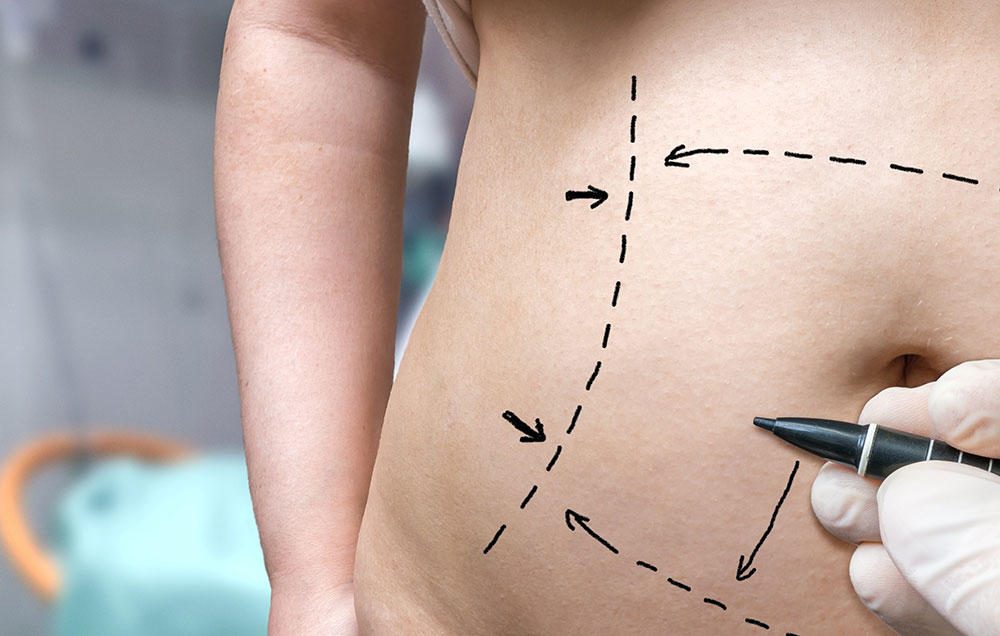
- Abdominal Etching
Some people are never happy. A wash board-flat stomach not enough? Want that super-realistic muscle definition that will convince everyone you’ve been doing 100 abdominal crunches a day? Thank goodness the surgeons are one step ahead of you. Small-volume lipoplasty can now be used to hover up any layers of fat that are sitting directly over your abdominal muscles so that the muscles can show through, creating that lean, toned ‘rippled’ effect. (It’s almost always performed on men, but some athletic women have been requesting it, too.)
Of course, it goes without saying that if you exercise regularly, your muscles will be bigger and have a better chance of showing up.
While controlled diet and regular exercise directs the body’s proportions, exercise is primarily responsible for carving off previously gained weight. Just as bacon fat will only liquefy at warmer temperatures, body fat can only come off the body with physical activity.
Disclaimer
The Content is not intended to be a substitute for professional medical advice, diagnosis, or treatment. Always seek the advice of your physician or other qualified health provider with any questions you may have regarding a medical condition.