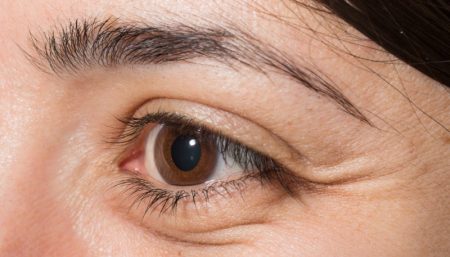
Do you spend your days staring at a computer screen? If you do, you probably know how draining and tiring it can be to your entire body, not just your eyes.
This agitation strains the entire body, including the eyes. That’s why people often feel drained after studying or working, even though they haven’t physically exerted themselves.
One of the big benefits of yoga is that it releases built-up tension and stress, which burrow into the muscles of the body. The following exercises can help to strengthen the eye muscles and counterbalance the effects of eyestrain. The key to doing these exercises is to relax and empty the mind as if you are meditating.
General tips when doing eye exercises
Please take off your glasses or contact lenses, you will then feel more comfortable and relaxed.
When doing the exercises, intensely concentrate on your eyes. Feel them working and coming to life again!
Do them on a regular basis, e.g. ideally 3 times a day. The results will be better.
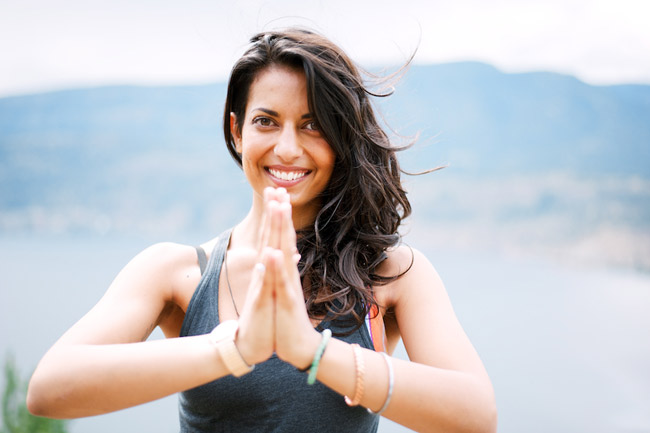
Improving Visual Concentration
The first step is to strengthen visual concentration. Sit comfortably with your back and neck straight but not stiff. Start by holding each posture for a few minutes and gradually increase. p>
- Focus your gaze on the tip of your nose without blinking. Remain like this for as long as you can. Then close your eyes and relax.
- Focus on your “third eye” without blinking. This is the area between the eyebrows above your nose. Then close your eyes and relax.
It may feel uncomfortable or hard to do at first, but do not let yourself become frustrated. Keep your focus on that area and with time, you will find this posture easier to do. - Without turning your head, focus both eyes on your left shoulder. Remain like this for as long as you can. Then close your eyes and relax. Repeat this sequence with the right shoulder.
After you are finished, place the palms of your hands on your closed eyes and rest for as long as you would like.
Imagination to Balance Visual Concentration
Lie on your back facing up. Your palms should face the ceiling and your legs should be about shoulder-width apart. If you are doing this exercise in your office then sit comfortably in your chair.
Close your eyes. Breathe into your belly. Feel it expand as it fills with air. Continue for a few minutes and then open your eyes. Look at some object. Close your eyes again and continue “seeing” that object. This exercise helps to relax your eyes. It also balances mental focus with imagination.
Meditation to Balance Visual Concentration
Lie on your back facing up. Your palms should face the ceiling and your legs should be about shoulder-width apart. If you are doing this exercise in your office then sit comfortably in your chair.
Close your eyes and place your palms over your closed eyes. Breathe into your belly. Feel it expand as it fills with air. Continue for a few minutes and then open your eyes. Look at some object. Look but keep your mind empty. Don’t let yourself attach to it or stare at it. This exercise teaches you how to focus without straining or depleting your eyes.

Palming
This is when you cover your eyes with your palms. A few things to take note:
- Do not rest on the eyeballs directly. Only put pressure around the eye socket.
- Please make sure that your hands are clean. Introducing germs and bacteria to your eyes does not help matters much.
Gently cover your eyes so that you can see no light. In the darkness, you may see brief flashes of light. This is normal, and simply indicates the spontaneous firing of the neurones in your eyes. But if the light flashes are too intense, they may indicate that you are too tense. Loosen up a bit! Nobody’s watching you.
This is a wonderful relaxation technique for the eyes. I usually feel much better after each palming session. The duration is up to you. It can be as short as 10 seconds up to a few hours but try to make it about 30 minutes: That’s when the benefits can really be seen.
Disclaimer
The Content is not intended to be a substitute for professional medical advice, diagnosis, or treatment. Always seek the advice of your physician or other qualified health provider with any questions you may have regarding a medical condition.