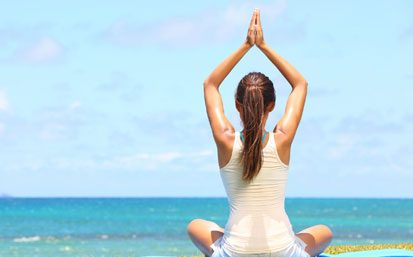
The weather has definite affect on our mood. Sunlight breaking through clouds can lift our spirits, while a dull, rainy day may make us feel a little gloomy. Seasonal Affective Disorder (SAD), is a mood disorder that many people suffer during the winter months. It is also known as winter depression, winter blues, summer depression, summer blues, or seasonal depression.

SAD has been related to lack of Serotonin, a monoamine neurotransmitter. Approximately 90% of the human body’s total serotonin is located in the enterochromaffin cells in the alimentary canal (gut), where it is used to regulate intestinal movements. The remainder is synthesized in serotonergic neurons of the CNS, where it has various functions. These include the regulation of mood, appetite, and sleep. Serotonin also has some cognitive functions, including memory and learning. Modulation of serotonin at synapses is thought to be a major action of several classes of pharmacological antidepressants.
Symptoms of seasonal affective disorder include tiredness, fatigue, depression, crying spells, irritability, trouble concentrating, body aches, loss of sex drive, poor sleep, decreased activity level, and overeating, especially of carbohydrates, with associated weight gain. When the condition presents in the summer, the symptoms are more commonly insomnia, poor appetite, and weight loss, in addition to irritability, difficulty concentrating, and crying spells. In severe instances, seasonal affective disorder can be associated with thoughts of suicide.
SAD may affect some children and teenagers, but it tends to begin in people over the age of 20. The risk of SAD decreases with age. The condition is more common in women than in men.
Treating or rather managing SAD, would involve, increasing exposure to light, monitoring your diet, sleep patterns and increasing exercise levels. Yoga can help in relieving stress, building energy and increasing your mental and physical well-being. For those who are severely affected, devising a treatment plan with a health care professional consisting of light therapy, medication and cognitive-behavioural therapy may also be needed.
Yoga: A Tool to Manage SAD
Trataka is a technique in yoga that involves gazing at a particular object, especially a candle flame. In fact, the word “trataka” means “steady and uninterrupted gaze”. If practiced regularly, the technique can stimulate the pineal gland in the brain to produce melatonin.
Pranayama or the manipulation of breath can also increase the production of melatonin. Some of the breathing techniques, alternate nostril breathing in particular, send electrical impulses through the brain which in turn can alter physiological process for the better.
Another amazing technique is Sun Salutations or Surya Namaskar. The series of forward and backward bends done in tune with the breath has the effect of regulating the functioning of the entire endocrine system.
Asanas that can be practiced regularly include,
Matsyasana (Fish pose)
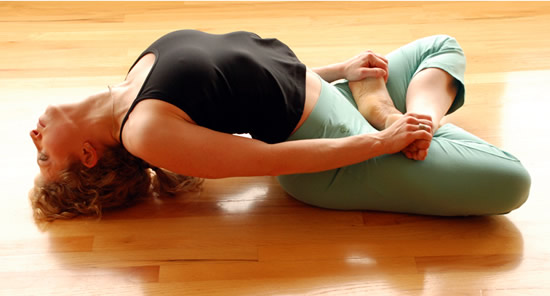
- Lie down on your back with your legs straight and your feet together. Place your hands, palms down, underneath your thighs.
- Pressing down on your elbows, inhale and arch your back. Drop your head back so that the top of your head is on the floor, but your weight should rest on your elbows. Exhale. Breathe deeply while in the position, keeping your legs and lower torso relaxed. To come out of the pose, lift your head and place it gently back down, then release the arms.
Sarvangasana (Shoulder stand)
- Lie down flat on the floor, on your back, palms by your side facing down.
- Exhale and lift your legs up 30, then 60, then 90 and then around 130 degrees so they are extended behind your head.
- Stay in this position, breathing normally, for a few seconds.
- Now, gradually, exhale again, and straighten your legs up to 90 degrees, lifting your buttocks as well. Support the back of your trunk with your palms, keeping elbows on the floor. Gradually, walk your hands towards your shoulder blades, as you lift your body higher.
- Your elbows may tend to move outwards. Bring them in, so they are straight in line with your shoulders.
- You will notice that your hips tend to jut out backwards, while your feet tend to come forward over the head. This is not the right way to do it. Work at it so your body is in a straight line. Your hips, feet and shoulders should be aligned, so push your feet back and bring your hips and tailbone forward. Remember, this exercise is not as much about effort as it is about balance.
- Lift your body as high up as possible. Sarvangasana is a shoulder stand, so your body should be resting on your shoulders and not on your back.
- Hold this position for as long as possible.
- Remember to exhale while lifting your body up, but once your body is up, you can breathe normally.
- There is no need to hold your breath.
- Time yourself, so you can see how long you can remain in this position. The next time, try and balance your body for a little longer.
Ardha-matsyendrasana (Spinal twist)
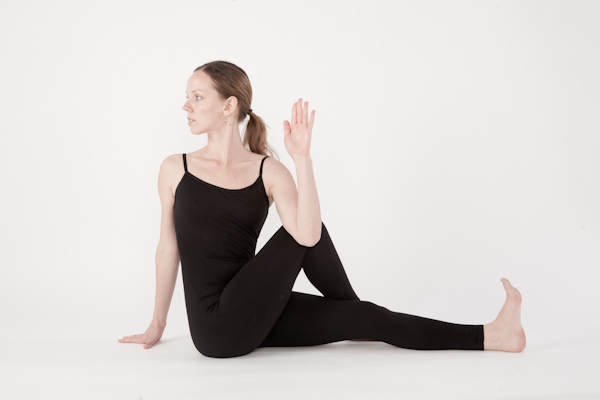
- Sit extending both the legs together in front, hands by the side, palms resting on the ground.
- Fingers should remain together pointing forward.
- Fold the right leg at knee. Slowly set the right heel at the perineum.
- Now folding the left leg, bringing it from above the right knee, place it by its side on the ground. The knee of the left leg should remain towards sky.
- Now bring the right hand on the left side of the left knee. The left knee should remain at the left side of the right armpit.
- Now straighten the right hand and hold the toe or ankle of the left leg.
- Twisting the body to the left side, look backwards, place the left hand bringing it from the back on the right thigh. Gaze should be towards back.
- While returning to the original position first release the hand from the thigh and turn head forward.
- Now bring the back to normal position after loosening the right hand.
- Bring the left leg in original position.
- Now bring the right leg also original position.
- Repeat it similarly from the other side by folding the left leg first.
Yoga nidra (or deep relaxation) and creative visualization techniques can be practiced for a few minutes daily.
If you exercise indoors, position yourself near a window. Make a habit of taking a daily noon-hour walk. The activity and increased exposure to natural light can raise your spirits.
NOTE: Speak to your doctor before you practice any of these methods and be sure to try them out with the help of an experienced yoga instructor. You will see the real difference between managing mood swings and feeling genuinely happy, no matter what the weather.
Disclaimer
The Content is not intended to be a substitute for professional medical advice, diagnosis, or treatment. Always seek the advice of your physician or other qualified health provider with any questions you may have regarding a medical condition.