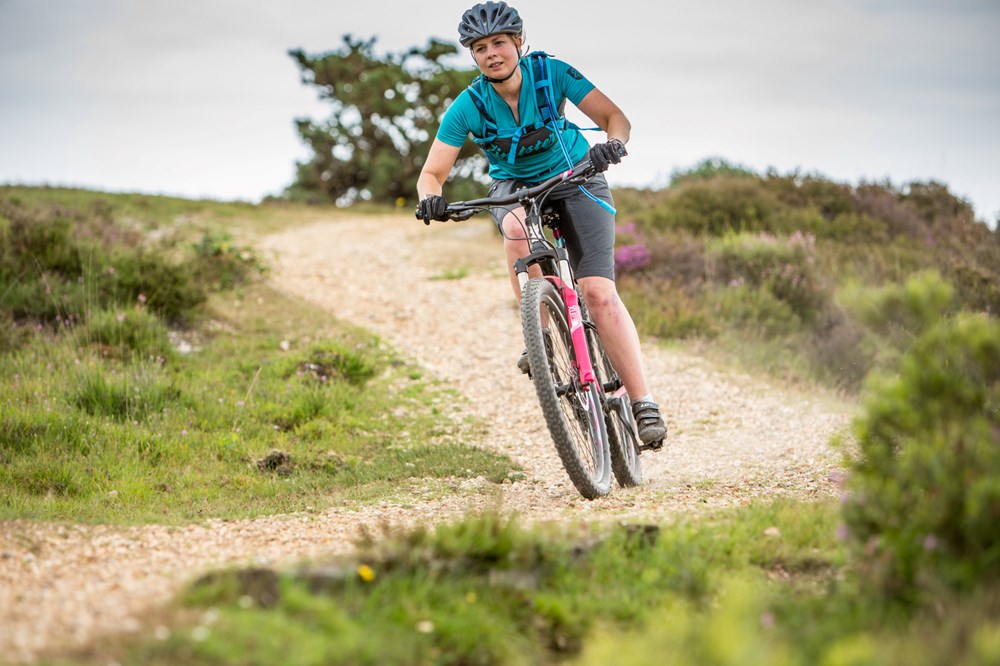
If cycling or mountain biking is new to you, many guides have several trips that are the perfect introduction. You will need to learn some basic shifting and climbing skills. Mountain biking can take us many places including away from the daily stress and turmoil of our hectic lives. Besides freeing our minds, it has the incredible health benefit of keeping our hearts and bodies in great physical shape as well. Mountain biking can be relaxing or strenuous, depending on the terrain and your physical capabilities or goals. And, when you consider that the terrain is influenced by weather factors, temperature, natural elements, and even natural hazards, every trip is truly a new and exhilarating experience!
Some helmets are specifically designed for mountain biking and include features such as a harder outer shell. This better protects you from trail hazards, such as low-hanging branches, that you might come into contact with.
There are some distinct health benefits derived from biking
- First of all, biking requires a thorough and more intense use of moremuscle groups. Despite the mistaken idea that biking involves primarily the use of leg muscles, anyone who has climbed a hill on a bike will tell you that it can be an extreme upper body workout: lower back, shoulders, arms, neck — they all get involved. Also, a descent works its own muscle groups. Hands gripping brake levers will ache after a particularly long and steep descent. And, somewhat surprisingly to the novice, a different set of leg muscles are used going downhill because of the need to stand on the pedals and take the weight off the seat.
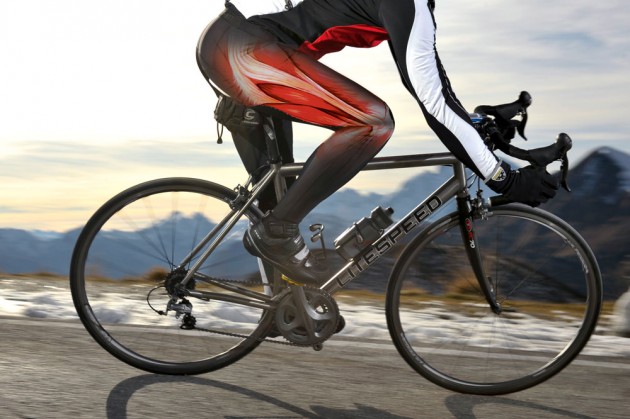
- Perhaps the biggest difference while biking, comes from the way knees feel after a ride. Biking, puts very little pressure on knees if the seat is adjusted correctly.
- Mountain biking gives a thorough aerobic workout. In other words, you breathe deep and fast with a corresponding heart rate increase. This aerobic workout releases endorphins, the “feel good” hormones that some people get so used to they become biking junkies, addicted to the sensation created by intense physical exertion.
Some helpful hints for the mountain biking beginners:
- Where you look is where you’ll go. Try not to look off-course or over a drop-off, or you may catch your self inadvertently heading in that direction.
- When not pedaling, try to ‘stand’ on the pedals in the 9 and 3 o’clock position. This will give you extra control. Keeping your elbows relaxed at about 90 degrees with your back at an approximate 45 degree angle will also help maintain your balance.
- Try to conserve your momentum. More so than power, it will get you through most any tight spot and will conserve your energy.
- Don’t waste golden opportunities to recover. Every time you can get your heart rate back down, you’re recovering. Use downhill areas and flats to recover for the next tough section and keep your arms relaxed during descents.
- When using multi-speed bicycles, gear shifting is critical! Anticipate each gear shift and let yourself transition smoothly and don’t let your cadence slow down to much. Losing speed on a climb is a great way to introduce your self to hike-a-biking. When going uphill, you should tuck your backside down to ensure your back wheel has proper traction.

- Play Follow the Leader while riding with a friend or a fellow enthusiast. If the leader goes down a steep hill or bunny-hops a mud hole, the follower should assume that they can do the same. This is a great way to build confidence and to see exactly what you are capable of. Of course, don’t let your “expert” friends force you to do stuff over your head that you aren’t comfortable with. Think smart and follow your own instincts.
- When cornering you should make sure your outside foot is down so that your weight is properly distributed. Dropping the outside leg helps keep the rear of the bike sliding out on you. Pushing out gently with the inside hand will help you avoid tucking your front tire underneath the bike and flipping you mercilessly over the handlebars, thus experiencing your first ‘endo’.
Though the thought of mountain biking may be intimidating to some, the skills necessary to maneuver on a trail can be quickly learned from fellow mountain bikers or acquired from trial and error practice. One of the most difficult techniques to learn, however, is the ability to look ahead on the trail. Keeping your chin up is very important!