The Amazing Human Body: All About the Two Major Types of Glands
Do
you know the two main types of glands in the body? They are the
endocrine and the exocrine glands, and they control a range of
processes in your body. If something is wrong, it could cause
serious health problems. Here's
what you need to know.
What Are Glands?
A gland is an organ that produces and releases chemicals into the body that help it in some way or another. There are essentially two types of glands in the body. These types of glands are comprised of various sub-types which have specific functions in the body.
The two types of glands are the endocrine gland and the exocrine gland.
Exocrine glands are glands that have a duct that connects to the surface of the body. The products produced by these glands are released through these ducts.
Endocrine glands form an integral part of the endocrine system. They're not attached to the surface of the body and they don't have ducts in them. Rather, they release the products they create directly into the bloodstream.
When there is a problem in the body with one or more of these types of glands, it can be classified as a disorder. However, many times, the glands themselves are self-correcting. Meaning, when there is a problem in the body, the body can heal itself. The glands are responsible for controlling many bodily processes, and can adjust their secretions accordingly.
The adrenal glands, for example, are very robust. While they can become exhausted, they are quite resilient.
What Do Endocrine Glands Do?
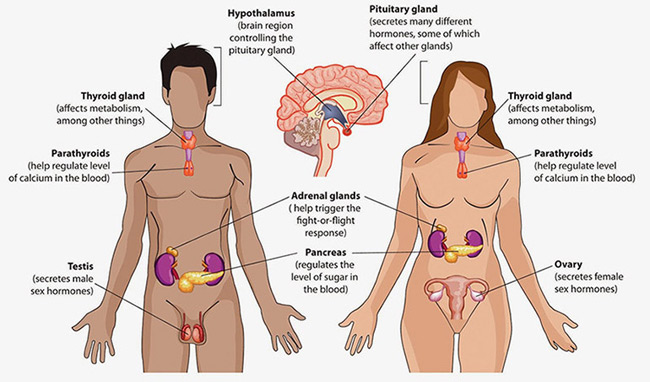
Endocrine glands are controlled by precise mechanisms in the body, and are subject to strict control so that their effects can be integrated with those of the nervous and immune systems. Signals that tell the gland to hold back or release chemicals into the body are triggered by hormone concentrations, a biochemical process, or a biologically important element, like potassium or calcium concentration.
Examples of endocrine glands include Pineal Glands, Thyroid Glands, Adrenal Glands, etc.
Each endocrine gland has a rich supply of blood, and each gland can detect minute changes in concentrations of regulating substances. Even so, an imbalance of hormones or an exhaustion of certain hormones can cause serious problems, like adrenal fatigue.
And, while the endocrine system does have mechanisms to cope with these types of problems, the body only has so many resources to draw on for self-correcting mechanisms.
Some endocrine glands are controlled by simple negative feedback mechanisms. For example, a decrease in serum calcium triggers the parathyroid gland to produce more parathormone.
What Do Exocrine Glands Do??
Exocrine glands have ducts that connect them to the surface of the body. Examples include sweat glands, mammary glands, and sweat or tear glands.
Salivary glands, for example, produce saliva which begins the process of digestion in the body. These glands are further subdivided into the parotid, submandibular, and sublingual glands.
Mammary glands are located in the breasts of both females and males. Their primary function in females is to produce milk for offspring. The glandular tissue only produces milk after a baby is born. And, when the female is pregnant, hormones like progesterone and prolactin are released. Progesterone reacts with the prolactin and prevents these glands from making milk. But, a small amount of a substance called colostrum is produced, which is very rich in antibodies and nutrients. It's helpful for the infant in the few days of life.
After a baby is born, the progesterone levels fall, but prolactin levels remain high and more milk is produced for the baby.
Another very well-known example is the sweat gland. Sweat glands are present all over the body and they regulate the body's temperature and its functioning. For example, if the weather outside is too hot, the body's temperature rises. The sweat glands then release sweat from the body, a breeze passes over the surface of the skin, causing evaporation.
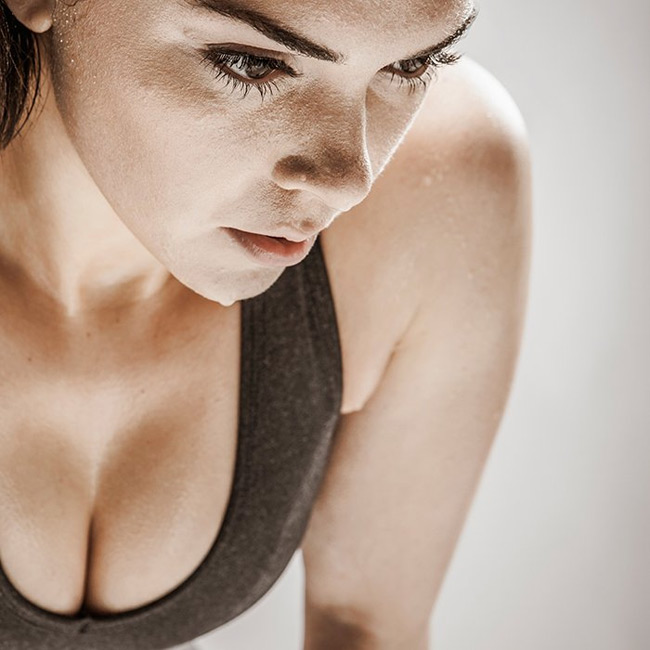
This evaporative process cools the body down.
But, even sweat glands are subdivided into different types of glands, called Eccrine sweat glands and apocrine sweat glands.
The Eccrine glands are really very small and don't extend to the surface of the body. Instead, they're coiled and tubular in shape. They discharge their secretions direction into the surface of the skin.
Apocrine glands are also tubular in shape, but they release a cloudy secretion with an odor. These secretions then interact with bacteria on the surface of the skin, which produce body odor.
Georgina Thompson is a medical student, in her first year of studies at university. She enjoys learning more about the human body each day and putting that new-found knowledge into her writing.
Listen To Podcast