


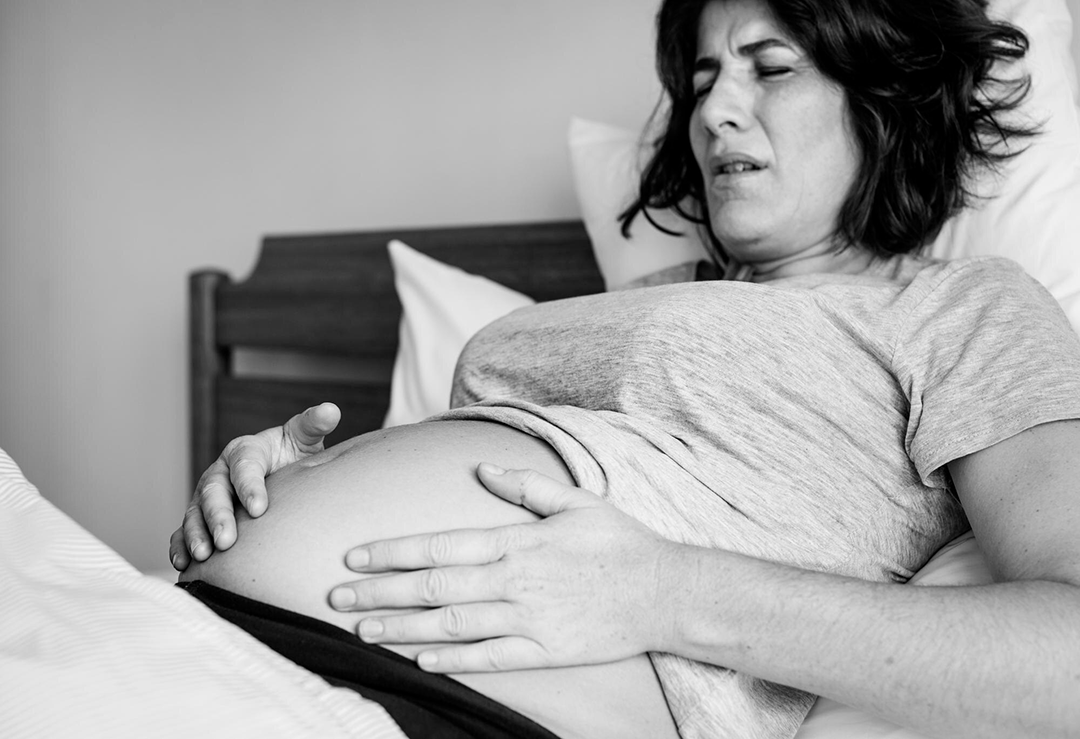


By the time you’re over 40, you’ve earned a say in how your birth goes. Here’s how to build a comfort toolkit that actually holds up.
Natural pain relief can work well after 40, especially when you pair it with strong support and a flexible plan. Here’s what to know, in short.
What the Research Says
A Cochrane overview found that water immersion, relaxation, massage, and acupuncture improved pain relief and satisfaction. Evidence was too limited to judge hypnosis, aromatherapy, or TENS. Most methods are safe, but none is a guarantee. Treat them as a toolkit, not a promise.
Your Top Five Tools
- Continuous support. A doula, midwife, or partner by your side was linked to fewer cesareans and less pain medication in a review of more than 12,000 women.
- Warm water. A shower or tub probably improves satisfaction with pain relief. Avoid getting in too early (before about 5 cm) and check your hospital’s policy.
- Breathing and relaxation. Slow breaths with a longer exhale. Practice 10 minutes daily from your second trimester.
- Massage and counter pressure. Teach your partner firm pressure on your lower back for back labor.
- Movement. Walking, swaying, and a birthing ball. Ask about wireless or intermittent monitoring so you can stay mobile.
Less proven but low-risk: hypnobirthing, TENS, and aromatherapy. Check oils and acupressure points with your provider, since some points can stimulate labor.

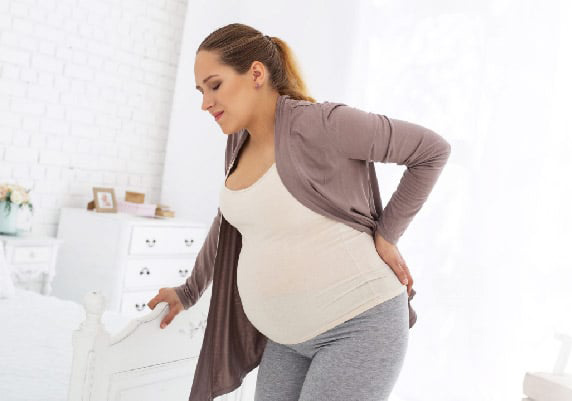
What Is Different After 40?
- Induction may come up. In the 35/39 trial, inducing first-time mothers aged 35+ at 39 weeks did not significantly change cesarean rates. Stillbirth risk rises from 39 weeks in older mothers, which is why it’s discussed.
- Induced contractions can feel stronger. Start your toolkit early, ask about staying mobile, and keep an epidural as a backup.
- Prepare your body. Build strength and stamina, learn to relax your pelvic floor, and ask your provider about perineal massage from about 34 to 36 weeks.
Questions for Your Provider
- Are any of these methods unsuitable for me?
- If I’m induced, can I still move around and use a tub or shower?
- Can my doula stay with me throughout?
- How fast can I get an epidural if I want one?
Keep It Flexible
Choosing natural methods and being open to medication aren’t opposites. The best birth is one where you felt informed, supported, and in charge of your decisions.
Note: General information only, not medical advice. Talk to your doctor or midwife about what’s right for you.
Sources: Cochrane overview of pain management in labour (cochrane.org); Walker et al., 35/39 trial, New England Journal of Medicine, 2016; ACOG guidance on labor induction (acog.org)