

Scientists at Cincinnati Children’s along with an international team of researchers have discovered a surprising new connection between gut health and blood cancer risk — one that could transform how we think about aging, inflammation, and the early stages of leukemia.

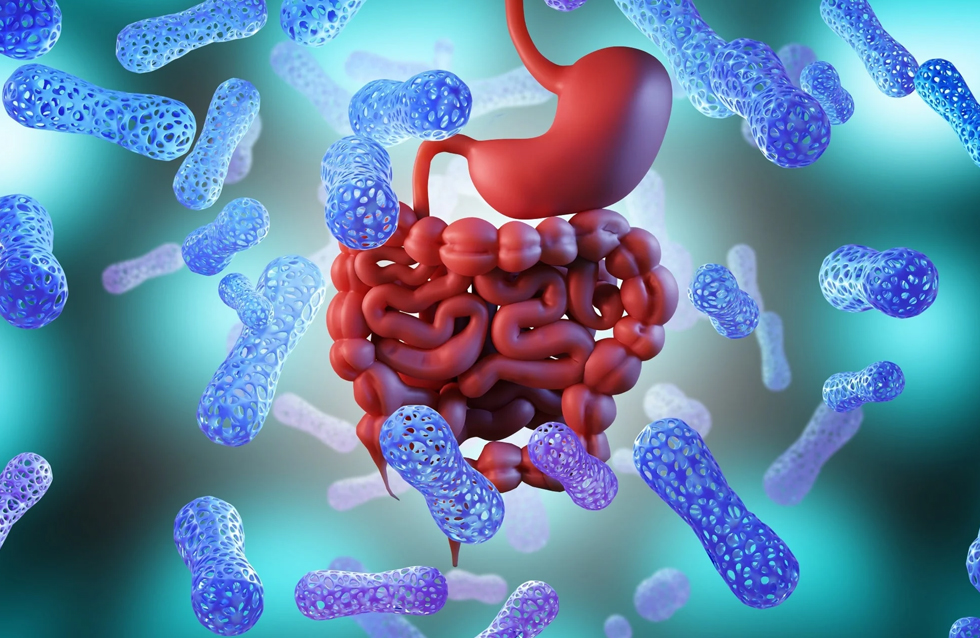
As we grow older — or in some cases, when gut health is compromised by disease — changes in the intestinal lining allow certain bacteria to leak their byproducts into the bloodstream. One such molecule, produced by specific bacteria, acts as a signal that accelerates the expansion of dormant, pre-leukemic blood cells, a critical step to developing full-blown leukemia.
The team’s findings — published April 23, 2025, in the journal Nature — lay out for the first time how this process works. The study also suggests that this mechanism may reach beyond leukemia to influence risk for other diseases and among older people who share a little-known condition called clonal hematopoiesis of indeterminate potential (CHIP).
“This study significantly advances our understanding about how blood cancers develop and progress, especially in older adults. The exciting news is that we also may have a way to intervene early — before these pre-leukemic cells evolve into more aggressive disease. We look forward to conducting further studies to pursue this new approach,” says Daniel Starczynowski, PhD, director of the Advanced Leukemia Therapies and Research Center at Cincinnati Children’s and corresponding author for the new study.
“Our research shows age-associated changes in the gut to be a non-traditional risk factor in the development of blood cancers. Thus, taking care of your gut could be more important than ever” says Puneet Agarwal, PhD, an associate staff scientist with the Division of Experimental Hematology and Cancer Biology, and first author on the study.
Leukemia, aging and the gut
More than 470,000 Americans are living with leukemias and more than 62,000 new cases are diagnosed each year. Of these people, nearly 24,000 were projected to die of their disease in 2024, according to the National Cancer Institute’s Surveillance, Epidemiology, and End Results (SEER) Program.
While survival rates for leukemia have improved over the years, it remains a life-threatening cancer that disproportionately affects people over 65. Scientists have long wondered why age is such a dominant risk factor. Now Starczynowski and colleagues may have found a compelling answer.
A disease risk cascade traced to a bacteria-made sugar
As we age, the gut lining becomes more permeable, thus allowing more interactions between the contents of the intestine and the blood system. Inside the intestine, a variety of common “gram-negative” bacteria tend to multiply in older people, producing rising amounts of a bacterial sugar called ADP-heptose. Turns out, this bacterial byproduct can cause problems when it gets into the bloodstream.
“ADP-heptose is uniquely found in the circulation of older individuals and favors the expansion of pre-leukemic cells,” Starczynowski says. “This sugar also is found in younger individuals that have experienced disruption of their gut.”
This study involved a host of complex experiments to decipher the mechanisms involved that allow ADP-heptose to act like pre-leukemia fuel. Importantly, the team found tiny signaling structures called TIFAsomes forming inside the cells, which indicates that ADP-heptose can activate expansion of pre-leukemic blood cells.
In fact, the team developed a TIFAsome Assay, a new blood test to detect ADP-heptose activity in circulation. Scientists interested in the new assay can get more information here.
Once the process could be measured, the research team could see potentially far-reaching implications.
What is CHIP?
Clonal hematopoiesis of indeterminate potential (CHIP) describes a condition in which a person’s blood cells gradually acquire mutations that set the stage for diseases to develop. These mutated cells then make multiple copies — or clones. Some of these mutations are well-known to be linked to blood cancers. But others are associated with other illnesses, including heart disease, stroke, and inflammatory conditions.
An estimated 10-20% of adults over 70 have CHIP, yet few know it because there are no symptoms and routine screenings don’t yet exist.
In the new study, researchers generated mice that mimic CHIP. In these mice, the early-stage pre-leukemic cells dramatically expanded when exposed to ADP-heptose from the gut bacteria.
“This is a perfect storm of risk factors: age-related changes in gut microbiota and intestinal permeability, exposure to ADP-heptose, and the presence of pre-leukemic cells. Together, they create an environment that supports the expansion of the harmful pre-leukemic cells,” Starczynowski says.
For more: https://www.sciencedaily.com/