


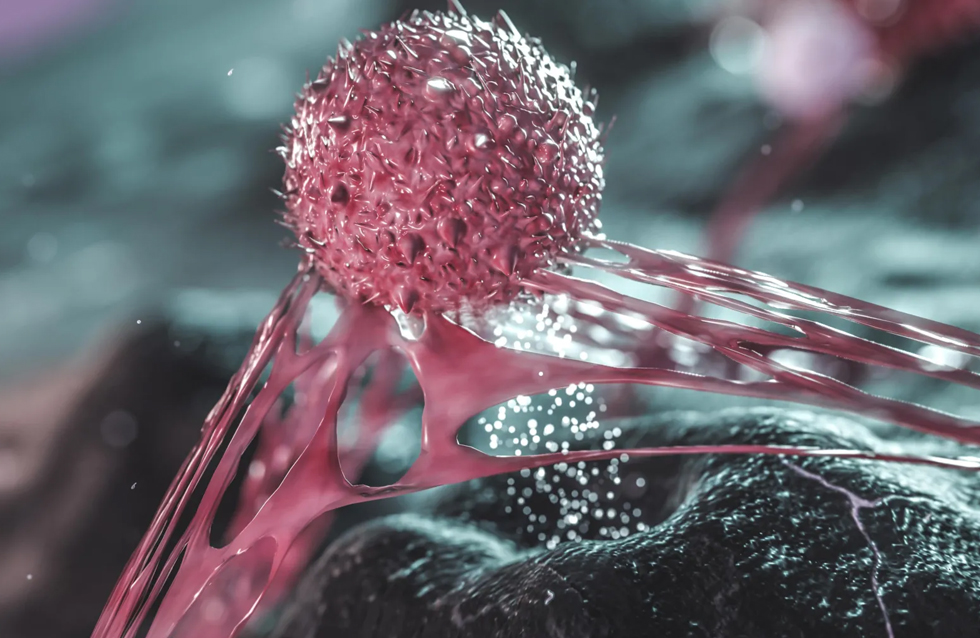
A study from The Wistar Institute has identified a surprising connection between fructose, a widely consumed dietary sugar, and the spread of an aggressive type of ovarian cancer. The findings, published in Nature Aging, suggest that cancer cells that remain after chemotherapy can communicate with nearby tumor cells and make them more likely to spread.
The researchers found that fructose serves as one of the chemical messages released by these treatment-surviving cells. The discovery reveals a previously unknown way that cancer cells left behind after therapy may contribute to metastasis.
“Some cancer cells that survive chemotherapy aren’t dividing anymore, but they’re still biologically active,” said Aidan Cole, Ph.D., a postdoctoral fellow in the lab of Katherine Aird, Ph.D., at The Wistar Institute and first author on the study. “Instead, they continue to release molecules that send signals to nearby cells. Our study is among the first to show that a nutrient — in this case, fructose — can act as one of those signals.”
Why Ovarian Cancer Often Returns
Nearly all ovarian cancer patients receive platinum-based chemotherapy, and the initial response is often strong. Even so, the cancer returns in most cases and typically spreads throughout the abdominal cavity. This process, known as metastasis, is responsible for roughly 90% of deaths from the disease.
Previous studies have indicated that cancer cells surviving chemotherapy may help drive recurrence by releasing a complicated mixture of signaling molecules. To investigate this possibility, Cole and his colleagues developed an experiment that separated the surviving cells from the substances they released.
The team collected molecules produced by chemotherapy-surviving cells and exposed other cancer cells to them. Those released substances alone were enough to significantly increase the cancer cells’ ability to spread.
“As far as we know, this is the first time anyone has shown, in a preclinical model rather than just a dish, that it’s the molecules these cells release — not the cells themselves — that drive the cancer’s spread,” said Cole.
Fructose Acts as a Signal for Cancer Spread
The researchers then set out to determine which released substance was causing this effect. Their analysis showed that the surviving cancer cells produced fructose and used it as a signal that encouraged neighboring cells to spread.
The team also found that high amounts of dietary fructose, comparable to the levels present in sugary drinks, could encourage cancer spread even when chemotherapy had not been given. This result raises the possibility that dietary habits may influence how cancer progresses.
That possibility is especially notable because fructose is widely consumed in the United States. In some people, high fructose corn syrup accounts for ~8-20% of daily calorie intake. Unlike many risk factors that patients cannot change, fructose intake can be reduced through dietary choices.