

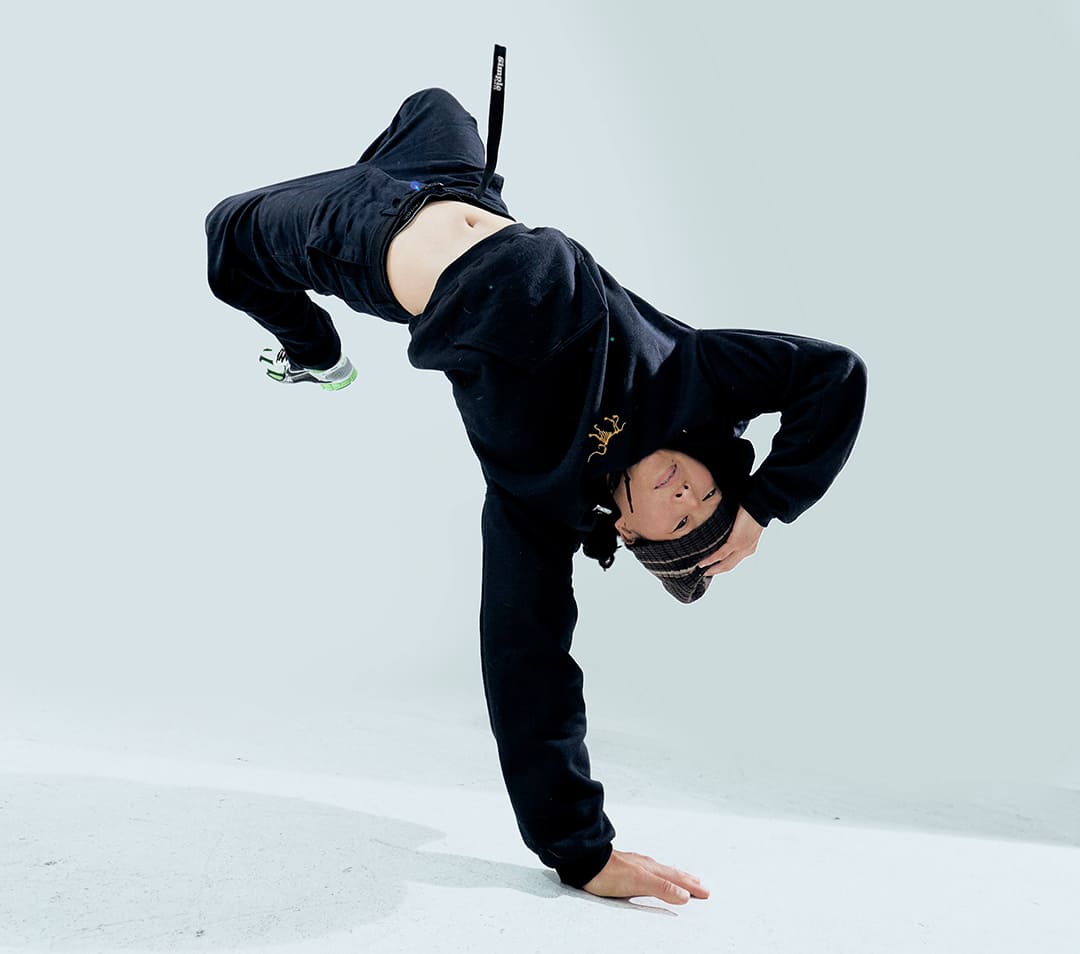
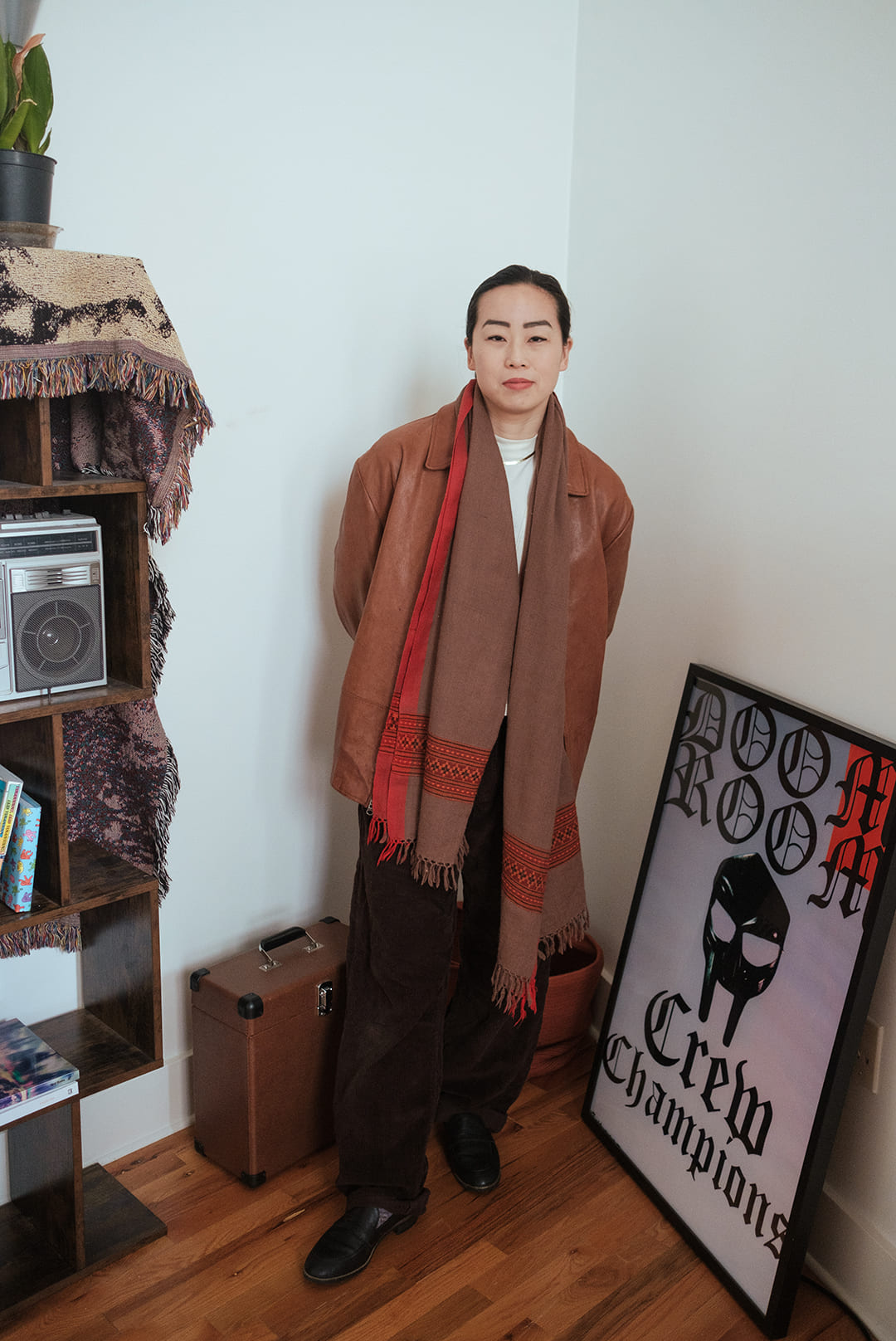
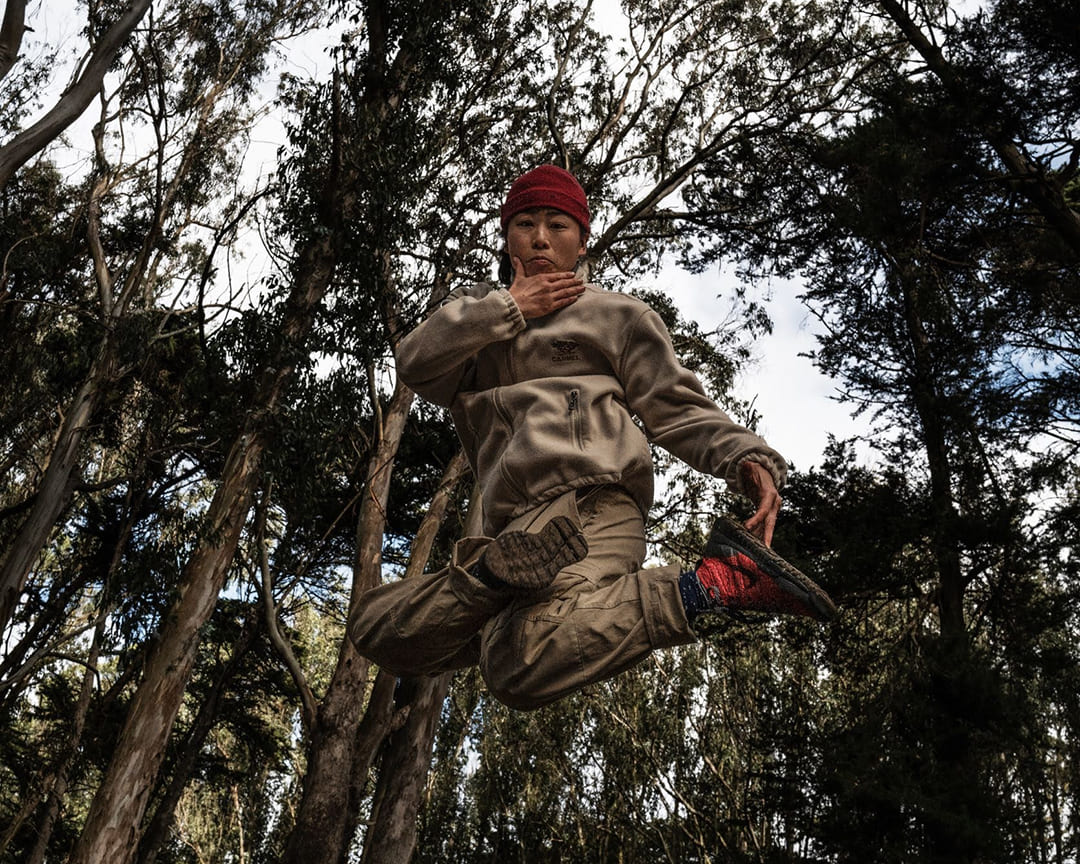
Vicki Chang B-girl is also named “La Vix”…Vicki “La Vix”. She was born in San Jose, California and is the youngest daughter of Taiwanese immigrants, who came to the states during the Silicon Valley tech boom. She started breaking at the age of 18 in Berkeley, where I studied ecology and restoration sociology. In 2021, she decided to change careers from an ecological consultant to a full-time b-girl in order to more fully pursue her artistic passions and try for the 2024 Olympics. She is currently on the U.S. National Team and has also recently collaborated with the Golden State Warriors, Nike, Red Bull, Lyft, and Jack in the Box.
Achievements of Vicki Chang
- Undisputed Majors – 2022 USA Champion
- Breaking for Gold USA 2022 National Champion
- Texas Breaking Open 2022 and 2022 Champion
- Break X Grand Jam 2021 – 2nd
- Red Bull BC One 2021 – Top 8
- World Championship Experience
- Most Recent: 2022
- Years of Participation: 2022
- Top Finish: 11th
Influenced by the diverse music and dance culture of the Bay Area, her dance style has been described as creative and intricate. She enjoys the innovative freedom of breaking and is deeply inspired by her friends and mentors. She is a member of 4th World, the Calamities, Elephant Graveyard, and the artistry collective “The Soulshifters.”
Now, breakdancing — or breaking — is on the cusp of making its Olympic debut in Paris. It will be the first dance sport ever included in the Olympic Games.
Chang, who goes by La Vix, didn’t grow up breaking. She didn’t even grow up dancing. She did taekwondo and played volleyball through high school but, she said, was “much too short” to ever think of competing in college. But she wanted to stay active, and after watching Sara Von Gillern break on “So You Think You Can Dance” she decided to check out the open practices on the Cal-Berkeley campus.
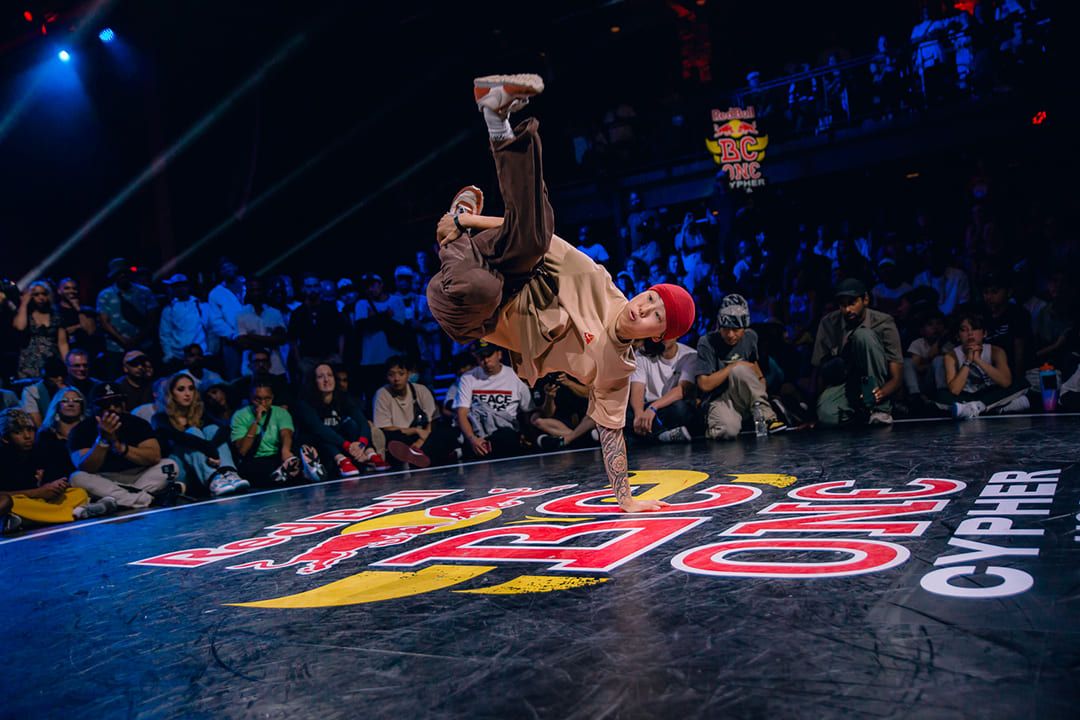
Competing, or battling, has always been part of the breaking culture. Chang herself started doing it regularly at local events about four years after starting, and then began traveling the country to battle about 10 years ago. Then in 2021 she decided to leave a job she enjoyed as a restoration ecologist to follow her passion and dedicate herself full-time to breaking. There are no routines; breakers just dance to whatever the DJ puts on, so they have to be adaptable and go with the flow. There’s also a lot of stamina involved. The Olympic qualifying events have generally been 18 rounds from preliminaries through finals, with round robins and then best-of-three formats in the later rounds.
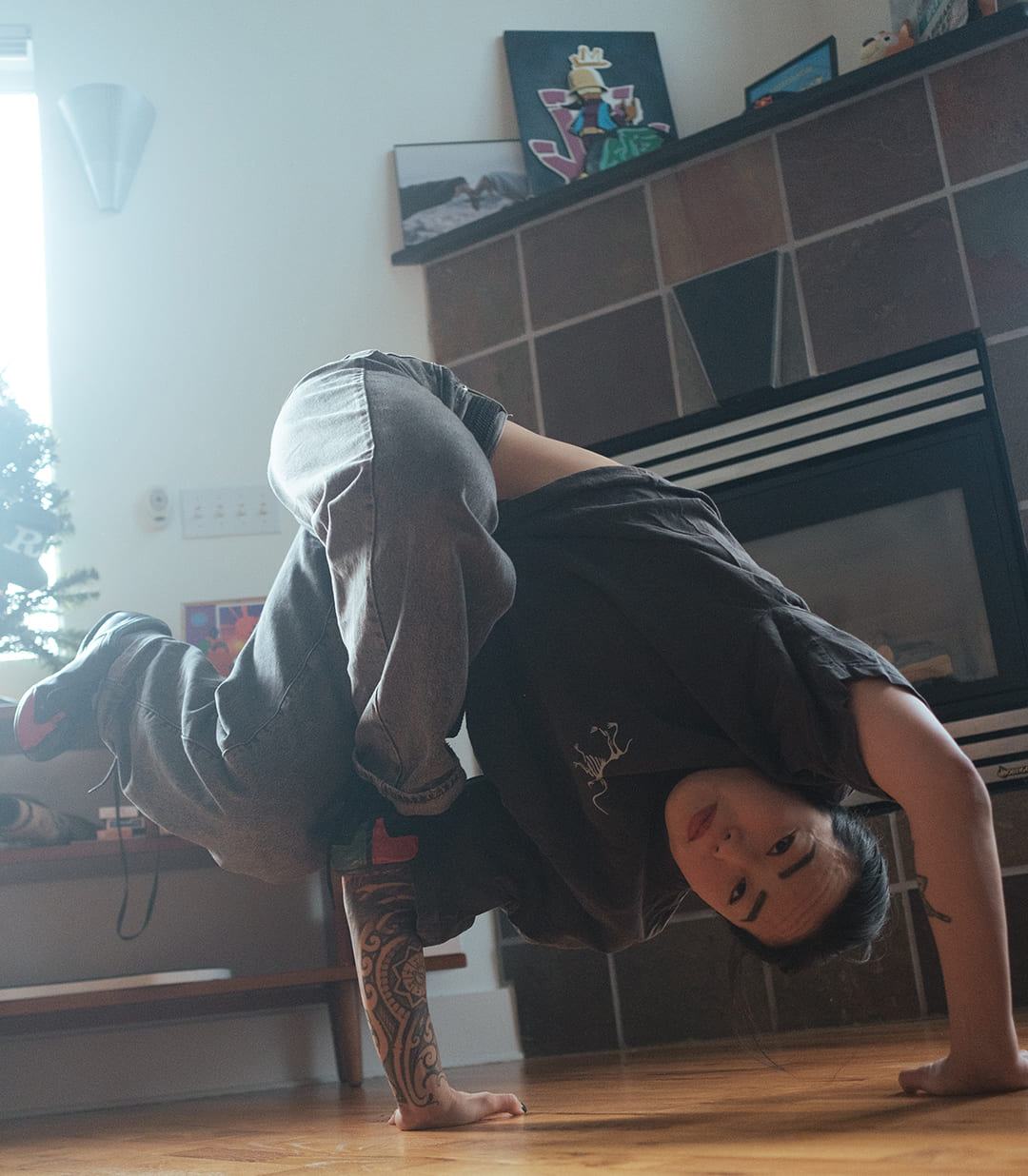
Chang says her breaking style would be considered pretty detailed and intricate. “It’s a way to be really creative and move my body around, so a lot of my material is unique to me because I created it,” said Chang, who earned her first international podium last year with a bronze medal at the Pan American Games in Santiago, Chile. “I don’t do the big power or dynamic moves, but my strength is in the details.”
No matter what happens, Chang hopes that with breaking on the Olympic stage people will get to see that as much as it is a sport, it’s also a dance. Athlete, artist, scientist… it’s impossible to put a label on Vicki Chang, aka B-girl La Vix.

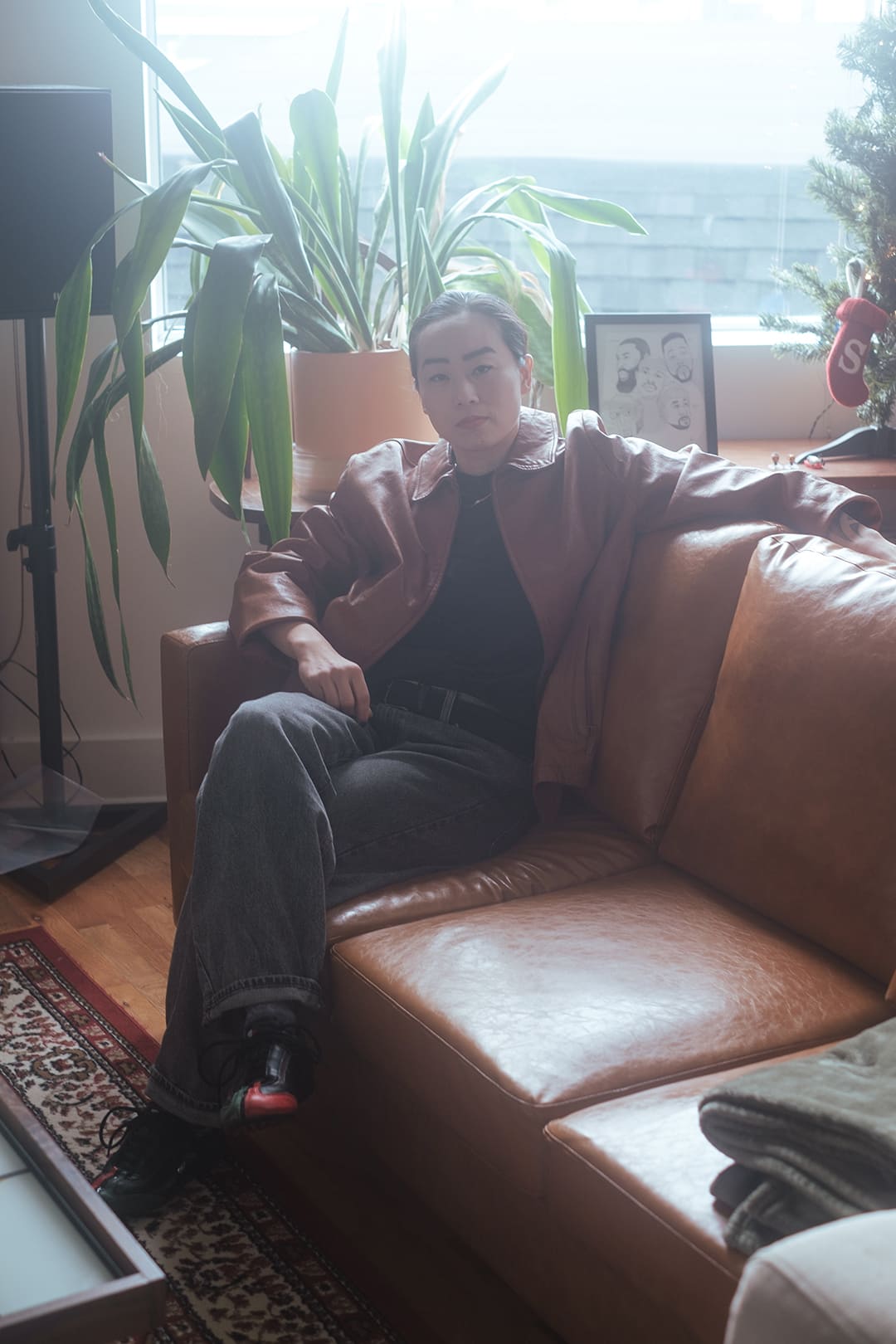
The California native started breaking while studying for a degree in Conservation and Resource Studies at Berkeley. After graduating, she worked as a marine ecologist for a decade – which provided fulfillment, a stable income, and healthcare – while continuing to break on the side.
“I was a field tech. So I would go out to our habitat restoration sites to do field work and then come back and write reports. We were restoring habitats for native plants and animals to be able to live in,” she told Olympics.com. “When I first went into marine ecology, I couldn’t practice breaking for two weeks at a time when I was on a boat, so I changed to plant ecology which allowed me to be on the ground more and practice breaking.” But there was just one problem; Chang also had a dream to become a professional B-Girl.
So in 2021, she made the risky decision to quit her job and focus on a sport. “The decision was difficult because quitting my job would mean losing health care and I wouldn’t have money. And so it took me a long time to just be like, ‘OK, I’m just going to go for it because I’m getting older. Anything could happen. I’m just going to do it’.
Chang finished second at the 2021 Break X Grand Jam, before becoming the national champion a year later, and winning Pan American Games bronze in 2023. But even as a full-time B-Girl and a member of the US national team, Chang doesn’t see herself primarily as an athlete. “I see myself as an artist first and then an athlete,” she says. “There’s a saying that goes around the breakers: Treat the dance as an art, but practice it as a sport.
“The dancers don’t really know the music that’s going to play. So there’s just so many surprises that can happen. This creates so many moments that the crowd is able to catch on to. So I think it’s really exciting because everyone loves dancing, and everyone loves music!
“It’s a very creative process for me. So as a style, I describe it as intricate, creative, original, free.” Underlining the importance of culture in breaking, athletes even get judged upon their fashion choices.
This combination of sports and culture has seen breaking grow in popularity in Chang’s hometown.
Women Fitness President Ms. Namita Nayyar catches up with Vicki Chang an exceptionally talented break dancer, here she talks about her fitness routine, her diet, her beauty secrets and success story.
Namita Nayyar:
You were born in Jose, California US and where did you have your early education? Breakdancing or breaking, also called b-girling (women), is a style of street dance originated by African Americans and Puerto Ricans in the Bronx. Breaking is the only new sport at the 2024 Paris Olympics. You start breakdancing at the age of eighteen years. This later propelled your career to the height where you have been a leading US Break dancer. Tell us more about your professional journey of exceptional hard work, tenacity, and endurance?
Vicki Chang:
I went to my local public schools from pre-k through high school, and then went to UC Berkeley for university and graduated with a B.S. in Conservation & Resource Studies with focuses in Ecology and Environmental Sociology. I started breaking at 18 because I saw a b-girl on the tv show “So You Think You Can Dance.” At UC Berkeley, there were open sessions every Tuesday and Thursday, so I just started going and would ask people how to break.
Back then (2010s), it wasn’t common to have dance studios that taught breaking, so people that went to practice sessions would share their knowledge with beginners or anyone who wanted to learn. Battling/competitions were a natural part of breaking, so people would encourage me to enter battles even though I didn’t feel ready. This was helpful because really the only way to get better at battling was through experience.
Around 2019/2020, I started traveling around the USA to enter battles by myself and gain more experience and start making a name for myself while also working a full time job as an ecologist. I transitioned into becoming a full-time dancer in 2022 in order to put all my energy and time into qualifying for the Olympics.
The qualification process for me was difficult because I had to self-fund all my travels to about 15 different, mostly international competitions within two years. This was one of the hardest journeys I’ve ever taken, with the highest highs and the lowest lows, and I commend anyone who also went through it, especially those who had to pay their own way.
Participating in the Olympic qualification process was also a rewarding experience because we were able to connect with breakers from all over the world and get to know the international community. I think making genuine connections with people who have the same passion and are working towards making their dreams come true is one of the most worthwhile experiences I could have in my lifetime.
Presently, I just finished a two-month theatre tour across the USA, and am working on seeing where to go from here.
*A note: I don’t call it b-girling because the dance itself is not gendered – originally, it was called bboying because the large majority of breakers were men when the dance first started, but to be inclusive of all genders, I use the term breaking.
Namita Nayyar:
While performing Breakdancing that consists mainly of four kinds of movement—toprock, downrock, power moves, and freezes—and is typically set to songs containing drum breaks, especially in funk, soul, and hip-hop, it’s about finding a balance between showcasing strengths and creating a captivating performance. Elaborate?
Vicki Chang:
For me, breaking is my personal creative outlet, so I don’t really think of it as showcasing certain strengths for an audience. My mindset is that if someone watching connects with what I’m putting out there through my dance, then that’s amazing.
So while there is a traditional performance aspect to breaking in certain arenas, such as during organized competitions or in a structured show, one performance aspect for me comes from emphasizing parts of the music, whether it is the drums, the horns, or the vocals so that the audience can catch how the dancer is interpreting the music at the specific moment.
Full Interview is Continued on Next Page
This interview is exclusive and taken by Namita Nayyar, President of womenfitness.net, and should not be reproduced, copied, or hosted in part or in full anywhere without express permission.
All Written Content Copyright © 2026 Women Fitness

Namita Nayyar:
Which event in your breakdancing journey acted as a catalyst in your metriotic rise as a leading Break Dancer?
Vicki Chang:
It was an event called Break Free thrown in Texas after some of the Covid lockdown restrictions had been lifted, so it was one of the first events that started happening again. It was a series of events that included international dancers and that was the beginning of when I started flying myself out around the United States and internationally to enter individual 1v1 events.
Namita Nayyar:
You had a memorable sporting participation with your performance as the winner of the gold medal at USA National Championship 2022. Tell us your experience at this iconic breaking competition for women event and what you learned here to make you move further in your break dancing career.
Vicki Chang:
This is the event that qualified me to be on Team USA. The format of the event was organized the way that, at the time, the Olympics’ competition was supposed to be formatted, so it was clear that it was a different type of competition. Typically, breakers usually only have to dance for 10 rounds throughout the entire day. However, for this event and other international qualifying events for the Olympics, breakers would dance between 15-19 rounds.
Namita Nayyar:
You must have a coach who has been a catalyst who helped you pave the way to rise in your career with discipline and a never stopping attitude. Elaborate about his/her influence on your professional sporting life?
Vicki Chang:
Traditionally, breakers do not have coaches. There are usually mentors in a very casual way, and everyone in the community typically helps anyone who asks for help at practices. Because of this, it is a very personal journey that looks different for everyone.
For the Olympic qualifying run, I had a personal life/fitness coach, who was instrumental in programming my workouts and giving life advice, but I would not consider him a breaking coach. I also was able to utilize a sports psychiatrist through Team USA, who was great at helping me maintain composure and work through the ups and downs of the qualifying process.

Namita Nayyar:
What do you do that helps you in staying calm ahead of competitions?
Vicki Chang:
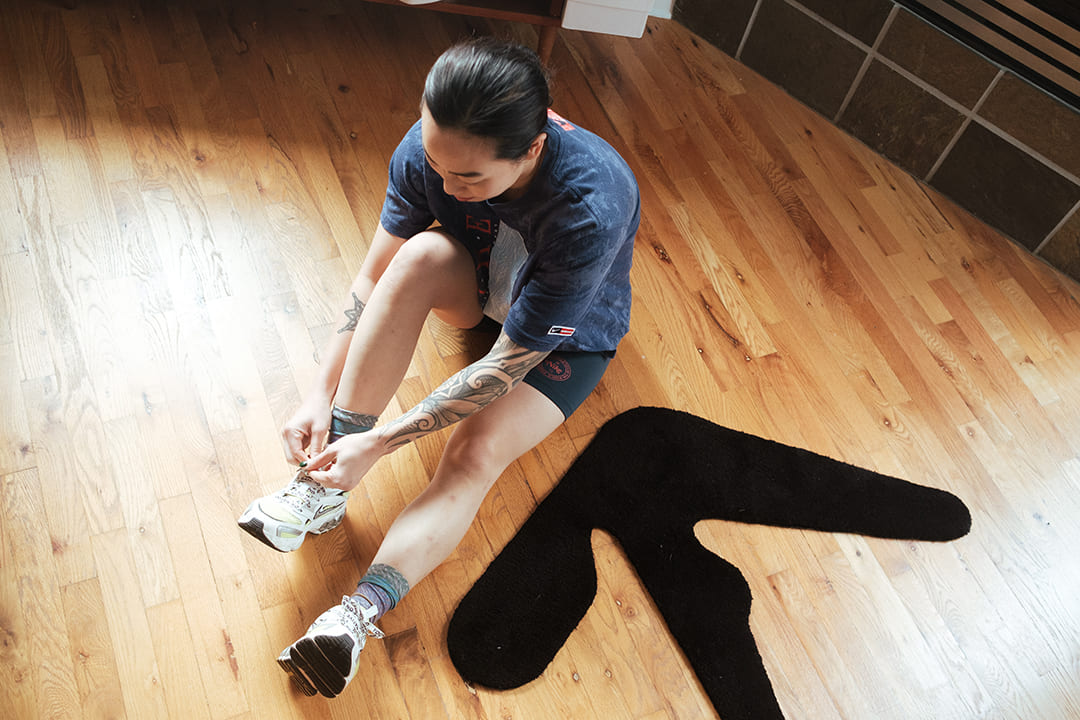
Meditating in the morning, and breathing exercises that reduce stress. Something my sport psychologist suggested that helped a lot was to accept that I was nervous instead of trying to get rid of the nervousness, because it meant that I cared, and I could use it as adrenaline into helping my performance in the competition.
Namita Nayyar:
Break Dancing needs exceptional flexibility of one’s body. What exercises comprise your fitness regime or workout routine you may wish to share?
Vicki Chang:
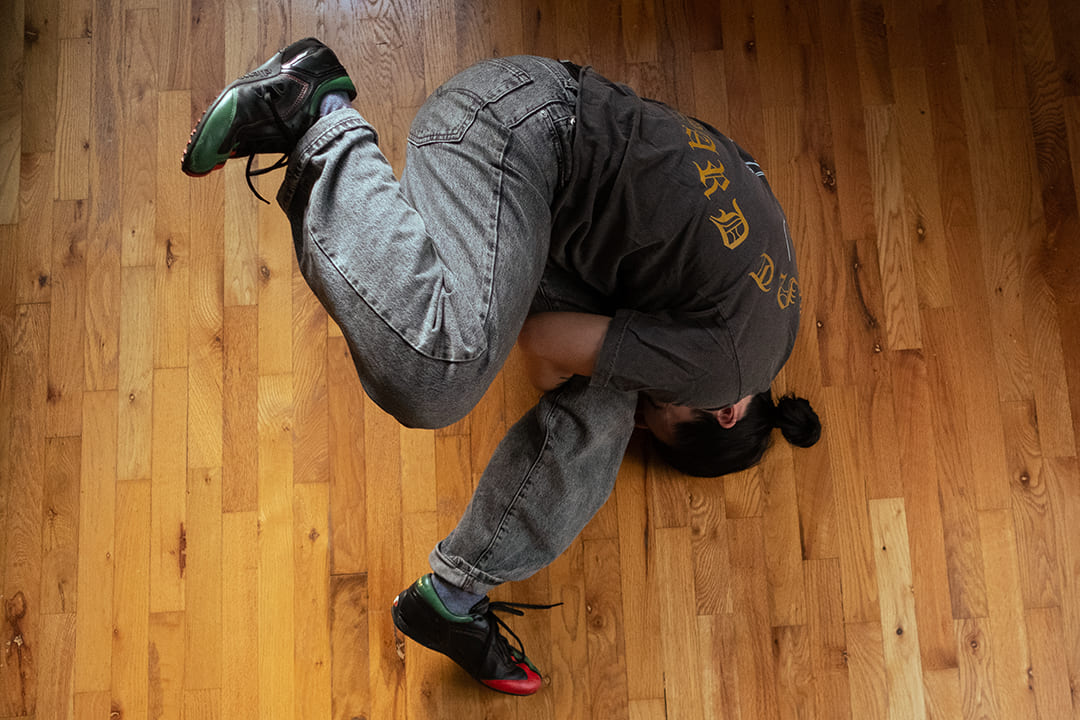
In addition to my dance practice schedule (typically 5-6 days a week, 2-3 hours a day), my workout schedule during what I would consider the “off season” is 4 days a week. Because I’m training mostly for explosiveness and strength, I do a lot of plyometrics, such as box and depth jumps, speed push-ups, and lateral jumps. My strength workout consists of exercises like dumbbell rows, overhead presses, weighted step ups, and Cossack squats.
Of course, core strength is also important, so I do exercises like hamstring curls, planks, lateral plank leg lifts, and leg lifts.
Namita Nayyar:
How do you train your abs? One secret to your toned body.
Vicki Chang:
Core workouts include Romanian Deadlifts, dead bug exercises, planks, Russian Twists with weights, and bicycle sit ups. I think the secret is the not-so-special tip to be consistent and follow a workout schedule that works with your lifestyle.
Namita Nayyar:
Do you take a special diet or have a strict menu that you follow to remain healthy and physically fit?
Vicki Chang:
Yes, I eat a specific amount of protein and carbohydrates daily, and time them so that it helps with recovery. I also try to eat a lot of fruits and leafy greens. My protein intake usually came from chicken, fish, and tofu, with rice or noodles for the carb. After competition days, I would usually drink a protein shake and use electrolytes for rehydration.
Namita Nayyar:
Five foods you absolutely love and five you keep to a minimum.
Vicki Chang:
A lot of the foods I like would also be considered unhealthy, so these are both foods I love and foods I eat only occasionally.
Fried chicken
Key lime pie
Donuts
Green Onion Pancakes
Beef Noodle Soup
Namita Nayyar:
You have glowing skin and gorgeous hair. Share with us your hair care and skincare routine.
Vicki Chang:
I use natural shampoo called Healthy Scalp Happy Hair from Zir Yabs Body Brew that includes ingredients like castor oil, coconut oil, arnica, apple cider vinegar, and other ingredients. Because breakers are either standing or spinning on their heads a lot, which can lead to thinning hair and hair loss, I have to take care of my scalp and hair.
For my face, I just wash it with a facial bar soap with ingredients like Shea butter, olive oil, etc., and then use a tiny bit of argon oil.
Namita Nayyar:
Adapting to different music types for international competitions requires building adaptability to your dance moves. What is your unique strategy to build the near perfect connection in your break dance routines? Elaborate.
Vicki Chang:
A big part of battling, whether in local events or in international competitions, is free styling. It’s just something that comes with time and practice.
Breaking songs traditionally play at around 115-130 beats per minute (bpm), so dancing to different songs at that speed and building that “muscle” is important. Listening to different types of music, whether at home or in the club, is also helpful because it trains the ear to be able to pick up different rhythms and parts of the song that I can play with.

Namita Nayyar:
Five athletic leisure brands you love to wear.
Vicki Chang:
Nike
Mountain hardware
The North Face
Saucony
Adidas
Namita Nayyar:
Five travel destinations on your wish list.
Vicki Chang:
Some of these places I’ve already gone to, but would love to go to again
Patagonia
New Zealand
Bhutan
Brazil
Indonesia

Namita Nayyar:
Quote you live by.
Vicki Chang:
Give a gift, in reciprocity for what you have taken. Sustain the ones who sustain you and the earth will last forever.”
― Robin Wall Kimmerer, Braiding Sweetgrass: Indigenous Wisdom, Scientific Knowledge, and the Teachings of Plants
Namita Nayyar:
Tell us about a day in the life of ‘Vicki Chang’.
Vicki Chang:
Right now, I wake up at 8:30, work out, then make breakfast and walk my dog. Then I spend the rest of the morning and part of the afternoon doing emails and making/editing content for social media (unfortunately, social media play a big role in either getting sponsored as a dancer, or booking dance jobs). I do some errands after, and then take my dog on a nice little hike in the late afternoon every day.
Dance practice happens in the evening and I get home around 10:30 or 11 pm, eat dinner, and then do about 45 minutes of recovery. If I have time, I’ll run an Epsom salt bath, and then usually head to bed around 1 am.
Namita Nayyar:
During the Covid pandemic. Tell us more about your routine to remain fit in those challenging times?
Vicki Chang:
I received a grant from the Women’s Sport Foundation that gave me funding for sports equipment. With money from the grant, I was able to purchase a barbell and weights, some dumbbells, and some kettle bells. My friend also let me borrow his Assault Air bike, so I was able to workout at home. The most important thing was to motivate myself to stick to my workout schedule and not be lazy.
Namita Nayyar:
In sports like Breakdancing how were you able to overcome any physical or sports injury setbacks and what advice can you give to those in a similar situation.
Vicki Chang:
In December 2023, right in the middle of the Olympic qualifiers, I tore two tendons in my left middle finger and had to get surgery to repair them. This was a really difficult time for me because of the timing of the surgery, and I always felt like I was playing catch up to the other competitors who were healthy. I had to take a month off from dancing to focus on physical therapy, and I am still recovering/doing PT for this injury.
ne thing that really helped for me was to not dwell on the fact that I had to get surgery, and to focus on what I could control, which was to be consistent with my physical therapy exercises and not worry about what could have been. So my advice to those who have had major injury setbacks is to really focus on what you can control instead of what you cannot control. Take the time to explore other hobbies, such as reading/painting/etc., or learn something new.
Namita Nayyar:
What do you wish to say about the website Womenfitness.net and the message for its visitors?
Vicki Chang:
Thank you for featuring me and putting out interesting articles focusing on women and women’s fitness.
Namita Nayyar:
Advice and motivational words to the inspiring and break dancing girls, who all are your fans and shall like to know from you for their climb to the ladder of success in the field of break dancing?
Vicki Chang:
Don’t be afraid to be yourself. Put in the work to find your own style within breaking, and find good people (not just good dancers) who will encourage and push you in a healthy way.
Namita Nayyar:
A message for your ardent admirers on Instagram.
Vicki Chang:
Thanks for supporting me throughout my breaking journey!
Vicki Chang Social Media Presence
Instagram: https://www.instagram.com/la_vix/
This interview is exclusive and taken by Namita Nayyar, President of womenfitness.net, and should not be reproduced, copied, or hosted in part or in full anywhere without express permission.
All Written Content Copyright © 2026 Women Fitness