

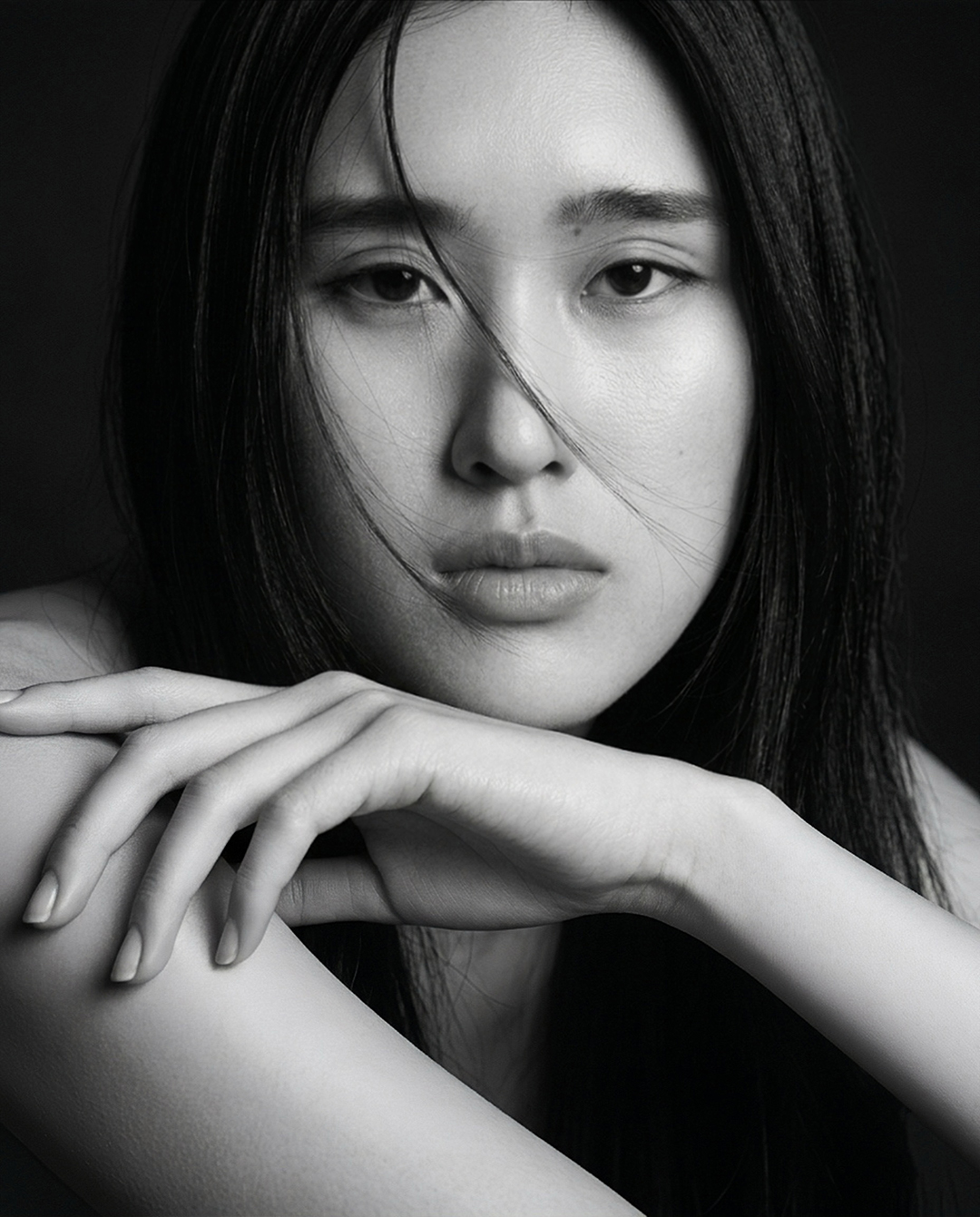
Yeong Kim is a distinguished high-fashion model and creative director known for a luxury, minimal, and structural aesthetic. Holding a Master’s degree in Psychology and Philosophy, she brings a rare intellectual rigor to the fashion industry, translating complex human emotions and philosophical concepts into high-end visual narratives.
With a career built on the pillar of “Work and Honor” Rian has established herself as a versatile professional capable of leading high-budget productions and delivering world-class performances on the runway. Her work consistently explores the intersection of “Old Money” elegance and modern structuralism, making her a preferred collaborator for premium international titles and avant-garde designers.
Key Experience and Highlights
1- Global Runway and Fashion Weeks
- Paris Fashion Week (2024 FW – 2026 FW): Consistent presence on the Paris runways for multiple seasons, featuring in Women’s wear shows including the PHAN HUY collection.
- Fashion KODE Seoul (2024 SS – 2026 FW): A mainstay on the Seoul Fashion Code runways, demonstrating versatile walking and professional consistency across consecutive seasons.
- International Circuit: Strategic engagement with elite agencies and production houses in Paris, Manila, and Seoul.
2- International Editorial and Publications
- FLANELLE Magazine: Featured in high-concept structural editorials.
- NASTY Magazine: Collaborated on avant-garde beauty and fashion spreads.
- SURE Magazine: Lead model for sophisticated, high-end fashion features.
- HOLLYWAY Magazine: Featured in luxury-focused cover and editorial projects.
- MOB Journal: Showcased artistic movement and creative form in specialized spreads.

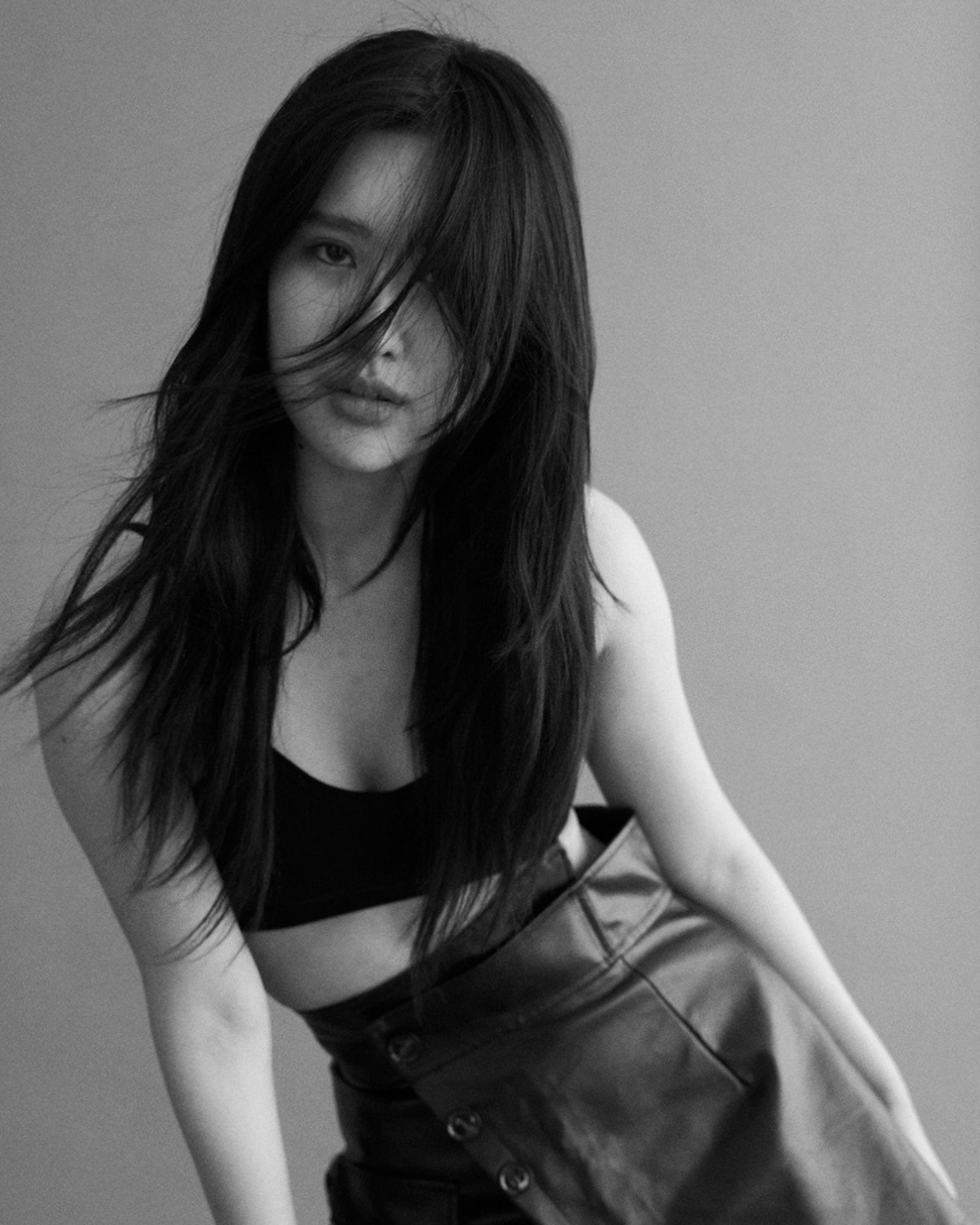
3- Creative Direction
- Executive Director: Head of production for high-budget editorial projects.
Education
- Bachelor and Master Degree (M.A.) in Psychology
- Specializing in the intersection of aesthetic perception and structural visual art.
Core Competencies
- High-Fashion and Beauty Modeling: Expert in structural posing and avant-garde editorial expression.
- Full-Scale Production: Management of the entire creative process from mood board conceptualization to final selection.
- Professional Integrity: Rigorous self-management and adherence to the highest industry standards.
- Cross-Cultural Strategy: Deep understanding of Western (French/European) and Asian fashion markets.
Philosophy
“Integrating intellectual clarity with visual elegance to provide a professional standard of excellence that honors the artistic vision of every collaboration.”
Agency
- France (Paris): Blake Model Management (MA)
- Czech Republic: Eskimo Bohemia
- UAE (Dubai): TNM Management
- Spain: Isla Management
Women Fitness President Ms. Namita Nayyar catches up Yeong Kim an exceptionally talented, distinguished high-fashion model and creative director, here she talks about her life as a successful model, fitness routine, her diet, her hair care, skin care and her success story.

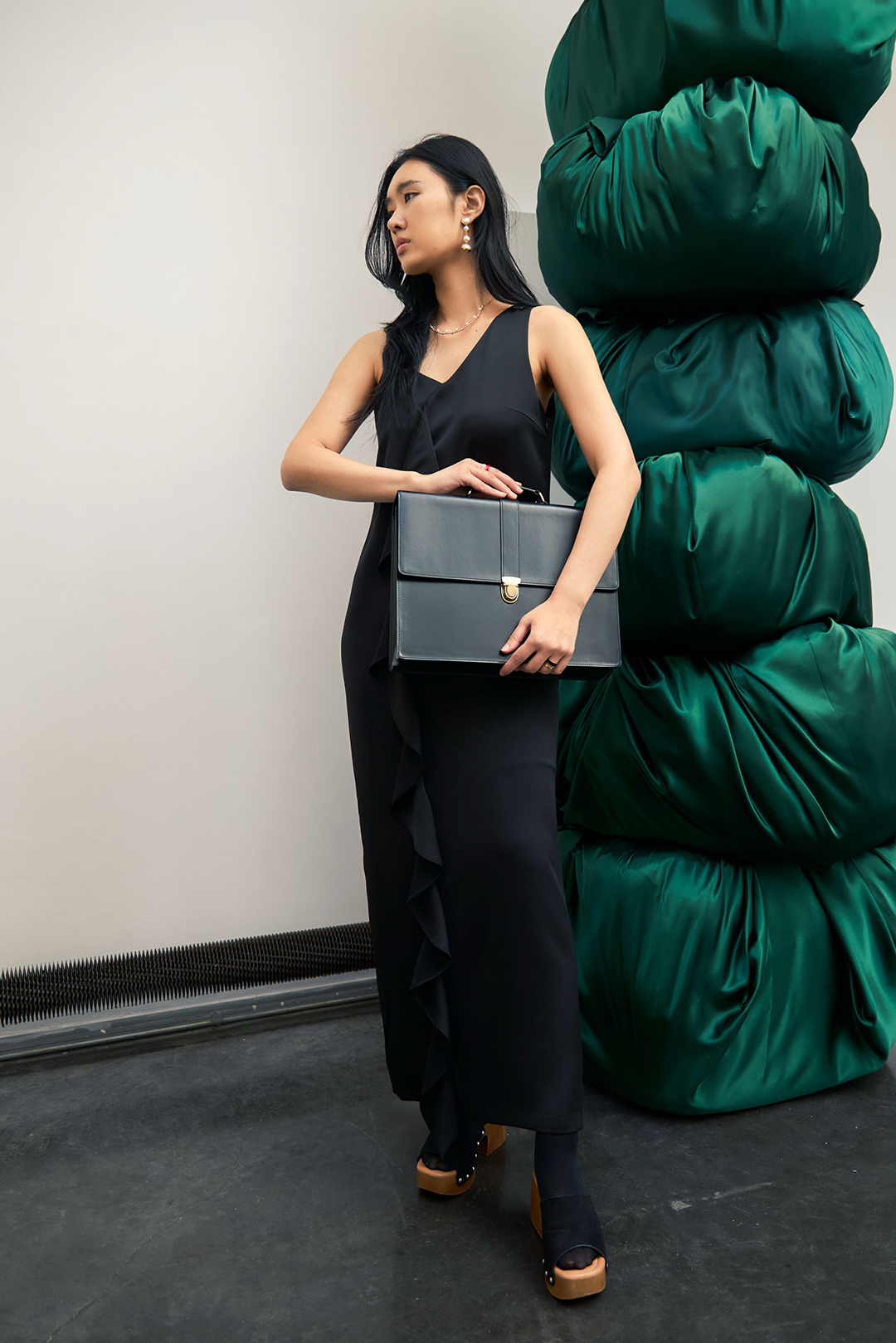
@editorial_showroom
Photo @andrekim.seoul
Namita Nayyar:
You hold a Master’s degree in Psychology and Philosophy, a rarity in high-fashion. How does your academic background directly influence the way you deconstruct a brief for a runway show (e.g., PHAN HUY at Paris Fashion Week) versus a structural editorial for FLANELLE Magazine?
Yeong Kim:
When I observe a runway or an editorial, I rarely perceive it as something purely aesthetic. More often, I experience it as a manifestation of the creator’s inner landscape—what might be understood, from a psychological perspective, as expressions of unmet desires, personal value systems, or even implicit social and political positions. Fashion, in that sense, is rarely separable from life; it is an extension of it.
Because of my academic background in psychology and philosophy, I tend to approach a brief by first asking why it exists at all. What absence is this collection responding to? What internal tension is being externalized through form, material, and movement? This process allows me to engage with the work not at a surface level, but at its structural core.
For instance, during a Paris Fashion Week show, I encountered a collection defined by highly controlled silhouettes and restricted movement. Rather than interpreting it simply as “strong” or “architectural,” I approached it as a study of control—perhaps even a resistance to instability. As a result, my walk became intentionally contained, almost withheld, allowing a sense of internal pressure to remain visible without overt expression.
In contrast, when working on a structural editorial, I tend to dissect the narrative more deliberately. I consider gaze, spatial tension, and emotional restraint as elements within a system, rather than isolated stylistic choices. This analytical lens enables me to translate the creator’s intention into something embodied and precise. Ultimately, the ability to read and understand the psychology of the creator offers me access to the root of the work. It allows me to participate not as a passive interpreter, but as an active translator of meaning.
Namita Nayyar:
Your philosophy is “Work and Honor.” In an industry often driven by ephemeral trends and social media metrics, what does “honor” look like in your daily professional practice—from call time to final curtain call?
Yeong Kim:
For me, honor is not something that can be reduced to recognition or visibility, nor is it always immediate. While it may, at times, be accompanied by financial reward, I find that its deeper form exists beyond measurable outcomes—across time, space, and even cultural boundaries.
What I consider truly honorable is the realization that the psychological and philosophical layers embedded in my work can travel beyond the moment of its creation. A runway, an image, or an editorial may reach individuals I will never meet, in places I may never visit, and yet still resonate in a way that inspires them to create something of their own.
There is, in that sense, a kind of continuity—an invisible chain of inspiration. One expression leads to another, and then another, forming a cycle that extends far beyond the original act of creation. When I become aware that I am, even in a small way, part of that cycle, I experience a profound sense of honor.
In an industry that often prioritizes immediacy, metrics, and visibility; I find meaning in what endures quietly. To contribute to something that continues to evolve through others feels far more significant than any singular moment of recognition.
Full Interview is Continued on Next Page
This interview is exclusive and taken by Namita Nayyar, President of womenfitness.net, and should not be reproduced, copied, or hosted in part or in full anywhere without express permission.
All Written Content Copyright © 2026 Women Fitness

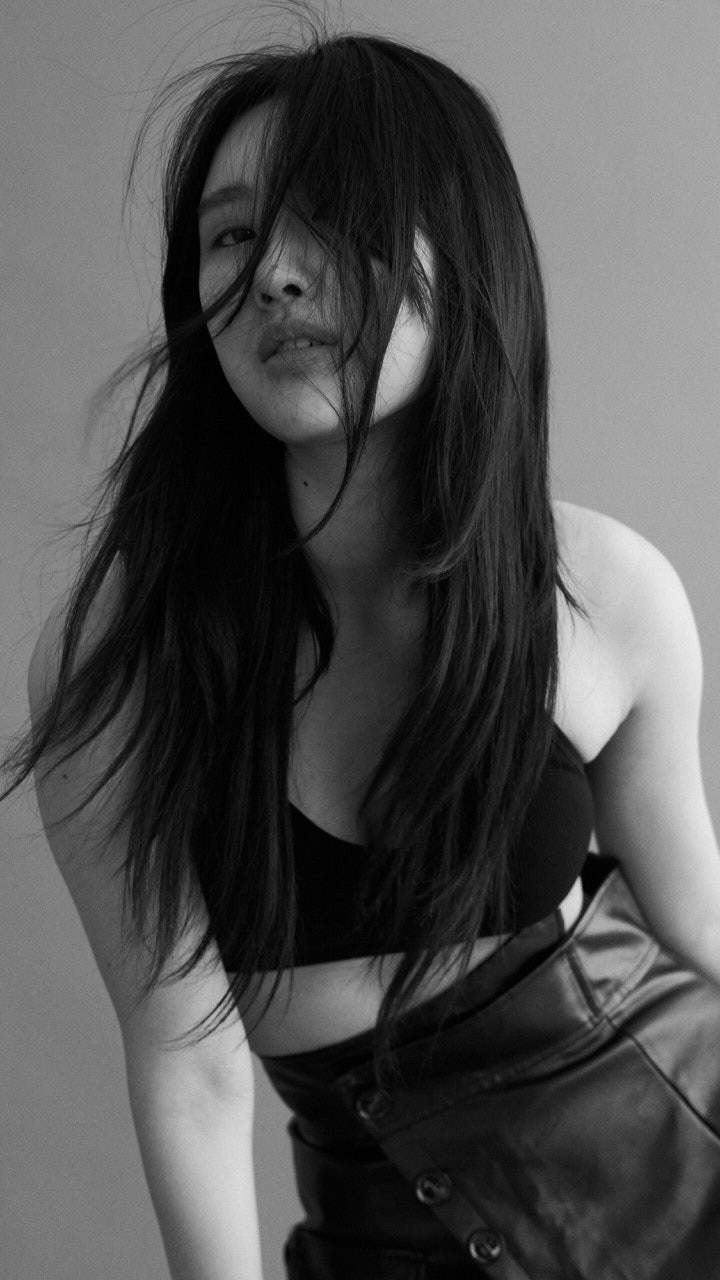
Namita Nayyar:
You’ve walked consistent seasons in both Paris (FW 2024-26) and Seoul (SS 2024-26). How does the psychological expectation of a European vs. an Asian audience change your physical performance on the runway?
Yeong Kim:
The difference between European and Asian audiences is not always overt, but it is deeply psychological, and it inevitably shapes the way I approach performance.
In cities like Paris, there is a strong expectation of authorship. A model is not simply presenting a garment but is invited, in a subtle way, to interpret it. There is room for ambiguity, for silence, for tension that is not fully resolved. The audience, in turn, engages with that ambiguity—they are comfortable projecting meaning rather than receiving it in a fixed form.
In contrast, in Seoul and many Asian contexts, there is a heightened sensitivity to precision, cohesion, and clarity. The performance is expected to align more closely with the collective vision of the show. The emphasis is often on harmony—how each movement contributes to the overall composition.
As a result, my internal calibration shifts. In Paris, I allow more space within the performance. My walk tends to hold a certain restraint, leaving room for interpretation, almost as if I am presenting a question rather than an answer. In Seoul, I refine the execution to a greater degree, ensuring that every gesture is aligned with the intended structure and flow of the show.
Neither approach is inherently more complex or valuable than the other. Rather, they require different forms of awareness. As a model, I see my role as moving fluidly between these modes—understanding not only how to perform, but how to adapt my presence to the psychological expectations of the audience.
Namita Nayyar:
As an Executive Director on high-budget editorial projects, you bridge “Old Money” elegance with modern structuralism. Walk us through a specific conflict during production—perhaps between a designer’s vision and budget reality—and how you resolved it using psychological principles.
Yeong Kim:
There was a project in which the designer envisioned a highly complex structural silhouette, but the reality of the budget made it impossible to fully realize every element as originally intended. Situations like this can easily become framed as compromise, but I approached it differently.
From a psychological perspective, not all elements of a visual composition carry equal weight. Certain features function as perceptual anchors—they define how the entire work is interpreted. My first step was to identify that anchor: the element that held the conceptual and emotional core of the design.
Once that was clearly defined, the conversation shifted. Instead of focusing on what we could not achieve, we began to ask what must absolutely remain intact. This reframing allowed the team to protect the essence of the piece while reinterpreting secondary components in a more resource-efficient way.
The key was not to eliminate limitation, but to redirect attention. By aligning everyone around intention rather than loss, we were able to preserve the integrity of the original vision.
In the end, the final result did not feel diminished. On the contrary, it felt more precise—because every element that remained had a clear purpose.

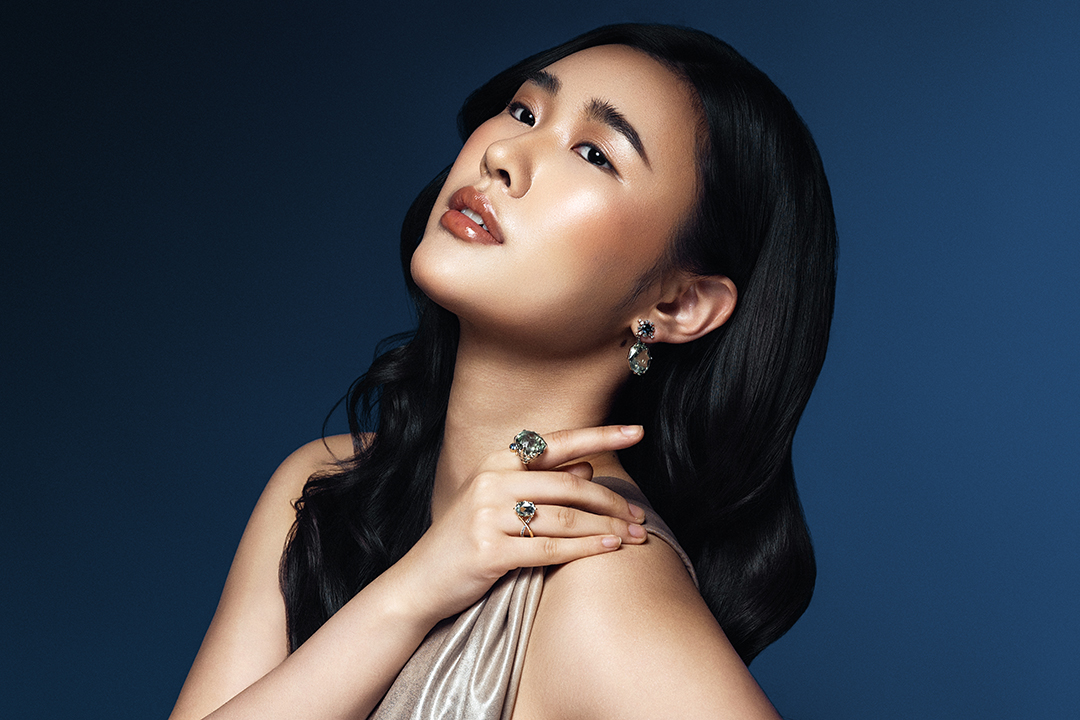
Namita Nayyar:
Your aesthetic is described as minimal, structural, and luxurious. If you were to cast a philosopher (dead or alive) as the face of a structuralist fashion campaign, who would it be and why?
Yeong Kim:
If I were to cast a philosopher as the face of a structuralist fashion campaign, I would choose Michel Foucault. His work consistently examines the invisible frameworks that shape human behavior—systems of power, surveillance, and internalized control that operate beneath the surface of what we perceive as freedom.
Fashion, in many ways, mirrors this dynamic. It constructs identities, regulates visibility, and defines what is considered acceptable or desirable within a given context. These structures are often internalized to the point where they feel natural, even inevitable.
What draws me to Foucault is not only his theoretical contribution, but the tension within his ideas—the way visibility can both empower and constrain, the way structure can both define and limit the self.
Translating that into a visual language would create a campaign that does not simply present beauty, but interrogates it.
In that sense, the image would not seek to be immediately consumed. Instead, it would invite reflection, perhaps even discomfort. And for me, that is where a certain form of luxury emerges—not from excess, but from depth.
Namita Nayyar:
Looking ahead to International Mother’s Day on May 10, 2026, how does your understanding of “attachment theory” (from your Psychology M.A.) shape your perspective on the mother-daughter dynamic within the often high-pressure, high-glamour fashion world?
Yeong Kim:
My understanding of attachment theory has inevitably shaped the way I perceive relationships within the fashion industry, particularly the mother-daughter dynamic. At its core, attachment is about the formation of an internal sense of security—something that allows an individual to navigate external instability without losing coherence.
Fashion, however, is an environment defined by constant movement, evaluation, and transformation. In such a context, relational dynamics can become intensified. The mother-daughter relationship often carries both protection and projection—support intertwined with expectation.
What I find important is the development of an internal base that is not entirely dependent on external validation. A secure attachment does not necessarily mean the absence of pressure, but rather the ability to metabolize it without fragmentation.
In practice, this means understanding where one’s sense of worth originates. If it is overly externalized, the industry can become destabilizing. But if there is an internalized sense of grounding, then even within high-pressure environments, one can engage, perform, and evolve without losing continuity of self.
Ultimately, I see attachment not as something fixed in early life, but as something that can be reinterpreted and strengthened over time. And in an industry like fashion, that ongoing process becomes essential.
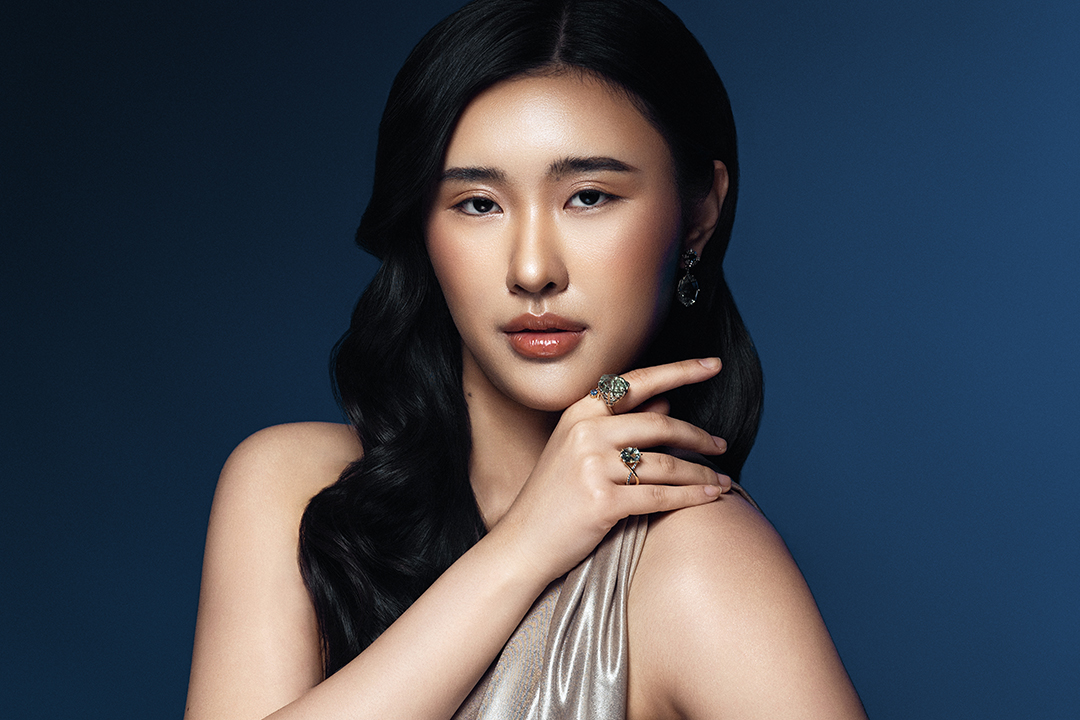
Namita Nayyar:
A Message from Yeong Kim for Mother’s Day 2026: If you could write a one-minute letter to either your own mother or to the metaphorical “mother” of modern structural elegance (e.g., Coco Chanel or Rei Kawakubo), what would it say about legacy, honor, and the transmission of strength?
Yeong Kim:
If I were to write a letter, it would not be grand in its language, but deliberate in its meaning.
You taught me that strength is not something that needs to be constantly demonstrated. It exists quietly, in repetition—in the decisions made when no one is observing. Because of you, I learned how to remain intact in environments that are inherently unstable, how to move without becoming displaced.
There were moments when I did not fully understand the weight of what you were giving me. But over time, I realized that what you passed down was not simply resilience, but discernment—the ability to recognize what is worth preserving.
In an industry that constantly shifts its standards, that ability has become my anchor. If I am able to carry anything forward, it would be that sense of internal alignment. Not as something visible, but as something that endures across time and circumstance.
That, to me, is legacy.
Namita Nayyar:
Your look requires both the ethereality of a runway model and the structural rigidity of an editorial pose. What is your specific fitness regime to maintain that tension? (Please include: weekly workout split, reps/sets where relevant, and any non-traditional training like Pilates, reformer, or isometrics.)
Yeong Kim:
My approach to fitness is less about intensity and more about continuity and awareness. As a model, I am required to maintain a certain duality—fluidity in movement, yet precision in structure. To support this, I focus on practices that cultivate both control and release.
Hot yoga and meditation are central to my routine. They allow me to develop strength within stillness, rather than through external force. In those environments, I am able to refine alignment, breath, and internal focus simultaneously.
I do not rely heavily on high-impact training such as running or intensive personal training. Instead, I am drawn to disciplines that emphasize quiet endurance—where the body is trained not through excess, but through consistency.
Maintaining a body fat percentage around 17–18% is not approached through restriction, but through balance. The goal is not to impose control on the body, but to create conditions where it can regulate itself efficiently.
For me, physical training is ultimately an extension of mental discipline. It is less about shaping the body, and more about understanding it.
Namita Nayyar:
Describe a typical exercise routine the day before a Paris Fashion Week show versus a day off in Seoul. How does it differ in intensity and intention?
Yeong Kim:
The day before a show is highly dependent on the garments I will be wearing, as each look demands a slightly different physical presentation. If the styling involves exposure of the abdomen or lower body, I implement what is often referred to as a “water out” protocol. This involves significantly reducing water intake to minimize retention, as well as avoiding fermented or bloating-inducing foods. In Korea, I occasionally use facilities such as jjimjilbangs to accelerate the release of excess water through heat exposure.
However, if the look is more covered and does not require that level of refinement, my approach is more moderate. I maintain simple intake— primarily coffee, eggs, and protein-focused meals—to sustain energy while keeping the body visually stable.
The intention is not to drastically alter the body within a short period, but to fine-tune how it presents under specific lighting, fabric, and silhouette conditions. It is a subtle calibration rather than an extreme transformation.

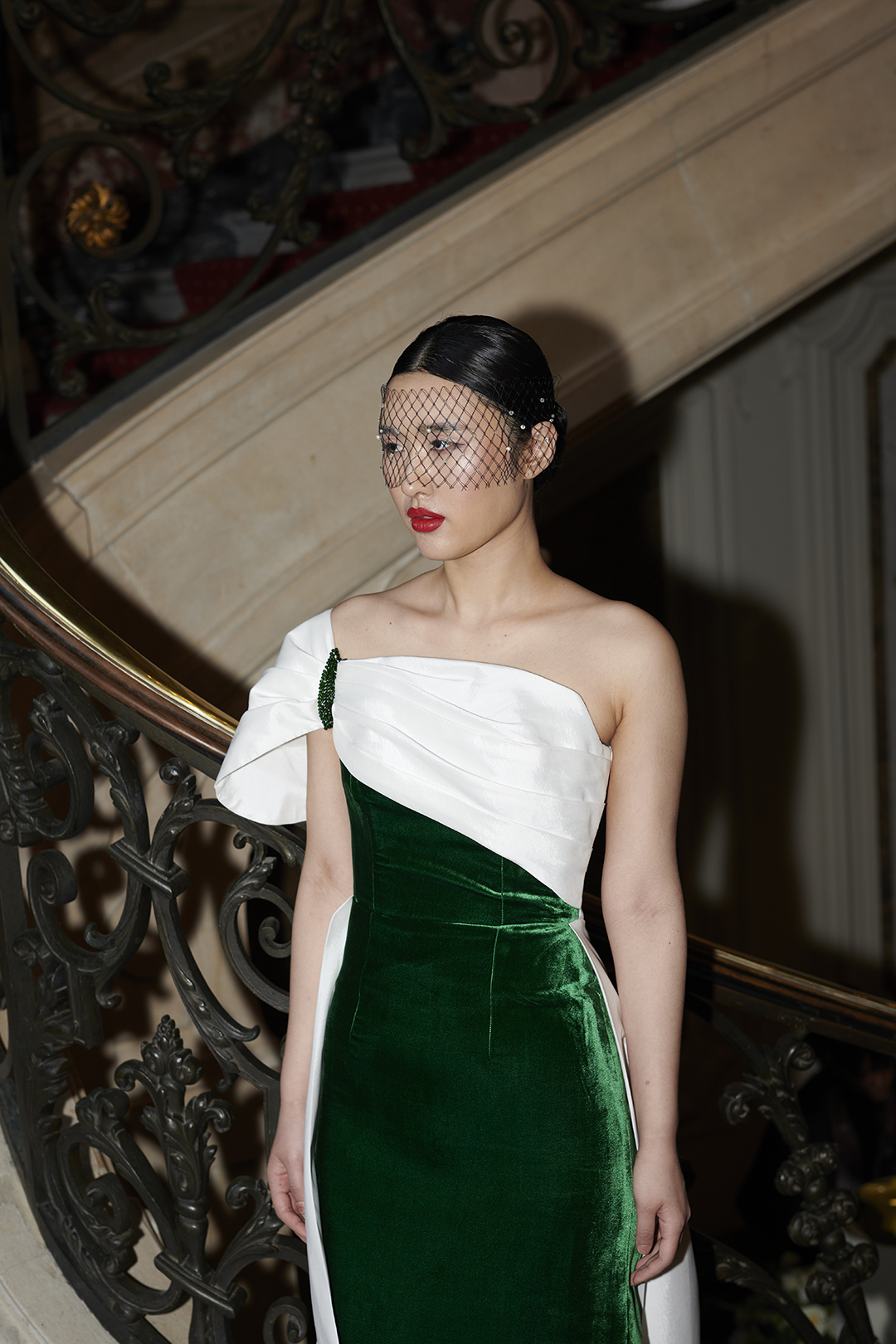
Namita Nayyar:
Your diet must fuel high-budget production leadership while maintaining a fashion-edit silhouette. Walk us through a full day of eating (breakfast, lunch, dinner, hydration protocol) and any strategic fasting or nutrient timing you use.
Yeong Kim:
From a nutritional perspective, modeling requires a level of precision that extends beyond general dietary habits. It is not simply about maintaining a certain physique, but about sustaining cognitive clarity, physical consistency, and adaptability across varying conditions.
My approach begins with stability. I avoid extreme fluctuations in intake, as they tend to create unpredictability in both energy levels and physical appearance. In the morning, I prefer light, easily digestible foods—typically a combination of protein and natural sugars—to gently activate metabolism without creating heaviness. Lunch is the most structured meal of the day, where I incorporate a balanced ratio of complex carbohydrates, lean protein, and essential fats.
Dinner is intentionally minimal. The focus is on recovery rather than intake, allowing the body to rest without excessive digestive demand.
Hydration is consistent but strategic. It is adjusted depending on upcoming schedules, particularly before shoots or shows where visual precision is critical.
I also consider nutrient timing. Certain foods are introduced or reduced depending on whether the priority is energy output, visual sharpness, or recovery. Ultimately, nutrition becomes less about restriction and more about responsiveness—understanding how the body reacts, and adjusting accordingly.
Namita Nayyar:
Back-to-back runway seasons (Paris, Seoul, and Manila) mean extreme climate and styling changes. What is your non-negotiable skin care ritual for repairing barrier damage after a show using heavy foundation or latex-based structural makeup?
Yeong Kim:
After shows involving heavy foundation or latex-based makeup, my focus shifts from removal to restoration. The skin, at that point, is not simply “dirty,” but compromised.
I begin with a gentle, layered cleansing process to dissolve product without disrupting the skin barrier. Harsh or overly aggressive cleansing tends to create further imbalance, especially during fashion week when the skin is repeatedly stressed.
Following cleansing, I prioritize hydration and barrier repair. This includes products designed to reinforce the skin’s natural protective function, rather than temporarily altering its appearance. I avoid excessive exfoliation during these periods. While it may seem beneficial in the short term, it often leads to increased sensitivity over time.
The goal is to return the skin to a neutral, stable state. Not perfected, but balanced. Consistency in this process is what ultimately preserves long-term skin health.
Namita Nayyar:
For hair: How do you maintain the “minimal luxury” aesthetic when your hair is washed, heat-styled, and sprayed daily during Fashion Week? Do you use any specific scalp treatments or bond-building systems?
Yeong Kim:
Hair, during fashion week, undergoes a significant amount of stress—frequent washing, repeated heat styling, and continuous product application. Because of this, my approach is centered on preservation rather than correction. I focus primarily on scalp health, ensuring that it remains calm and balanced despite constant manipulation. A stable scalp creates the foundation for healthier hair overall.
When possible, I incorporate bond-repair treatments to reinforce the internal structure of the hair. However, I avoid overloading it with products, as excess can often lead to buildup and further damage. Outside of work, I minimize additional styling. The intention is to allow the hair to recover in its most natural state.
Maintaining a “minimal luxury” aesthetic, in this sense, is not about constant refinement, but about protecting what is already there.

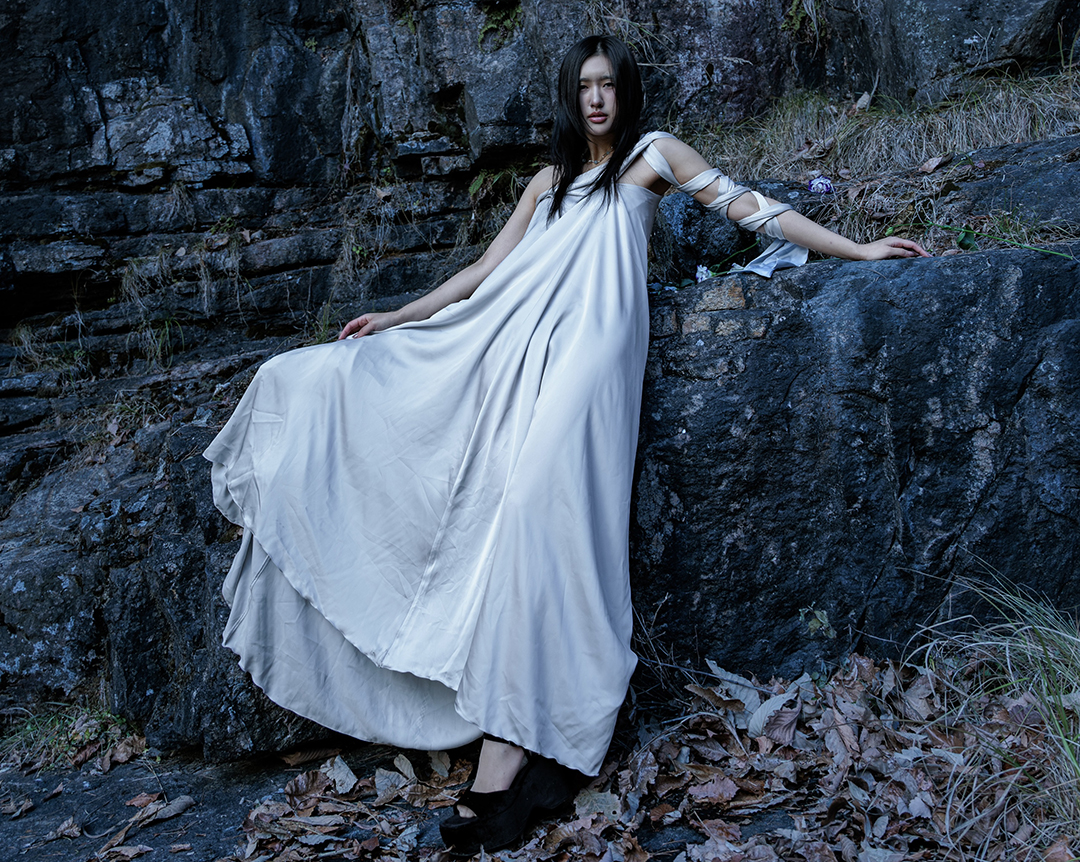
par.lune – 26SS
Art Director – @par.lune
Fashion Styling – @remembermyblue @somorilgob_jinjin
Film – @filmnova Photo – @xnives_ @__yeojoon @yoosugon
Hair/ Make up – @k.inmatsu
General Assistant – @sujun.kr
Namita Nayyar:
You’re represented by elite agencies in Paris, Czech Republic, Dubai, and Spain. What was your single most “un-glamorous” moment on the path to this global circuit—and how did that moment become a pillar of your success story?
Yeong Kim:
There are many moments in this industry that are far from glamorous, but the casting process remains one of the most defining.
It is, in many ways, a continuous exposure to evaluation. You enter spaces where you are observed, compared, and often dismissed within moments. There is little explanation, and even less closure. But beyond the external environment, the more difficult aspect is internal. There are times when the contrast becomes almost disorienting—between the most elevated, visible version of yourself and the moments where you feel depleted, uncertain, or even diminished.
To confront all versions of you simultaneously—the celebrated and the unseen, the desired and the overlooked—is not an easy process. There are moments where one can feel, quite plainly, reduced. Financially, emotionally, even physically. And yet, those moments demand certain honesty. They strip away illusion and force a confrontation with what remains when external validation is absent.
Over time, I came to understand that these experiences were not obstacles, but foundations. They taught me that identity cannot be contingent on circumstance. And in that realization, there is a form of stability that no success alone can provide.
Namita Nayyar:
You translate “complex human emotions into high-end visual narratives.” Share one recent emotion (e.g., grief, awe, quiet rage) that you are currently exploring for a 2026 editorial concept.
Yeong Kim:
Recently, I have been exploring an emotional state that feels both deeply human and inherently contradictory—the simultaneous desire for intimacy and fear of it. From a psychological perspective, this can be understood through the lens of anxious-avoidant attachment dynamics. There is a genuine longing to connect, to be seen, to experience closeness. Yet at the same time, there exists an equally strong impulse to withdraw, to protect, and to maintain distance.
This creates a subtle but persistent tension—a movement toward connection that is immediately followed by retreat.
What interest me is not the extremes of this dynamic, but the space in between. The hesitation before a gesture, the ambiguity within a gaze, the body that both opens and closes at once. Visually, it translates into restraint layered with vulnerability. A presence that invites yet resists.
I believe this tension reflects a contemporary emotional condition—one shaped by both increased connectivity and heightened self-protection. And it is within that tension that I find a compelling narrative to explore.

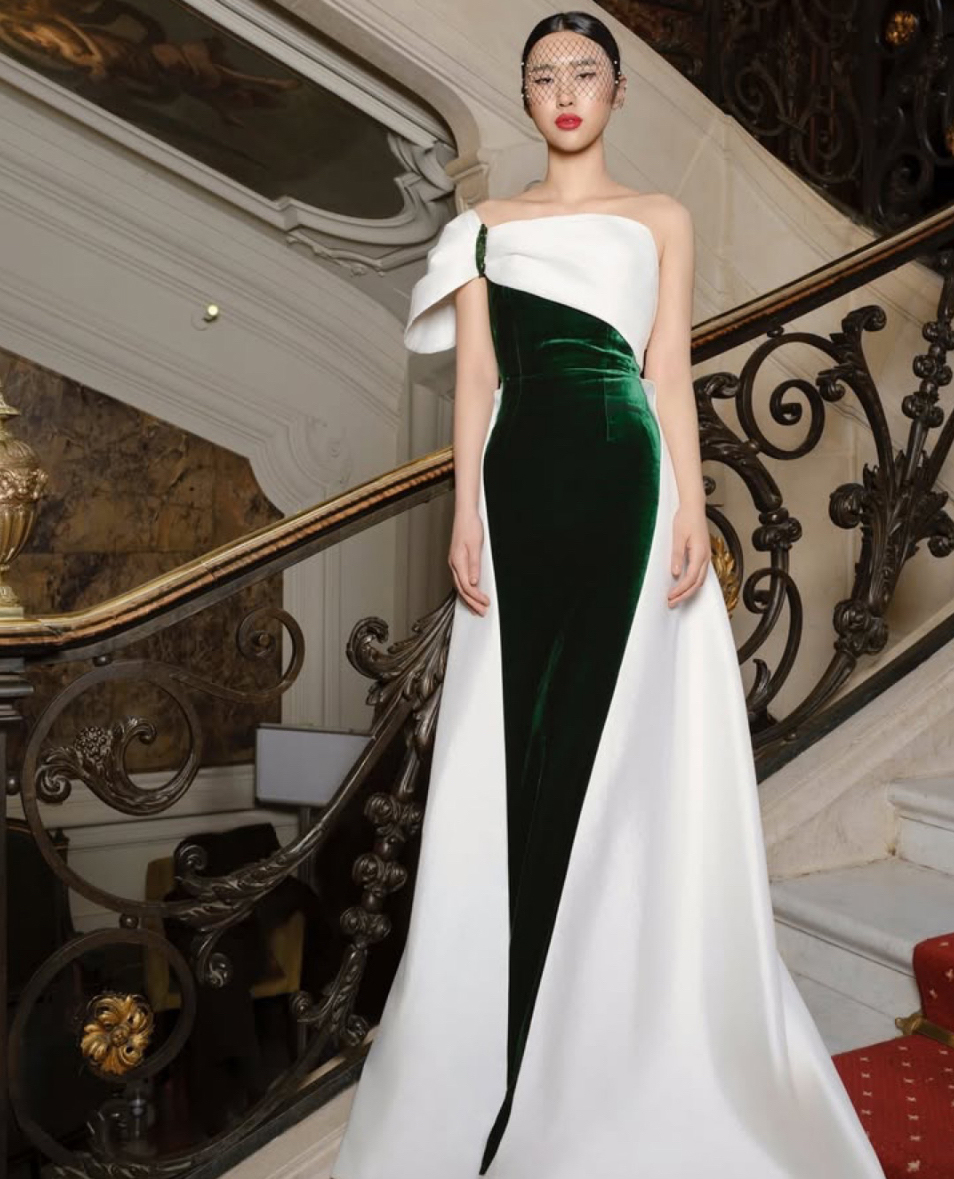
Namita Nayyar:
Looking ahead to 2027 and beyond: Do you foresee yourself stepping fully behind the camera as a creative director, or will you continue to walk runways? What is the one role (e.g., Head of Image for a structuralist house, academic lecturer on fashion philosophy) that you have not yet been offered but are preparing for?
Yeong Kim:
I do not see my future as a choice between being in front of the camera or behind it. Rather, I see it as an expansion of the same intention across different positions.
On the runway, I embody a vision. I translate a concept into movement, into presence, into something immediate. But behind the scenes—within the structure of a project—there is an equally important process of shaping that vision before it is ever seen.
My aspiration is to remain a central figure in both spaces. Not only as someone who presents the final image, but as someone who contributes to the formation of it.
I am particularly drawn to the space between Paris and Seoul. These are two environments with distinct aesthetic languages, cultural histories, and emotional sensibilities. Yet precisely because of these differences, there exists a powerful potential for dialogue and convergence.
I want to position myself within that intersection—not only as a participant, but as a connector. As someone who can translate between systems, and in doing so, create new forms of expression. This is not simply about career progression. It is about commitment. To engage with the industry not passively, but with intention, discipline, and continuity. To contribute to spaces where creation is not only executed, but understood.
Namita Nayyar:
Finally, if your future legacy reads as a single line in fashion history, what do you want that line to say about Yeong Kim’s contribution to the intersection of intellect and elegance?
Yeong Kim:
If my legacy were to be reduced to a single line, I would hope it reflects not only what I have done, but how I have approached the work. Perhaps it would read as someone who understood elegance not as ornament, but as structure. In haute couture and high-end visual environments, there is often an emphasis on surface refinement. But what has always interested me is what exists beneath that surface—the psychological experience that informs how something is seen, felt, and remembered.
I have tried to approach each project with an awareness that extends beyond appearance. To consider not only how an image is constructed, but what it communicates on a more internal level. If there is any contribution I hope to leave, it is the integration of intellect and aesthetics. The idea that beauty does not need to be simplified to be understood, and that complexity, when held with clarity, can become its own form of elegance.
Not something loud or immediately defined, but something that remains—quietly, and with intention.
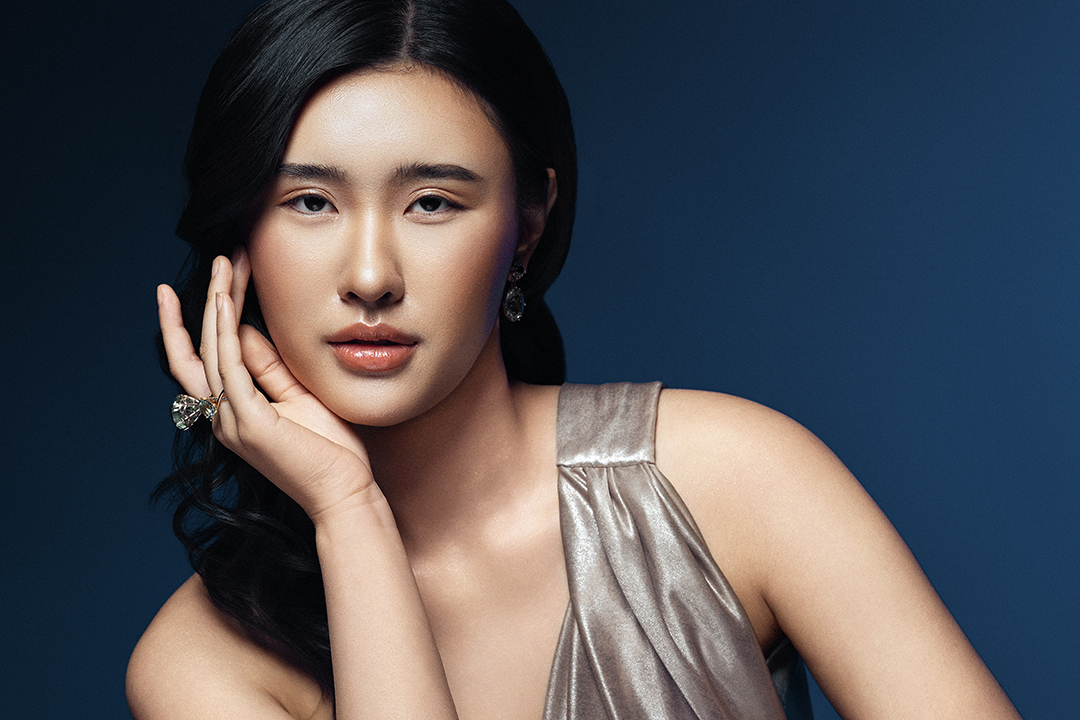
Yeong Kim: Rapid Fire:
- One scent that embodies “Old Money” structure: A powdery iris with restrained depth.
- A book on your nightstand right now: A philosophical text exploring emotion and form.
- The exercise you hate but always do: Prolonged core holds.
- Your Mother’s Day 2026 wish: Enduring health, and a quiet, unwavering sense of peace.
Your modeling journey has been unwavering commitment to women’s leadership, is an inspiration. We look forward to seeing your vision of strength continue to rise. Your intellectual rigor and structural aesthetic you are known for, is there in your answers of moving beyond typical fashion interview clichés. We are thankful for your time.
Yeong Kim Social Media Presence
Instagram: https://www.instagram.com/slice_of_ys/
Credits
Photographer : Junessa Sarendon @junessarendonphotography
Stylist : Bryan The Stylist @bryan.thestylist
Makeup Artist : Yra Mantaring @facesbyyramantaring
Hair : Matt Ledesma @matt.doeshair, Gabriel Garcia @zycho.dlq @hair_by_zychotic
Model : RIAN YEONG K @slice_of_ys
Agency : Blake model management @blake.modelmgmt
The Name Management @tnm_management
Creative Direction : VALEUR
Production @valeur.modelpsyche
Brand : Artinie Jewels @artinjewels