
The neck consists of a series of interlocking blocks (vertebrae), each linked on either side by a facet point, and all but the top two separated by a disc. Problems can arise with any of these structures: it is possible to have a painful, stiff facet joint on one side only or on both sides, or pain at more than one facet joint on one or both sides, or at one or more facet joints and discs. Pain may be localized, or it may restrict a number of different movements. Work very gently and cautiously through the exercises.
When training the neck, it is extremely important to follow good form. Carelessness with neck exercises can be much worse than with other exercises. Use smooth controlled motion at all times, don’t jerk or bounce at all.
These gentle exercises aim to introduce mobility in all directions in the neck, while encouraging muscle control and flexibility in the soft tissues. Do not do any exercise so vigorously or so often that it hurts.
Warning: None of the positions should be held for more than 2 to 3 seconds, particularly backward bending and /or turning. Never practice head circling.
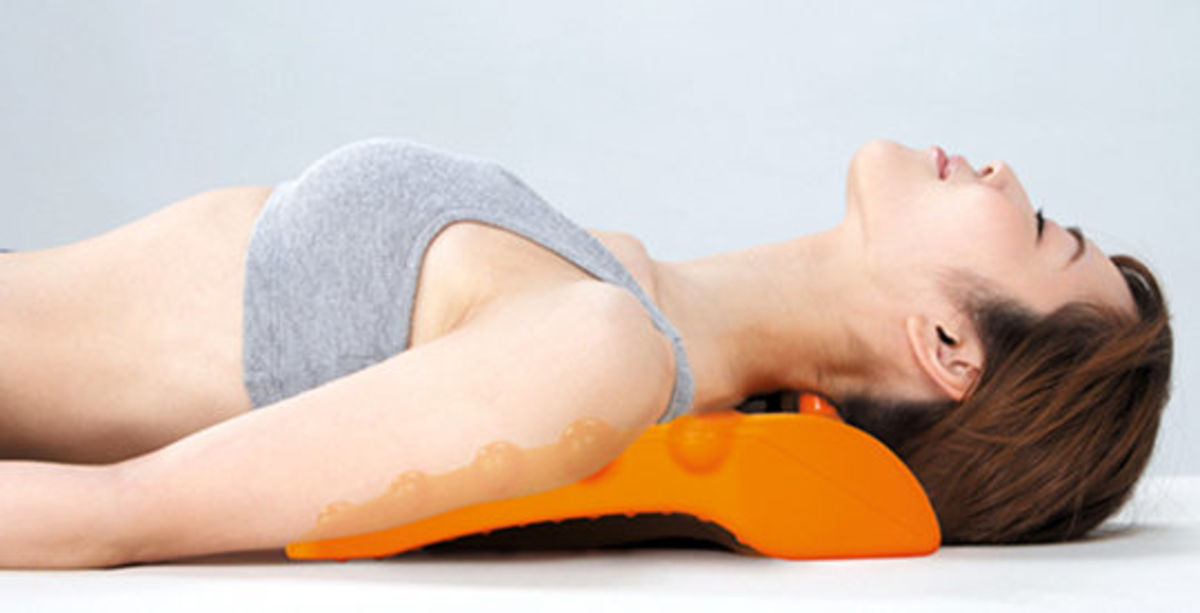
Neck Turns
- Lie on your back with a pillow under your head Gently turn your head to the right and return. Repeat.
- Gently turn your head to the left and return. Repeat.
Neck Tilts
- Lie on your back with a pillow under your head. Gently tilt your head sideways to the right, bringing your ear to your shoulder. Return and repeat.
- Gently tilt your head sideways to the left, bringing your ear to your shoulder. Return and repeat.
Neck Stretches
- Lie on whichever side is more comfortable, with a pillow under your head. Bend your head down toward your chest. Return and repeat.
- Tip your head back gently, without letting your chin point up- i.e. keep your neck straight, don’t twist it. Return and repeat.
Side Twists
- Lie on whichever side is more comfortable, with a pillow under your head
- Breathing in, gently twist your neck and lift your head slightly off the pillow
- as you breathe out, slowly relax back down on to the pillow and stay there for 10 seconds, relaxing and breathing gently. Repeat three times.
Shoulder Circles
- Sit in a chair with your head and neck in a neutral, relaxed position.
- Bring your shoulders forward and up, circling from the front to the back. Repeat a few times in a continuous movement, then reverse the movement. This relaxes the muscles which run from the neck to the shoulder.
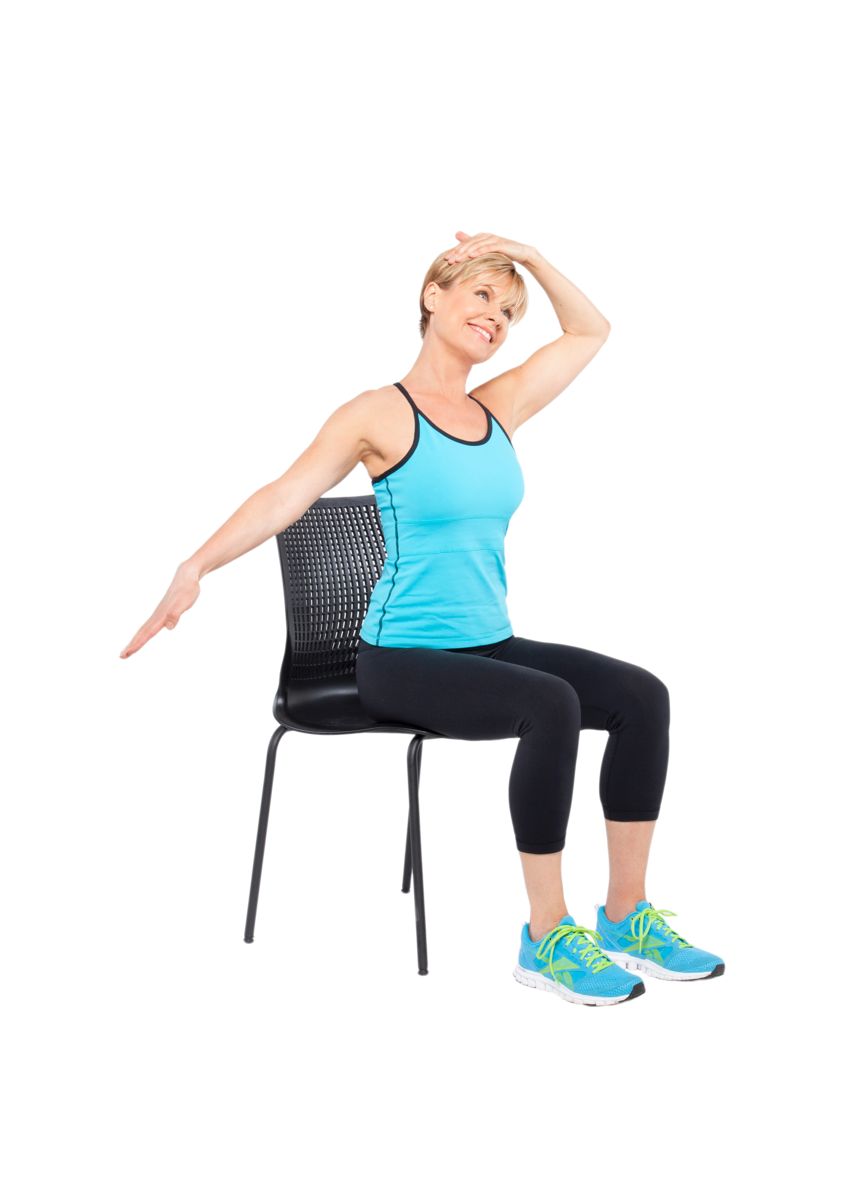
Neck & Arm Stretch
- Sit in front of a mirror with the one arm hanging down toward the floor, palm facing forward and hand relaxed but open. Keeping your shoulder and neck relaxed, move your arm slightly behind you, and raise it to an angle of about 45 degrees from your body. Keep your neck in a ” neutral ” position. Hold, relax and repeat. This mobilizes the soft tissues which run from the neck to the shoulder.
NODDING
Upper Neck Flexion
- Sitting on a chair, bend both arms to bring your fingertips behind your ears. Place the tips of your index and middle fingers on the top of your neck and the base of your skill respectively, on either side. Place your thumbs on your jaw.
- Keeping your neck still, nod your head down slightly so that the gap between your fingertips widens. Bring your head up and repeat the movement. This increases mobility at the top of the neck and its junction with the skull.
TIPPING
Upper Neck Extension
- Sitting on a chair, bend both arms to bring your fingertips behind your ears. Place the tips of your index and middle fingers on the top of your neck and the base of your skull respectively; place your thumbs on your jaw. Supporting the weight of your head on your hands, gently tip your head back. Bring your head forward and repeat the movement. This increases mobility at the top of the neck and its junction with the skull.
HEAD TILTS
Upper Neck Side Flexion
- Sitting on a chair, bend both arms to bring your fingertips behind your ears. Place the tips of your index and middle fingers on the top of your neck and the base of your skill respectively, on either side of your spine; place your thumbs on your jaw. Keeping your shoulders level, gently tilt your head to the left, relax and repeat. Repeat the same exercise, tilting your head to the right. Relax and repeat.
- Variation: do the exercise on both sides, moving your head alternately to right and left.

MINI TURNS
Uppper Neck Rotation
- Sitting on a chair, bend both arms to bring your fingertips behind your ears. Place the tips of your index and middle fingers on the top of your neck and the base of your skull respectively; place your thumbs on your jaw. Gently turn your head to the left, return and repeat the movement.
- Variation : turn your head to the right, return and repeat the movement.
SIDEWAYS TILT
Resisted Side Flexion
- Sitting on a chair, bend one arm, with your elbow pointing outward and your palm against the side of your head. Keeping your head facing forward, push your head into your hand and vice versa, so that your head does not move. Hold for 2 to 3 seconds, relax and repeat.
NECK TWIST
Resisted Rotation
- Sitting on a chair, bend one arm, with your elbow pointing outward and your palm against the side of your head. Turn your head into your hand, using gentle hand pressure to resist the movement.
- Hold for 2 to 3 seconds, relax and repeat.
BACKWARD LEAN
Resisted Extension
- Sitting upright on a chair, bend your arms and place your fingers at the base of your skull, on either side of your spine. Push your head back against your hands, using gentle hand pressure to resist the movement, so that your head does not move. Hold for 2 to 3 seconds, return to the start position and repeat.
FORWARD LEAN
Resisted Flexion
- Sitting upright on a chair, bend your arms and place your fingers on your forehead. Push your head forward against your hands, using gentle hand pressure to resist the movement. Hold, return to the start position and repeat.
NODDING
Neck Stability
- Sit on the floor, with your back and ” tail ” against a wall and your legs stretched out in front of you. Gently bend your head down toward your chest, keeping the back of your head in contact with the wall and your chin level (not poking out, up or down). The movement should come from the back of your neck, at the top of your spine. Return to the start position and repeat.