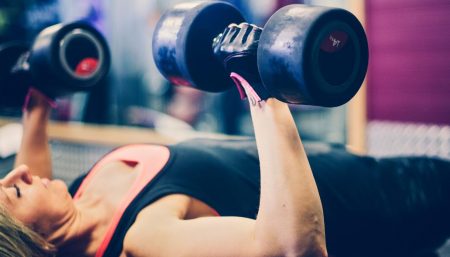
Arghh, the dull pain from sore muscles, is a repeated complain from women involved in fitness training! Hard exercise causes muscle damage. If you looked under a microscope at your sore muscles after a hard workout you would see torn and ruptured individual muscle cells, and breakdown of the membranes between them. High intensity exercise causes muscle soreness.
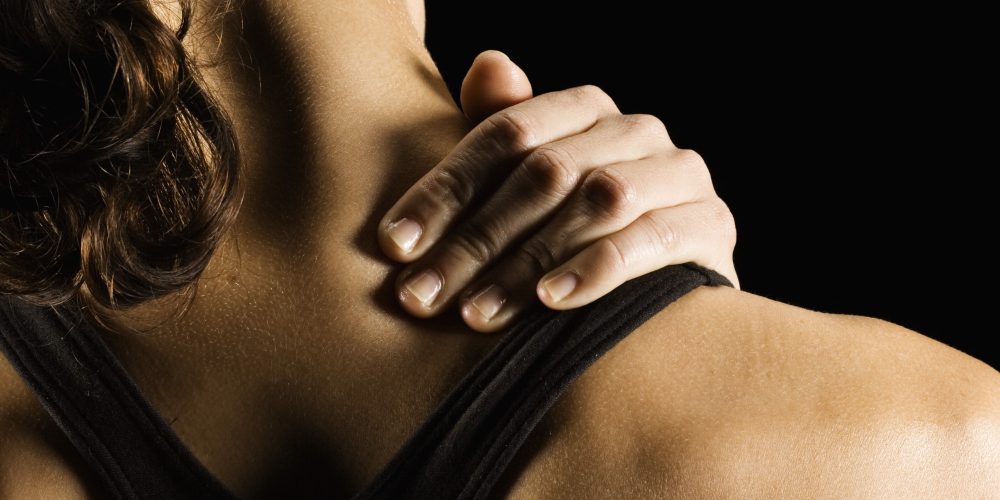
However you can reduce the incidence of pain and sore muscles by incorporating the following tips in your training routine.
Adopt good training habits.
Avoid being a weekend warrior. A weekend warrior does little exercise during the week. The words “couch potato” come to mind. Then, with a burst of enthusiasm, the weekend warrior “seizes the weekend”, running, playing, dancing, etc. A better strategy is to exercise regularly. Get into motion 2 or 3 times a week for 20 min at a stretch!
Do a bit of stretching.
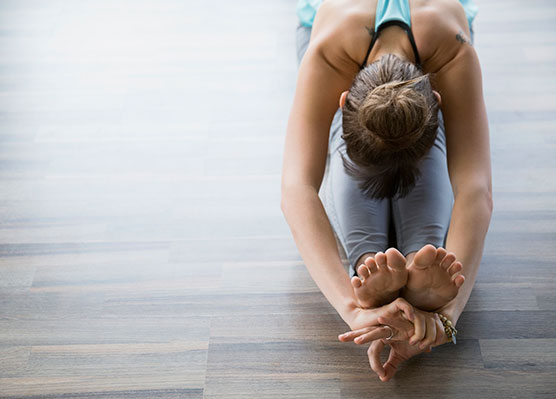
Slowly bend down, reaching for your toes. Hang forward, counting to 15. Let gravity do the stretching. Don’t force the stretch. Then lean over to each side, making a giant letter “C”, again for 15 seconds. Then bend your knees and shift from side to side, stretching the groin muscles. Lastly, roll your shoulders around a couple of times. Now you’re ready for more vigorous activity. Have fun.
Start with a slow warm up.
Cold muscles suddenly put to work are more likely to become damaged than ones that have been warmed up properly. Warming up gradually will increase your heart and breathing rates, increasing the flow of oxygen and nutrients to your muscles before you begin to work them hard. In addition, your joints secrete more synovial fluid and become less stiff. With a warm-up, the body is properly adapted to the demands of exercise.
Be sure to drink lots of water.
And remember to eat a high carbohydrate, low fat diet so your muscles have plenty of fuel.
Do not increase both intensity and duration during the same week.
If you are on a strength and endurance program keep your intensity or duration increase to 10% or less each week. Allow your body to recover properly and adapt slowly to improved performance levels.
Split Workouts
It may seem that doing full body workouts will benefit you the most but you can actually push yourself harder and work your muscles more effectively (avoid muscle soreness) if you work different body parts each day. Modify your strength training routine by, working back, chest, biceps, triceps, shoulders one day and quads, hamstrings, calves, abs the next day. The advantage is that you can easily incorporate supersets, combination sets, and tri-sets into your workout. The disadvantage is that the full upper body workout can get really lengthy.
Get a massage
Even though research hasn’t proved this to speed healing, massage has been shown to lower levels of muscle soreness by stimulating neutrophils (white blood cells that fight inflammation). It goes without saying that athletes feel better after a massage.
Relaxation

You can also take an epsom salt bath or use the pool and hot tub for 15 minutes of relaxation to reduce muscle tension.
Diet Tip
Maintain a regular intake of 1000 mg of vitamin C and 100-200 mg of bromelain, an enzyme from pineapples, for two days – these are natural anti-inflammatories.
Good blood flow through your muscles is the key to quick, natural healing.
Related Links
- Water: an element in healthy weight loss
- Stretching for Fitness
- Top 10 Ways to Add Movement in Life
- Top 10 Tips on Prevention of Sports Injury
Disclaimer
The Content is not intended to be a substitute for professional medical advice, diagnosis, or treatment. Always seek the advice of your physician or other qualified health provider with any questions you may have regarding a medical condition.