



Andrea Oddos is a Doctor of Psychology and Cognitive Neuroscience, as well as a licensed Neuropsychologist. Her doctoral research focused on the electroencephalographic correlates of well-being enhancement induced by different non-ordinary states of consciousness, including Ericksonian hypnosis, mindfulness meditation, and MOSAIC therapy. Her work explored how these therapeutic approaches influence brain regions strongly associated with markers of psychological well-being.
Alongside her academic and clinical career, Andrea is deeply committed to promoting mental health awareness and evidence-based approaches to psychological well-being. She is also highly active in sports and maintains a lifestyle centered around fitness, running, and regular mindfulness meditation practice.
In 2026, Andrea was awarded the title of Miss Landes-Béarn as part of the official Miss France competition. She is also the creator and host of the podcast “Nuances,” where she discusses topics related to psychology, cognitive biases, mental health, and personal development, with the aim of making scientific knowledge accessible to a broader audience.
Women Fitness President Ms. Namita Nayyar catches up with Andrea Oddos – an exceptionally talented and accomplished Doctor of Psychology and Cognitive Neuroscience, licensed Neuropsychologist and winner of beauty pageant ‘Miss Landes-Béarn’. Here she talks about Ericksonian hypnosis, mindfulness meditation, and MOSAIC therapy, her beauty pageant achievement and her success journey.
Namita Nayyar:
Your doctoral research specifically looked at the EEG correlates of well-being during hypnosis, meditation, and MOSAIC therapy. If you had to describe the “brainprint” of well-being to a layperson, what does it actually look like on a screen?
Andrea Oddos:
The brain print of well-being is not a single “happiness spot” in the brain. What we tend to see is a brain that is well balanced and well-coordinated.
In EEG, one marker often associated with well-being is slightly greater activity in the left frontal brain than in the right, a pattern linked to positive engagement with life rather than a focus on threats or worries.
More broadly, brain imaging suggests that well-being emerges when different brain networks work together efficiently. I often compare it to an orchestra: well-being is not one instrument playing louder, but many instruments playing in harmony.
Namita Nayyar:
Why did you choose these three specific modalities (Ericksonian hypnosis, mindfulness, and MOSAIC) for your research? What makes each of them uniquely effective in reshaping neural pathways, and how do they complement each other?
Andrea Oddos:
I chose Ericksonian hypnosis, mindfulness meditation, and MOSAIC therapy because they share a common humanistic philosophy: they focus on people’s inner resources, self-awareness, and capacity for change.
From a research perspective, they are particularly interesting because they can induce non-ordinary states of consciousness that may help people relate differently to their thoughts, emotions, and experiences. Rather than “rewiring” the brain in a simplistic sense, these approaches appear to mobilize and modulate brain networks involved in attention, emotional regulation, and self-perception.
I see them as complementary pathways toward well-being: mindfulness cultivates present-moment awareness, hypnosis facilitates access to personal resources and imagination, and MOSAIC helps people connect with desired internal states and solutions. Together, they offer different ways of fostering psychological flexibility, balance, and well-being.
Namita Nayyar:
How has your research changed the way you practice as a Neuropsychologist today? Do you prescribe “brain training” differently for a patient with anxiety versus a patient with depression based on what you discovered?
Andrea Oddos:
My research has reinforced the idea that there is no single neural pathway to well-being. Two people may present with similar symptoms, yet the underlying cognitive, emotional, and neurophysiological processes can be quite different.
As a neuropsychologist, this has made me less focused on symptoms alone and more interested in understanding the person’s patterns of attention, emotional regulation, and relationship to their internal experiences.
So, I don’t think in terms of applying a fixed “brain training” protocol for anxiety versus depression. Rather, I try to identify which capacities need the most support. Someone with anxiety may benefit from approaches that help reduce hyper vigilance and cultivate a greater sense of safety, while someone with depression may need support reconnecting with motivation, engagement, and positive experiences.
What my research ultimately taught me is that the goal is not simply to change brain activity, but to help people develop greater flexibility. When people become more flexible in how they relate to their thoughts, emotions, and experiences, well-being tends to follow.

Namita Nayyar:
As the host of “Nuances”, you tackle cognitive biases. What is the single most destructive cognitive bias you see affecting people’s mental health in 2026, and what is the neurological trick to override it?
Andrea Oddos:
If I had to choose one cognitive bias that has the greatest impact on mental health today, I would probably say the negativity bias. From an evolutionary perspective, our brains are naturally wired to pay more attention to threats than to opportunities. That tendency helped our ancestors survive, but in today’s world it can lead us to overestimate risks, dwell on failures, and overlook positive experiences.
What makes this bias so powerful is that it often feels like reality rather than a bias. People may genuinely believe they are seeing things objectively, when in fact their attention is selectively drawn toward what is wrong, uncertain, or threatening.
The good news is that we can counterbalance it. The “neurological trick,” if there is one, is not to force positive thinking, but to deliberately train attention. Practices such as mindfulness or simply taking time to notice positive experiences help the brain give more weight to information that it would otherwise ignore.
In other words, mental well-being is not about seeing the world through rose-colored glasses. It’s about seeing the full picture rather than only the negative parts of it.
Namita Nayyar:
You started the podcast “Nuances” to make science accessible. What is the biggest misconception about the brain that you are constantly debunking for your listeners?
Andrea Oddos:
One of the biggest misconceptions I often debunk is the idea that the brain is fixed, that our personality, emotional patterns, or difficulties are hardwired and cannot really change.
What neuroscience has shown over the past decades is quite the opposite. The brain is plastic, meaning it continuously adapts throughout life. This doesn’t mean we can become anything we want overnight, but it does mean that our experiences, habits, relationships, and even the way we direct our attention can gradually shape how the brain functions.
That’s why I find the concept of neuroplasticity so powerful. It offers a scientific basis for hope. It reminds us that change is possible, not because of wishful thinking, but because the brain itself is designed to learn, adapt, and reorganize.
If there’s one message I hope listeners take away from “Nuances”, it’s that understanding the brain should not make us feel trapped by our past, it should help us appreciate our capacity to evolve.
Namita Nayyar:
As a scientist, you speak in data; as a host, you speak in stories. How do you translate complex neuropsychological concepts into actionable advice without losing the scientific integrity?
Andrea Oddos:
I see stories and data as complementary rather than opposing forces. The challenge is to use stories as illustrations, not as evidence. When I communicate complex neuropsychological concepts, I try to start with the science, and then translate it into simple language and practical examples. My goal is not to oversimplify, but to make the underlying principles understandable and useful. The key is to focus on evidence-based principles that people can apply in their daily lives, rather than offering quick fixes or one-size-fits-all solutions.
I also think it’s important to be transparent about uncertainty. In science, we rarely deal in absolutes. So rather than saying, “this is how the brain works,” I prefer to say, “this is what the current evidence suggests.”
Namita Nayyar:
Is there a specific episode or guest that fundamentally changed your own perspective on mental health or personal development?
Andrea Oddos:
Because the podcast is still very new, I wouldn’t say there has been a single episode that fundamentally changed my perspective.
What has already struck me, however, is how often very different conversations converge on the same idea: mental health is rarely about fixing a single problem. It’s usually about learning to relate differently to ourselves, our emotions, and our experiences.
As a scientist, I tend to think in terms of mechanisms and evidence. As a host, I’m constantly reminded that behind every concept or dataset, there is a human story. The podcast has reinforced my belief that science is most valuable when it helps us better understand the complexity of human experience, rather than reducing it to simple explanations.


Namita Nayyar:
Winning the title of Miss Landes-Béarn is a massive achievement. From a neurological perspective, how did you prepare your brain for the stress, scrutiny, and pressure of a major competition like Miss France?
Andrea Oddos:
I think the most important thing was not trying to eliminate stress, but learning to regulate my relationship with it. Events like Miss France involve a high level of uncertainty, evaluation, and social scrutiny; three things that naturally activate our threat-detection systems. The challenge is not to stop feeling stress, but to prevent it from taking over.
What my research has taught me is that attention is one of our most valuable mental resources. Under pressure, where we place our attention often matters more than the pressure itself. For me, practices such as mindfulness and intentional training were valuable because they helped me repeatedly bring my attention back to what I could control: the present moment, my preparation, and my values, rather than the outcome itself.
In a way, preparing for Miss France was less about building confidence and more about building psychological flexibility.
Full Interview is Continued on Next Page
This interview is exclusive and taken by Namita Nayyar, President of womenfitness.net, and should not be reproduced, copied, or hosted in part or in full anywhere without express permission.
All Written Content Copyright © 2026 Women Fitness

Namita Nayyar:
There is a stereotype that pageants are solely about looks. How did you use your platform as a scientist to reframe that narrative during the competition? Did you bring psychology into the preparation room?
Andrea Oddos:
I think one of the best ways to challenge a stereotype is not to argue against it, but to embody an alternative narrative. Throughout the competition, I tried to show that science, curiosity, and personal development also have a place in these environments. Being a researcher and a neuropsychologist is a central part of who I am, so I never felt the need to separate that from my experience as a contestant.
Did I bring psychology into the preparation room? Absolutely. Not as a set of techniques, but as a way of understanding myself and others. It helped me stay grounded, manage pressure, and remember that self-worth should not depend solely on external validation.
More broadly, I think beauty pageants have evolved. Today, beauty transcends physical appearance. It is also reflected in a person’s values, resilience, authenticity, ability to connect with others, and the impact they choose to have on the world.
Ultimately, psychology teaches us that confidence is not about being perfect; it’s about being authentic, even when you’re being evaluated. And that’s a lesson that extends far beyond pageants.
Namita Nayyar:
You are a Doctor of Neuroscience, a licensed Neuropsychologist, and now a titleholder. How do you reconcile the “seriousness” of academia with the “glamour” of pageantry in your own mind? Do you see these roles as conflicting or synergistic?
Andrea Oddos:
I don’t see these roles as conflicting. If anything, I see them as complementary. I think we often create artificial boundaries between different dimensions of human experience; between intellect and emotion, science and creativity, rigor and self-expression. Yet people are far more complex than the categories we place them in.
Academia has taught me the value of curiosity, critical thinking, and intellectual humility. Pageantry has given me a platform to connect with people, communicate ideas, and reach audiences that might not otherwise engage with neuroscience or psychology.
At their best, both worlds are ultimately about human potential. One seeks to understand it, the other provides an opportunity to inspire it. So rather than choosing between the two, I’ve always seen them as different ways of contributing to the same mission: helping people better understand themselves and what they are capable of becoming.
Namita Nayyar:
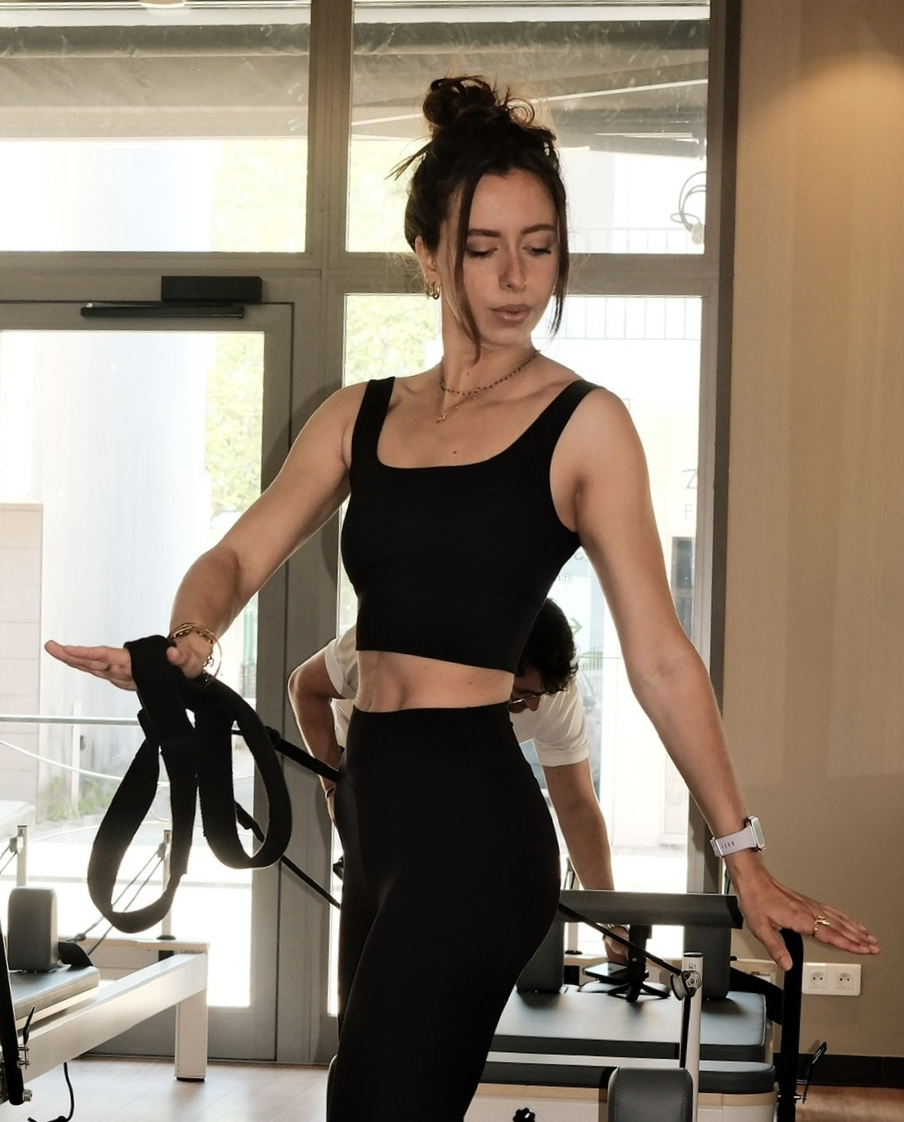
You are highly active in running and fitness. We know exercise boosts BDNF (Brain-Derived Neurotrophic Factor). How do you structure your weekly workout routine to optimize not just your physique, but your cognitive performance for work?
Andrea Oddos:
As a neuroscientist, I find the link between exercise and brain health fascinating, including the role of factors such as BDNF in supporting neuroplasticity. But in practice, I try not to over-engineer my workouts.
My goal is not just to improve physical fitness, but to support my energy, focus, and overall well-being. That’s why I like to combine different types of exercise throughout the week, including running, strength training, and recovery sessions.
More broadly, I think we sometimes view exercise as something we do for our bodies, when in reality it may be one of the most powerful things we can do for our brains. For me, movement is not just part of my fitness routine—it’s part of my cognitive and emotional hygiene.

Namita Nayyar:
Can you walk us through a typical weekly workout split? Do you prioritize endurance running, strength training, or a mix of both?
Andrea Oddos:
I would describe my weekly routine more as a balance than a strict split. I usually include a few running sessions during the week, because endurance work is not only important for physical fitness, but also for mental clarity and stress regulation. I also incorporate strength training, which I see as essential for long-term health, posture, and injury prevention. And I always leave space for recovery, which I think is often underestimated but crucial for both body and brain.
Rather than following a rigid plan, I try to adapt depending on my energy levels and my schedule. Some weeks are more running-focused, others more strength-focused, but the common thread is consistency rather than intensity. Overall, my approach is quite simple: I aim for a routine that supports performance, but also mental well-being and sustainability in the long term.


Namita Nayyar:
When you are feeling mentally “stuck” or stressed, what is your go-to physical activity to reset your nervous system?
Andrea Oddos:
When I feel mentally “stuck” or stressed, my go-to strategy is usually running. What I find interesting from a neuropsychological perspective is that it doesn’t necessarily solve the problem I’m thinking about, but it changes the state of my nervous system. It helps shift attention away from repetitive thoughts and brings me back into the body, into rhythm and breathing.
Sometimes it’s not about intensity. Even a short, easy run or a walk can be enough to create that sense of mental “reset.” It gives the brain a different kind of input, which often makes it easier to come back to a situation with more clarity. More than a performance tool, I see movement as a way to restore cognitive and emotional flexibility.
Namita Nayyar:
You maintain a lifestyle centered on fitness. Beyond the physical benefits, what dietary principles do you follow to ensure your brain is getting the fuel it needs for high-level cognitive work? (e.g., do you follow a specific eating window, macro split, or focus on specific brain foods?
Andrea Oddos:
I wouldn’t say I follow a strict dietary protocol or a specific macro split for cognitive performance.
What I try to prioritize is consistency and balance rather than optimization. I focus on whole, minimally processed foods, enough protein for energy stability, and meals that support sustained focus rather than short-lived energy spikes.
I’m also quite attentive to something very simple: listening to my body. Eating when I’m hungry, and not turning food into something overly restrictive or controlled is important to me. From a psychological perspective, excessive rigidity around food can sometimes create unnecessary stress and may, in some cases, contribute to a more deregulated relationship with eating.
So for me, the goal is not to follow a “brain diet,” but to maintain a stable and flexible relationship with food that supports both mental and physical well-being. In practice, that means regular meals, hydration, and a simple, sustainable approach to nutrition rather than an overly controlled system.
Namita Nayyar:
We talk a lot about activity, but rarely about rest. What does your recovery routine look like—specifically regarding sleep hygiene and active recovery?
Andrea Oddos:
I actually think recovery is one of the most important and often underestimated parts of both physical and cognitive performance. For me, sleep is the foundation. I try to keep relatively regular sleep hours, reduce stimulation in the evening, and give my brain time to “switch off” rather than stay in a constant state of cognitive activation. I don’t approach sleep in a highly rigid way, but I’m attentive to creating conditions that make it easier for the nervous system to downregulate.
During the day, I also rely on what we could call active recovery. That includes walking, light movement, time outdoors, and sometimes running at a very easy pace. These moments are not about performance, but about giving the brain space to reset.
I think we often underestimate how much recovery is not passive at all. It’s an active process of restoring attention, emotional balance, and mental flexibility.
Namita Nayyar:
As a neuropsychologist, you know that routine can be grounding. What does your morning and evening skincare routine look like? Is it a meditative ritual for you, or purely functional?
Andrea Oddos:
I would say my skincare routine is quite simple, but it is also one of those small daily moments that I really appreciate. In the morning, it is mostly functional: hydration, protection, and getting ready for the day. In the evening, it becomes a way of marking the transition between an active day and a more restful state.
What I find interesting is how much our senses are involved in these routines. The texture of a cleanser, the feeling of water on the skin, or even certain subtle smells can become very grounding signals for the brain. They help create a sense of familiarity and closure after a busy day.
So I wouldn’t call it a meditation practice, but it is definitely a moment of presence. And I think these small, sensory routines are important; they are simple ways of giving you time, attention, and a sense of calm in an otherwise very stimulated world.
Namita Nayyar:
Between running, pageant styling, and podcast recordings, your hair goes through a lot. What are your “non-negotiable” hair care tips for maintaining health under that level of stress and styling?
Andrea Oddos:
I would say my approach to hair care is actually quite simple and very consistent, rather than complicated.
My main “non-negotiables” are basic but effective: keeping my hair well hydrated, avoiding excessive heat when it’s not necessary, and making sure I give it time to recover between periods of intense styling.
Beyond products or routines, I think what really matters is not putting the hair or, more broadly, the body under constant stress. Just like the brain, it benefits from cycles of stimulation and recovery. So I wouldn’t say I have a highly engineered routine, but rather a few simple principles that I stick to: care, protection, and recovery.
Namita Nayyar:
You study well-being. How much of “beauty” do you believe is actually neurological—meaning, how much does a calm, regulated nervous system contribute to physical appearance versus topical products?
Andrea Oddos:
I think it’s important to be careful with the idea of reducing beauty to a single factor, whether it is neurological or cosmetic. What we could say is that there is a clear link between our internal states and how we are perceived externally. When the nervous system is more regulated, when stress is lower, sleep is better, and the body is not in a constant state of tension, this can influence many subtle signals: facial expression, skin quality, posture, and overall presence.
At the same time, topical care, grooming, and external factors absolutely matter as well. It is not an “either/or” but rather an interaction between internal regulation and external care. So I would say that beauty is embodied: it reflects both the way we take care of ourselves, both internally and externally, and the way these two dimensions interact over time.


Namita Nayyar:
You teach mindfulness and meditation. What does your personal mindfulness practice look like daily? Do you still sit for 20 minutes, or do you practice micro-moments of awareness throughout the day?
Andrea Oddos:
I’ve had a long-standing personal mindfulness practice, and I completed an MBSR (Mindfulness-Based Stress Reduction) program some years ago, which really structured the way I relate to meditation. My practice is quite flexible today. There are periods where I still sit for 15 to 20 minutes of formal meditation, especially when I feel I need more structure or grounding. But daily, I also rely a lot on micro-moments of awareness throughout the day.
For me, mindfulness is not only what happens on the cushion. It’s also the ability to come back to the present moment in very simple situations while walking, between tasks, or during moments of stress. These brief returns to awareness are often just as powerful as longer sessions.
Overall, I see mindfulness less as a fixed practice and more as a way of relating to experience with more attention, openness, and less automatic reactivity.
Namita Nayyar:
As a clinician, researcher, podcaster, and titleholder, your schedule must be intense. What boundaries have you set to protect your own mental health and prevent cognitive overload?
Andrea Oddos:
I think the most important boundary for me is not trying to do everything at full cognitive intensity all the time.
With multiple roles, it would be easy to fall into a constant state of mental activation. So I’ve learned to be quite intentional about protecting recovery time, not just productivity time.
Practically, that means structuring my days with real pauses, limiting unnecessary cognitive overload when it’s not needed, and preserving moments where I’m not switching between tasks or decisions. I also try to separate “deep work” periods from times that are more social, creative, or restorative. For me, mental health is not maintained through optimization, but through rhythm periods of engagement balanced with periods of real recovery.
Namita Nayyar:
You talk about mental health openly. Have you ever had a moment where you struggled with your mental health despite knowing all the neuroscience? How did you handle that?
Andrea Oddos:
Yes, there was a period, toward the end of my studies, that turned out to be particularly difficult, despite everything I know about neuroscience and mental health. Several stressors piled up at the same time: the pressure of preparing for my thesis defense and waiting for the examiners’ feedback, personal grief following the loss of a loved one, as well as very concrete changes in my life, such as having to move out of my apartment earlier than planned. All of this led to a simultaneous loss of stability and a sense of direction.
Knowing science doesn’t make you immune to the human experience. Understanding the mechanisms of stress doesn’t prevent it from manifesting; it merely changes, at times, the way we cope with it. What helped me wasn’t trying to “figure it all out” cognitively, but focusing on very basic forms of self-regulation: a structured daily routine, physical activity, rest, and staying in touch with people who support me. And also accepting that certain periods are simply about endurance rather than optimization.
In a way, this has reinforced one of my core beliefs today: mental health isn’t about not being affected by life’s events, but about maintaining enough resilience to get through them.
Namita Nayyar:
Looking back, was there a pivotal moment that shifted your trajectory from purely academic research to becoming a public figure and titleholder?
Andrea Oddos:
I don’t think there was a single turning point when everything suddenly changed. It was more of a gradual evolution. For a long time, I focused mainly on the academic world: research, clinical work, and understanding the mechanisms underlying well-being and cognition. But over time, I became increasingly interested in something a little different: how to make this knowledge more accessible and relevant outside the academic world.
The “Nuances” podcast was part of that transition. It allowed me to explore a different way of communicating science: less formal, more human, and more grounded in everyday life. From there, other opportunities naturally arose; I initially saw them as a very different world, but they ultimately became a new platform for expression and communication.
Rather than a turning point, I see this as an expansion: science, communication, and public engagement have become different expressions of the same underlying curiosity.
Namita Nayyar:
You have achieved a lot academically and professionally. How has your definition of “success” evolved from when you started your PhD to where you are today?
Andrea Oddos:
My definition of success has changed quite a lot over time. At the beginning of my PhD, success was very much tied to external markers: publications, academic recognition, and the idea of progressing along a clearly defined path. It was a very linear and performance-oriented view of achievement.
Over time, that definition has become much broader. I still value academic rigor and intellectual achievement, but I now see them as only one part of a larger picture. Today, success feels less like reaching a fixed destination and more like the ability to stay aligned with what feels meaningful, while maintaining balance over time. It includes impact on how my work can help or resonate with others, but also sustainability: how I take care of my own mental and physical health along the way.
In that sense, success is no longer only about “doing more” or “achieving more,” but about being able to grow without losing coherence, curiosity, or well-being.
Namita Nayyar:
What is next for Andrea Oddos? Are you planning to integrate your title with your research (e.g., a study on high-performance psychology)? Can we expect a second season of Nuances or perhaps a book on the neuroscience of resilience?
Andrea Oddos:
What comes next for me is really about integration rather than a completely new direction. I will continue my work as a research associate at the University of Liège, which remains an important anchor for me intellectually and scientifically.
At the same time, I want to keep deepening my clinical practice by continuing to train in different therapeutic approaches. I don’t see therapy as something one-size-fits-all. Each person is unique, and I think it’s important to be able to adapt and combine tools in a thoughtful and individualized way.
More broadly, I also want to maintain a strong link between research, clinical work, and public communication. These three dimensions feed into each other: what I see in practice informs my scientific questions, and what I learn from research helps me communicate more accurately and responsibly.
In terms of projects, I would definitely like to continue “Nuances” and further develop it. And writing a book is also something I could see happening in the future. So rather than a single next step, I see it as a continuation of the same thread: trying to better understand human well-being, and making that knowledge useful and accessible.
Namita Nayyar:
If you could leave the world with one singular message about the brain, mental health, and human potential, what would it be?
Andrea Oddos:
If I had to leave one message, it would be that the brain is not a fixed structure that defines who we are once and for all, but a living system that continuously adapts through experience. This means that mental health is not simply the absence of difficulty, and it is certainly not a fixed state. It is more accurately a dynamic capacity: the ability to recover, to adapt, and to regain flexibility when life becomes challenging.
I also deeply believe that each person already has internal resources. These resources are not always immediately accessible, especially in moments of stress or suffering, but they are there, and they can be strengthened, supported, and reactivated through experience, relationships, and awareness. From that point of view, human potential is not about becoming someone entirely different, but about gradually expanding how we can access and mobilize those resources within ourselves.
So the message is quite simple: we are not defined by a static brain, but by a brain in continuous dialogue with our environment—and within that dialogue, there is always a space for change, growth, and the reactivation of our own resources.
Namita Nayyar:
Morning Person or Night Owl? (And when is your brain sharpest?
Andrea Oddos:
I would say I’m more of a morning person. My father often used to say, “The future belongs to those who wake up early,” and that idea stayed with me, not in a rigid way, but as a simple reminder of the value of structure and clarity at the start of the day. I tend to feel that my brain is sharper in the morning, especially for focused work, writing, and anything that requires concentration and less distraction.
That said, I also really appreciate evenings. For me, it’s really about balance. I try to align my schedule with my cognitive rhythms when possible, using mornings for deep work and allowing evenings to be more flexible and restorative.


Namita Nayyar:
Running Playlist or Podcasts? What do you listen to when you run?
Andrea Oddos:
When I’m running, I mostly prefer music. It brings a certain rhythm and energy that helps me stay in the movement without too much cognitive load. I tend to choose something quite dynamic, almost like a pacing tool rather than something I actively think about.
Podcasts are something I usually reserve for other moments in the day, like getting ready in the morning. They require more focused attention, and I like being able to fully listen, process, and later reflect on what was said, sometimes even discussing or integrating it into my thinking afterwards. For me, that level of engagement feels better suited to a context where I’m not also physically exerting myself.
Namita Nayyar:
Desert Island Brain Tool: If you could only have one technique (meditation, hypnosis, or exercise) for the rest of your life, which would it be and why?
Andrea Oddos:
If I had to choose only one technique on a desert island, I would still choose exercise, but not in a fitness sense. On an island like that, the real challenge would not just be physical health; it would be mental stability, grounding, and staying connected to reality. And movement is the most direct way I know to stay anchored in the present moment.
It helps regulate the nervous system, but it also gives structure to time, to space, and to experience. When everything becomes uncertain or overwhelming, movement can create a simple anchor: here, now, body, breath, action.
I think in that kind of context, the goal is not optimization, but preservation of clarity and presence. And movement is enough for that, it keeps you engaged with life in a very immediate, embodied way.
So it wouldn’t be a “technique” in the strict sense, but more a way of staying connected to the present and not getting lost internally.
Namita Nayyar:
Guilty Pleasure: What is a food or habit that is not neuro-optimized but that you enjoy anyway?
Andrea Oddos:
I don’t really think of it in terms of “neuro-optimized” versus “non-optimized,” but I understand the idea behind the question. If I had to answer, I would say that I do enjoy moments where I am not trying to optimize anything at all. For example, having something simple like chocolate without overthinking it is something I genuinely appreciate.
I think there is also something interesting about allowing space for pleasure without control or analysis. Constant self-monitoring can actually create cognitive load, whereas letting go occasionally can feel mentally very restorative. So my “guilty pleasure” is probably just simplicity: eating something I enjoy, without turning it into a decision to optimize or justify.
Namita Nayyar:
Final Advice: If a young woman came to you torn between a career in science and a dream of entering pageantry, what would you tell her?
Andrea Oddos:
I would tell her that she does not necessarily have to choose between the two. The idea that science and pageantry belong to completely separate worlds is, in my view, more of a social construct than a real incompatibility. One is often associated with rigor, analysis, and knowledge, while the other is associated with expression, presence, and communication, but both ultimately involve understanding and connecting with human experience.
What matters most is not the field itself, but the intention behind it: what she wants to contribute, what feels meaningful to her, and how authentic she can remain within each environment. From my own experience, I have learned that different paths can actually enrich each other. Science can give depth and critical thinking, while public-facing platforms can give visibility, impact, and the ability to translate complex ideas into something accessible.
So my advice would be: don’t reduce yourself to a single identity too early. Build the foundation in what you are curious about, stay rigorous in what you choose, but allow yourself to explore different forms of expression. You may find that what seems like two opposite worlds can actually become two languages for the same purpose.
Andrea Oddos Social Media Presence
Instagram: @andreaoddos
LinkedIn: Andréa Oddos | LinkedIn
Podcast “Nuances”: Nuances Podcast by Andréa – YouTube
This interview is exclusive and taken by Namita Nayyar, President of womenfitness.net, and should not be reproduced, copied, or hosted in part or in full anywhere without express permission.
All Written Content Copyright © 2026 Women Fitness