

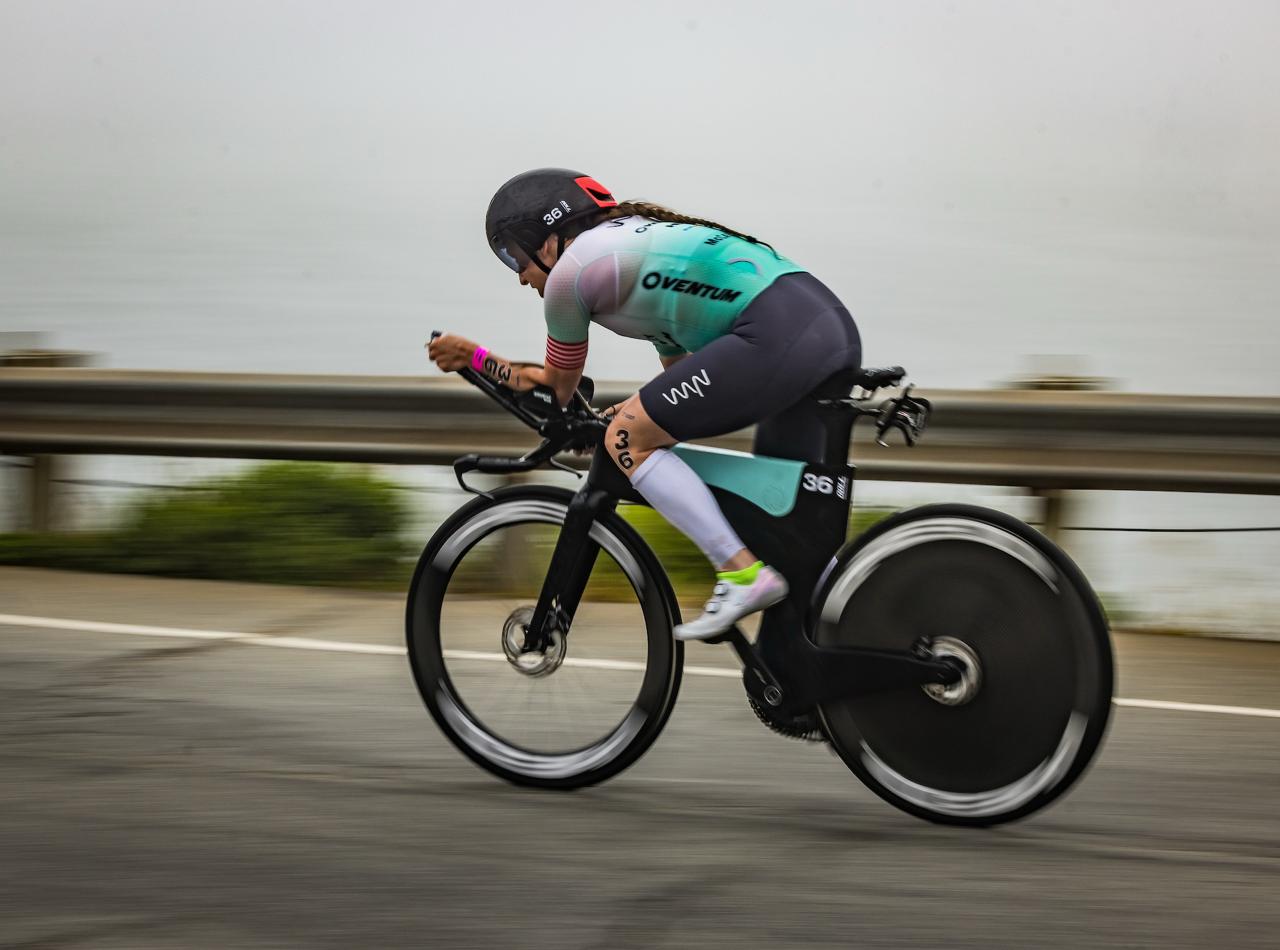
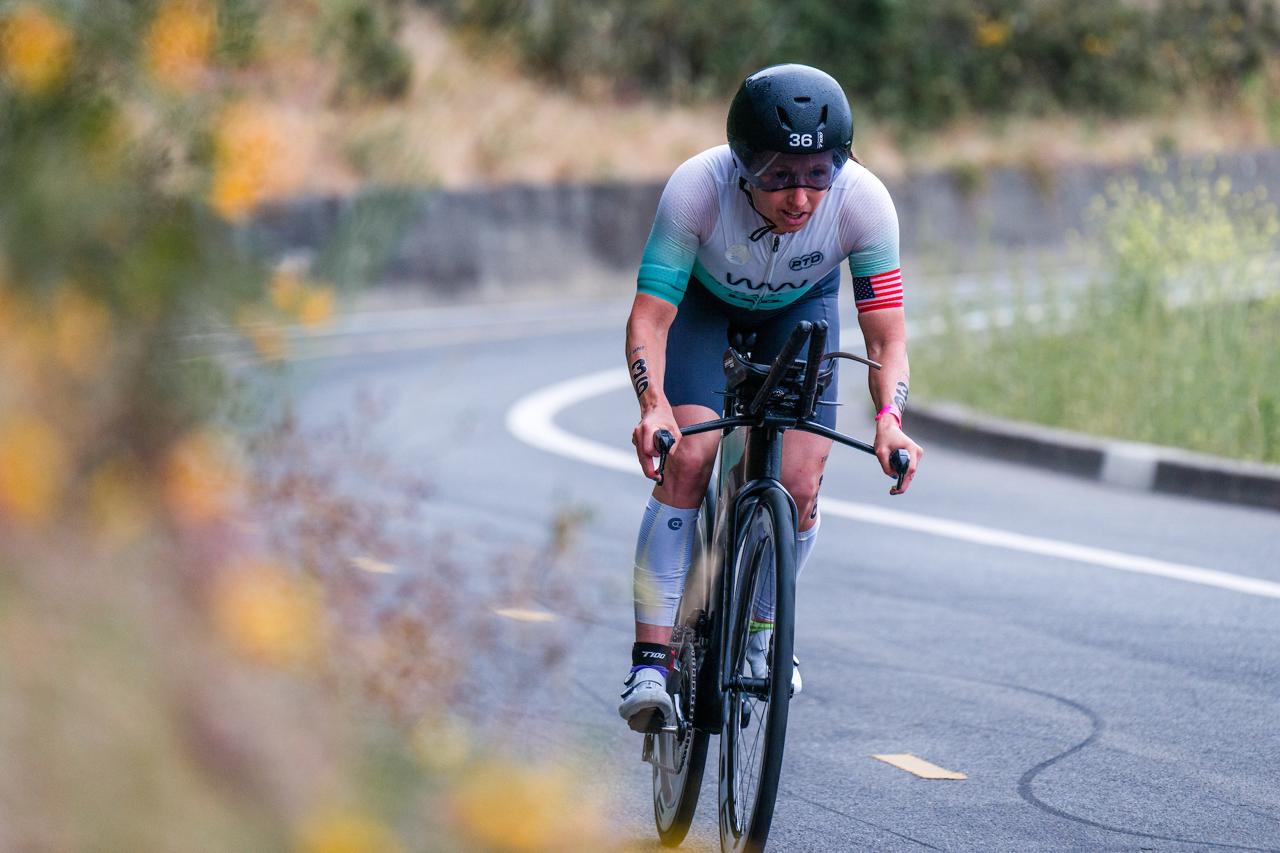
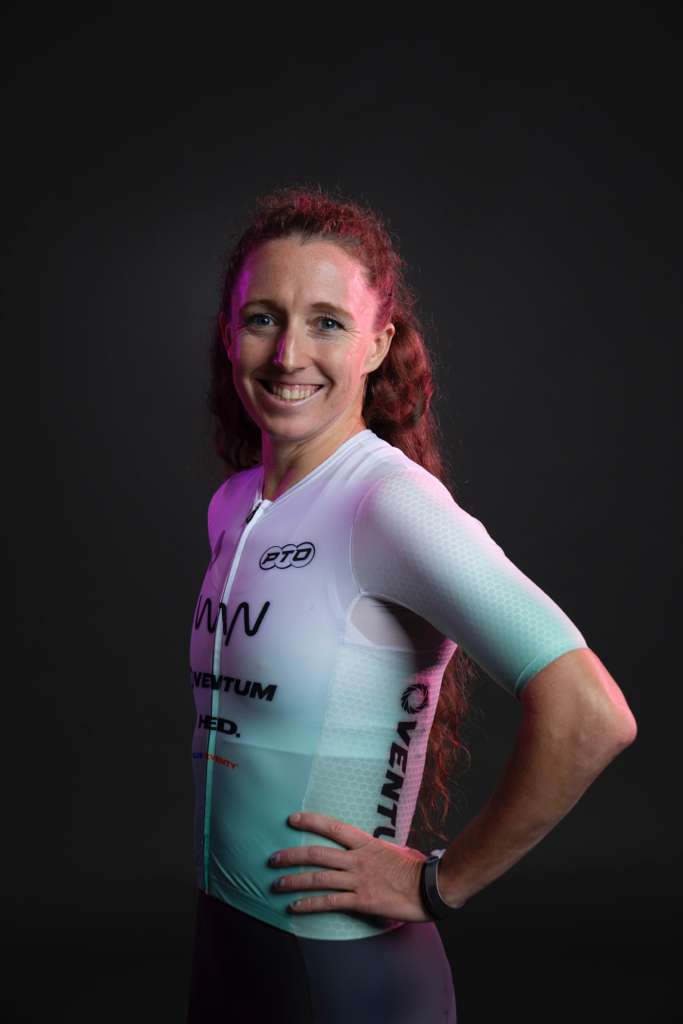
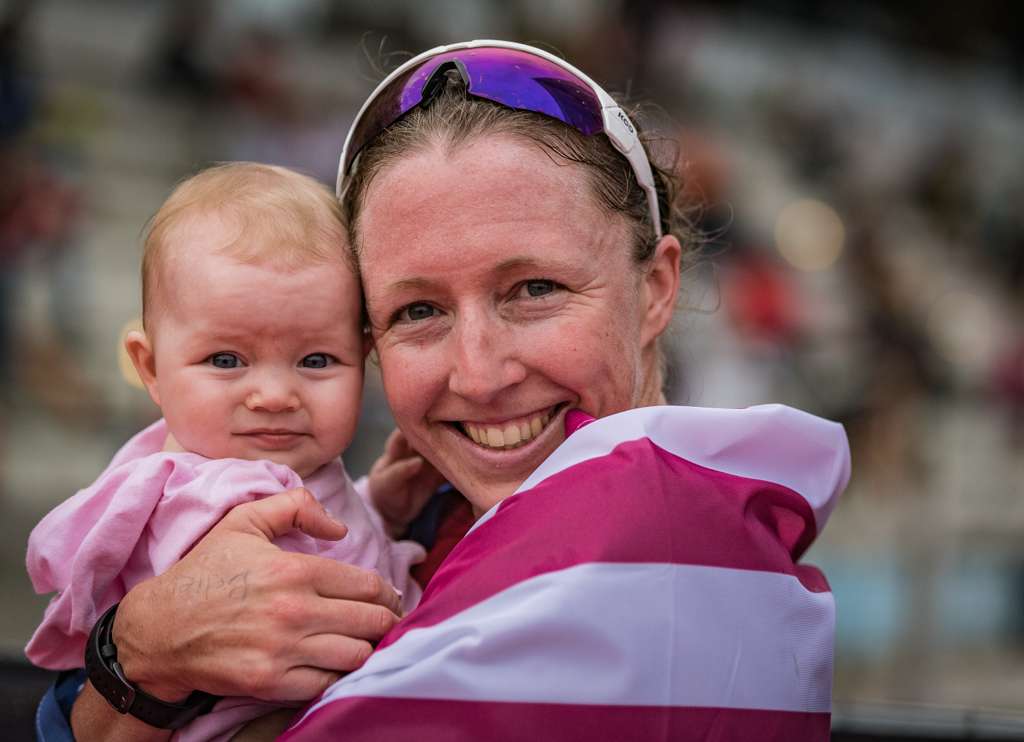
Jocelyn McCauley, a USA world’s top female triathlete, originally from Texas and now based in Boise ran cross country and track and field in college before trying triathlon after watching her sister race several IRONMAN events. Her first IRONMAN was in 2014, where she won her age group at IRONMAN Texas. At the IRONMAN World Championship that year, she was the top amateur female. After transitioning to racing professionally, she is now more than ten years into her pro racing career.
She believes in balancing pregnancy, childbirth and training, and how motherhood has shaped their performance, mindset and overall resilience.
Her life also highlight the challenges of motherhood and elite sport, including funding, sponsorship and loss of form, sparking a wider conversation about systemic change. She also highlight the need for better support, policies and research to help more women balance family and elite performance, because motherhood should not be a career risk.
Women Fitness President Ms. Namita Nayyar catches up Jocelyn McCauley an exceptionally talented, World Leading Triathlete here she highlight her unique journey from Texas college runner to world-class professional triathlete, her advocacy for systemic change in maternal athletic support, and her Mother’s Day 2026 message.
Namita Nayyar:
As we approach Mother’s Day 2026, you have recently announced your third pregnancy after competing at IRONMAN New Zealand. What does this Mother’s Day mean to you differently from your first or second?
Jocelyn McCauley:
I’ve just announced for the 3rd time but it is my 7th pregnancy. I’ve miscarried 4 times since my 2nd so this Mother’s Day I have a much deeper appreciation for motherhood and the journey women go on to be able to become mothers.
Namita Nayyar:
You have spoken openly about the lack of systemic support for pregnant and postpartum elite athletes. On Mother’s Day 2026, what is the one message you want to send to sports federations, sponsors, and race organizers about what “support” should actually look like?
Jocelyn McCauley:
Support isn’t a marketing campaign or a one-time gesture, it’s structural. If others want to support pregnant and postpartum athletes, it has to show up in policies all around, not just messaging. Pregnancy isn’t a stop of an athletic career, its part of many athletes’ lives. When systems are built to accommodate that, you don’t just retain women athletes, but in retaining them you elevate sport. On Mather’s Day the message is simple: if you value women in sport, build systems that allow them to stay.

Namita Nayyar:
For the mum reading this who has just lost form or funding after having a child, what is your specific, actionable advice for her next 30 days?
Jocelyn McCauley:
You are not a victim and do not compare yourself to others in similar positions. Most athletes are athletes because they enjoy process and building. The benefit of being on the “ground floor” of fitness or sponsorship is that you can only go up. So, find markers of where you are now and get to work, the work you love and enjoy, building!
Namita Nayyar:
You ran cross country and track in college. Then you watched your sister race IRONMAN events. What did you see in her that made you think, “I need to try that,” despite never having swum or biked competitively?
Jocelyn McCauley:
It wasn’t what I saw in just her but all of the competitors out there. There is a real energy that is uplifting and electrifying at these races. It draws you in and makes you want and need to be a bigger part of it.
Namita Nayyar:
Your first IRONMAN in 2014 was IRONMAN Texas, where you won your age group. Later that year, at the IRONMAN World Championship, you were the top amateur female. That is a remarkable rookie year. Did you immediately know you would turn pro, or did that decision come later?
Jocelyn McCauley:
It was an amazing year but had many years of athletic experience behind it. I’ve always been very competitive and had just beaten all the women in the amateur category so the only others to race against were professionals. My husband and I sat down and talked and prayed about it for weeks and decided it was a journey our family would thrive in and learn from.
Namita Nayyar:
You have now been a professional triathlete for over a decade. What is the single biggest difference between the pro circuits in 2014 versus 2026, especially for women?
Jocelyn McCauley:
The level of competition just keeps growing every year, but that is a gradual change and not something specific. The number of mothers in 2014 versus 2026 has grown exponentially.
Namita Nayyar:
You have experienced loss of form, funding challenges, and sponsorship struggles as a mother. Can you name one specific low point in your career where you nearly stopped, and what pulled you back?
Jocelyn McCauley:
When I was postpartum with my second I worked extremely hard and pushed my body to get back to fitness a bit too much. Because of the push and sponsor pressures I broke my wrist in a crash in a race I had no business doing but did to try to retain a sponsor. I also ended up wrecking my knee badly. That sponsor ended up not honoring their side of the contract even though I had done everything I was required to do on my side of the contract.
It was heart wrenching. It was quite personal. I felt like “I” didn’t matter. My husband, my biggest supporter, helped pull me out of the mental struggle and spiral the situation had sent me in. I was a world class athlete and still in the prime of my career and was too excited to see what else I could do. I guess hope, my blind optimism, and my desire to show that sponsor they made a big mistake pulled me back.

Namita Nayyar:
You have been a powerful voice arguing that motherhood should not be a career risk. What is the most outdated policy or belief in elite triathlon right now regarding pregnant athletes, and what would you replace it with?
Jocelyn McCauley:
I think that policies start with individuals beliefs about pregnancy. People assume that once a woman becomes pregnant she’s less committed, or less driven. Those beliefs are not usually expressed out rightly but come out in subtle ways, the tone of conversations, the unspoken doubt you’ll come back stronger or as committed. Because there are more mother athletes out there the perspective is slowly changing but the belief needs to be that pregnancy is not the end of an athlete’s career, it’s an opportunity to come back stronger and with more motivation and power than before.
Full Interview is Continued on Next Page
This interview is exclusive and taken by Namita Nayyar, President of womenfitness.net, and should not be reproduced, copied, or hosted in part or in full anywhere without express permission.
All Written Content Copyright © 2026 Women Fitness

Namita Nayyar:
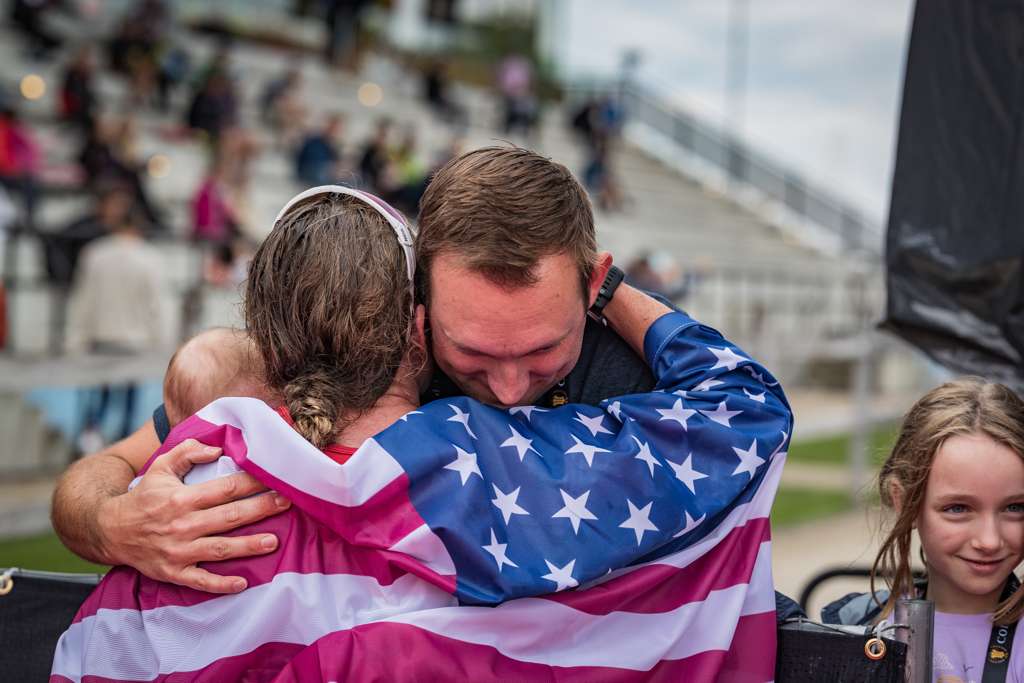
After competing at IRONMAN New Zealand earlier this month and then announcing your third pregnancy, how did you make the decision to race while very early pregnant? What conversations happened with your medical team and your family?
Jocelyn McCauley:
I’ve had 4 miscarriages trying for this 3rd baby. The last one was 10 weeks along. I did 70.3 Boise in my backyard but pulled out (planned) on the run because I was struggling with a bone injury. My family and I were all hanging out and enjoying all the friends around when I had the feeling I needed to run to the bathroom to check on things. I was bleeding. I ran out and told my husband we needed to leave right now. I called my midwife in the car and she said I could go to the ER or this could be fine and I could wait till Monday to get an ultrasound.
I didn’t feel like things were fine so we ended up in the ER and received the awful news. Many people would question my sanity to do yet another race while pregnant. Those people would have outdated information. Most “restrictions” in pregnancy have been shown to not be based in reality. There are some still shown to be valid but nothing saying that I shouldn’t or couldn’t race. I raced to prove that exercise and racing didn’t take my baby and fear doesn’t get to take me.
Namita Nayyar:
You have highlighted the need for better research on female athletes through pregnancy and postpartum. If you could commission one scientific study tomorrow, what question would you want it to answer? What does an optimized, evidence-based return-to-performance pathway actually look like for elite athletes from pregnancy through the first year postpartum?
Jocelyn McCauley:
Most guidance is overly cautious or too general. I want to know how athletes can come back best because right now women are navigating the most demanding transition of their career with guesswork instead of guidance.
Namita Nayyar:
How has motherhood—especially three pregnancies—changed your actual racing strategy? Do you take fewer risks, or paradoxically, more?
Jocelyn McCauley:
Fortunately Ironman distance racing isn’t extremely risky, but I am very much a different person when my racing personality comes out. I am there to do one job, win. I’ve pushed past the physiological boundaries many times but never “too” dangerously.
Namita Nayyar:
Walk us through a typical training week for you during early pregnancy versus a typical week when you are not pregnant. What modifications do you make automatically now?
Jocelyn McCauley:
Training makes me feel human so it is essential for me even through pregnancy. In or out of pregnancy I like to swim M-Sat, bike M-Sat and run 3-4 times a week. I take Sunday completely off to spend time with God and my family. I generally do shorter sessions in pregnancy and less intense. When I run I always wear a hip binder because all my ligaments are extremely lax. It helps me feel like my body isn’t just falling apart while I run.
Namita Nayyar:
What does a key “quality session” look like for Jocelyn McCauley in 2026? Please give us an exact workout example (e.g., bike intervals, long run with surges).
Jocelyn McCauley:
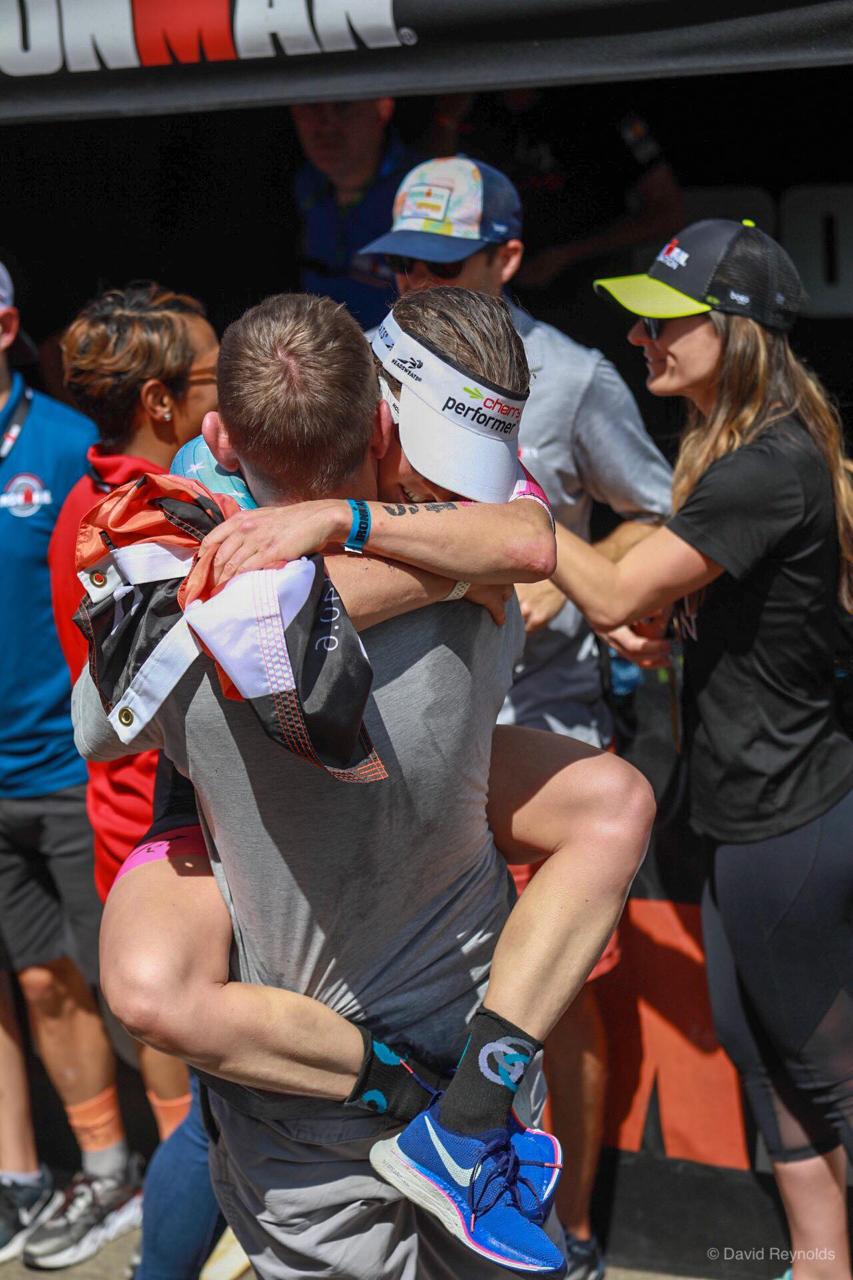
My favorite quality sessions are long rides on my bike in the time trial position. I love going out and doing a 4-5 hour ride with 4-6×30 min around IM power. My favorite quality runs are when my oldest rides her bike with me and we listen to an audio book or music together. The run would consist of 6x1km faster than threshold and then end with 30-45minutes of IM pace. My quality swims generally seem boring to most people but I love just getting into a rhythm. After warming up I would do 30×100 yds on a 1:30 sendoff but trying to come into the wall at 1:07.

Namita Nayyar:
You have now returned to elite form after two previous pregnancies. What is the single most important workout or habit that you have found accelerates your postpartum return faster than anything else?
Jocelyn McCauley:
Respecting recovery is the most important habit. That means that if recovery isn’t optimal or happening at all because of lack of sleep or not timing food well, I need to modify my workouts that day to respect the lack of recovery. I have learned the hard way that if you keep pushing when you aren’t recovered you will push yourself into injury, burnout, or just a plateau.
Namita Nayyar:
What is your honest advice about pelvic floor health for female endurance athletes who want multiple children and a long pro career?
Jocelyn McCauley:
Find a great pelvic floor PT and go to them before giving birth and after giving birth. Postpartum listen to your body and pay attention to the signs it’s giving you. I’ve heard of others training through rectal bleeds. If it doesn’t seem normal, it’s not.
Namita Nayyar:
How does your nutrition change across the phases: trying to conceive, pregnant, breastfeeding (if applicable), and full training again? Give us one specific change for each phase.
Jocelyn McCauley:
This may be a bit controversial. Because of the miscarriages and trying to get approved for a medication to help with that, but it being denied by anti-doping, I resorted to less mainstream treatments for fertility. One of the less mainstream treatments was extended fasting timed around my cycle. So the cycle we were able to get pregnant on I did an extended fast to improve the egg health before ovulation. While I’ve been pregnant I just focus on clean, healthy foods and listen to my body for amounts needed.
I have found breastfeeding to be the hardest time with nutrition. You have a newborn that requires a lot of time, but you also need to eat and drink lots. I have always made a PB&J before bed so I have an easy snack for the middle of the night feeding. In full training I go back to timing my food around my training. I target good meals and snacks after each training session.
Namita Nayyar:
On a heavy training day (e.g., 5-hour ride + run), what does your meal timing look like around family life? How do you fuel without making every meal a separate production?
Jocelyn McCauley:
When you have a heavy training day 8+ hours of training, it is inevitable you’ll train through a meal. Fortunately during those long days my family is self-sufficient and doesn’t need me to make food. In my training, I’ll focus on getting in 120g of carbs through Precision Fuel Hydration drink mix, gels, and chews. I find if I get in that much fuel I am able perform better, and recover a lot faster.
Namita Nayyar:
What is your “emergency fuel” when you are exhausted from a sleepless night with a child but still have a key session to complete?
Jocelyn McCauley:
My emergency fuel is always a caffeinated Precision Fue l& Hydration gel. I get caffeine and carbs (energy) in. I usually feel pretty invincible after taking one in.
Namita Nayyar:
You train in Boise (dry climate) and Texas (humid heat) at different times. How does your hair care routine adapt to protect against chlorine, sweat, sun, and two very different climates?
Jocelyn McCauley:
I’m pretty simple in my routine. I get my hair wet before getting in the pool so it absorbs less chlorine. In Boise because it’s dry, I wash my hair less frequently and in Texas I wash it more often.
Namita Nayyar:
Skin care for a pro triathlete mum: You are outside for hours, then indoors with kids. What are your three non-negotiable products for sun protection, post-swim repair, and post-workout cleansing?
Jocelyn McCauley:
I use a tinted sunscreen daily, a Vitamin C lotion in the morning, and retinol cream at night. I have disposable face washcloths I use after a training session.
Namita Nayyar:
Do you have a “3-minute face” routine for when you go from a morning trainer ride straight to a school drop-off or sponsor Zoom call?
Jocelyn McCauley:
I’ll use a disposable face wash cloth cleanser, some lotion, then just a quick application of mascara.
Namita Nayyar:
You have been honest about funding challenges as a mother in elite sport. What is the most frustrating conversation you have had with a sponsor about pregnancy, and what do you wish you had said?
Jocelyn McCauley:
I try not to carry frustration from specific conversations. I find that if I do I play the victim and stay stagnated rather than try to move on and progress. I’ve learned to say what I mean in the moment and stand behind it. What I like to enforce during these conversations is that I’m not asking for special treatment, I’m asking to be evaluated with the same long term lens and belief that is given to any athlete navigating a transition. Careers aren’t linear for anyone.

Namita Nayyar:
If you could design a “mother-friendly” professional triathlon contract today, what three clauses would be mandatory?
Jocelyn McCauley:
- Guaranteed contract protection through pregnancy and postpartum. That means no automatic reductions or terminations based on pregnancy, and a defined window of support that allows for both recovery and a realistic return to performance.
- Flexible performance and deliverable expectations. Pregnancy and postpartum aren’t linear, so contracts shouldn’t be either.
- Formal commitment to continued investment, not quiet disengagement. A mother-friendly contract should require the same intentional partnership and belief during that season as any other instead of a wait-and-see attitude.

Namita Nayyar:
What advice do you give to younger female pros that want children but are afraid it will end their careers?
Jocelyn McCauley:
I would tell them that there is almost never going to be a perfect time, and if you wait until your career feels completely settled or your trajectory feels totally secure, that moment may never come.
I never felt fully “ready.” I still had goals I wanted to chase, races I wanted to do, and plenty of uncertainty. But I knew I wanted children, and at some point I had to stop asking whether it fit neatly into my career and start asking what mattered to me in the bigger picture of my life.
So my advice is: don’t make decisions only from fear. Make them from what you actually want your life to look like years from now.
Namita Nayyar:
Looking beyond this third pregnancy and postpartum period, what is the specific race or result you are still chasing? Is there a podium or a course record you believe is still yours?
Jocelyn McCauley:
I still feel like there is a lot left for me to chase.
Ironman New Zealand will always be one of the races closest to my heart, and I absolutely plan to be back there in 2027 racing for the win again. That race means a lot to me personally, but I also believe I still have unfinished business there competitively.
And beyond that, I just had the best World Championship finish of my career, which gave me even more belief that my ceiling is still moving. I know there is more in me on that stage, and I would love a few more opportunities at Worlds to see just how far I can push that.
Namita Nayyar:
You have already won your age group at an IRONMAN, been the top amateur at Kona, and raced professionally for over a decade. What does a “successful end of career” look like for you now—different from what it looked like at 25?
Jocelyn McCauley:
Honestly, it doesn’t look that different.
From the very beginning, I’ve always just wanted to see how good I could be against the best in the world, and that hasn’t changed. I’m still motivated by the same question now that I was over a decade ago: what is my absolute best, and how does that stack up against the highest level this sport has to offer?
A successful end to my career isn’t about quietly fading out because I’ve done enough. It’s getting to the end knowing I stayed in the arena bravely long enough to find out what I was truly capable of.
Namita Nayyar:
Finally, on Mother’s Day 2026, what is the one sentence you want your three children to read someday about their mother’s career and choices?
Jocelyn McCauley:
I hope my children will one day see that I tried to honor God, live and race with integrity, and chase big dreams in a way that never asked me to sacrifice who I was.
Namita Nayyar:
Quick-Fire Round
Jocelyn McCauley:
- Boise or Texas for training? Boise
- Pool swim or open water? Pool
- One piece of gear you will not race without? PF&H Caffeine gel
- Postpartum comeback: best advice you actually used? Be patient and don’t race the comeback
- One thing you wish men in triathlon understood about pregnancy? It’s harder than we make it look
- Go-to post-kids-bedtime recovery ritual? Sleep!
Jocelyn McCauley Social Media Presence
Instagram: https://www.instagram.com/jocelynmccauley/
This interview is exclusive and taken by Namita Nayyar, President of womenfitness.net, and should not be reproduced, copied, or hosted in part or in full anywhere without express permission.
All Written Content Copyright © 2026 Women Fitness