



By Lindsey Ewert, RYT-200
Sleep can become more elusive as women enter perimenopause, menopause and the years beyond. Hormonal changes, hot flashes, stress, caregiving responsibilities and shifts in mood may all make it harder to fall asleep or stay asleep.

While yoga is not a cure for insomnia, a gentle evening practice may support better sleep quality by helping the body transition from the activity of the day toward rest. The goal is not to force yourself to sleep. It is to create conditions in which rest feels more accessible.
Try these five restorative practices before bed:
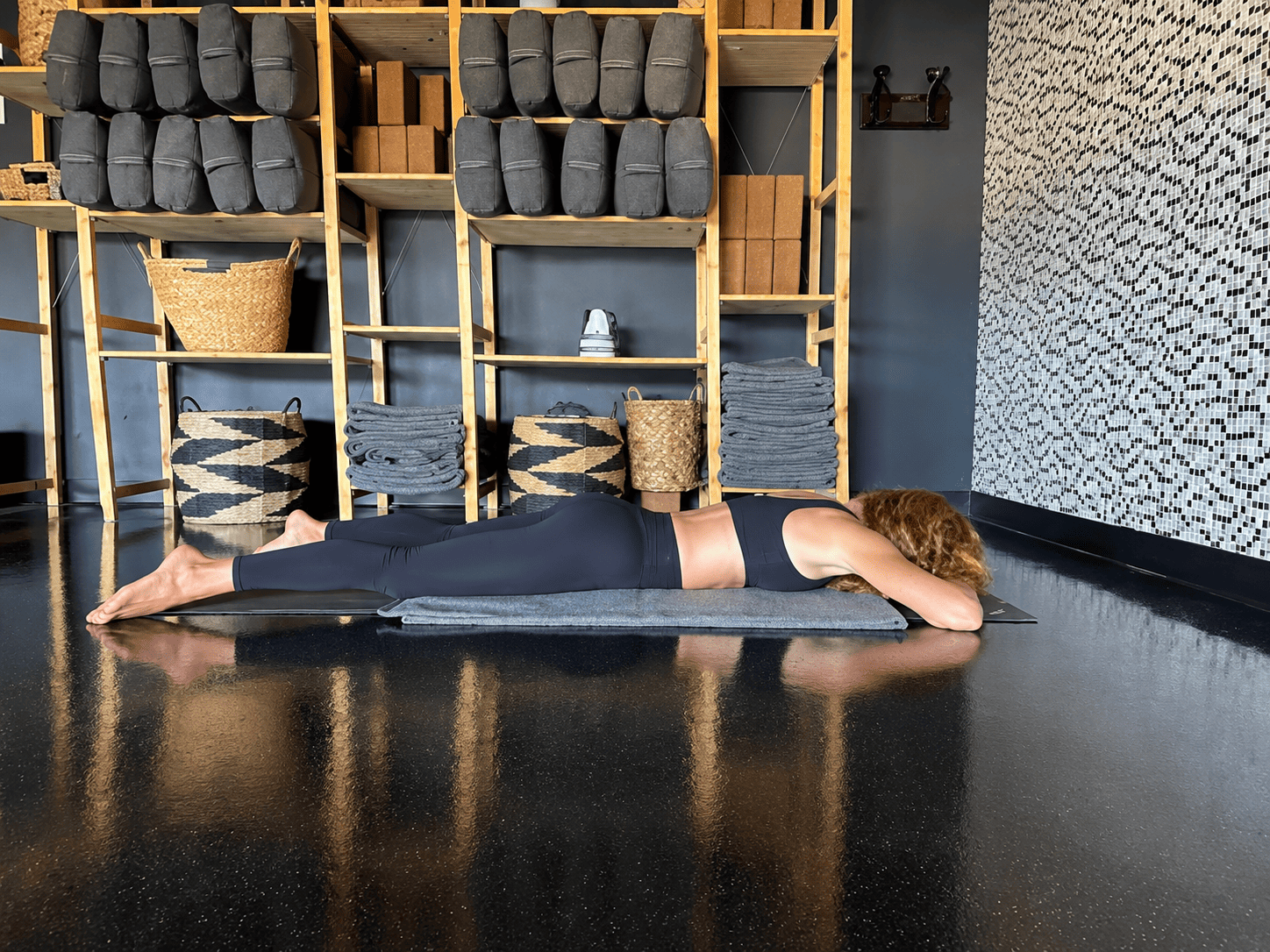
1- Crocodile Breath:
Lie on your belly with your head resting on stacked hands or forearms. Rest your forehead down or turn one cheek to the side, switching sides halfway through. As you inhale through your nose, notice your abdomen gently pressing into the floor and your breath expanding through the sides and back of your ribs. Slowly exhale out of your mouth, allowing the exhale to be longer than the inhale. Drop into the body and notice what is present without judgment. Continue for six to ten slow breaths.
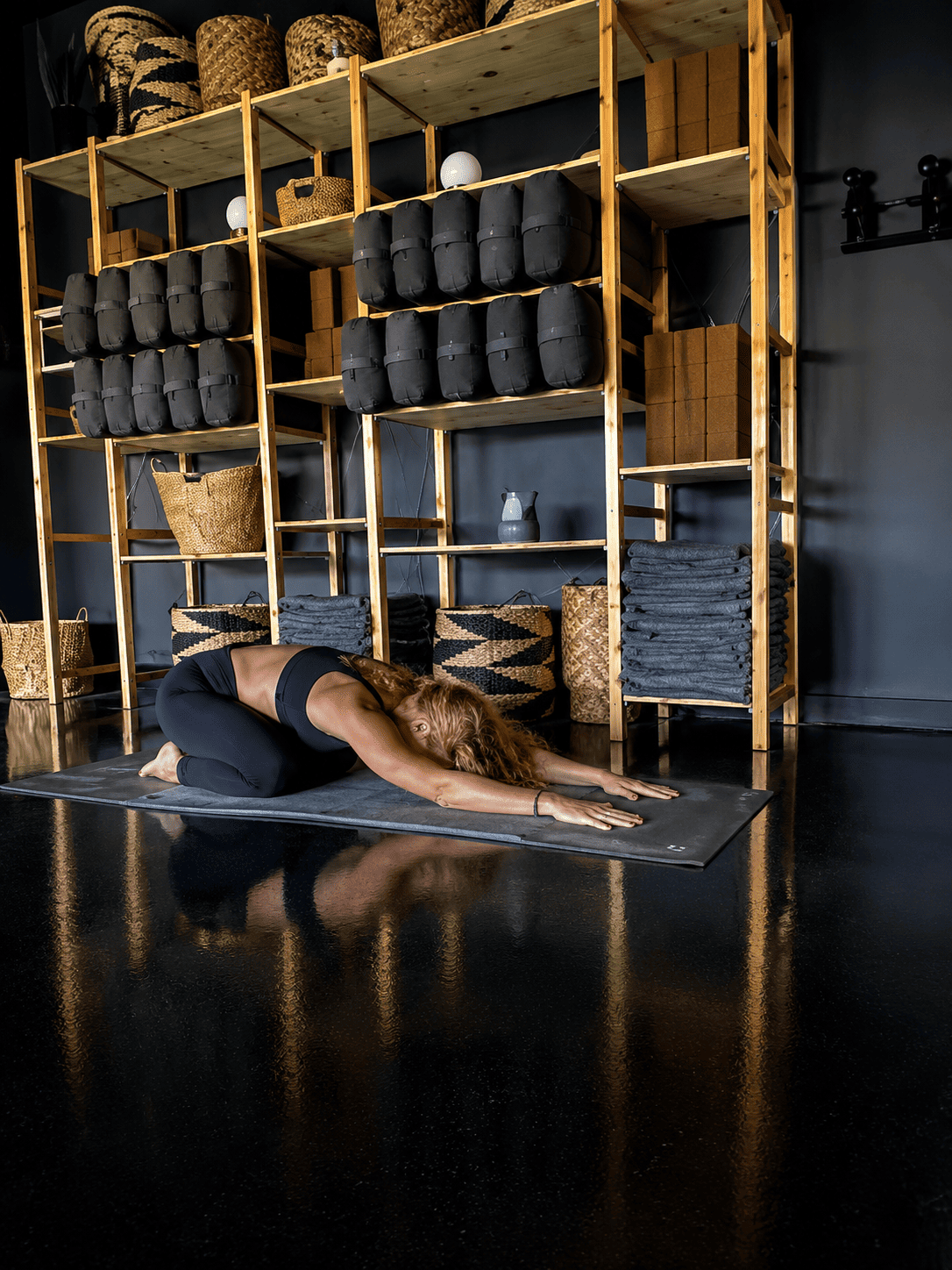
2- Supported Child’s Pose
Knees wide, big toes touch. Bring your hips toward your heels and rest your head on a pillow or bolster. Let your arms extend forward or relax alongside you. Allow the support beneath you to soften the effort of holding yourself up. Again focus on deep breathing.
3- Supported Bridge
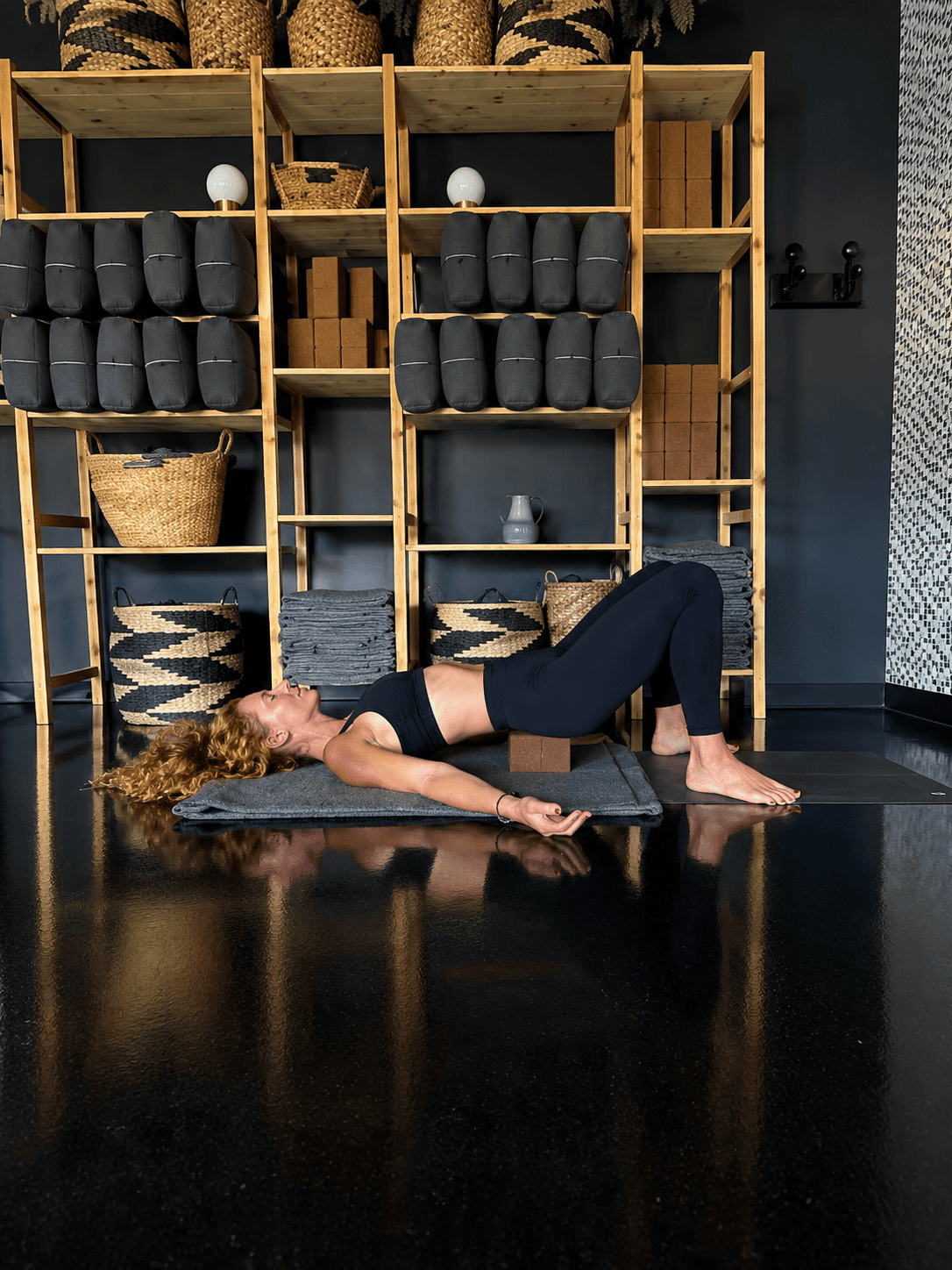
Lie on your back with your knees bent and feet grounded. Lift your hips and place a yoga block beneath your sacrum, rather than your low back. Keep the block on its lowest setting and allow your weight to settle into the support. If you don’t have a block, use a pillow or folded blanket for gentle support.
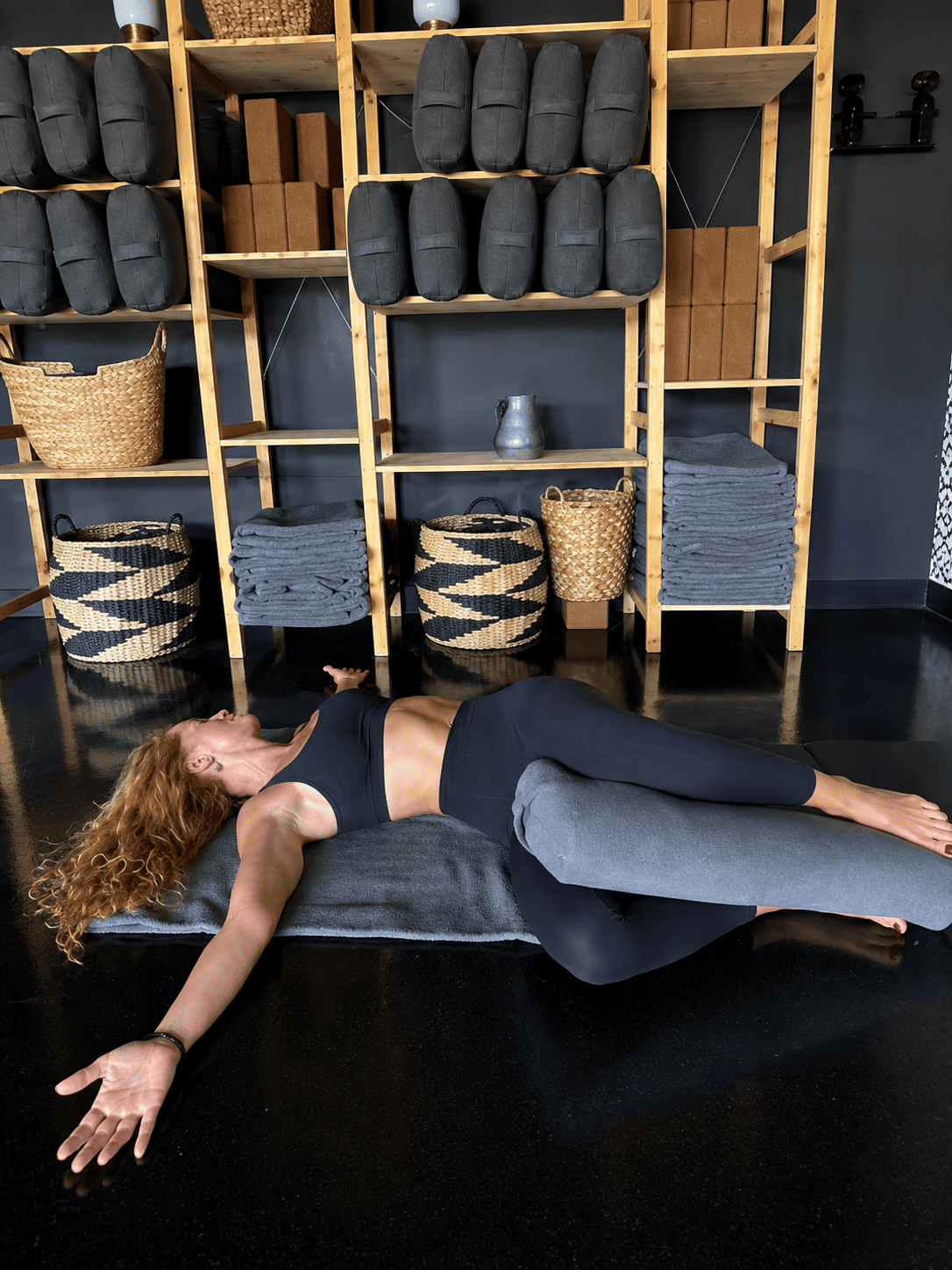
4- Supported Supine Twist
Draw your knees toward your chest, then gently lower them to one side. Place a bolster or pillow beneath or between your legs so you do not have to force the twist. Keep your shoulders relaxed and repeat on the opposite side.
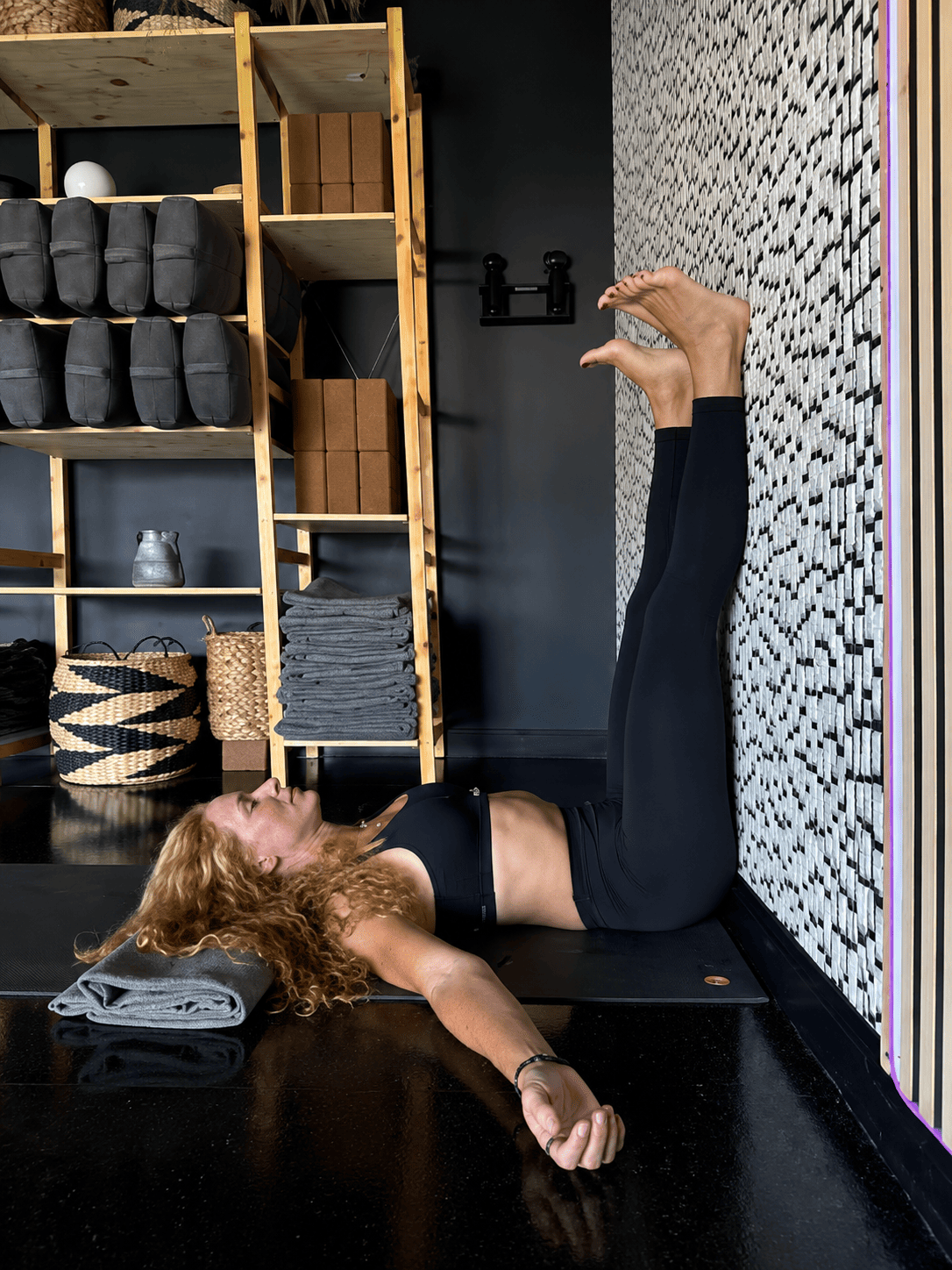
5- Legs up the Wall
Sit beside a wall, lower onto your back and extend your legs upward. Move farther from the wall if your hamstrings feel tight. Rest here for three to five minutes and allow your breathing to remain natural.
Finish by placing one hand over your heart and the other over your abdomen. Without straining, allow your exhale to become slightly longer than your inhale. You might silently repeat, “Nothing else is required of me right now.”
Consistency matters more than duration. Even five or ten minutes practiced regularly can become a meaningful bedtime ritual. Keep the lights low, move slowly and choose comfort over intensity. Consider adding relaxing piano music in the background.
Persistent insomnia deserves professional support. If sleep disruption continues or significantly affects your daily life, speak with a qualified healthcare professional.
Yoga cannot guarantee sleep, but it can offer a gentle way to let the day end and remind the body that it is safe enough to rest.