


By Mellara Gold
When period cramps arrive, yoga doesn’t need to become another thing to push through. Gentle movement may help ease menstrual discomfort, but I believe the deeper invitation is to listen: What would actually support my body today?

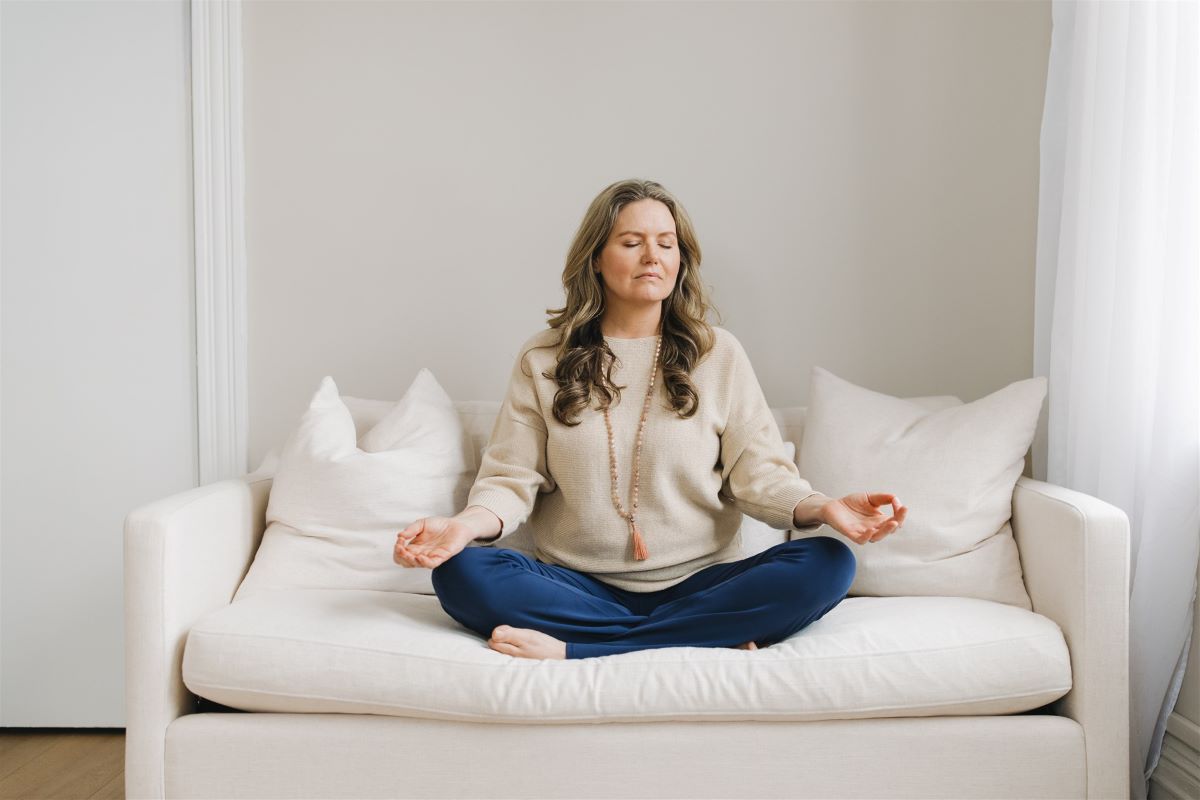
During your period, let comfort be the guide. None of these poses should increase cramping, pelvic pain, dizziness, nausea, or discomfort. Come out of any posture that doesn’t feel supportive.
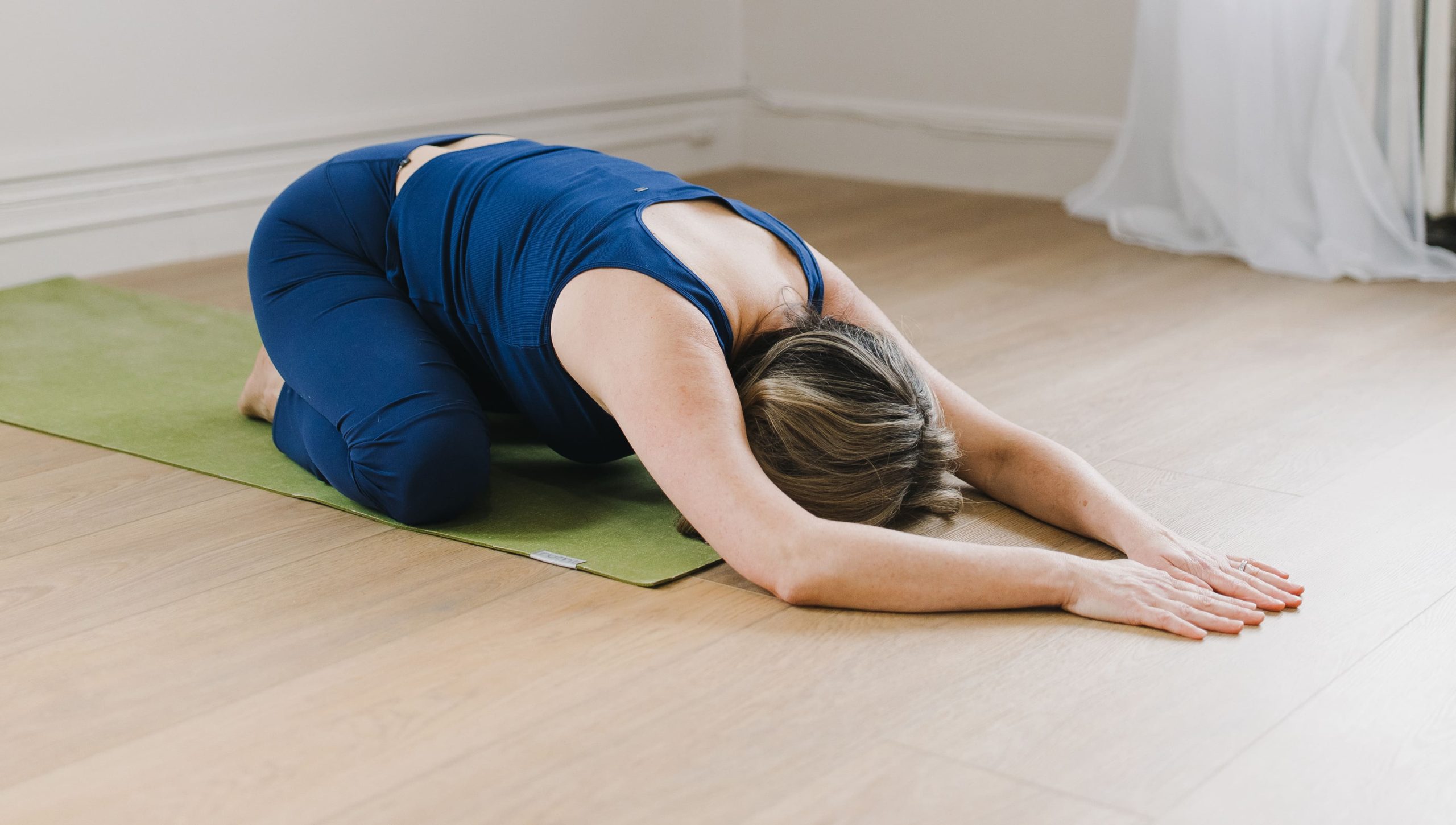
1- Child’s Pose
Begin on your knees and allow them to come comfortably apart. Ease your hips back toward your heels and fold forward, letting your forehead rest on the mat and your arms extend in front of you. Allow your belly and lower back to soften. Stay for 1–3 minutes, breathing slowly.

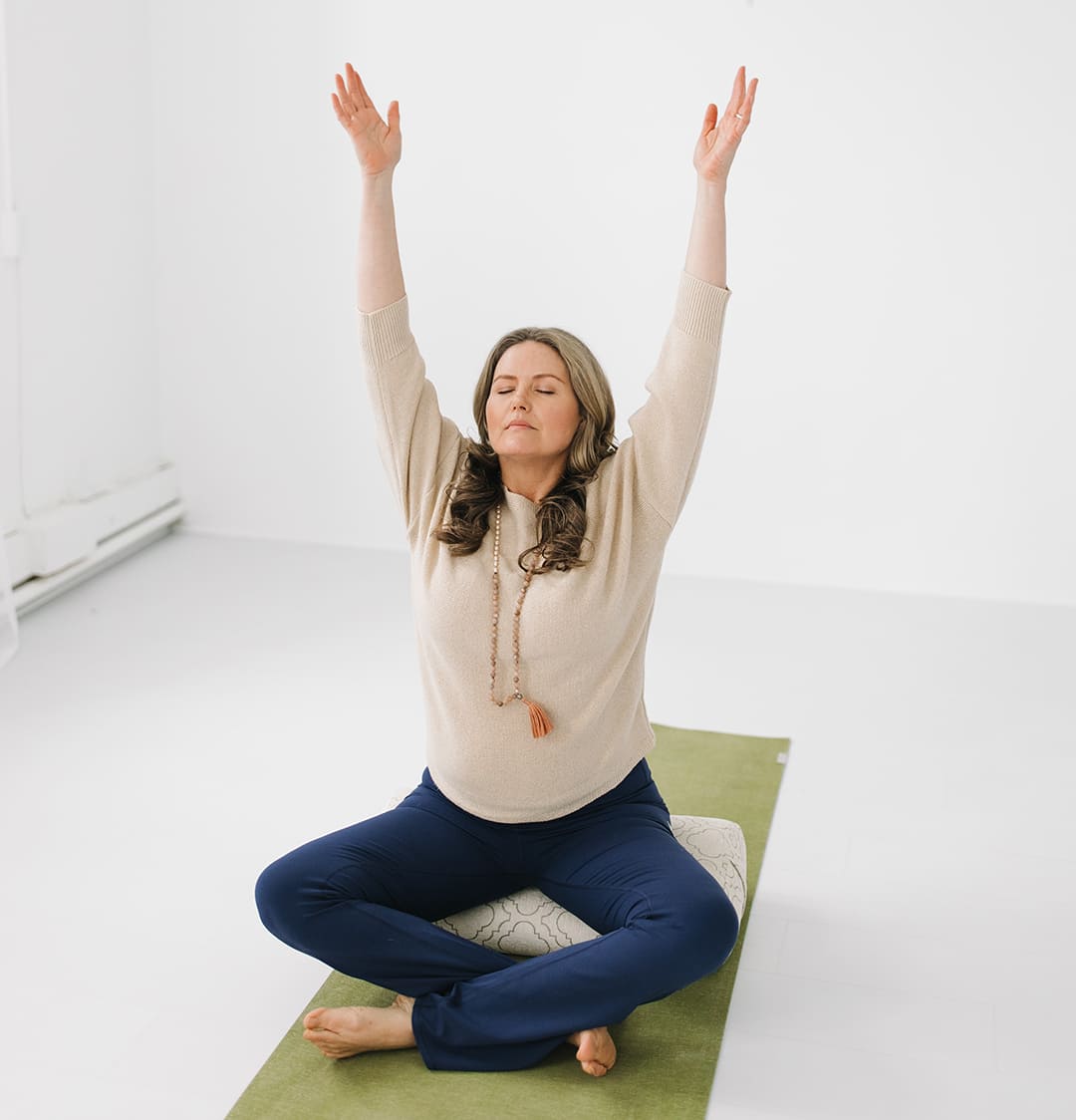
2- Easy Seat with Gentle Arm Sweep
Sit comfortably, elevating your hips on a folded blanket if needed. Begin with your hands at heart. As you inhale, sweep your arms overhead; as you exhale, open your arms wide and return your hands to heart. Let your breath determine your range and pace. Repeat 5–8 times.

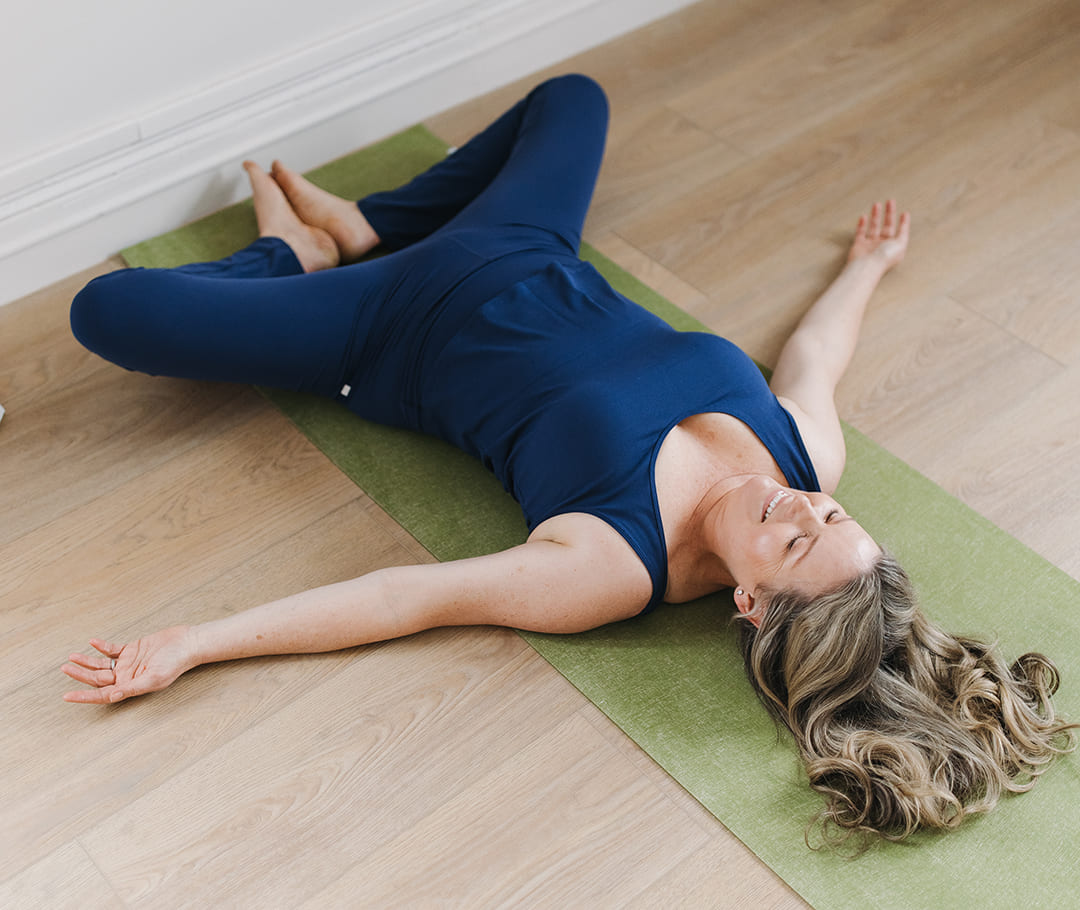
3- Reclined Bound Angle
Lie on your back, bring the soles of your feet together, and allow your knees to open. Move your feet farther from your pelvis for less intensity, and never press the knees toward the floor. Stay for 1–3 minutes.

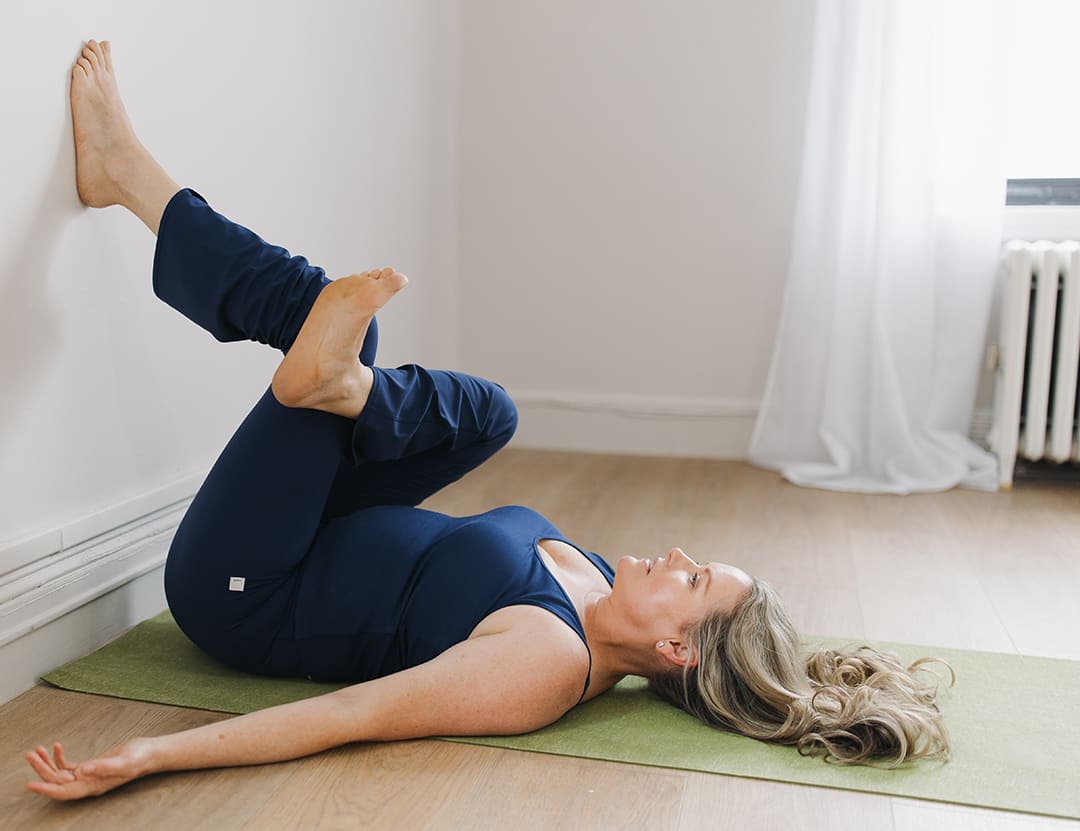
4- Reclined Pigeon at the Wall
Place both feet against the wall and cross one ankle over the opposite thigh. Adjust your distance until you feel a comfortable opening through the outer hip without strain. Stay for 5–8 breaths, then change sides.

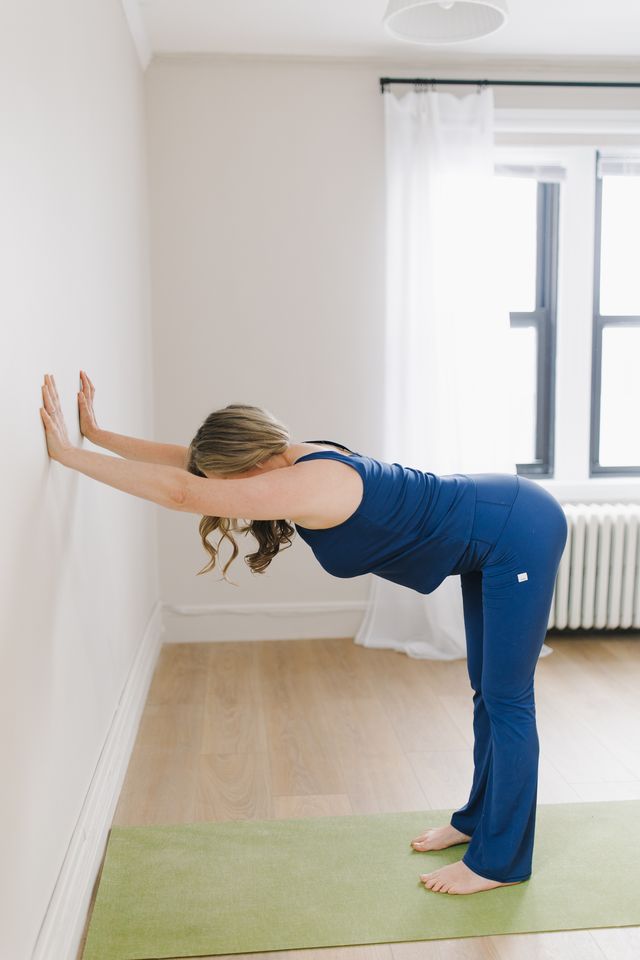
5- Right Angle at the Wall

Photography credit: Emily McCafferty Photography
Place your hands on the wall at approximately hip height and shoulder-distance apart. Walk your feet back until they are underneath your hips, and your torso is approximately parallel to the floor. Lengthen from your sitting bones through the crown of your head. This is a lovely alternative when Downward Dog doesn’t feel good during your period.
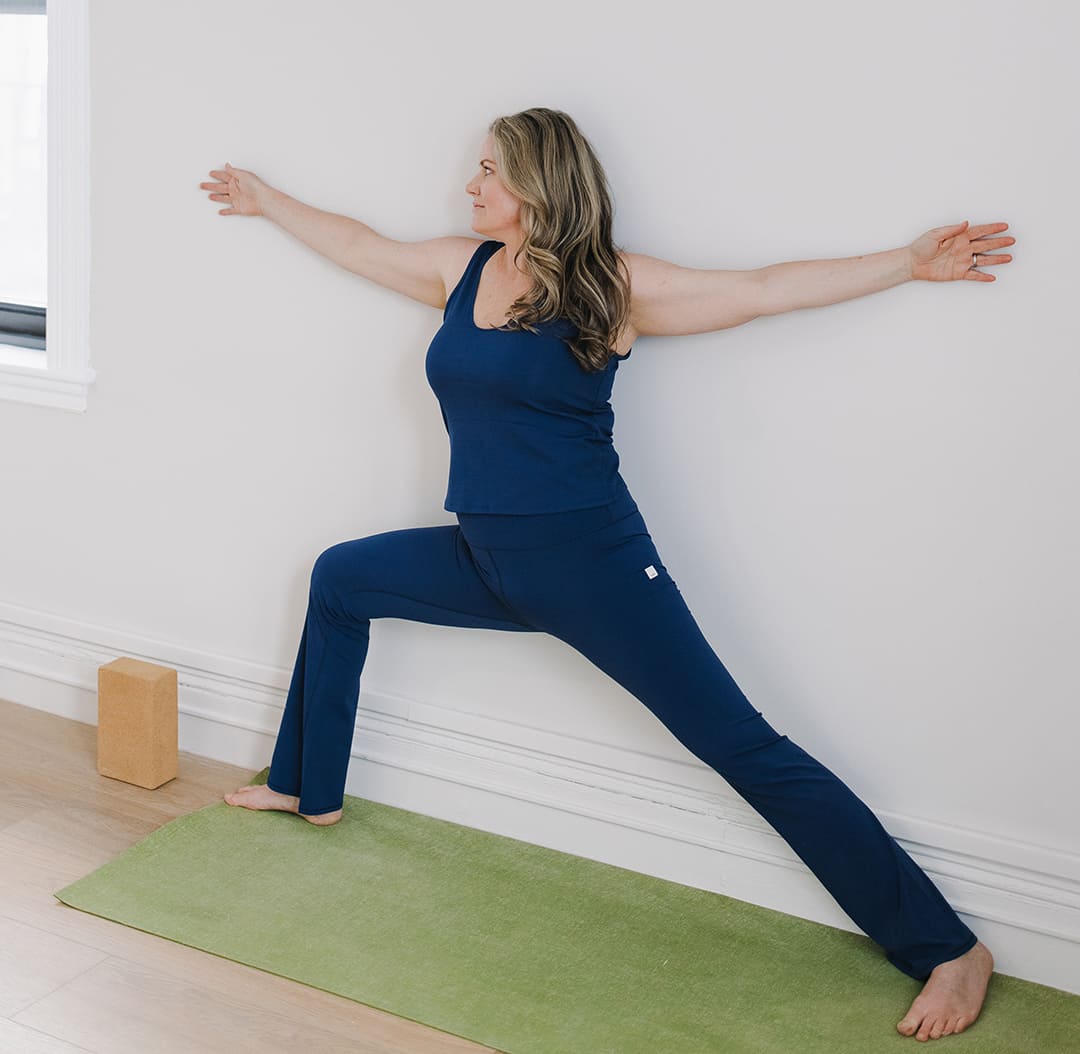
6- Supported Warrior II at the Wall
If you have energy and aren’t experiencing significant pain, add a little strength. With your right foot forward, position your front foot and knee a few inches away from the wall—or place a block in that space for support—while pressing your back heel into the wall. Breathe, then change sides. Skip this pose whenever your body asks for less.

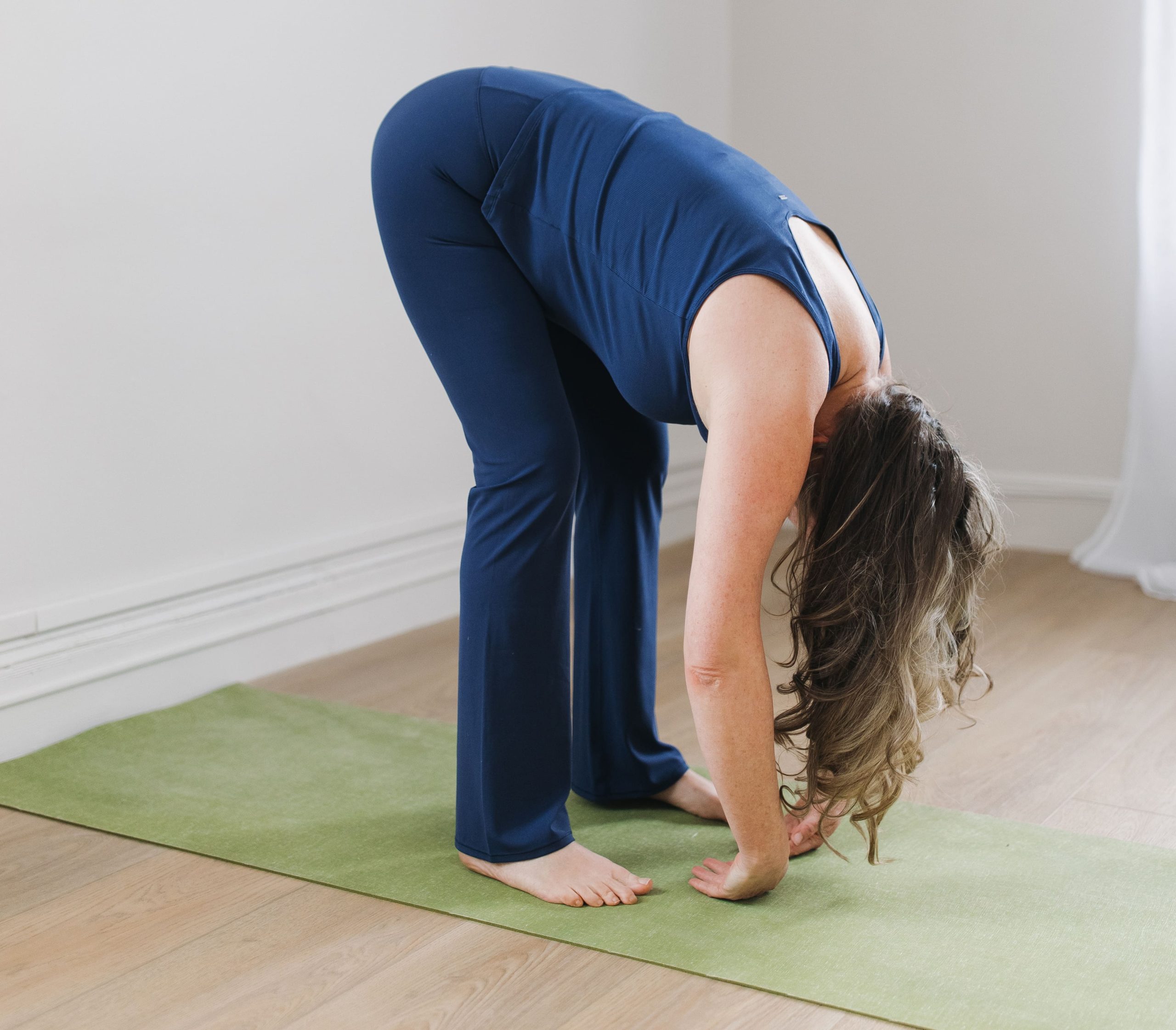
7-Standing Forward Fold
From standing, soften your knees and fold forward without forcing your legs straight. Let your head and neck release. Hands can rest on blocks if the floor feels far away. Stay for several comfortable breaths.

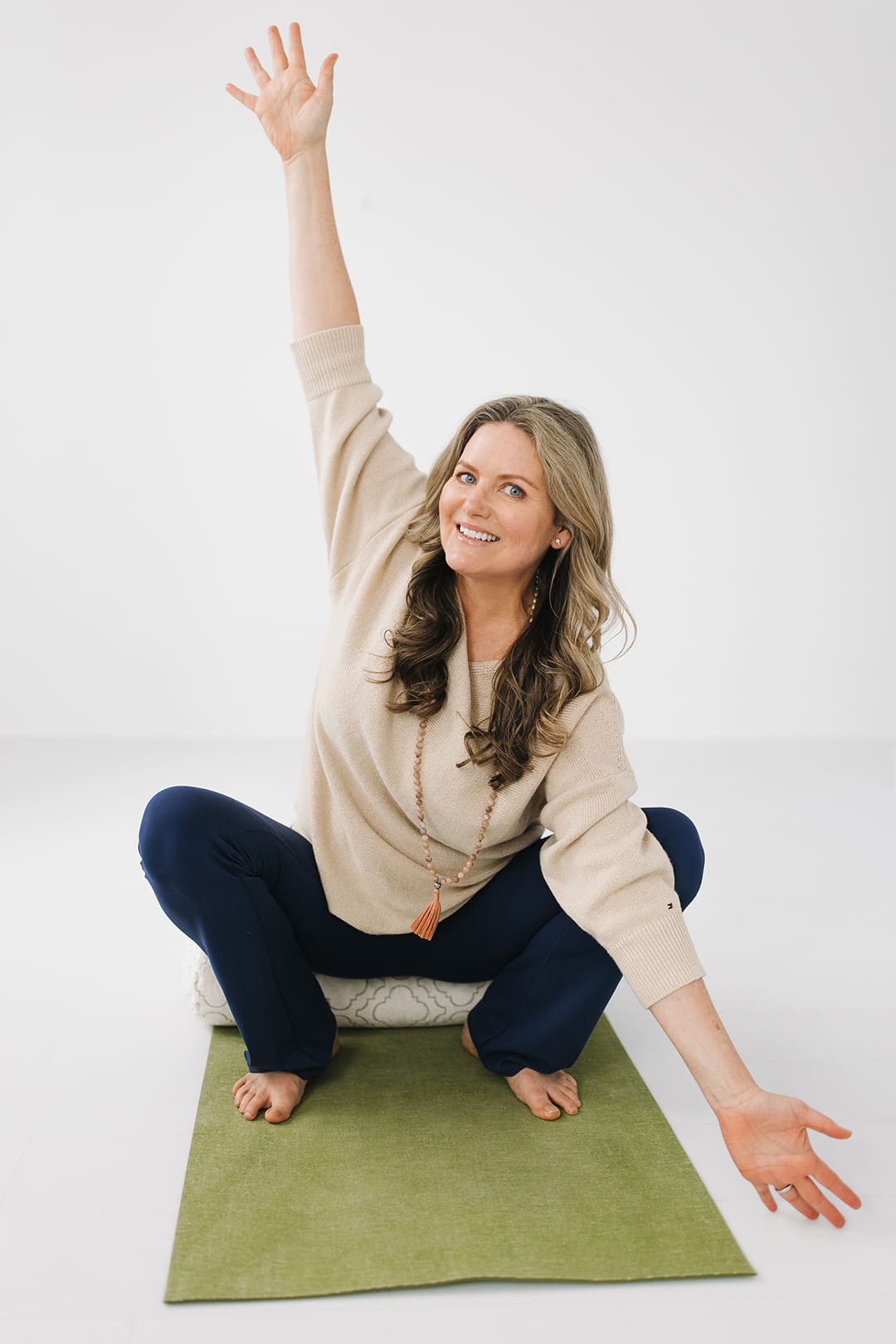
8- Supported Squat with Gentle Twist
Place a folded blanket beneath your heels if needed and lower into a comfortable squat, bringing your hands to your heart. Keep the toes pointing forward as much as comfortably possible. From here, place one hand toward the floor and gently reach the opposite arm upward, allowing the torso to rotate. Repeat on the other side. This position may support comfortable bowel movement, which can be helpful if constipation accompanies your period. Skip the twist—or the entire pose—if it increases cramping or pelvic discomfort.

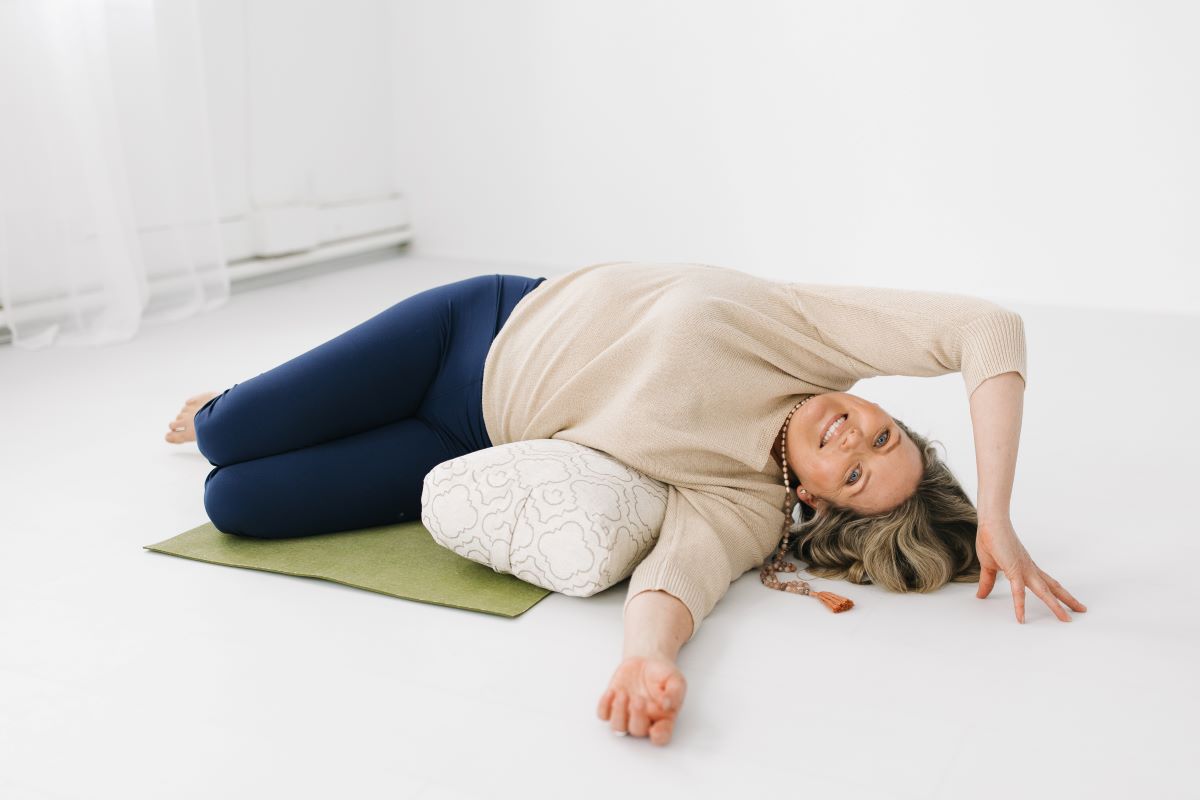
9- Supported Seated Side Stretch
Photography credit: Emily McCafferty Photography
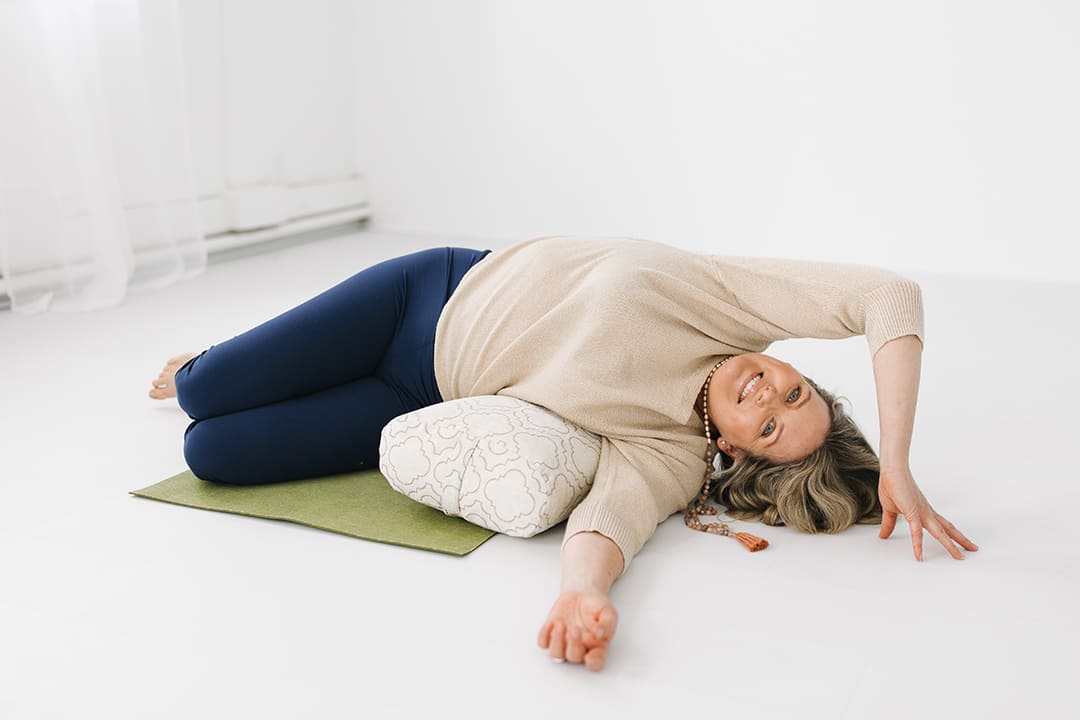
Sit with your knees and feet stacked and your sitting bones reaching slightly back. Place a bolster or two firm pillows beside you and slowly lower your side body onto the support. Extend the top arm overhead. If your head doesn’t comfortably reach the floor, place a folded blanket or block underneath it for support. Breathe into the side ribs and waist, then repeat on the other side.
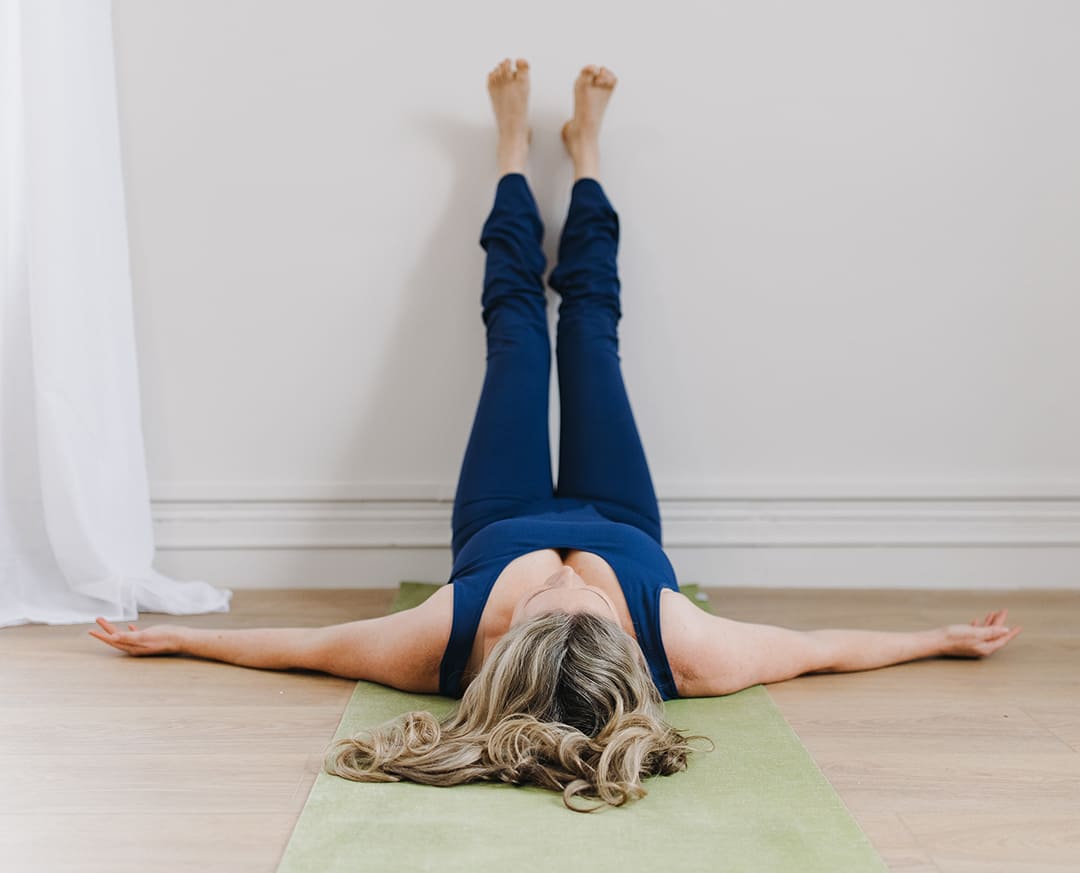
10- Legs Up the Wall

Photography credit: Emily McCafferty Photography
Finish on your back with your legs resting up the wall. Choose a distance from the wall that allows your legs and abdomen to relax. Let your arms rest easily, close your eyes, and stay for several minutes.
A practice that belongs to us has to be allowed to change with us. Some days that means strength; some days it means support. Perhaps you practice all ten poses—or perhaps you choose one.
Yoga doesn’t have to be another place where we override the body. It can be one of the places where we learn to listen.
Note: Period pain is common, but severe or worsening pain, or pain that interferes with everyday life, deserves medical attention.