Top 10 to Break Through Training Plateau

Starting your weight loss programme with gusto, losing a few pounds and then finding that your progress has come to a dead stop is a natural and common occurrence for many dieters. This plateau is a result of the body's constant need to maintain equilibrium.
When you start a new diet or fitness plan, you usually consume fewer calories but also burn more through exercise. As you're expending more energy than you take in, your body burns those few calories for energy first, then you begin to burn stored fat quicker than before, when your calorie intake was higher.
Your body, like a finely tuned machine settles into this new pattern of outgoing
and incoming calories and gradually adjusts by burning fewer calories in order
to safeguard its reserves. The result? Weight loss slows down as your body tries
to retain
fat stores so it can use its reserves as sparingly as possible.
It's at this point that you'll notice your eating and exercise efforts aren't producing results and that you can't seem to shift the weight any more. In order to break through the plateau, you have to do few things: alter your eating habits and change your exercise programme in a way that challenges your body.
 Add resistance training to your program.
A wonderful way to boost your metabolism and break through to the next level of weight loss is by incorporating aerobic exercise into your program, such as 30 minutes of walking three to four times a week. (If you are 35 years or older, or haven't exercised regularly, begin with 10 to 15 minutes two to three times a week.) In addition, weight training with free weights or machines several times a week can help increase muscle mass, which in turn allows you to burn more calories faster. Studies show that weight training can increase your metabolism overnight by five to 10 percent. Working out can increase your metabolism for up to 21 hours after an intense workout.
 Look out for hidden carbohydrates.
If your weight loss progress seems slow, look out for carbohydrates that might be sneaking their way unnoticed into your diet. Sugar can lurk in the most unexpected places such as ketchup, salad dressings, teriyaki and barbecue sauces. Watch out too for cornstarch, sugar or milk solids in many processed foods such as gravies, or sauces on frozen vegetables. Avoid "low-fat" foods where flavor is enhanced by sugar and other carbohydrates. Besides, don't be afraid of heart healthy monounsaturated fats like those found in olive oil, nuts, seeds, and avocado. The omega-3 fatty acids found in fish are quite beneficial as well. A little bit of fat will slow the entry rate of carbohydrate into your blood stream, keeping blood sugar stable and helping to reduce hunger, mood swings, and cravings.
 Try keeping a diet journal
for a couple of days of EVERYTHING
you eat and drink. You may quickly discover the hidden carbs that are keeping
your weight-loss progress stuck and be able to eliminate them and move past your
plateau.

 Go high-protein, low carbohydrates.
Unless you are eating enough protein to maintain your lean muscle mass, you are likely to have lost weight already from both your fat stores and muscle. Women need to eat approximately 100grams of protein a day in order to preserve their muscle tissue during a weight loss program. If you have lost some muscle during your weight loss program so far you will need to focus on protein so your body can build muscle, which requires more calories to sustain, which will in turn, kick start your weight loss again. Needless to say, any weight loss program you choose should be one that preserves your body's muscle and this does not happen!
 Get clear on your ultimate weight-loss goal.
Be sure that your weight-loss goal is realistic and that your expected rate of weight loss is reasonable. If you are on a heath enhancing, nutritionally rich weight loss program you can expect to loss one to two pounds a week. Each body has its own ideal weight and size. Don't compare yourself to anyone else, but listen to your body and notice what feels best for you. A simple way to approximate your ideal weight is by referring to a Body Mass Index calculator.
 Drink to burn up.
It's vitally important to replenish your fluids by drinking plenty of
water on
your weight loss program. An inadequate supply of water in itself can slow down
your weight-loss. Carry water with you wherever you go throughout the day. For
additional
weight-management benefits, add a high quality aloe concentrate to
your water to help keep your digestion in top shape. Keeping well hydrated not
only helps you burn fat efficiently, it also helps control hunger.

 Change Method of Doing Exercise
Another way to get past a plateau and force further gains is to simply do the already effective exercise, but change how you do it or use different equipment. For example, if you have been doing Front Shoulder Raise exercises with dumbbells, try using a barbell to perform the same Front Shoulder Raise, or do the cable version of the Front Shoulder Raise. One important strategy is to keep switching the way you do each exercise.
So for example, if on Day 1 when you train your chest, you use a barbell for the Bench Press, the next time either use dumbbells or a machine to perform the same exercise. This is a great way to add variety to an exercise you enjoy doing but still keep your muscles "guessing", forcing them to continue making great gains.
 Try New Exercises
The human neuromuscular system adapts to specific movement patterns, it is advisable to change your training exercises occasionally. If you have been walking for a long time take up running or jogging. Choose activities that you genuinely enjoy, and exercise at an intensity that challenges you.
Similarly, if progress comes to a halt in the Bench Press exercise, then either the Incline Bench Press, Flys, or Dips can serve as excellent substitutes to "shock" your muscles and promote further progress. Although all of those exercises target the chest muscles, the different movements require different muscle-fiber recruitment patterns that will stimulate further strength and development.
 Be Flexible
Whichever eating or exercise plan you choose be sure to
adjust it accordingly depending on how you feel and how your body responds.
Don't ever blindly follow a rigid diet or exercise routine based on someone
else's rules and guidelines. Be flexible and focus on small positive changes.
Balance, moderation, and common sense are key.
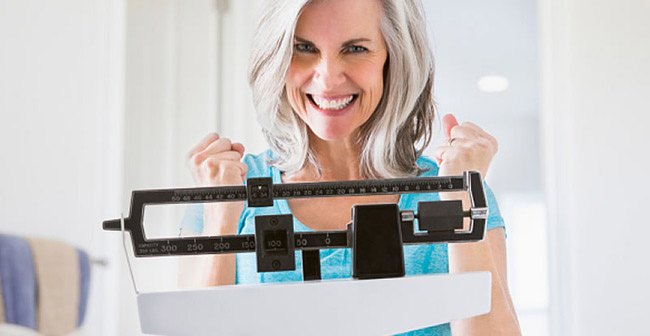
 Maintain the right attitude
The final, perhaps most important, component of weight loss success is your attitude. Pay special attention to your mental and emotional connections to food and exercise. If you find yourself sitting on the sofa, watching television and eating ice cream rather than working out, ask yourself why. There has to be some benefit to it, some payoff that, at the time anyway, seems greater than your long-term goal of health and fitness. You have to identify and acknowledge your fitness downfalls before you can do anything to change them. Remember that you can't continue doing the same thing the same way and expect different results.
If what you're doing is not working, make changes!
Listen To Podcast