


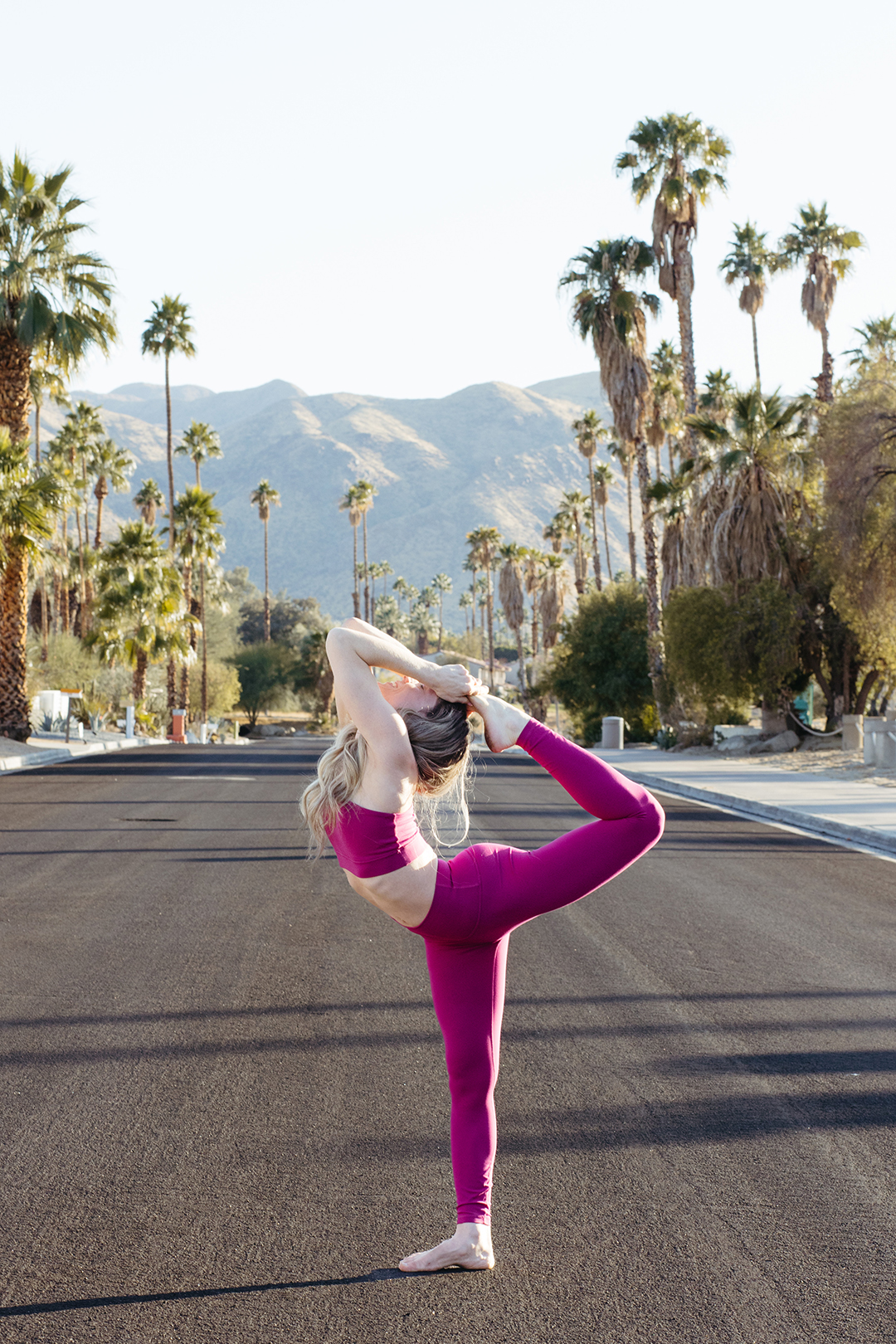
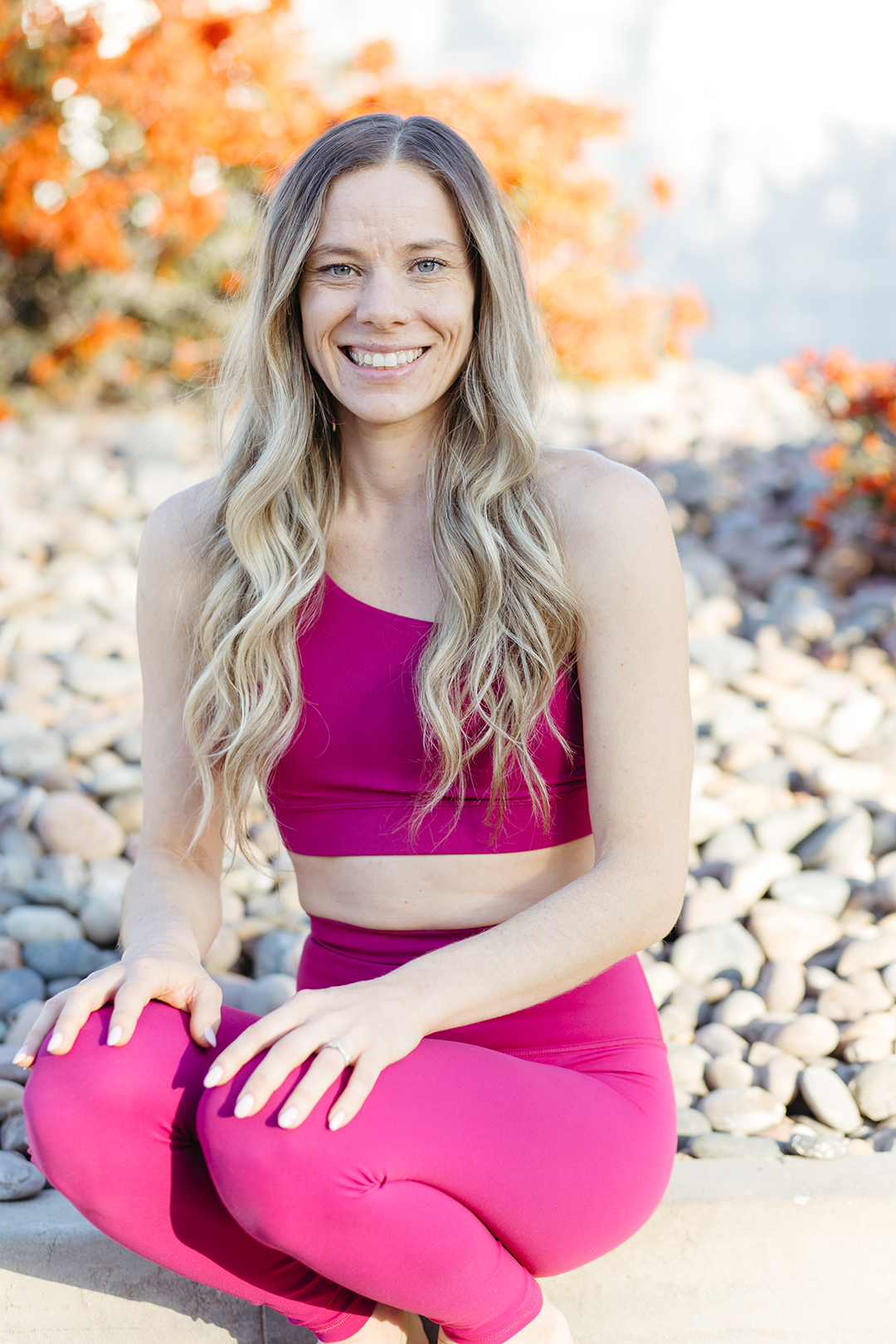
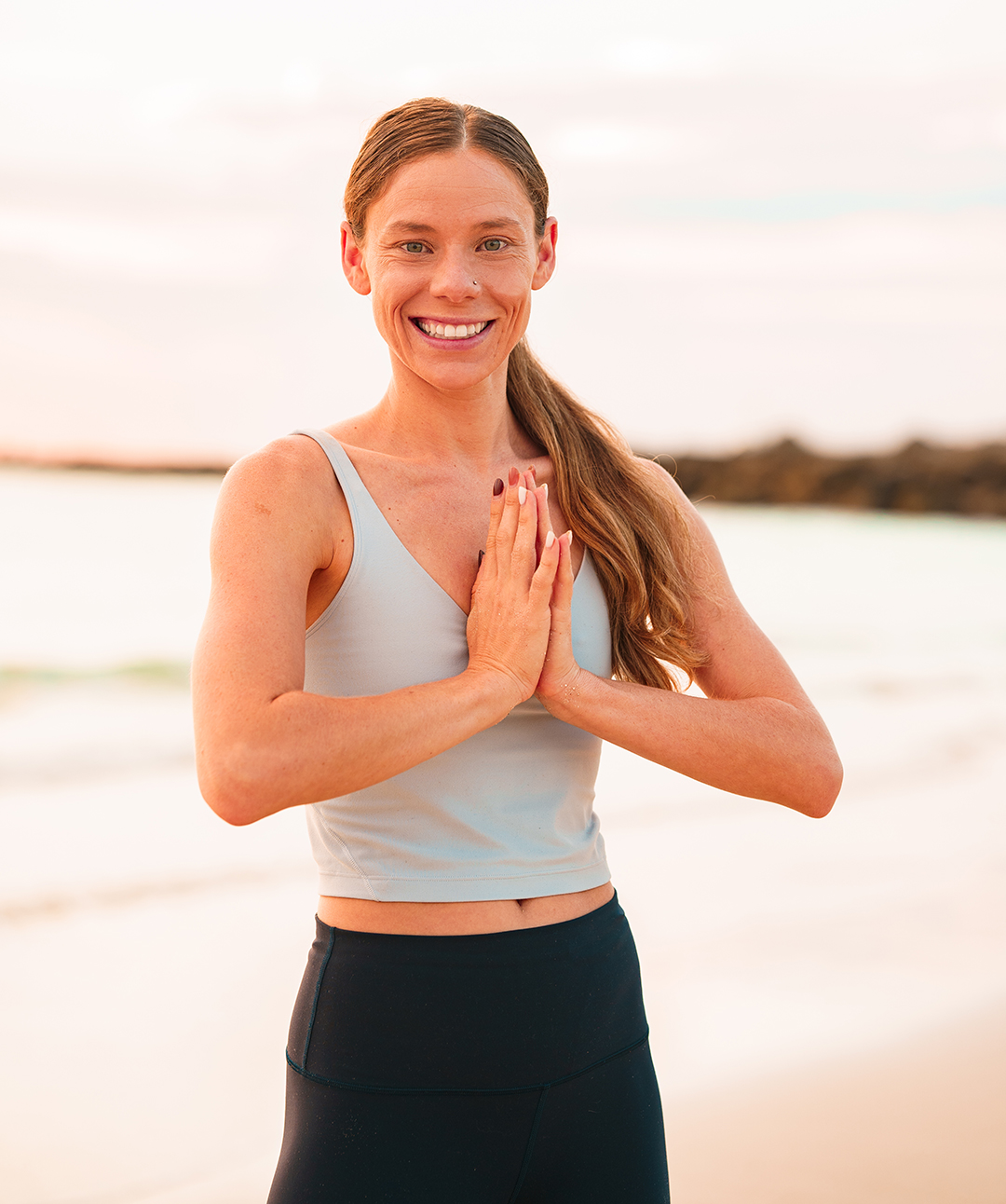
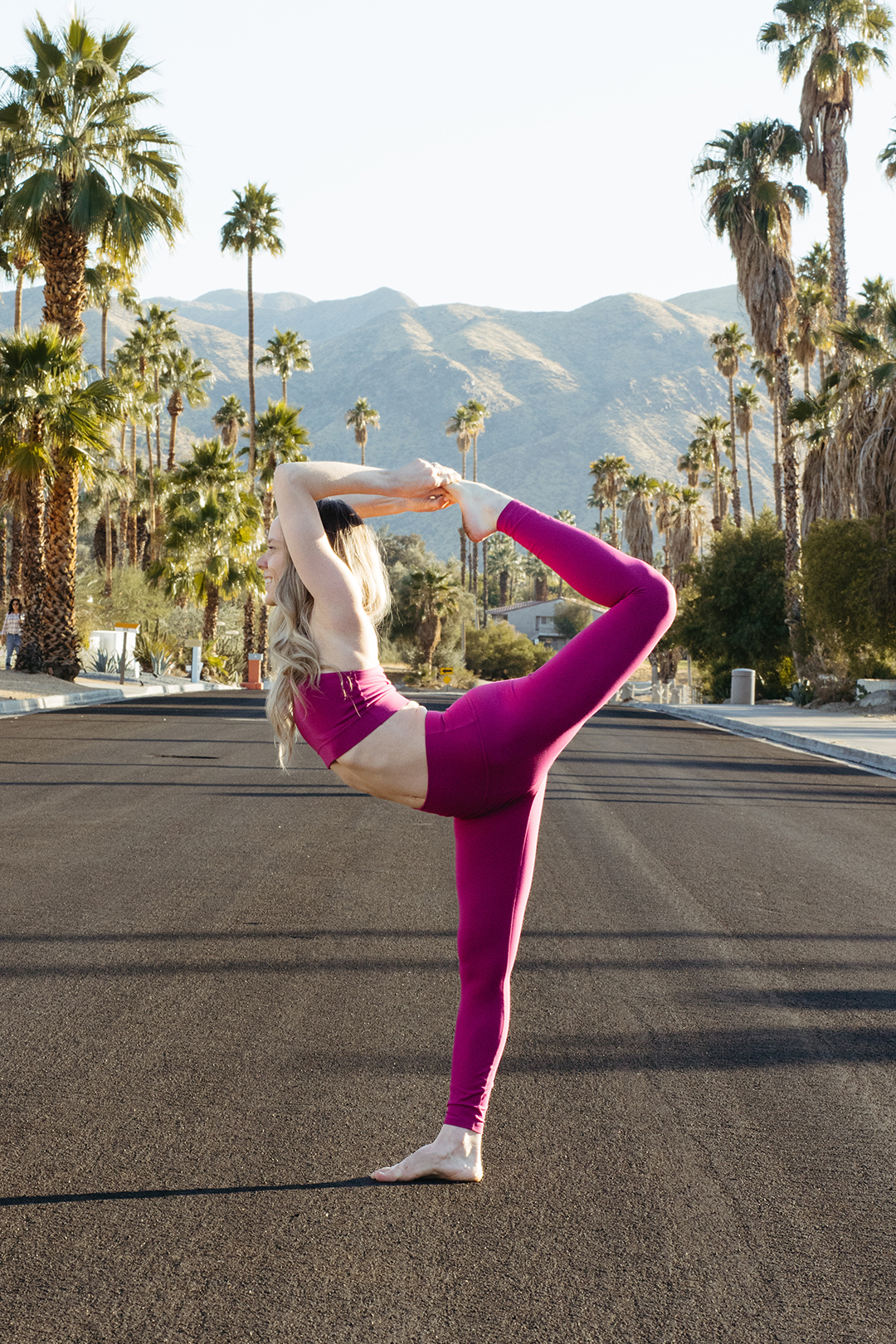
Juliana Larochelle, she is a yoga teacher’s teacher and founder of Creative Sequencing Studio, online education platform supporting yoga teachers worldwide with easy, effective class planning. With over 12 years of experience, she leads online 300-hour Yoga Teacher Trainings and offers done-for-you class plans to help teachers feel confident teaching. She specializes in creative yet accessible sequencing and weaving yoga philosophy into modern classes.
Women Fitness President Ms. Namita Nayyar catches up with Juliana Larochelle – an exceptionally talented and accomplished yoga teacher’s teacher. Here she talks about her fitness journey and the success story.
Namita Nayyar:
Welcome, Juliana. Thank you for making time. For our readers who may not know you yet, could you introduce yourself and the mission of Creative Sequencing Studio in your own words?
Juliana Larochelle:
Thank you for having me! I am Juliana Larochelle, a yoga teacher with 12 years of experience and the creator of #StealMyFlow on Instagram! The Creative Sequencing Studio is my solution to a problem I’ve encountered at different stages of my career. I did my 200-hour training on a quick retreat in Costa Rica, and when I got back to New Jersey, where I was going to college at the time, I barely knew the names of poses and definitely had no idea how to string together a sequence, never mind a creative one. We never taught a class in that training or learned the basics of sequencing, which I’ve found is really common in these condensed certification programs. During my first years of teaching, I actually wrote down flows from Yoga Girl’s YouTube classes because I was so lost.
When I finally did find mentorship from studios on the East Coast and became confident in sequencing, I was too burnt out from driving to a million studios just to make ends meet that I didn’t have the time or energy to actually implement what I learned. I hope to reach both younger versions of me through the Creative Sequencing Studio, my signature membership. The idea is simple: teachers receive weekly done-for-you sequences, dharma talks, and live classes so they can take the pressure off class prep and focus on teaching. Each week includes a brand-new sequence, a dharma talk, a playlist, and a live yoga class with me. This helps take the pressure off and gives teachers everything they need to deliver a memorable yoga class. All they have to do is show up and be themselves.
Namita Nayyar:
The term “yoga teacher’s teacher” is powerful. What does that responsibility mean to you, and how does it shape your approach to creating educational content?
Juliana Larochelle:
While I am grateful to my 200-hour training for giving me a jumping-off point in my yoga teaching career, I left it feeling pretty unprepared and unsatisfied, like far too many other yogis. I dedicated years to learning everything I could about yoga, from sequencing to philosophy. I studied in Vrindavan, India, in my 20s to finally wrap my head around yoga off the mat, and I recently had the opportunity to return with my own retreat group, which was a really full-circle moment.
When I finally found confidence as a teacher, I ran into a lot of toxic “mean girl” behavior at other yoga studios that made me question my own value. Add the pressure of teaching up to 20 classes a week and it’s a recipe for disaster, specifically burnout. Unfortunately, this is extremely common for yoga teachers, and I want to save others the time and struggle I went through. Because of these experiences, I approach educational content with a lot of empathy for teachers. I want it to feel practical, supportive, and actually usable in the real world of teaching.
I healed myself so I could be a healer. I have been to the darkest parts of myself and come back guided by my own light. I know the power of yoga through my life and study, so I have committed myself to making this practice fun, creative, and easy for others, so we can all continue to spread yoga far and wide. Through my classes, the membership, retreats, and workshops, I show teachers that teaching yoga can actually be easier and, importantly, sustainable.
Namita Nayyar:
With over 12 years of experience, what is the most significant shift you’ve witnessed in how yoga teachers approach class planning, and how has your platform evolved in response?
Juliana Larochelle:
I’ve noticed that many yoga teachers still spend hours planning classes and second-guessing their sequencing, which is exactly what I experienced early in my career. I used to spend hours writing out sequences only to stand at the front of class, totally blank out, and question every single pose. And honestly, until I created my own formula for sequencing classes, that’s what my preparation process looked like — up until 1 a.m. trying to find the right flow, only to feel like it came out all wrong when I taught the 6 a.m. sunrise class the next day. It wasn’t until I learned to teach in a progressive manner that I finally got my time and confidence back. That’s why I do what I do, so other yoga teachers don’t have this uncomfortable start to their career and are actually set up to succeed. My platform has evolved in many ways over the years, but I really found my purpose when I started teaching other teachers how to creatively sequence through the studio, the membership, and my other work.
Namita Nayyar:
Your specialty is “creative yet accessible sequencing.” Can you walk us through your core principles for building a sequence that feels both fresh and safe for a mixed-level class?
Juliana Larochelle:
Totally! This is the entire concept behind my Sequencing Remix Method, which I am starting to offer as weekend immersions, and I’m really excited about it. Like I’ve mentioned, and I’ll keep saying because I believe it so deeply, teaching yoga can be easy when you are equipped with the right tools. This is my driving force. Through my method, I show teachers how to remix their go-to poses. Any yogi is probably familiar with this sequence: Warrior II, Reverse Warrior, and Extended Side Angle. There is absolutely nothing wrong with that. But it’s fun to breathe some new life into it by cactusing the arms during Warrior II, or moving into Reverse Warrior or Extended Side Angle in an unexpected way, like pretending to push the wall away in front of you, or doing a cactus twist or thread-the-needle variation with the arms.
All these variations make the sequence feel fresh and unexpected to your regular students while still being accessible to someone new to yoga. This is what teaching in a progressive manner is all about. If I had a yogi with 30 years of experience and another who did their first sun salutation last week, I would take them step by step through poses in a way that empowers them.
For Half Moon pose, I might cue students to first take their hands to blocks for a modified Warrior III. Then they can stack their hips and perhaps lift one hand off the block, stacking their shoulders. If this feels easy for them, they can remove the bottom hand from the block and reach for the floor, or perhaps draw an elbow-to-knee connection. See how this offers students options and allows them to break down the pose progressively, rather than just firing off “Half Moon pose”?
Full Interview is Continued on Next Page
This interview is exclusive and taken by Namita Nayyar, President of womenfitness.net, and should not be reproduced, copied, or hosted in part or in full anywhere without express permission.
All Written Content Copyright © 2026 Women Fitness

Namita Nayyar:
Weaving yoga philosophy into modern classes is a hallmark of your work. How do you make ancient texts like the Yoga Sutras or Bhagavad Gita relatable and relevant to a 21st-century student in, say, a 60-minute vinyasa flow?
Juliana Larochelle:
I first read the Bhagavad Gita in college and was immediately hooked by the characters, stories, and life lessons I was absorbing. When I was given the chance to travel to India with my professor for two weeks, I knew I had to go. I lived in an ashram for two weeks, and my eyes were opened to a whole new part of yoga that didn’t deal with pretty poses but rather deep meditation and philosophical work. I left after those two weeks, certain it wouldn’t be my last time there, and thankfully, it wasn’t.
I returned to India shortly after, while my professor was on sabbatical there, teaching about the Yoga Sutras from an insider perspective. I lived in the ashram for four months that time, studying Vedic psychology and healing wounds I didn’t even know I had. I even returned again this past March with my own group and was reminded once again how important it is to teach yoga beyond the asanas.
I poured all of that knowledge and more into my 300 Hour Yoga Teacher Training, where I help teachers write their own dharma talks that reference yogic principles. I believe we can change the world this way, by sharing little nuggets of wisdom. In a class setting, that often means offering a simple story or reflection from these texts and connecting it to something students are experiencing in their everyday lives. Most of us have probably had a yoga teacher say something in class that hit us hard, in the best way. While it can feel intimidating at first, trust me, I started doing this while teaching at a gym in New Jersey during the Jersey Shore era, it really resonates with people.
To this day, one of my favorite feelings is hearing a student say they felt I was telling them exactly what they needed to hear in my talk that day. I also sell my dharma talks and have a digital book for teachers who want to borrow them or use them as a jumping-off point for their own classes.
Namita Nayyar:
Many teachers struggle with confidence. Beyond your done-for-you class plans, what is one fundamental piece of advice you give to teachers to help them build authentic confidence in their own voice and style?
Juliana Larochelle:
I am a big believer in having a plan. While I adapt to the students in front of me, of course, I am unashamed to say that even after teaching for more than 12 years, I always have notes at the top of my mat. I’m not reading off the paper cue by cue, but having a general outline gives me a solid base to fall back on if I forget a transition or get flustered.
The other thing I often remind my students is that while there are many yoga teachers, we all have our own individual styles. Every single yoga teacher has a unique and important perspective to offer, and there is room for everyone. The more you lean into your own magic, the greater impact you will have on your students.
Namita Nayyar:
The online yoga education space is vast. What gap did you see that Creative Sequencing Studio uniquely fills, and how do you ensure your online 300-hour training fosters genuine community and connection?
Juliana Larochelle:
My Creative Sequencing Studio is unique in that it supports teachers at every stage of their careers. As I said when we began, I built it to support two very different teachers: the beginner who doesn’t yet know how to sequence and the seasoned instructor who is short on time. It offers every part of the class you need, from creative and accessible poses to a dharma talk so your yoga philosophy is present, too. The class plans also give teachers time to fill their own cup, which can be difficult when you’re spending hours planning classes.
My 300-hour training has quickly become one of my favorite offerings. Teaching online can be tricky, but I strive to create a space that still feels intimate and supportive through the screen. We meet for hours at a time, which naturally brings everyone closer together. I also offer an in-person session at the end, which has been really special. Last year, I even co-led a class at a yoga festival with my graduates, and it was one of my career highlights.

Namita Nayyar:
Your professional life revolves around movement. What does your personal movement and fitness regime look like? Does it include practices outside of yoga (e.g., strength training, hiking, dance) to complement your asana practice?
Juliana Larochelle:
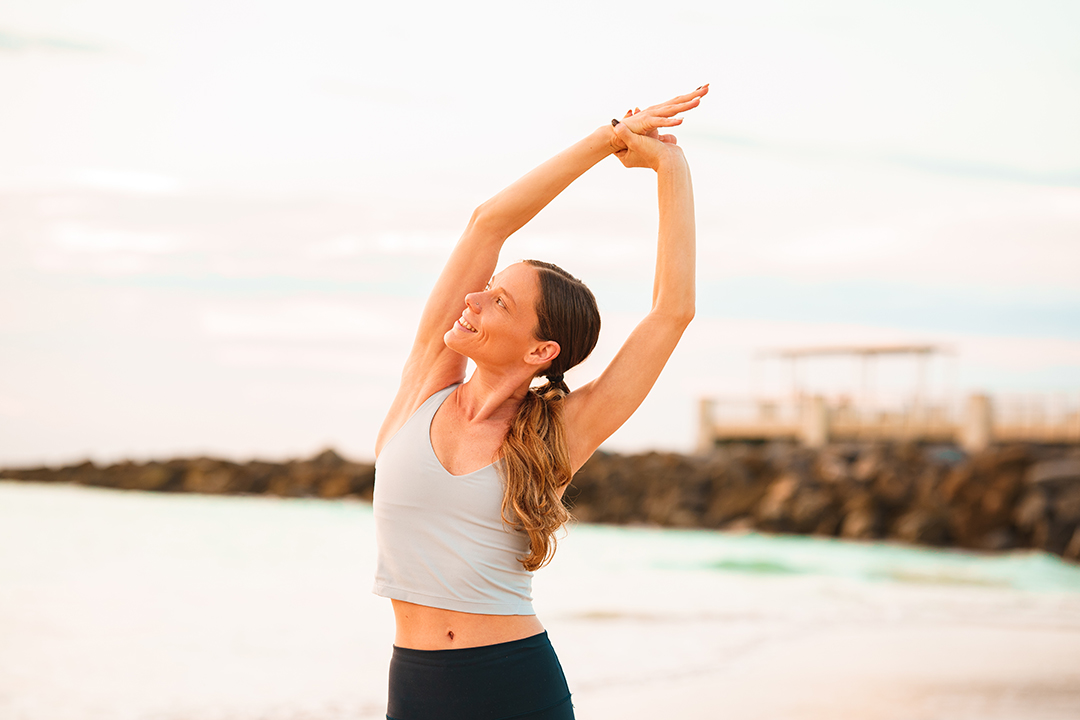
My personal movement and fitness routine includes a mix of different practices that support my yoga. I do strength training at the gym at least twice a week, focusing on heavier weights. I also love practicing acro yoga with my husband.
In terms of my own asana practice, I tend to gravitate toward slower flows and restorative classes, which help me, slow down and balance everything else I’m doing.
Outside of yoga, especially in the summer around the D.C. area, I love getting outside to hike. My husband and I also have a tandem bike, which is something we really enjoy doing together.
Namita Nayyar:
How do you approach exercise and workout structure? Is it intuitive, highly planned, or seasonally varied? Do you follow your own sequencing principles for your personal practice?
Juliana Larochelle:
I’m hypermobile, so strength training is really important to balance out my yoga practice.
I didn’t always approach it this way. I was a die-hard yoga girl and didn’t enjoy the gym, but I’ve learned that my body needs strength and load.
So while I don’t love going to the gym, I know it’s part of what my body needs. Yoga also teaches discipline, or tapas, which for me means doing what you need to do even if you don’t like it.
I do follow my own sequencing principles in my personal practice. One of the fun parts of creative sequencing is that you get to break the rules, but I still come back to the structure I teach. I also take my own classes from the Creative Sequencing Studio.
Namita Nayyar:
As someone who teaches movement, how do you listen to your body’s needs on a day when energy is low or motivation is lacking?
Juliana Larochelle:
I think what helps me most is carving out time for my practice. I always go to a teacher’s class before I teach, and that routine helps me stay grounded so I don’t get to a place of burnout.
If my energy is low or motivation is lacking in my own practice, it comes back to discipline and having a schedule. I still show up, but I choose what style I need that day. That’s something I love about yoga, there are so many different options. If my energy is low, I can do restorative, yoga nidra, yin, or a slower flow.
But when it comes to teaching, I put my own stuff aside and show up for my students, and I always feel better after.
Namita Nayyar:
How would you describe your approach to diet and nourishment? Is it tied to yogic principles (like sattvic foods), or has it evolved into a more personal philosophy?
Juliana Larochelle:
Yes, how I approach diet now is related to the principle of Ahimsa, or non-violence. Believe it or not, I boarded my first flight to New Delhi with a ribeye steak my mom packed for me in a Tupperware container. I had just started studying yoga philosophy then, and I knew eating meat was considered a firm no-no. The Yoga Sutras teach that animals have the same souls as humans. Before that trip, I struggled with this idea, but I still ate the meals my Italian mother prepared for me.
My time in India opened my eyes to a culture so different from mine that it made my head spin. We lived in a cow sanctuary where we could run outside each morning and pet the cows. Cows are considered sacred in India, and we also ate vegetarian meals while we were there.
One of our leaders told us that stepping our feet directly in cow poo would have the same effects as espresso, so one morning, a friend and I tried it. While I’m not sure it worked, and it definitely made for a lot of giggles, it became clear to me on that trip, with my feet covered in cow dung, that I would stay vegetarian.
Now, ten years later, I’m happy I made that choice. While there’s nothing wrong with eating meat and I never judge others for it, becoming a vegetarian felt important to me, and my time in India helped me see that clearly. At the ashram, we also don’t eat onions and garlic as they are considered a tamasic food so I do that to the best of my ability at home, too.
Namita Nayyar:
Are there any non-negotiable foods or rituals in your day that you feel significantly support your energy for teaching, creating, and running a business?
Juliana Larochelle:
I wouldn’t say I have specific non-negotiable foods, aside from coffee — which I definitely love to start my day! But for me, it’s really about having my own time.
That includes my meditation practice, my yoga practice, and making time for my friends. Working online can be isolating, so that connection is really important for me.
Namita Nayyar:
Given the physical nature of your work and often being on camera, do you have a mindful skincare routine? Are there products or ingredients you favor, or perhaps Ayurvedic principles (like abhyanga) that you incorporate?
Juliana Larochelle:
I grew up with really bad acne, including cystic acne. I went on Accutane and had cortisone shots that left some scarring, so I’ve always dealt with uneven skin tone.
Now I use non-toxic, clean products and keep my routine really simple. I love Mad Hippie’s products, especially their vitamin C serum, face wash, and moisturizer.
For me, it’s all about keeping it simple and using clean ingredients.
Namita Nayyar:
Similarly, with an active lifestyle, how do you care for your hair? Are there any simple, holistic habits you swear by to maintain hair health amidst frequent washing or styling for teaching?
Juliana Larochelle:
I wash my hair once a week, usually on filming day, and use dry shampoo throughout the week.
When I’m teaching, I often just let it be as is, and I typically style it in a low ponytail.
Namita Nayyar:
How these personal do pillars—movement, nourishment, and self-care—directly influence your creativity and stamina as an entrepreneur and educator?
Juliana Larochelle:
If those three pillars—movement, nourishment, and self-care—are low, then my ability to show up as my best self as an educator is low.
When those three cups are filled, I feel more creative and I have more energy. I’m able to show up fully and give from a full cup.
Namita Nayyar:
Looking ahead, what is the next evolution for you and Creative Sequencing Studio? What are you most excited about building or exploring in the coming year?
Juliana Larochelle:
The next evolution is having my 300-hour students graduate and share their sequences on the platform, and also having them teach live classes. I’m so proud of my students, they’re incredibly creative, and I want to showcase them and give them more opportunities.
I’m also really excited about bringing people back to India as part of my seva work, and having my students co-teach with me during those immersions and other in-person events. Creating more opportunities to teach alongside the teachers I train is what excites me most.
Namita Nayyar:
Finally, what is the one most important thing you hope every yoga teacher who engages with your work takes away and integrates into their own teaching and life?
Juliana Larochelle:
I want every teacher to walk away knowing that teaching yoga doesn’t have to be hard. When you have the right tools and support, it can feel creative, sustainable, and even fun.
More than anything, I hope they trust their own voice. Every teacher has something unique to offer, and when you lean into that, you can create classes that truly connect and leave an impact!
Redefining what it means to be a teacher. So grateful for this chat with Juliana.
Juliana Larochelle Social Media Presence
Instagram: https://www.instagram.com/juliana.larochelle/
You Tube: https://www.youtube.com/@julianalarochelle7886
Website: https://julianalarochelle.com/