An Optimum Diet to manage PMS
There is no doubt in the fact that diet has a large role to play in reducing the symptoms of PMS. Women Fitness in co-operation with Ms. Gaynor Bussell, dietary advisor (NAPS) brings you an exclusive insight into how improvement in diet and lifestyle can raise the threshold above which PMS symptoms might appear. Infact some new research has shown that erratic periods and PMS are a sign that that woman has a poor nutritional status.
Nutrition is undoubtedly a good starting point for the treatment of PMS ; it is safe, relatively cheap, effective and puts the sufferer in control of her own treatment. NAPS team of nutritional experts have devised a logical approach to giving dietary advice for better management of PMS. The scientific literature provides much evidence to show that a low fat, low sugar, high fibre, low salt, sufficient good fats such as omega 3 fats, diet can help to relieve PMS.
In this article we'll talk about various nutritional aspects that need to be imbibed into daily dietary pattern to combat PMS symptoms:
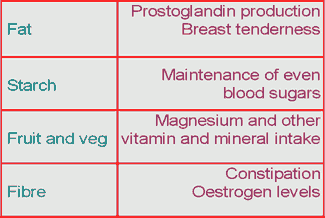
- Cutting down on fat, particularly saturated fat may help with prostaglandin production Prostaglandins have many actions in the body, for example they can affect neurotransmitter sensitivity and alter cerebral blood flow. Prostaglandin such as PGE1 may play a role in lessening PMS symptoms. A diet high in saturated and trans fats are particularly implicated in making PMS worse. Such fats eaten in excess can also lead to weight gain and raised cholesterol levels, particularly when approaching middle age.
- Increasing starch was thought to help with serotonin production, but this has mostly been disproved as only a pure carbohydrate diet, not associated with any protein (even pasta, pots and bread contains some protein) would cause such a rise in serotonin. It is now thought that a diet rich in certain slowly broken down starches (low GI) may be helping PMS symptoms by maintaining an even blood sugar level. Such a diet can also ward off hunger and reduce overall food intake. For a healthy diet, 50% of our total calories should come from carbohydrate.

- Increasing fruit and vegetables may help to increase essential mineral and vitamin intake which are important co-factors in PGE1 and neurotransmitter production. The anti-oxidants found in fruit and vegetables are particularly important in warding off cancers and heart disease. The soluble fibre from fruit and vegetables (and also oats) may also help to alleviate IBS which can be worse pre-menstrually.
- Increasing fibre will alleviate the common problem of pre menstrual constipation. It may help to bring down the oestrogen levels in the body by preventing the re-absorption from the gut. In the same way it can help reduce cholesterol levels. High oestrogen to progesterone ratio was at one time blamed for causing PMS although this theory is now thought by most experts to be "old-hat". Fibre can help reduce the absorption rate of glucose into the blood stream and so smooth out blood sugar highs and lows.
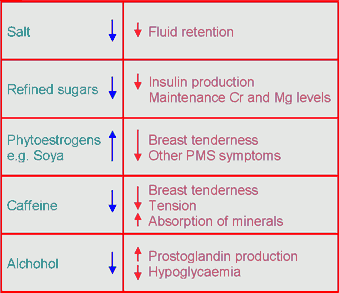
- Decreasing salt in the diet will help to offset bloating and fluid retention. We are often recommended to eat no more than 6g of salt a day instead of our usual 9-12g. This is difficult if a lot of processed food is consumed. Cutting down on salt will also help to reduce the incidence of high blood pressure and osteoporosis. Blood pressure is a major cause of heart disease and strokes, the risk of which increases after the menopause.
|
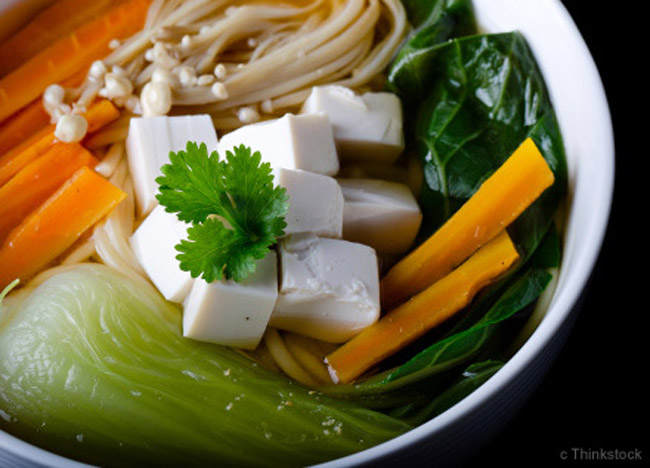
Foods that may help to relieve the symptoms of PMS include |
|

- Excess refined sugar consumption may increase insulin production which may aggravate bloating. It also can lead to a lowering of blood Chromium levels and cause increased urinary excretion of magnesium. Processed food which contain starches and sugars that are quickly broken down by the body have a high GI (The Glycemic Index (GI) is simply a ranking of foods, based on their immediate effect on blood glucose levels. It is a physiological measure of how fast, and to what extent, a carbohydrate food affects blood glucose levels.), i.e. they are converted into glucose rapidly and can cause rapid fluctuations in blood sugar levels which can make PMS worse. Middle age can sometimes bring with it insulin resistance and frank diabetes, so it makes sense to avoid too much refined sugar.
- Decreasing the consumption of caffeinated beverages may help to alleviate breast tenderness. Also caffeine is a known aggravate of sleep and tension which may already be upset by PMS . Drunk to excess it also lowers the level of some important minerals in the body such as calcium The tannin in tea also hinders the absorption of certain minerals such as iron and calcium. Too much caffeine can also exacerbate hot flushes.
- Soya products, such as soya milk and tofu, and linseed provide substances known as phytoestrogens (plant oestrogens). These substances are also found to a lesser extent in most fruit and vegetables, nuts and seeds. A diet rich in plant oestrogens, such as that consumed by the Chinese, are thought to prolong the follicular phase of a woman's cycle, thus prolonging the time each month before PMS starts. They are thought to reduce the influence of oestrogen's in the body (when a woman is still producing plenty of her own oestrogen) and may prove beneficial in reducing breast pain. Soya works as a weak oestrogen in women that are no longer menstruating. Evidence is emerging that phytoestrogens may help to reduce hot flushes (by about 40%, compared to 80% for HRT) and may help with other menopausal symptoms . (also check, Top 10 on why women need to make soya an essential part of their diet.)
- Alcoholics are known to suffer more from PMS and alcohol seems to aggravate the condition. It may be due to its inhibiting action on an important rate limiting enzyme (delta 6 dehydrogenase) involved in the conversion of Linoleic Acid ( a fatty acid) to PGE1 (see later). Alcohol can also cause hypoglycaemia which is a symptom many PMS sufferers complain of, and lowers the body's stores of essential B vitamins. It is thought that some PMS sufferers have more of a craving for alcohol premenstrually, but are also less able to metabolize it.

It may take 3 months for the diet to have an effect on PMS.
Experience has proved that regular complex carbohydrate intake is a very helpful approach to reducing many PMS symptoms such as dizziness, irritability and shakiness. Some researchers are now looking at using foods with a low Glycemic Index (i.e. slowly absorbable starchy foods) to provide a lower glycaemic load, thus providing an even supply of long lasting energy.
NAPS dietician recommend women suffering from PMS to consume 3 snacks and 3 meals usually right throughout the luteal phase of the cycle. Each snack and meal should ideally be based on a low GI carbohydrate If weight gain is a problem then advice on suitable low fat, low sugar snacks is given. The helpful nature of this approach should become manifest almost immediately.
Women who are trying to lose weight and control their food intake (50% of all women at any one time!), might get affected by the increased appetite which occurs premenstrually to a greater degree than those who are not on a diet. What is worrying is that the more they try and 'restrain' themselves, the more likely a backlash is likely to happen in the form of a binge, quite often on the wrong type of foods. It is as if the body says I cannot hold out any longer, and sends signals to grab the most satisfying food it can. Unfortunately, if a woman suffers additionally from PMS bloating, she is even more likely to feel dissatisfied with her body shape and feel she must diet.
Furthermore, another symptom of PMS, depression, is also a sign of falling serotoninlevels, and depressed PMS women are even more likely to have the desire to binge. Allow yourself to have some extra food at this time and to avoid trying to follow a strict diet when you know you have the greatest desire to eat.. The regular carbohydrate meals and snacks should help keep bingeing at bay.
Avoiding weight gain at whatever age is important, as well as predisposing a
woman to diabetes and heart disease, weight gain is a risk factor for several
cancers, including the breast and uterus.
Our Special Thanks to:
- Ms. Gaynor Bussell, qualified State Registered Dietitian. Gaynor has been the dietary advisor to the National Association for Premenstrual Syndrome (NAPS), for the last 7 years and is also a trustee, with responsibility for public relations. I hope you enjoy reading it. &
- The National Association for Premenstrual Syndrome an independent body providing advice and support to those affected by and treating PMS and post natal depression. They undertake research, clinical trials, professional development and provide clinical advice. For more log on to their Website (www.pms.org.uk)
Listen To Podcast