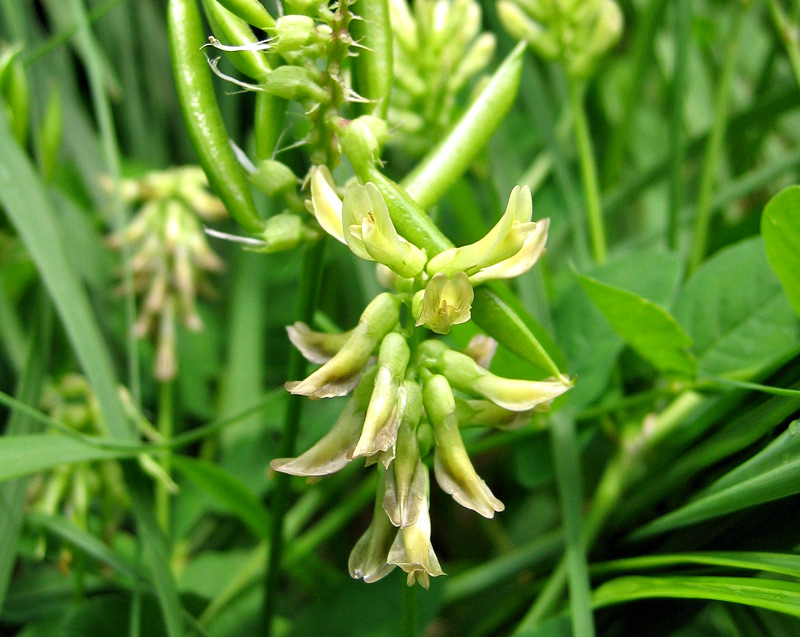
Other names: Astragalus membranaceus, Huang Qi
Astragalus is a twining leguminous perennial plant that grows 11-1/2 to 39 inches high. The stem has many branches, slanting upward and slightly hairy. The pinnate leaves are alternate and the 9 to 21 leaflets are elliptical-shaped, 1/4 to 3/4 inches long and about 1/3 inch wide. The racemes are axillary and the peduncle slender, with anywhere from 3 to 9 flowers growing at the top. The pod is spindle-shaped, inflated, a little over an inch in length and beaked at its tip. Astragalus has 20 to 30 seeds. Astragalus grows in grasses or in thickets on hillsides in northwest China, Manchuria and Mongolia.
Medicinal value is in the root. Astragalus root is flexible and long, as large as your forefinger, and covered with a tough, wrinkled, yellowish- brown skin, which has a tendency to break up into woolly fibers. The woody interior is of a yellowish-white color and has a faint sweetish taste that reminds you of licorice root.
USES
- Tonic & endurance remedy – Astragalus is a classic energy tonic, perhaps even superior to ginseng for young people. In China it is believed to warm and tone the wei qi (a protective energy that circulates just beneath the skin), helping the body to adapt to external influences, especially to the cold. Astragalus raises immune resistance and manifestly improves physical endurance.
- Control of fluids – Though a vasodilator (encouraging blood to flow to the surface), astragalus is used for excessive sweating, including night sweats. Astragalus is also helpful in both relieving fluid retention and reducing thirstiness. Astragalus encourages the system to function correctly.
- Immune stimulant – Not an herb for acute illness, astragalus is nonetheless a very useful medicine for viral infections such as the common cold.
- Other medical uses – Bone cancer, Breast cancer, Cervical cancer, Colorectal cancer, Endometrial cancer, Hodgkin’s disease, Kidney cancer, Liver cancer, Lung cancer, Ovarian cancer. Astragalus treats prolapsed organs, especially the uterus, and it is beneficial for uterine bleeding. Astragalus is often combined with Chinese angelica as a blood tonic to treat anemia.
If you are being treated for cancer, be aware of the battle that is going on in your body. Radiation therapy and chemotherapy add to the fatigue caused by the disease itself. Give your body the rest it needs so that you will feel better as time goes on. Exercise once you feel rested enough. Ask your cancer care team whether your cancer or its treatments might limit your exercise program or other activities. It is important that you consider your emotional, psychological, and spiritual health along with the physical aspects of your recovery from cancer.