Parts Usually Used: Root, root-bark, berries
Common name: Jaundice berry, Pepperidge bush, Sowberry, Wood turmeric
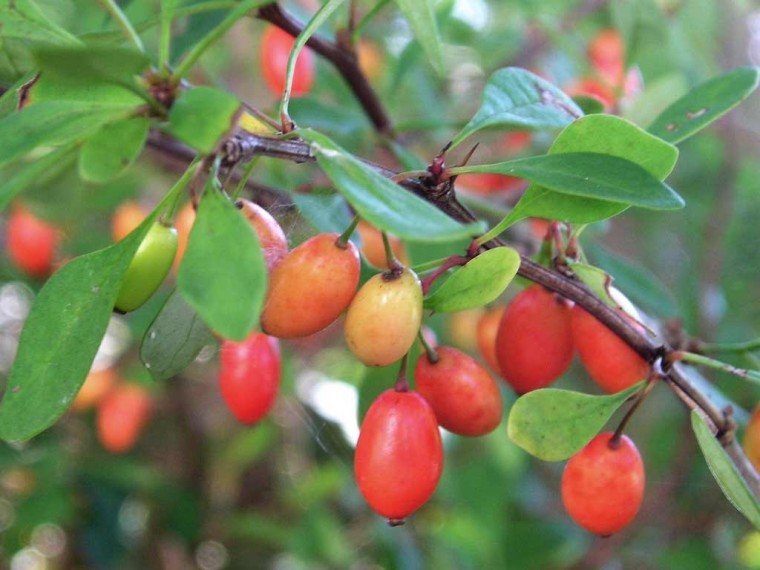
Barberry is a densely branched, deciduous shrub 3-8 feet tall, with many tripartite spines on the yellowish branches; the root is yellow on the outside and its bark has a bitter taste. The stems, growing from 3-8 feet high, are reddish when young but turn dirty gray when older. The leaves are obovate to oval and have a soft, bristly point, grow crowded together on short shoots.
The berries must be ripe when used; taken for fever or diarrhea, dysentery, typhus fever. The fresh juice used for mouthwash to strengthen gums or gargle. The root-bark contains berberine, a bitter alkaloid, that aids in the secretion of bile and is good for liver problems, acts as a mild purgative, and helps regulate the digestive processes, dyspepsia. Possible beneficial effect on the blood pressure by causing a dilatation of the blood vessels. Good for hepititis, colic, jaundice, diabetes, consumption. Used as a bitter tonic to stimulate digestion, and in the treatment of inflammatory arthritic, sciatica, and rheumatic complaints. Decreases heart rate, depresses the breathing, stimulates intestinal movement, reduces bronchial constriction, and kills bacteria on the skin. Externally, for sores, burns, ulcers, acne, itch, tetters, ringworm, cuts, bruises. As a tonic it will help convalescent patients recuperate. The berries can be made into jellies or cooked with other fruits.
Warning
Avoid in pregnancy. Large doses harmful.