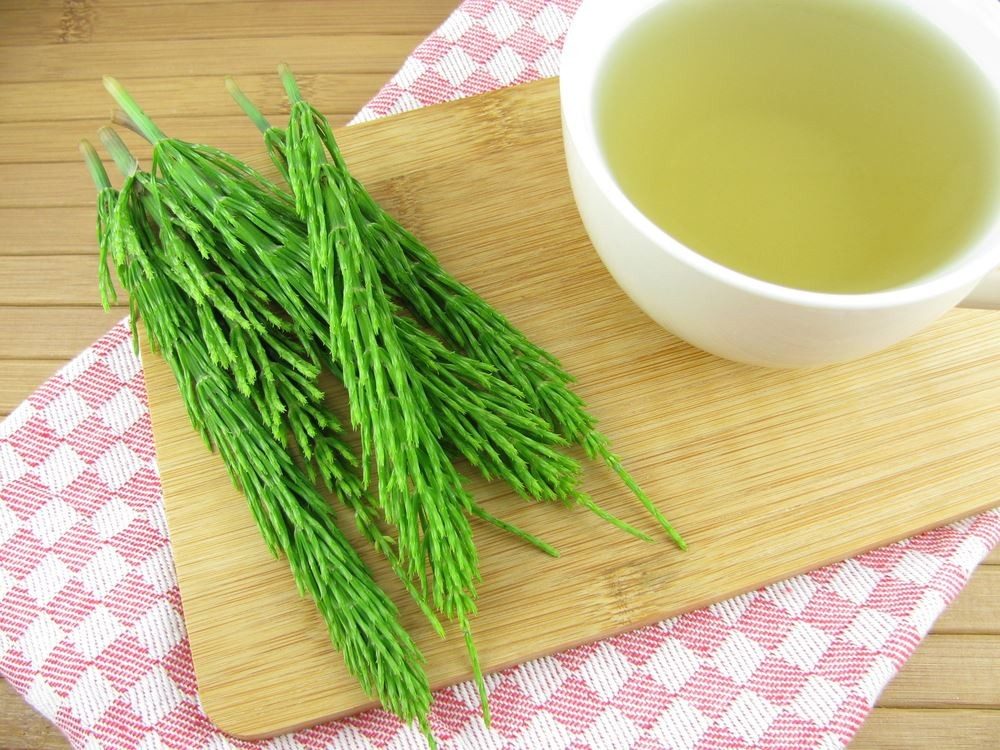
(Common names: Bottlebrush plant, Shave grass, Scouring rush)
 Several cultures have employed horsetail as a folk remedy for kidney and bladder troubles, arthritis, bleeding ulcers, and tuberculosis. In addition, the topical use of horsetail was used traditionally to stop the bleeding of wounds and promote rapid healing. Horsetail may be of some use in the treatment of brittle nails.
Horsetail is rich in silicic acid and silicates, which provide approximately 2–3% elemental silicon. Potassium, aluminum, and manganese, along with fifteen different types of flavonoids, are also found in this herb. The presence of these flavonoids, as well as saponins, is believed to cause the diuretic effect, while the silicon content is thought to exert a connective tissue-strengthening and anti-arthritic action.
The only concern would be that the correct species of horsetail is used. Due to a lack of clear safety information, horsetail should be avoided during pregnancy and breast-feeding.
This herb has been suggested as a treatment for osteoporosis (thinning bone), because it contains silicon, a mineral needed for bone health. However, only one study has examined horsetail for osteoporosis. In that study, 122 Italian women took horsetail dry extract or Osteosil calcium 270 mg twice daily (a horsetail/calcium combination used in Italy for osteoporosis and fractures). Although both groups who took horsetail experienced improved bone density, the study was poorly designed. The silica that is found in horsetail also helps in healing bones, keeping the arteries clean, and facilitating the absorption of calcium in the body.