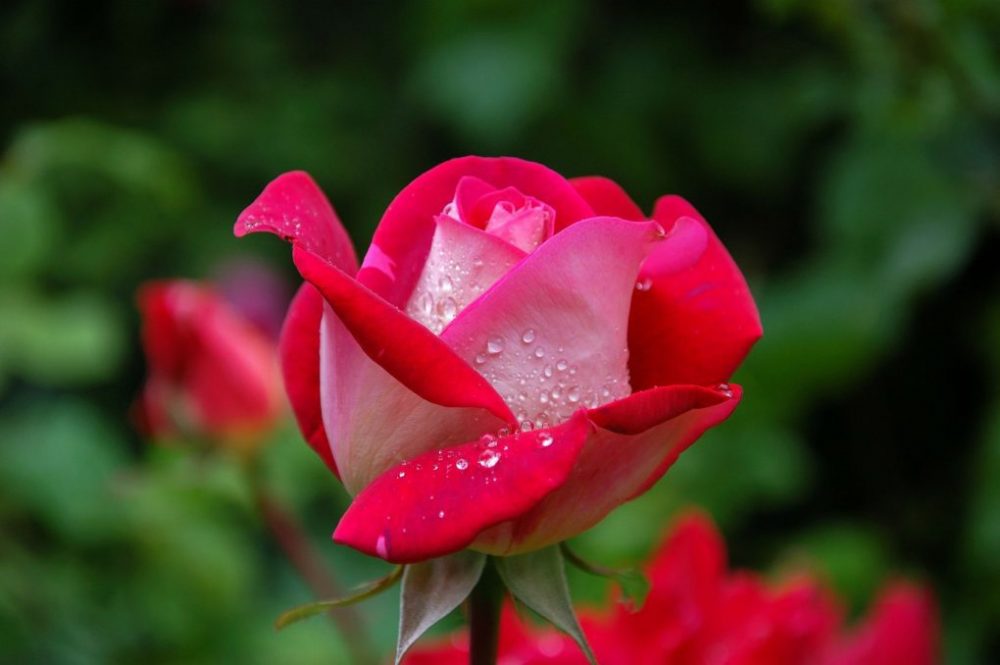
These grow in copses and hedgerows. Their flowering period extends from spring to the middle of summer. The pink or white flowers are fragrantly scented. They are the richest natural source of Vitamin E.
The use of the rose is far and varied. It has a long history in its use in folk remedies, especially in the area of skincare. It is suitable for all skin types, but it is especially valuable for dry, sensitive or aging skins. It has a tonic and astringent effect on the capillaries just below the skin surface, which makes it useful in diminishing the redness caused by enlarged capillaries. It is important to ensure that the product contains the genuine natural rose oil. Many manufacturers label their products containing rose essence but it could be synthetic. Synthetic rose ingredients have no therapeutic value at all! Remember, with authentic rose oil, a little goes a long way. Certainly rosewater is a less expensive way to provide skincare. It is very soothing to irritated skin. It is also a tonic and antiseptic. Rosewater has been shown to be very valuable as an antiseptic in eye infections.
The rose also offers a soothing property to the nerves and emotional /psychological state of mind. It is regarded as a mild sedative and anti-depressant. It is increasingly used in treatments for conditions of stress: nervous tension, peptic ulcers, heart disease, among others. There is indication that rose essence may also positively influence digestion, bile secretion, womb disorders and circulation. In addition, a tea made with rose petals (pour 150 ml of boiling water over 1 /2 grams of rose petals) often soothes a mild sore throat.
Rose hips (the flowers which have swollen to seed) are an excellent source of vitamins A, B3, C, D and E. They also contain bioflavonoids, citric acid, flavonoids, fructose, malic acid, tannins and zinc. Taken in the form of tea they are good for infections, particularly bladder infections. Rose hip tea is also used in the treatment of diarrhea. It is an especially good source of vitamin C.
To best use rose oil for topical purposes (i.e. skin care), use approximately 8 drops of essential rose oil for every 10 ml of carrier oil. Apply directly onto skin. Rosewater may be used with abandon. There is no such thing as too much of it. For emotional wholeness and wellness, rose oil may also be used in a room diffuser, aromatherapy ring (a brass ring placed atop a hot light bulb will work to evaporate the essential essence throughout the
room) or in steaming hot water on the stove. Whatever works