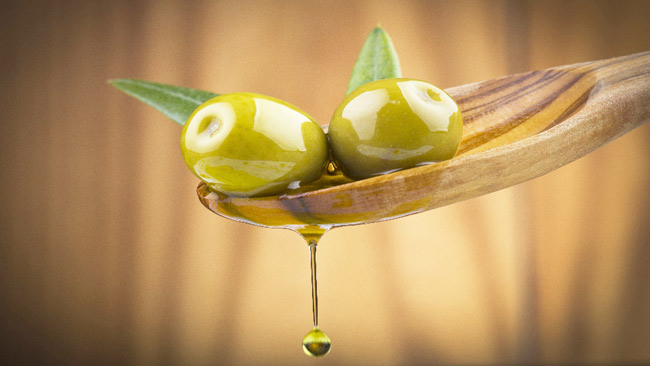
A Recent research has provided firm proof that a Mediterranean diet, which includes olive oil, is not only generally healthy, but that consuming olive oil can actually help lower harmful LDL cholesterol. Olive oil contains antioxidants that discourage artery clogging and chronic diseases, including cancer.
The major fatty acids in olive oil triacylglycerols are:
- Oleic Acid (C18:1), a monounsaturated omega-9 fatty acid. It makes up 55 to 83% of olive oil.
- Linoleic Acid (C18:2), a polyunsaturated omega-6 fatty acid that makes up about 3.5 to 21% of olive oil.
- Palmitic Acid (C16:0), a saturated fatty acid that makes up 7.5 to 20% of olive oil.
- Stearic Acid (C18:0), a saturated fatty acid that makes up 0.5 to 5% of olive oil.
- Linolenic Acid (C18:3)(specifically alpha-Linolenic Acid), a polyunsaturated omega-3 fatty acid that makes up 0 to 1.5% of olive oil.
- Triacylglycerols are normally composed of a mixture of three fatty acids. Most prevalent in olive oil is the oleic-oleic-oleic (OOO) triacylglycerol, followed, in order of incidence, by palmitic-oleic-oleic (POO), then oleic-oleic-linoleic (OOL), then palmitic-oleic-linoleic (POL), then stearic-oleic-oleic (SOO), and so on.
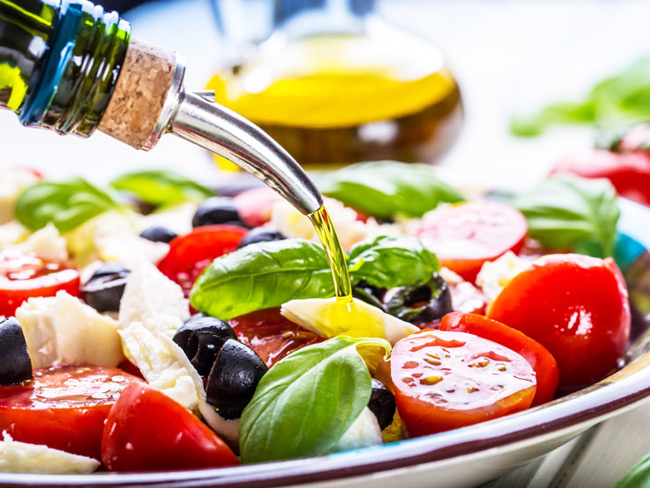
Olive oil contains more oleic acid and less linoleic and linolenic acids than other vegetable oils, that is, more monounsaturated thanpolyunsaturated fatty acids. This renders olive oil more resistant to oxidation because generally, the greater the number of double bonds in the fatty acid, the more unstable and easily broken down by heat, light, and other factors the oil is.
From a nutritional standpoint, all types of olive oil are approximately the same, with 80% monounsaturated, 14% saturated, 9%polyunsaturated fats on average.
Health Benefits
- Olive oil is rich in vitamins and minerals like Vitamin A, B-1, B-2, C, D, E and K and in iron. Vitamin E (a natural antioxidant): Olives have 1.6mg, or 2.3 IU (International Units) per tablespoon. One tablespoon provides 8% of RDA for vitamin E. According to the USDA , vegetable oils such as olive oil are the second best source of Vitamin K .
- Acts as a mild laxative, if a spoon or two is taken with lemon or coffee, it prevents constipation without irritating the intestinal tract. Because movement through the digestive system is slowed during constipation, many essential nutrients will not be sufficiently absorbed and used. This mal-absorption can be further aggravated by the use of laxatives. Olive oil contains high levels of essential vitamins such as vitamin E, vitamin K, iron, the powerful antioxidants known as polyphenols, and omega 3 and omega 6 essential fatty acids, which can help replenish the nutrients lost.
- Olive oil is a good tonic, with specific benefits for people suffering from heart disease. Olive oil is cholesterol-free. Cholesterol is not entirely harmful; it is an essential building block for cell membranes, nerve fiber coverings, vitamin D and sex hormones. The body manufactures all the cholesterol it needs, so any cholesterol in foods we eat is excessive. Excess cholesterol causes a gradual accumulation of fatty deposits and connective tissue, known as plaque, along the walls of blood vessels. Eventually, plaque builds up, narrows the arteries and reduces blood flow, in this way increasing the risk of heart attacks and strokes.

- Time tested “beauty oil”. The body’s cells incorporate the valuable fatty acids from the oil, making arteries more supple andskin more lustrous. Whether applied to face or body, olive oil will penetrate deep into the skin and provide a long-lasting shield of moisture to keep skin smooth and supple. Used either as a night cream or daily moisturizer, it is best applied to damp skin, when water can help reduce any feeling of greasiness. We recommend using extra virgin olive oil. Extra virgin olive oil makes the perfect, simple solution for dry nails and cuticles. Simply rub a few drops into the cuticle area and around the nail. Cuticles stay plump and moist, and nails respond with a natural shine.
- The amount of oleic acid in olive oil is about the same as that found in a mother’s milk and is thus the best growth supplement for infants..
- Drunk before a meal, olive oil protects the stomach from ulcers. It is also effective in treating urinary tract infections and gall bladder problems.
- It’s regular consumption accelerates brain development. Studies suggest that taking supplements of vitamins C and E can prevent the risk of Alzheimer’s disease and slow the progression of memory loss.
- Olive Oil helps Fight Osteoporosis: Osteoporosis is a disease characterized by a decrease in bone mass, which in turn causes the architecture of bone tissue to become fragile. This can then increase the possibly of fractures, making even the slightest of knocks potentially fatal for sufferers. The disease is recognized as being particularly prevalent among postmenopausal women for whom a decrease in the production of estrogen then weakens bone structures and most commonly affects the ribs, wrists, and hips. For this study, scientists were particularly interested in how a supplementation of olive oil could be used to help women in this category. Tests were carried out on rats showing comparable conditions to female human menopause, with one group being treated orally with olive oil. At the end of the experiment, blood samples were collected and tested for levels of calcium, phosphorus, alkaline phosphatase (ALP), malondialdehyde (MDA), and nitrates. The results found that that rats not treated with olive oil showed a significant decrease in calcium levels and a significant increase in plasma ALP, MDA, and nitrates levels.
- Olive oil dissolves clots in capillaries, has been found to lower the degree of absorption of edible fats, and consequently slows down the aging process. In a recent study, Spanish researchers from the Lipids and Atherosclerosis Research Unit of the Reina Sofia University Hospital in Cordoba, discovered that a diet rich in olive oil or other monounsaturated fats could improve the arterial function of elderly individuals.
- Reduced Inflammation in Cancer patients: The phytonutrient in olive oil, oleocanthal, mimics the effect of ibuprofen in reducing inflammation, which can decrease the risk of breast cancer and its recurrence. Olive oil is rich in antioxidants, especially vitamin E, long thought to minimize cancer risk.
Producing high quality Extra Virgin olive oil requires the producer to reach perfection in every stage of the process, as well as be fortunate with Mother Nature. This is often much more expensive for producers to accomplish which is why some excellent extra virgin olive oils can be so pricey.
For more:
Related links
- About The Mediterranean Diet
- The Good, the Bad, and the Ugly about Cholesterol
- Identifying High fat foods
- Heart Disease and Aging
Disclaimer
The Content is not intended to be a substitute for professional medical advice, diagnosis, or treatment. Always seek the advice of your physician or other qualified health provider with any questions you may have regarding a medical condition.