Arthritis is inflammation of a joint. It often results in pain, limitation of movement and deformity. Osteoarthritis is the most common type of knee arthritis. It is also called degenerative joint disease being characterized by progressive thinning. Fraying and wearing away of the tough, smooth, glistening cartilage which covers the surfaces of the joint that move over each other. In addition there is inflammation of the encasing membrane and increase of the synovial fluid which lubricates the joint. Due to the protective cartilage being worn away, bare bone getting exposed within the joint and formation of speculated bony irregularities (osteophytes), the joint movement becomes rough and painful.

Who are at risk?
You are more likely to be prone to knee arthritis if you:
- Are above 50 years of age.
- Are/have been overweight.
- Have sustained trauma to the knee (tears or damage to its component parts.)
- Are in an occupation which carries high risk for it such as assembly line workers and heavy construction workers.
- Sustain injury to the bone or have sustained it in the past.
- Have indulged in high level sports.
- If it runs in your family (hereditary predisposition).
Symptoms:
Someone who has arthritis in the knee may experience:
Pain in knee joint, limitation of the range of motion, stiffness of the knee, swelling of the joint, tenderness along the joint line or a feeling that the joint may “give out” and / or deformity of the joint (knock-knees or bow-legs).
It is necessary to shed weight for those who are overweight and have osteoarthritis of the knee.
Top 10 Therapeutic exercises
This article deals with physical therapy which is the mainstay of management of knee osteoarthritis, whatever be the other modes of treatment. Physical therapy intervention includes exercises for strength, flexibility, range of motion, and the use of devices designed to provide rest or support to the joint, such as orthotics (knee cap, knee brace) or splints. Regular exercise is essential to restore joint movement and strengthen the knee. Weight, as stated above, should be optimized. Once symptoms are noted, excessive loading of knee joint such as from climbing stairs and sitting on the floor should be avoided. Some of the more useful exercises for the knee are given below. Each exercise should be performed at 2 x 10 repetitions for the first 2 weeks and 3 x 10 repetitions thereafter.
Knee Strengthening Exercises
Warming up with 5 minutes of low-impact aerobics, such as walking or riding a stationary exercise bike, increases blood supply to the muscles and helps prevent injury and stiffness.
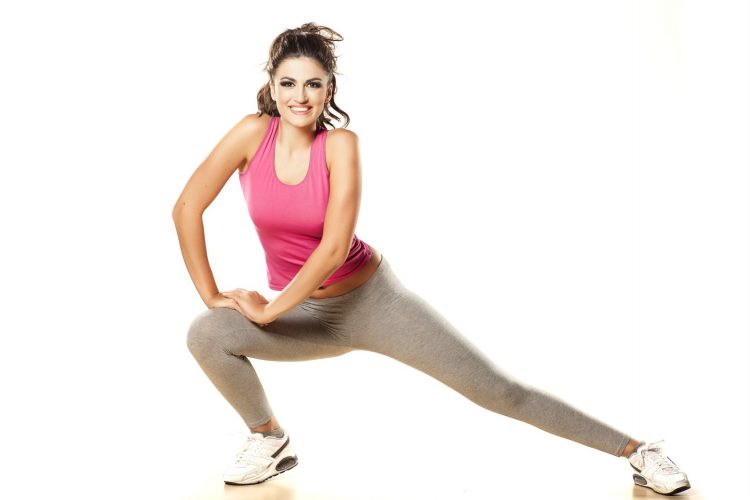
1. Position yourself lying on your back with a rolled up towel under your knee and a weight around your ankle. Start with your knee bent (pressing down). Finish with your knee straight.
2. Sit in a chair. Extend leg parallel to floor. Keep knees straight (or as straight as possible if you have arthritis). Tighten thigh muscles. Hold for count of 10. Relax for count of 3. Do 10 repetitions. You can do this several times throughout the day. You can build up to 2 or 3 sets of 10 repetitions at a time.
3. Position yourself sitting with your toes on a line in front of your knee. Practice sliding your foot back so that your heel touches a line behind your knee.
- Place the lines closer to the heel and toes.
- Place the lines further away from the heel and toes.
4. Position yourself standing with your feet together. Start with your heels on the ground. Finish with your heels off the ground.
5. Lie on floor or table on your right side, shoulder and hips aligned. Use your right hand to prop up your head. Place the left hand on floor or any other surface e.g. table top in front of you to help balance yourself. Bend left leg and bring leg about 10 inches off the floor, hold for one second, and then slowly lower leg to ground. Lift 10 times on each side.
6. Position yourself sitting with your hips and knees bent to each side and your feet together. Push your knees gently towards the floor with your elbows.
7. Keep one leg on ground; put one foot on chair with leg straight. Bend forward at the hip. Do not attempt to touch your toes as this will stretch your back, and the goal of this exercise is to isolate your hamstring muscle in the leg that is being supported by the chair. Hold for 30 seconds. Repeat on other side.
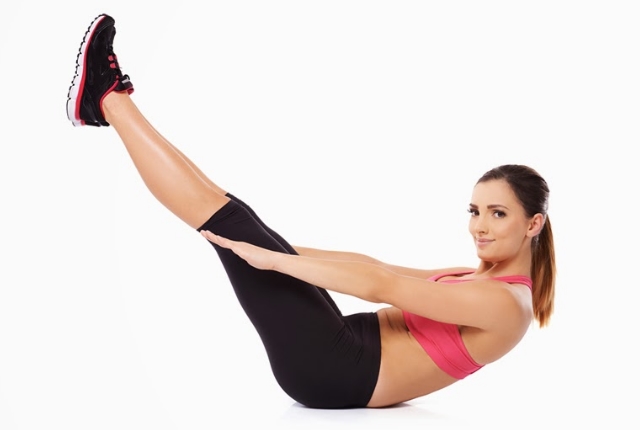
8. Lie flat on back. Bend left knee at 90-degree angle, keeping foot flat on floor. Keeping the right leg straight, slowly lift it to the height of the left knee. Hold for a count of 3. Repeat 10 times. Switch sides. Work up to 10 sets of 10 over several weeks.
Precaution: Lifting both legs at the same time causes excessive stress on your lower back so lift only one leg at a time; the opposite leg should be kept slightly bent with foot on floor.
9. Walking backwards helps to develop the hamstrings. When walking backwards, your weight is distributed more evenly, resulting in less strain on your knees.
10. Sit in a chair, put fist between knees, squeeze together knees. Hold for count of 10. Relax for count of 3. Do 10 repetitions.
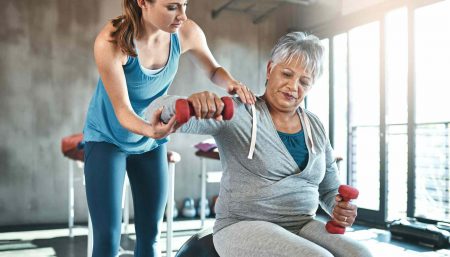
It is better to do the exercises under the supervision and guidance of a qualified physiotherapist at least initially because faulty exercises may cause further damage to the joint.
Special Thanks to: Dr Vijay Kumar and Ms Shellyka Ratnakar.
Related Links
- Preventing ACL Injury through Strengthening Exercises
- Top 10 to Conditioned buttocks – to prevent knee and back injuries
- Working the Hamstring
- At-home Gravity Workout: to build muscle & balance
- Yoga for healing body Stiffness
- Top 10 Reasons Why You Aren’t Getting the Most Out of Your Workout
Disclaimer
The Content is not intended to be a substitute for professional medical advice, diagnosis, or treatment. Always seek the advice of your physician or other qualified health provider with any questions you may have regarding a medical condition.