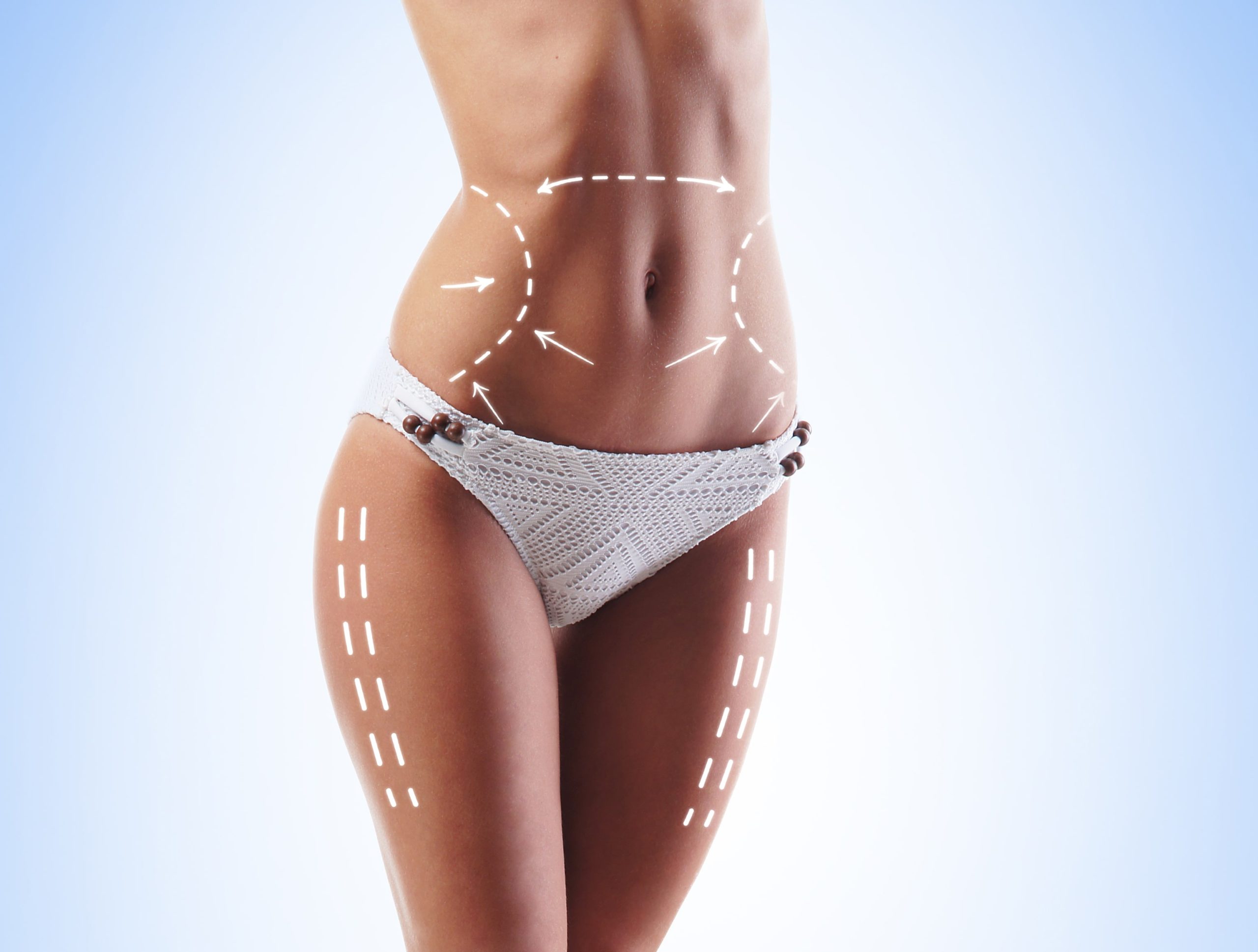
Abdominal liposuction is used when a woman is looking to get rid of that stubburn fat around the waste-line. Newer techniques of liposuction such as tumescent liposuction result in less bruising, less swelling and a quicker recovery than older traditional methods of liposuction. The other liposuction technique, ultrasound-assisted liposuction, uses ultrasound rather than mechanical action to elicit fat removal. This technique is the procedure of choice in certain areas of the body, such as the posterior hip, the back, and the male and female breasts. It also is frequently used in the traditional areas, such as the thighs and abdomen
Liposuction is especially useful for women who are of relatively normal weight but have isolated pockets of fat that cause certain areas of their body to appear disproportionate. These localized fat deposits may be an inherited trait and not responsive to dieting or exercise. It is possible to undergo liposuction at almost any age, however you will obtain the best results if your skin still has enough elasticity to achieve a smooth contour following fat removal. When skin is inelastic, as in some older patients, it may not reshape well, and a skin tightening procedure may be necessary.
If a woman wishes to achieve a tighter, smoother, flat abdomen, then liposuction is combined with a tummy tuck.
How is tumescent liposuction of the abdomen performed?
Tumescent liposuction is a breakthrough technique referred to, filling the fatty layer of skin with a diluted solution of local anesthesia and other medications prior to removing the excess fat. The liquid causes the compartments of fat to become swollen and firm or “tumesced.” Use of tumescent liposuction allows dermatologic surgeons to safely and efficiently remove both deep and superficial excess layers of fat with little discomfort, more rapid healing, and improved cosmetic results.
Blood loss is minimized during tumescent liposuction, use of the technique reduces the chance that a blood transfusion will be needed.
- Tumescent liposuction does not require a general anesthetic. A saline solution which contains a local anesthetic is introduced into the targeted fat deposits. This numbs the area to be treated.
- The incisions are very tiny and are located strategic positions over the abdomen. A tumescent solution-containing lidocaine, epinephrine and intravenous fluid- is then injected into the targeted layer of fat. This solution contains saline to prevent dehydration, a local anesthetic to numb the area, a medication to control bleeding and cortisone to control inflammation. As the liquid enters the fat, it becomes swollen, firm and blanched. Liposuction is then performed on the tumesced areas.
- A very small suction cannula is inserted through the incisions into the tumescent fatty layer of the abdomen. Using a back and forth action the surgeon crisscrosses the abdomen creating a number of tunnels in the fat with a cannula. The cannula is attached to a suction apparatus which draws the fat out from under the skin as the tunnels are created. The number of tunnels created determines the amount of fat that can be removed.
- After an acceptable abdominal contour has been achieved, the incisions sites are covered with absorbent pads and held in place with a pressure garment. Some physicians use a second garment over the first to provide additional pressure. The incisions are not sutured in order that the remaining solution will drain off into the pads. This helps to minimize swelling, bruising, and soreness. Eighty percent of the solution is absorbed into the body and excreted in the urine. The remaining 20% is either sucked out with the fat or drained out through the tiny incisions.
- The pressure garment is worn for a minimum of 4 days. Wearing the garment longer than this tends to decrease swelling sooner but does not alter the ultimate outcome of the procedure.
| Women who have large areas of excess fat may also be good candidates for tumescent liposuction. |
Does tumescent liposuction of the abdomen hurt?
The anesthetic in the tumescent solution numbs the area to be treated so little or no pain is felt during the procedure. No general anesthetic nor hospital stay is necessary.
Due to the residual local anesthetic and the mild cortisone left in the tissue, most patients do not experience any significant soreness for 6 to 18 hours after the procedure. An aching sensation similar to that felt in the muscles after rigorous exercises may be, experienced for up to 5 days after the surgery. Analgesia, such as Tylenol, helps to control this temporary discomfort.
What will I experience after tumescent liposuction?
Swelling, inflammation and soreness are to be expected. The more fat that has been removed the longer the duration of post-operative swelling and discomfort.
Temporary subcutaneous lumpiness and firmness are also common in the healing process. This may persist to some degree for 2 to 6 months.
Bruising is usually minimal with the tumescent technique because the bleeding is minimized by medication called epinephrine in the saline solution. Any bruising that may occur tends to subside over a period of 10 to 15 days.
When will an improvement be noticed?
About 90% of patients can actually see at least some improvement in their silhouette one week after surgery. However, because of the slow resolution of post surgical swelling, the ultimate results following tumescent liposuction is achieved in 12 to 24 weeks.
What are the limitations and alternatives to liposuction?
Liposuction is not means to lose or control weight. It is a procedure designed to remove deposits of localized fat which are resistant to diet and exercise. A patient’s weight should be stable for 6 months prior to the procedure. Further weight loss after the procedure will only enhance the results. A regular exercise plan will tone the underlying muscles and improve the results of the surgical contouring.
| By eating a healthy diet and getting regular exercise, you can help to maintain your slimmer figure or leaner physique. |
Liposuction is a technique which is used to remove subcutaneous fat (fat under the skin). Many women have fat in their abdominal cavity as well as under their skin. Only the fat under the skin can be removed with liposuction. The remaining fat must be lost through diet and exercise.
It is also important for a woman to understand that removing subcutaneous fat from the belly may not lead to a flat abdomen, especially if the abdominal musculature is round. A regular regime of exercises to strengthen the abdominal muscles will be necessary to achieve a flat abdomen. There may be some irregularity if scars, herniations or muscular separation are present.
The only alternative to abdominal liposuction is extensive dieting. Most people who have decided to have liposuction have been through several dieting programs and have failed to lose their abdominal fat.
NOTE: While abdominal liposuction can help you to loose fat it should not take place of proper diet and exercise.
Disclaimer
The Content is not intended to be a substitute for professional medical advice, diagnosis, or treatment. Always seek the advice of your physician or other qualified health provider with any questions you may have regarding a medical condition.
