Pregnancy is a time of intense change within the female body. The hormones of pregnancy have steroidal type effects and which can dampen down allergies.
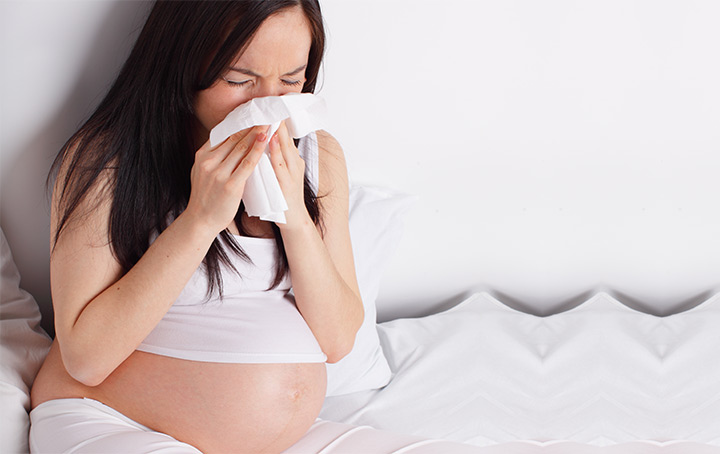
During pregnancy, the body’s immune system tends to be less reactive than at other times. This is normal, and necessary to prevent your body ‘rejecting’ your pregnancy. (As, half of your baby’s genetic material is ‘alien’ to your body.) Because of this, allergic conditions (such as asthma and eczema) – often seem to get better during pregnancy, although a minority of women may find they get worse. Similarly, autoimmune conditions tend to improve – but not always. There is no way of predicting exactly what will happen.
At certain times, you may become sensitive to certain soaps or other washing or cleaning products, or to cosmetics or perfumes. You may also be more sensitive to sunlight. (a local reaction – itching or a rash.)
If you know what you’re allergic to and are pregnant, try to avoid that thing(s) rather than taking lots of medications. It also helps to decrease exposure to cigarette smoke and other known environmental irritants.
Keep in mind that some medications are safer to use than others while you are expecting. The United States Food and Drug Administration (FDA) classifies drugs into five categories as to their safety during pregnancy.
Category A: Studies in pregnant show no adverse effects on the fetus during the first trimester of pregnancy, and there is no evidence of adverse effects in later trimesters. If this drug is used during pregnancy, the possibility of fetal harm appears remote.
Category B: Either (1) Studies in animals have shown adverse effects on the fetus at doses many times higher than the usual human dose, but human studies show no adverse effects on the fetus or (2) Studies in animals show no adverse effects on the fetus, but human studies have not been done.
Because the studies in humans cannot rule out the possibility of harm, this drug should be used during pregnancy only if clearly needed.

Category C: Either: (1) Animal studies have revealed adverse effects on the fetus but there are no controlled studies in women or (2) Studies in women and animals are not available.
Category D: There is positive evidence of human fetal risk, but the potential benefits may be acceptable despite the risk, as in life-threatening diseases for which safer drugs cannot be used or are ineffective.
Category X: Studies in animals or humans demonstrate fetal abnormalities. The risk of using the drug in pregnant women clearly outweighs any possible benefit.
Category NR: Not rated.
Avoidance of known allergens is the key in decreasing the frequency and intensity of allergy symptoms. If avoidance does not relieve the symptoms there are non drug options:
- Saline nasal sprays
- Nasal irrigation
- Humidifier use
- Drink plenty of fluidsDuring pregnancy, natural remedies are the safest. This does not mean herbs are safe for pregnancy. There are many herbs that can be harmful to the fetus.
Allergy Shots During Pregnancy
Allergy shots can be continued during pregnancy in women who do not have reactions to the shots. However, routine allergy skin testing and initial allergy shots should not be given during pregnancy.
It is important to remember, that if the mother has allergies there is a 30% chance of her baby having an allergy. If both parents have allergy, the baby’s risk increases to 60% and if both parents have the same allergy for example asthma, then the risk of allergy in the unborn baby reaches 80%. Maternal smoking during pregnancy and the eating of allergy provoking foods in her diet in the last few months of pregnancy may encourage allergic diseases to develop in the baby.
|
 Avoid excessive alcohol intake.
 Continue to take regular prescribed Preventive and Reliever Asthma medication throughout pregnancy. The Reliever Beta Agonists actually help to
 Related Links
- Top10 Towards Building a Strong Immune System
- Eczema
- Asthma
- Caution over using ginseng in early pregnancy
- Recommendations for Exercise in Pregnancy.
- Pregnancy and Exercise.
- Toxoplasmosis during Pregnancy
- Spreading Allergy Awareness
Disclaimer
The Content is not intended to be a substitute for professional medical advice, diagnosis, or treatment. Always seek the advice of your physician or other qualified health provider with any questions you may have regarding a medical condition.