|
|
|
,
Font size |
Ten Yogasanas for Anorexia
Eating disorders are complex and potentially life-threatening conditions that
arise from a combination of behavioral, emotional, psychological, interpersonal,
biological, and social factors. They are viewed as a dysfunction of the first
chakra in the yogic energetic system. Women with eating disorders often use
food and the control of food in an attempt to numb or avoid feelings and
emotions that are over-whelming.
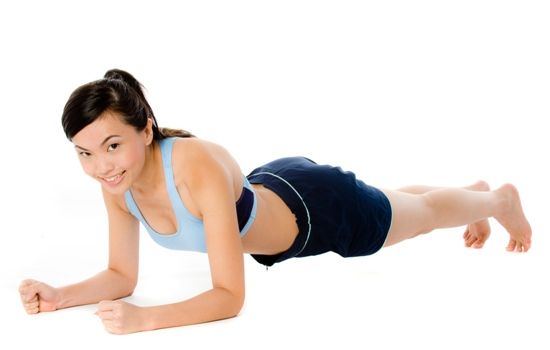
Anorexia is marked with pronounced
weight loss, triggered off by emotional factors such as low
self-esteem and a feeling of not being in control, induce this condition.
The symptoms include an acute preoccupation with body size which leads to very
low food intake, and excessive exercising.
Yoga can be an effective tool to restore the imbalances in
both the body and the mind that occur with
eating disorders. Yoga has a
profound ability to balance the emotions and has been shown to help relieve
depression, anger and anxiety and to promote equanimity: a calm, clear
focused mind. Yoga can also promote self-esteem and a positive body image,
which play primary roles in eating disorders, through the cultivation of
non-judgment, confidence, self-acceptance, openness and inner strength.
Physically, a regular yoga practice can help rebuild the strength, energy
and bone density that is damaged and lost with Anorexia.
|
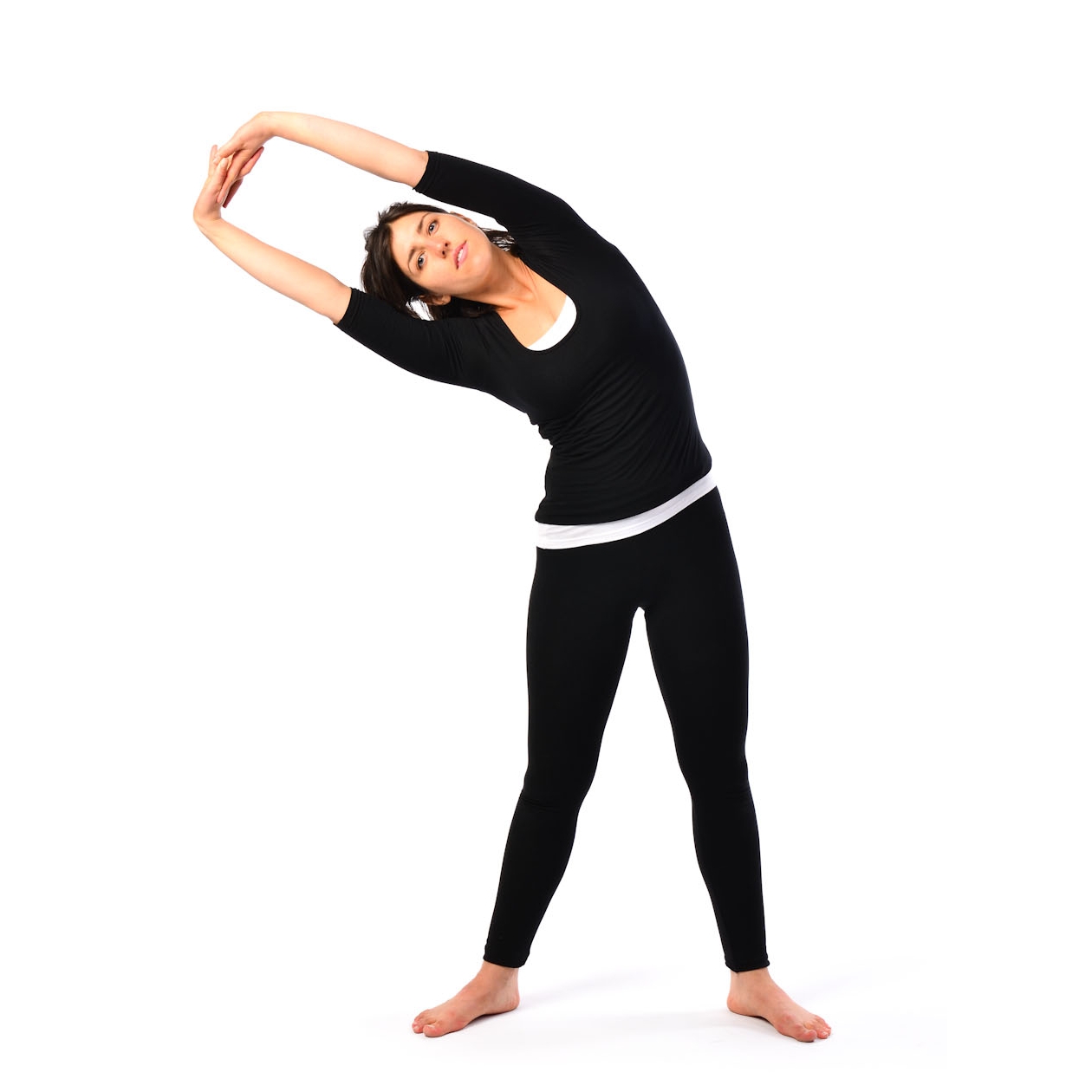
Here are ten yog-asanas to manage and overcome Anorexia:
Tadasana Samasthithi
-
Stand in your bare feet on a smooth and even surface. Keep your feet
together, with your heels touching the wall. Beginners may find it
easier to keep their feet 5cm (2 in) apart.
-
Stretch your arms along your sides, with the palms facing your thighs, and
your fingers pointing to the floor. Stretch your neck upward, keeping
the muscles soft and passive.
-
Distribute your weight evenly on the inner and outer edges of your feet,
and on your toes and heels. Tighten your kneecaps and open the back of
each knee. Turn in the front of your thighs. Tighten your
buttocks. Pull in your lower abdomen, and lift your chest.
-
Keep your head erect and look straight ahead.Breathe evenly and
with awareness. Experience your body and mind as an integrated whole and
feel the surge of energy. Stay in the pose for 30 - 60 seconds.
-
Stand in your bare feet in
Tadasana on an even, uncovered
surface. Exhale, and stretching from your waist, lift your arms in front
of you, to shoulder-level. Keep your palms open and facing each other.
-
Raise your arms above your head, perpendicular to the floor. Stretch
your arms and fingers. Push your shoulder blades into your body.
-
Stretch your arms further up from your shoulders, keeping them parallel to
each other. Extend your wrists, palms, and fingers toward the ceiling.
Feel the stretch along both sides of your body.
-
Pull in your lower abdomen. Turn your wrists so that the palms face
front. Hold the pose for 20-30 seconds. Breathe evenly.
-
Stand in your bare feet in
Tadasana against a wall, on an
even, uncovered surface. Bring your arms toward your chest, with your
palms facing the chest. Interlock your fingers firmly, from the base of
the knuckles, with the little finger of your left hand lower than the little
finger of the right hand (see inset).
-
Turn your interlocked palms inside out (see inset). Exhale,
and stretch your arms out in front of you at shoulder-level. Then
inhale, and raise your arms above your head until they are perpendicular to
the floor. Extend your arms fully and lock your elbows. Feel the
stretch in your palms. Hold the pose for 30 - 60 seconds.
-
Stand in your bare feet in
Tadasana on an even, uncovered
surface. Gently turn your arms in and out a few times. Take them behind you and join your fingertips, pointing them to the floor. Rest
your thumbs on your lower back. Move your elbows back and rotate your
wrists, so that your fingertips turn and point first toward your back, and
then upward.
-
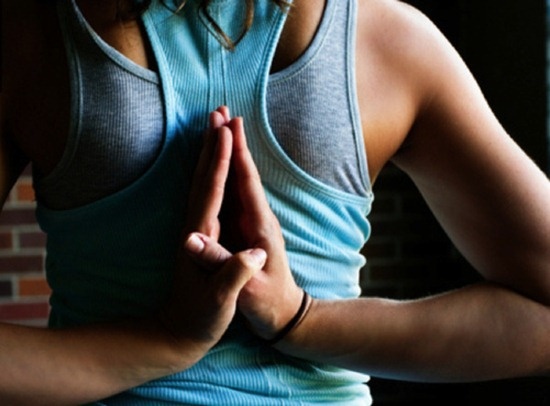
Press your palms together, and move them up your back until they are
between your shoulder blades. Keep your palms joined from the base to
the fingertips. Push your elbows down, to stretch your upper arms and
chest. Focus on keeping your chest and armpits open. Keep your
neck and shoulders relaxed. Hold the pose for 30-60 seconds.
Breathe evenly.
-
Stand in your bare feet in
Tadasana on an even,
uncovered
surface.
Take your left arm behind you and place the back of your left palm on the
middle of your back. Raise your right arm. Bend your right elbow
and move your hand down, with your palm facing your body.
-
Place your right palm on your left palm and interlink the fingers of both
hands. If this proves difficult, touch the fingertips of both hands to
each other. Do not force your arms to bend - give yourself time to
adjust to the action. Consciously relax your arms. Open your right
armpit to create space between your chest and your upper right arm. Keep
your right elbow pointed up and back, and your right forearm close to your
head. Lower your left elbow further. Then place the back of your
left wrist on your back. Hold the pose for 20-30 seconds. Repeat
the pose on the other side.
-
Spread a mat against a wall. Place a
wooden block on its long side on the right edge of the mat. Stand in
Tadasana on the centre
of the mat. Inhale, then spread your feet about 1m (3.5 ft) apart.
Your heels and buttocks should touch the wall. Raise your arms out to
your sides until they are in line with your shoulders.
-
Now, turn the right foot out to the right
until it is parallel to the wall. Turn your left foot in slightly to
the right. Your left heel and buttocks should touch the wall.
Keep your left leg straight. Stretch your arms away from your body,
keeping them parallel to the floor, with your palms facing down..
-
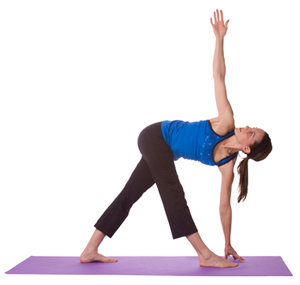
Bend to the right and extend your right arm
toward the floor.
Place your right palm on the block. Pull the
tailbone into your body, keeping your left buttock and shoulders firmly
pressed to the wall. Raise the left arm up toward the ceiling.
Turn your head and look at your left thumb. Rest your weight on both
heels, and not on your right palm. Breathe evenly, not deeply.
Hold the pose for 20-30 seconds. Repeat the pose on the other side.
-
Stand in
Tadasana against a wall, with your heels and your buttocks touching it. Place the
block on the floor behind your right foot. Inhale, and spread your feet
1m (3.5 ft) apart. Turn your right foot out to the right, until it is
parallel to the wall.
-
Turn your left foot in slightly to the right. Press the outer edge
of your left foot firmly on the floor, and bend the right knee, pushing your
thigh down until your calf is at right angles to the floor. Stretch your
left arm away from your left shoulder.
-
Bend to the right, and place your right palm on the block. Stretch
the left arm up, with the palm facing forward. Now rotate the arm and
bring it toward your left ear. Your left thumb should touch the wall.
Turn your head and look at your left arm. Maintain a continuous stretch
from the left ankle to the left wrist. Press your outer left foot into
the floor. Move your shoulder blades into your body, and extend your
spine toward your head. Hold the pose for 30 seconds. Repeat the
pose on the other side.
-
Stand in
Tadasana. lace a block on its short side against the wall. Inhale, spread your
feet 1m (3.5 ft) apart. Raise your arms to shoulder-level.
-
Turn your right foot out to the right, parallel to the wall, and turn your
left foot in, slightly to the right. Bend your right knee, and place the right palm on the block. Raise your left arm.
-
Straighten your right leg. aise your left leg, until it is parallel
to the floor. Keep your left arm stretched up, in line with the right
arm. The back of your left hand should touch the wall.
-
Look up at your left thumb. eep your weight on the right foot,
thigh, and hip, not on your right palm.Hold the pose for 20 seconds.
Repeat the pose on the other side.
-
Stand in
Tadasana.
Place your hands on your hips, with your thumbs on your thumbs on your back
and your fingers on the front of the hips. Inhale, and spread your feet
1.2m (4ft) apart. Your feet should be parallel to each other, the toes
pointing forward. Press the outer edges of your feet to the floor.
Keep your back erect.
-
Exhale, and lift both kneecaps. Bend forward, extending your spine,
and bring your torso down toward the floor. Look up as you bend to
ensure that your back is concave. Take both hands off your hips, and
lower them to the floor. Place your palms flat on the floor with your
fingers spread out.
-
Widen your elbows, keeping your palms flat on the floor. Place the crown of your head on the floor, between your palms. Push your sternum
forward and draw the abdomen in. Move the thighbones and groin back to
reduce the pressure on your head. Stay in the pose for 1 minute.
-
Stand in
Tadasana facing a wall, about 1 m (3.5 ft) away from it. Place 2 of the blocks on their broad sides, shoulder-width apart, against the wall. Place the
third block on its long side, 45cm (18in) away from the wall. Separate
your feet to a distance of 45 cm (18 in). Kneel, and place your palms on
the two blocks against the wall.
-
Press your palms down on the blocks and walk your feet back, until they are 1.2 m(4ft) away from your hands. Make sure that your feet are inline with your hands and the same distance apart. Raise both heels.
Stretch your legs, then lower your heels to the floor. Stretch your arms
fully.
-
Consciously stretch stretch each leg from heel to buttock, and from the
front of the ankle to the top of the thigh. Raise your buttocks, stretch your chest, and push your sternum toward your hands. Exhale, then est
your head on the third block. Press your hands down on the blocks, extending your arms fully. Stretch your spine and expand your chest.
Keep your throat soft and elongated. Relax your eyes and keep your brain
passive.
Regular practice of these yogasanas will help to regain the balance of the
chakra, located at the base of the spine. Other exercises you can include are:
staff posture (Dandasana), bound angle (Baddha
Konasana), crab, full wind
relieving pose, pigeon and locust.
If depression is a strong contributing factor, back-bending poses will be
beneficial for their energizing, toning and heart opening qualities. If anxiety
is a primary contributing factor, forward bends can be utilized for their
calming and nurturing aspects.
Pranayama (yogic breathing exercises) are also
helpful to calm the body and mind and to balance the energy in the body during
the recovery stage of the disease. Nadi Sodhana Pranayama (alternate nostril
breathing) is balancing, calming and reduces anxiety. Dirga Pranayama (three
part breath) is calming, grounding and nurturing.
The practice of
meditation is also very beneficial to cultivate a sense of
control over life’s events and to reduce obsessive thoughts. A general meditation
practice will be beneficial, but using an active and targeted meditation would
be more effective. Practice any or all of the following based upon what calls
you to be invoked within yourself: Inner Peace Meditation, Third Eye Meditation,
Root Chakra Meditation or Prana Healing Meditation.
Dated 17 May 2013
|
Related Links
|
|
|
|
|