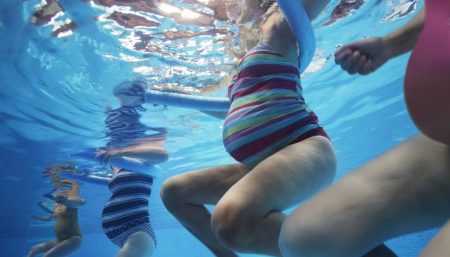
Yoga is a centuries’ old practice that promotes balance,energy, deep breathing and relaxation. The therapeutic and buoyant effect of water is combined with energizing and harmonizing effects of yoga provide the optimum workout for you and your baby.
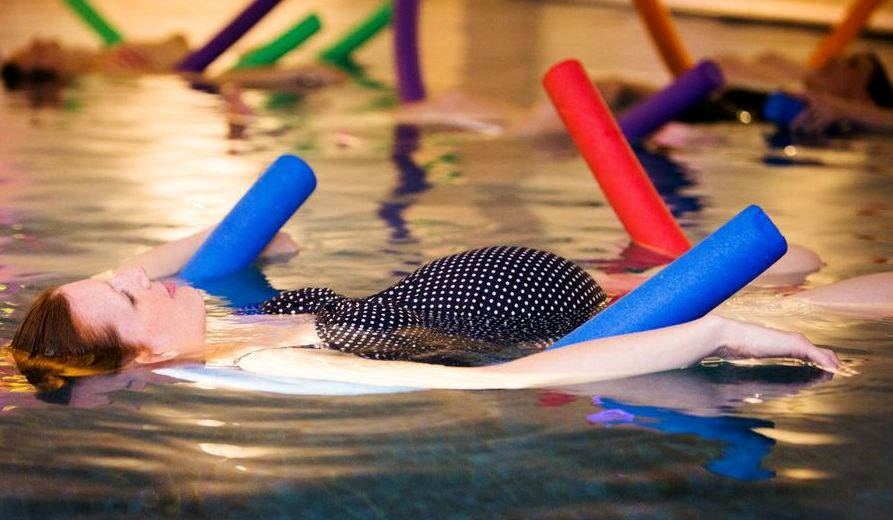
Aqua Yoga begins with yoga poses and swimming techniques for pregnancy designed to open the pelvis, deep breathing and ease aches and pains. If you aim to have a water birth, Aqua Yoga suggests exercises to help reduce the pain of labor, to ease the birth and open your pelvis in preparation for delivery.
When you labor in water, you escape to a peaceful protected world where you can be at one with the rhythm of the contractions and your breathing. The water massages, supports and envelops you in a way that is far removed from being watched in a labor ward. It gives you total privacy and comfort, in your own world with your baby.
Experience gathered from thousands of women by midwives and doctors who attended the first International Water birth Conference at Wembley, London, in 1995 showed that the more the body of a laboring woman is immersed in water, the more effective is the pain relief. Most women did not go underwater during labor, but it helped some to concentrate during painful uterine contractions.
Laboring while in warm water has the advantage of maximizing the supply of rich oxygenated blood to the hard-working uterus in several ways: the muscles that maintain your posture against gravity are supported; major veins and arteries are not obstructed in any position; temperature is even and less blood is diverted to the periphery of the body.
Exercises recommended in birthing pool
Exercises in the swimming pool or the birthing pool in early labor can help greatly to open the cervix. Short active periods can be alternated with quieter restful ones, during which you can practice visualization techniques or just relax and breathe through your contractions as they come and go.
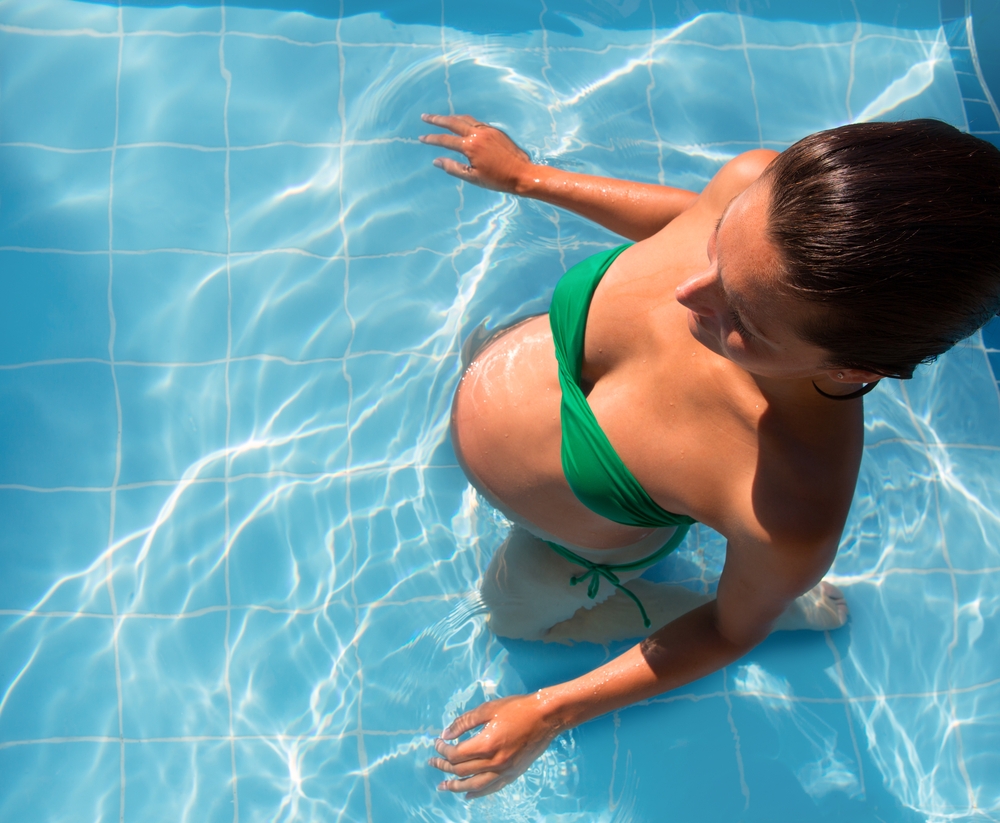
Pelvic rolls and swings in the birthing pool
Rolls and swings increase the pressure or the baby’s head in a rhythmical way and involve you actively in the process of making space for your baby to come down into the birth passage.
- Get into a low squatting position, holding on to the edge of the birthing pool.
- Swing your pelvis forward and back: this will make you bend and stretch your legs in a broad movement. Breathe in as you stretch back, out as you bend forward.
Knee-bent variations
These are useful movements which can get a baby “unstuck” from an awkward presentation and help promote stronger labour when contractions become weak during the first stage, as this is usually because the head of the baby is not pressing on the cervix at the best angle.
- Kneel in the birthing pool, holding the edge in front of you, and straighten one knee and then the other, extending the leg sideways at the bottom of the pool. Breathe deeply, exhaling as you extend either leg to the side, and take your time to feel intuitively which position “opens” you the most.
- The same leg movement can be practiced facing the pool in a squat, with the back against the side of the pool, or in a sitting position. Breathe in the same way.
- In an all-fours position, with the hands resting on the bottom of the pool, the same movement can be done as a wide swing of the hips to one side and then to the other, soothing the whole back and giving you a feeling of space.
- With the arms stretching sideways holding on to the opposite edges of the pool, the same alternating leg movement becomes more active and has all the advantages of a deep squat without putting undue pressure on the pubic bones or the perineum. A simultaneous opening of one knee and closing of the other is a very effective way of changing sides. Turn the head in the direction of the raised knee, as in a low-lying Archer Pose in classical yoga.
- Between these movements, take rests in a kneeling position, in which you can also do comforting pelvic rolls now and again. In the early phase of labor, when your contractions are just getting established, you may not mind being visited by your older children if you are having a home birth. Seeing you in the birthing pool involves them in the journey that their little brother or sister has initiated to join their family.
Disclaimer
The Content is not intended to be a substitute for professional medical advice, diagnosis, or treatment. Always seek the advice of your physician or other qualified health provider with any questions you may have regarding a medical condition.