While most women no longer spend the time to brush their hair before they go to bed, brushing your hair is still an important way to keep your hair healthy and shiny. Choosing the right brush is very important depending on your hair type, read on to find out what brush is best for your hair.
The role of brushing
Brushes help to remove tangles and knots and generally smooth the hair. The action of brushing from the roots to the ends removes dead skin cells and dirt, and encourages the cuticles to lie flat, thus reflecting the light. Brushing also stimulates the blood supply to the hair follicles, promoting healthy growth.
Brushes are made of bristles (sometimes termed quills or pins), which may be natural hog bristle, plastic, nylon, or wire. The bristles are embedded in a wooden, plastic, or moulded rubber base and set in tufts or rows. This allows loose or shed hair to collect in the grooves without interfering with the action of the bristles. The spacing of the tufts plays an important role – generally, the wider the spacing between the rows of bristles the easier the brush will flow through the hair.
Natural bristles are made of natural keratin (the same material as hair) and therefore create less friction and wear on the hair. They are good for grooming and polishing, and help to combat static on flyaway hair. However, they will not penetrate wet or thick hair and you must use a softer bristle brush for fine or thinning hair. In addition, the sharp ends can scratch the scalp. |
Types of Brush
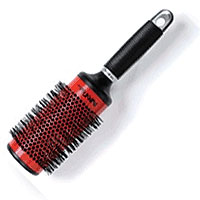
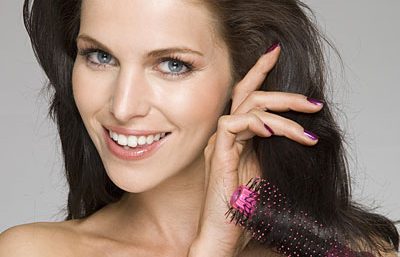
Circular or radial brushes come in a variety of sizes and are circular or semi-circular in shape. These brushes have either mixed bristles for finishing, a rubber pad with nylon bristles, or metal pins for styling. They are used to tame and control naturally curly, premed, and wavy hair and are ideal for blow-drying. The diameter of the brush determines the resulting volume and movement, much the same way as rollers do.
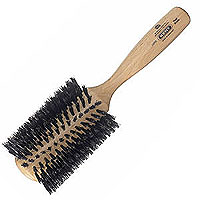
Flat or half-round brushes are ideal for all aspects of wet or dry hairstyling and blow-drying. Normally they are made of nylon bristles in a rubber base. Some bases slide into position on to the plastic moulded handle. Rubber basis can be removed for cleaning and replacement bristles are sometimes available.
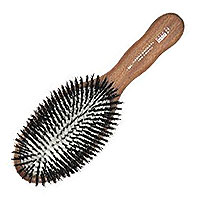
Pneumatic brushes have a domed rubber base with bristles set in tufts. They can be plastic, natural bristles, or both.
Vent brushes have vented hollow centres that allow the air flow from the dryer to pass through them. Special bristle, or pin, patterns are designed to lift and disentangle even wet hair. Vents and tunnel brush heads enable the air to circulate freely through both the brush and the hair so the hair dries faster.
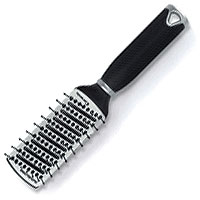
Paddle Hair brush: Great for straightening medium to long hair, a paddle hair brush smoothes as it lengthens. As opposed to the round brush, this style encourages hair to lie flat and is better for hair which is not layered too much.
Cushion Hair brush: Made for medium to long hair, cushion hair brush is a daily brush that massages the scalp and can perform the same duties as the half-round brush. Cushioned brushes give good flexibility, as they glide through the hair, preventing tugging and helping to remove knots. They are also non-static. A major,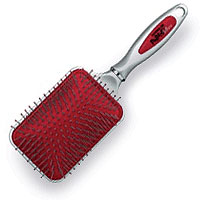 disadvantage is that the ends can be harsh, so try to choose bristles with rounded or ball tips.
Maintenance
All brushes should be cleaned by removing dead hairs and washing in warm, soapy water, then rinsing thoroughly. Natural bristle brushes should be placed bristle-side down and left to dry naturally. If you use a pneumatic brush with a rubber cushion base, block the air hole with a matchstick before washing.
Be it plastic, nylon, or wire bristles, all of these bristles are easily cleaned and heat resistant, s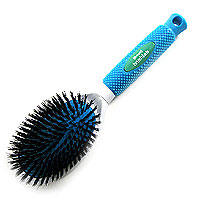 o they are good for blow-drying. They are available in a variety of shapes and styles.
Tips
Allow hair to air-dry before you brush it, to avoid damage. This can take a while, but it’s better for the hair than blow-drying. Running your fingers through it periodically and fluffing the roots a little will speed the process.
Replace brushes with damaged bristles or broken teeth; the sharp edges can damage your
scalp.
Keep your brushes and combs to yourself, never lend to other people.
A boar’s bristle brush is best for spreading the oil on your scalp down to the tips of your hair. This leads to softer, healthier hair. Bristle brushes are available at most drug stores, and at many hair salons. They are not good for detangling, so do that with a smooth wide-tooth comb.
Different types of brushes are made for different types of things so make sure the one you use if right for your hair.
Disclaimer
The Content is not intended to be a substitute for professional medical advice, diagnosis, or treatment. Always seek the advice of your physician or other qualified health provider with any questions you may have regarding a medical condition.