 Ingrown Hairs, as the name implies, occur when the end of the hair shaft is cut resulting in a sharpened edge that as it grows, curls back into the same hair follicle and results in an inflammatory response (redness, itchiness, and/or raised infected area). At times the small “ingrown hair” hair itself can even be seen beneath the raised area. Thus the hair is “ingrown” in that it does not penetrate the dermis as it grows, as it should.
Ingrown hairs are more common among people with very curly hair. Most ingrown hairs occur in the bikini area.
The seriousness of the inflammation and infection of the ingrown hair may vary. For some this is an annoying occurrence that doesn’t pose a serious health problem. For others pseudofolliculitis barbae (razor bumps) can develop into extreme Folliculitis when the hair follicle becomes acutely inflamed. Bacteria, yeasts, or fungi infections can further exacerbate the problem, and there are even acne variants of this same condition.
Possible Causes
- Skin suffering from lack of moisture
- Stiff hair
- Embedded oil in the hair follicles
- Build up of dead skin cells in the pores and on the surface of the skin can cause ingrown hairs – some are more prone to this than others due to genetics
- Coarse curly hair growing in a curved hair follicle
- Improper shaving technique with a blade such as too close a shave
- Hair removal methods such as shaving, waxing, tweezing,electrolysis, often irritate the hair follicle.
Dead cells can accumulate at the site of the irritation and form papule (small, raised, abnormality on the skin commonly known as a bump giving rise to the term ‘razor bumps’) which can also contain pus while the skin heals.
While this process continues any hair in the area can get trapped under the formation and is prevented from exiting the skin properly. Ingrown hair is the result.
Symptoms
The most common symptom of an ingrown hair is inflammation of the skin, followed by pus formation. However, each individual may experience symptoms differently. The symptoms of an ingrown hair may resemble other skin conditions.
- The body can also respond by producing a pustule – a blister on the skin containing pus
- An infected pustule can become ruptured resulting in bleeding
- Itching
- Tingling
- Pain – mild or severe
Diagnosis
Diagnosis of an ingrown hair can be confirmed with a medical history and a physical examination.
Treatment
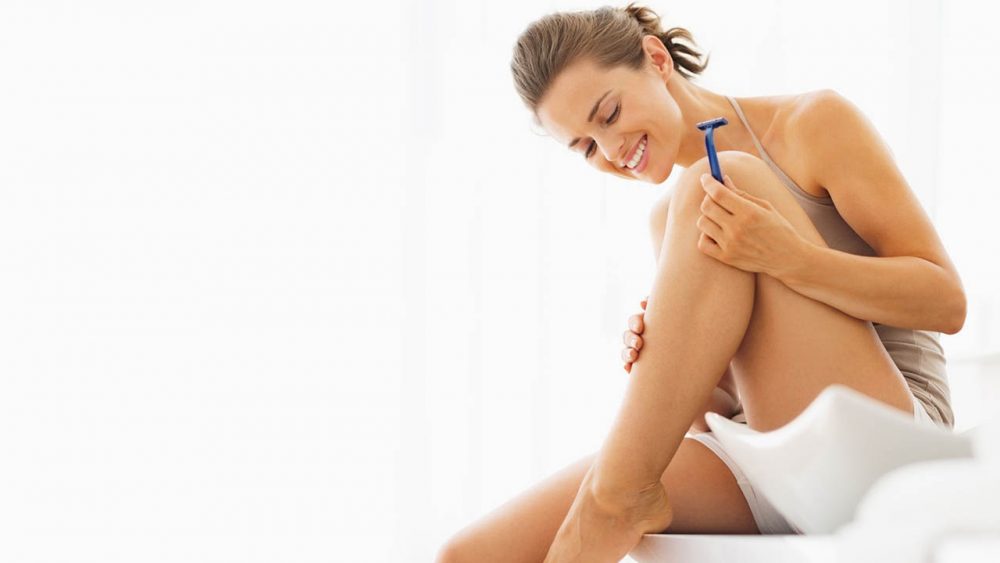
An ingrown hair often heals on its own. Many have found a decrease in occurrence when using an electric razor (electric razors are also available for women) due to the fact that although the shave may not be as close as that of a blade, the close cut resulting from the blade may be the cause of the end of the hair shaft becoming so sharpened and easily re-entering a hair follicle.
However, in the case of chronic ingrown hairs, treatment may include:
- allow the hair to grow longer
- depilatory (to remove the hair)
- electrolysis (to remove the hair)
Prevention
Shave down instead of up on the leg area. Shaving in the same direction (and not against the grain) helps to train the hair to grow out straight, thus preventing it curling back into the skin. Afterward a damp warm towel can be applied for a few minutes to further soothe and soften.
After making sure that the shaving process is completed remove the plug of hardened proteins that are blocking the hair follicle with exfoliation products so that the hair may grow outward. Exfoliating every time you bathe is your best defense against ingrown hairs. Gentle cleansing and keeping the skin smooth and supple works well to keep the hair follicles moisturized and growing in the right direction.
Disclaimer
The Content is not intended to be a substitute for professional medical advice, diagnosis, or treatment. Always seek the advice of your physician or other qualified health provider with any questions you may have regarding a medical condition.