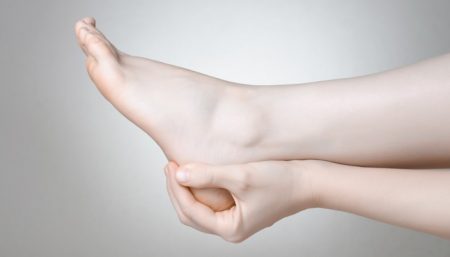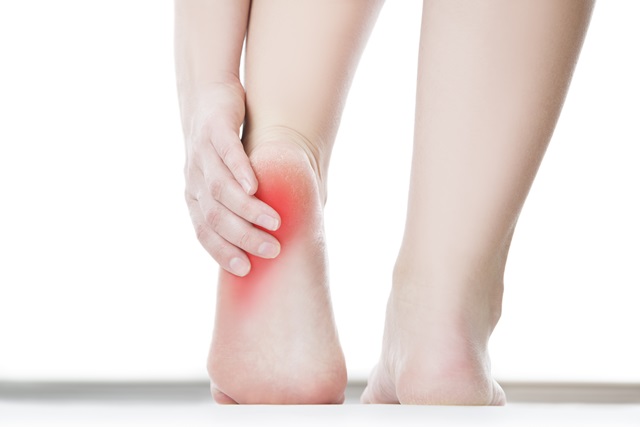
Heel pain is generally the result of faulty biomechanics (walking gait abnormalities) that place too much stress on the heel bone and the soft tissues that attach to it. The stress may also result from injury, or a bruise incurred while walking, running, or jumping on hard surfaces; wearing poorly constructed footwear; or being overweight.
The heel bone is the largest of the 26 bones in the human foot, which also has 33 joints and a network of more than 100 tendons, muscles, and ligaments.
Conditions that cause heel pain generally fall into two main categories: pain beneath the heel and pain behind the heel.
Pain beneath the heel
If it hurts under your heel, you may have one or more conditions that inflame the tissues on the bottom of your foot:
- Stone bruise: When you step on a hard object such as a rock or stone, you can bruise the fat pad on the underside of your heel. It may or may not look discolored. The pain goes away gradually with rest.
- Plantar fasciitis: (subcalcaneal pain) Doing too much running or jumping can inflame the tissue band (fascia) connecting the heel bone to the base of the toes. The pain is centered under your heel and may be mild at first but flares up when you take your first steps after resting overnight. You may need to do special exercises, take medication to reduce swelling and wear a heel pad in your shoe.
- Heel spur: When plantar fasciitis continues for a long time, a heel spur (calcium deposit) may form where the fascia tissue band connects to your heel bone. Your doctor may take an X-ray to see the bony protrusion, which can vary in size. Treatment is usually the same as for plantar fasciitis: rest until the pain subsides, do special stretching exercises and wear heel pad shoe inserts.
Pain behind the heel
If you have pain behind your heel, you may have inflamed the area where the Achilles tendon inserts into the heel bone (retrocalcaneal bursitis). People often get this by running too much or wearing shoes that rub or cut into the back of the heel. Pain behind the heel may build slowly over time, causing the skin to thicken, get red and swell. You might develop a bump on the back of your heel that feels tender and warm to the touch. The pain flares up when you first start an activity after resting. It often hurts too much to wear normal shoes. You may need an X-ray to see if you also have a bone spur. Click here for the best shoes for heel pain“
Initially, your doctor may instruct you to apply ice for 10 minutes several times a day (especially after activity and at bedtime), using an ice bath or cubes in a bag. If the problem persists he/she might prescribe painkillers, such as aspirin or ibuprofen. Foam heel cups or shoe inserts (called orthotic devices) may also be helpful.
Bathe your feet daily in lukewarm (not hot) water, using a mild soap, preferably one containing moisturizers, or use a moisturizer separately. Test the water temperature with your hand.
In addition below are, stretching and strengthening exercises for the Achilles tendon and the calf muscles that will help you heal faster. These exercises are to be done barefoot.
- Do heel raises to help stretch and strengthen the Achilles tendon and the plantar fascia .
- While sitting on a chair, grab a towel with your toes as if you are going to pick up the towel with your foot. Repeat this exercise several times a day.
- Strengthen your leg muscles by standing on the ball of your foot at the edge of a step and raising up as high as possible on your toes. Relax between toe raises and let your heel fall a little lower than the edge of the step.
- Walk on your toes only, then walk on your heels only, then walk backward to the starting point. Carry hand weights (10 to 20 pounds) to increase the value of these exercises.
- Stand straight with your hands against a wall and one leg slightly behind your other leg. Keeping your heels flat on the floor, slowly bend both knees. You should feel the stretch in the lower part of your leg. Hold the stretch for 10 to 15 seconds. Repeat the stretch 6 to 8 times. This stretching exercise may be helpful forplantar fasciitis, Achilles tendinitis and calcaneal apophysitis.
- Lie down with your upper body supported on your elbows. Tighten the top of the thigh muscle of one leg. Raise your leg on a count of 4, hold for a 2 count, and then lower the leg on a 4 count. Relax your thigh muscles. Then tighten the thigh and repeat. Do 3 sets of 10 repetitions each day. Once your leg gains strength, do the exercise with weights on your ankle. This strengthening exercise may be particularly helpful for patellofemoral syndrome.
- Lie on your stomach. Tighten your thigh muscles and slowly raise your injured leg off the floor on a 4 count. Hold the leg up for a 2 count, and then lower the leg on a 4 count. Relax your thigh muscles. Tighten the thigh and repeat. Do 3 sets of 10 repetitions each day. Once your leg gains strength, do the exercise with weights on your ankle. This strengthening exercise may be helpful for hamstring strain.
- Walk or run barefoot whenever possible.
- Practice stress reduction techniques to relax your muscles—and your mind. These have been shown to help relieve pain. For instance, try tensing and releasing the muscles in your body from your head to your toes.
As the pain decreases and your strength improves, gradually return to your usual activities. Exercises that keep your full weight off your feet, such as bicycling or swimming, will help you maintain fitness during recovery. Only a relatively few cases of heel pain require more advanced treatments or surgery. If surgery is necessary, it may involve the release of the plantar fascia, removal of a spur, removal of a bursa, or removal of a neuroma or other soft-tissue growth.
Disclaimer
The Content is not intended to be a substitute for professional medical advice, diagnosis, or treatment. Always seek the advice of your physician or other qualified health provider with any questions you may have regarding a medical condition.