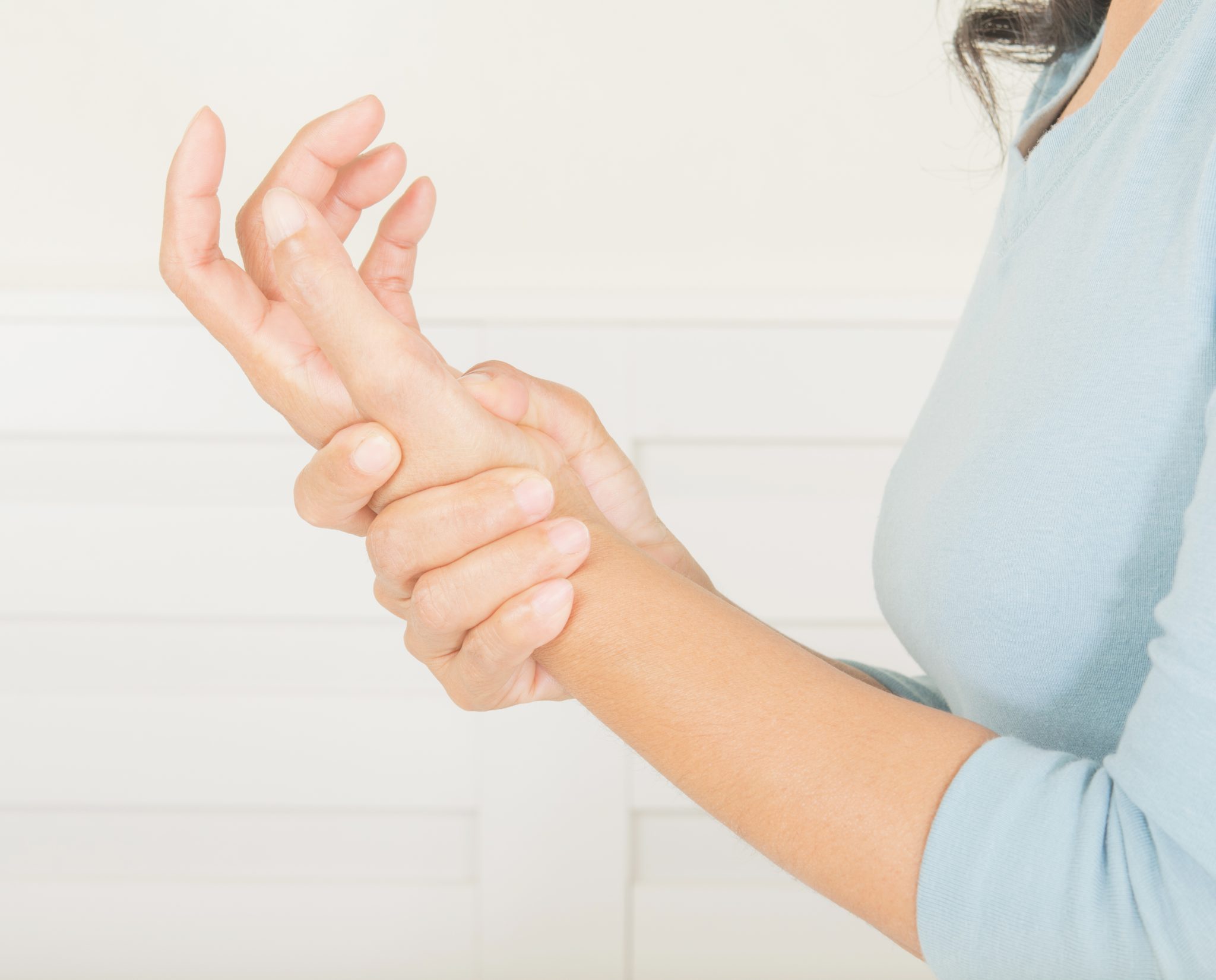
Trigger finger, also known as stenosing tenosynovitis, is a condition in which one of your fingers or your thumb catches in a bent position. Your finger may straighten with a snap — like a trigger being pulled and released. Stenosing refers to the narrowing of an opening or passageway in the body. Tenosynovitis refers to inflammation of the outer covering of the tendons that bend and extend the fingers and thumb. Trigger finger is also more common in women than in men.
There are no muscles in the fingers themselves. Muscles in the forearm are connected to the finger bones by smooth, flexible strings, called tendons. The muscles pull on the tendons, which then bend the finger joints. The tendons that bend the fingers run through a tunnel or sheath. Trigger finger is caused by a thickening on the tendon catching as it runs in and out of the sheath.
Causes
A trigger finger is caused by thickening or swelling of the lining of the flexor tendon. This pinches the tendon and prevents normal smooth gliding. When the tendon is too swollen to fit back into its tunnel, the tendon gets stuck and locks or clicks.
Tendons are fibrous cords that attach muscle to bone. Each tendon is surrounded by a protective sheath — which in turn is lined with a substance called tenosynovium. The tenosynovium releases lubricating fluid, which allows the tendon to glide smoothly within its protective sheath as you bend and straighten your finger — like a cord through a lubricated pipe.
If the tenosynovium becomes inflamed from repetitive strain injury or overuse or due to inflammatory conditions such as rheumatoid arthritis, the space within the tendon sheath can become narrow and constricting. The tendon can’t glide through the sheath easily, at times catching the finger in a bent position before popping straight. With each catch, the tendon itself becomes irritated and inflamed, worsening the problem. With prolonged inflammation, fibrosis can occur and bumps (nodules) can form.
The medical conditions of rheumatoid arthritis, gout, diabetes,hypothyroidism, amyloidosis and certain infections — including tuberculosis and sporotrichosis, a fungal infection that usually affects the skin may be associated with trigger finger/thumb symptoms.
Signs and Symptoms
One of the first signs of trigger finger may be discomfort or tenderness in the palm directly beneath the affected finger or thumb. This is the area where the tendon sheath enters the finger. The most noticeable symptom for most people, however, is when the finger or thumb actually has the painful “triggering” or locking problem.
Other possible symptoms of trigger finger are:
- Swelling or stiffness in the fingers
- Soreness in the affected finger or thumb
If left untreated, the finger or thumb may actually become closed in a bent position or, less likely, in a straightened position.
Treatment
Initial treatment of the condition can include:
- Rest. To prevent the overuse of your affected finger, your doctor may also suggest you change or curtail work or personal activities that require repeated gripping actions.
- Splinting. Your doctor may have you wear a splint to keep the affected finger in an extended position for several weeks. The splint helps to rest the joint. Splinting also helps prevent you from curling your fingers into a fist while sleeping, which can make it painful to move your fingers in the morning.
- Finger exercises. Your doctor may also suggest that you perform gentle exercises with the affected finger. This can help you to maintain mobility in your finger.
- Soaking in water. Placing the affected hand in warm water for five to 10 minutes, especially in the morning, may reduce the severity of the catching sensation during the day. If this helps, it can be repeated throughout the day.
- Massage. Massaging your affected fingers may feel good and help relieve your pain, but it won’t affect the inflammation.
For more serious symptoms, your doctor may recommend other approaches, including:
- Nonsteroial anti-inflammatory drugs (NSAIDs). Medications such as nonsteroidal anti-inflammatory drugs (NSAIDs) — ibuprofen (Advil, Motrin, others), for example — may relieve the inflammation and swelling that led to the constriction of the tendon sheath and trapping of the tendon.
- Steroids. An injection of a steroid medication such as cortisone near or into the tendon sheath can also be used to reduce inflammation of the sheath. Injections can be repeated if necessary.
- Surgery. Although most people with more serious symptoms of trigger finger are successfully treated with NSAIDs or injections, surgical release of the tendon may be necessary for troublesome locking that doesn’t respond to other treatments. Surgery is performed on an out-patient basis under a local anesthetic. A transverse or zigzag incision is made in the palm of the hand at the base of the affected finger or thumb. In most cases the surgeon will simply release (cut) the first annular band, relieving the constriction of the tendon as it passes through the sheath. The patient may be asked to actively move the tendon during surgery to confirm whether the triggering has been relieved.
In cases involving inflammation of the lining of the tendon, such as arthritis, it may be necessary to remove the thickened synovial covering and other tissue surrounding the tendon. Following surgery, a light dressing is applied to protect the wound yet allow for active and passive motion of the finger or thumb. The dressing may be removed after several days. It is recommended that the hand be kept dry until the sutures are removed, usually 10-14 days following surgery. Activities requiring use of the affected hand may be restricted for 4-6 weeks.
Disclaimer
The Content is not intended to be a substitute for professional medical advice, diagnosis, or treatment. Always seek the advice of your physician or other qualified health provider with any questions you may have regarding a medical condition.