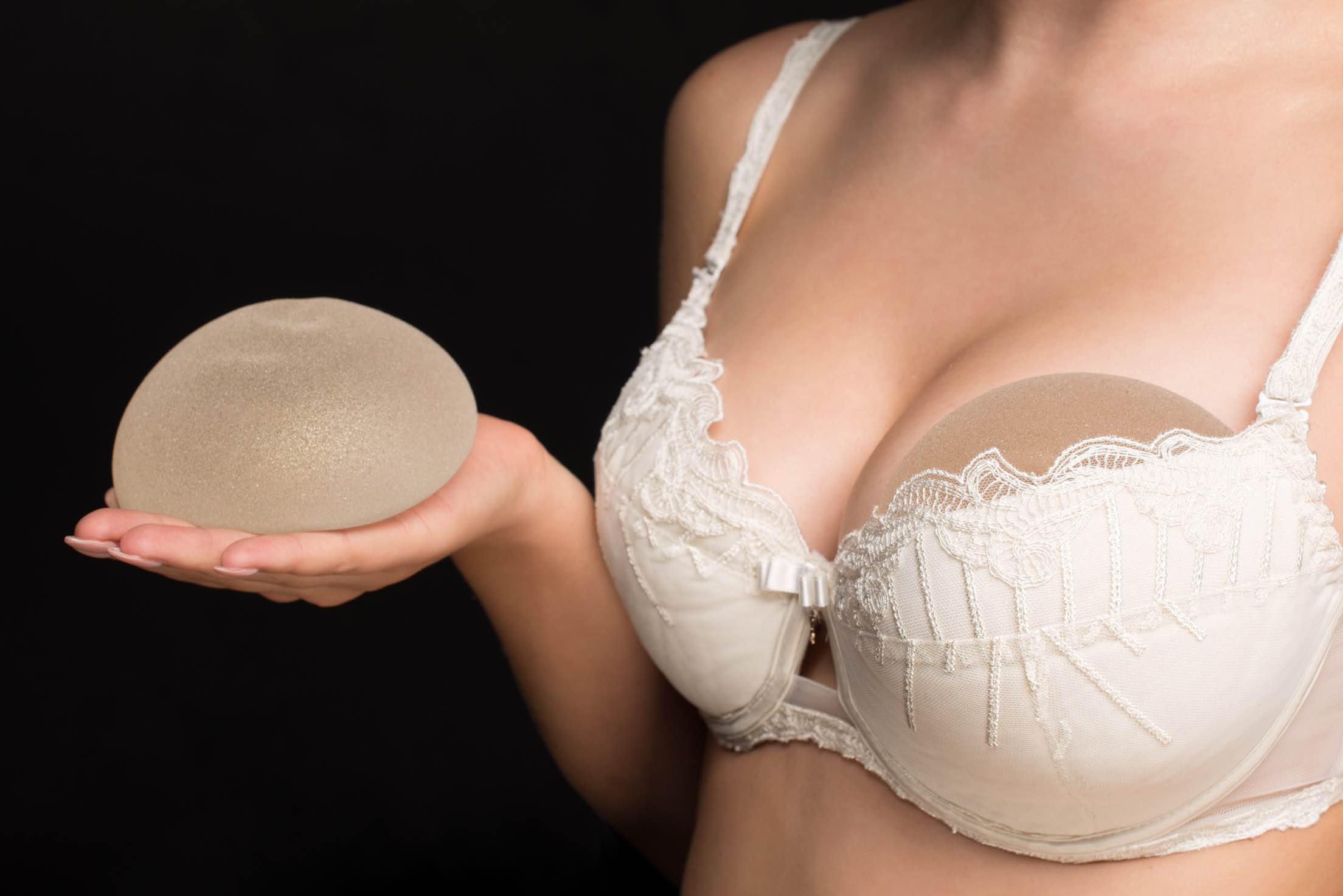
The size of your breasts is determined by the genes you inherited from your parents.
No exercises, creams, or machines can change the size of your breasts.
Breast surgery can enlarge small breasts using implants, reduce the size of large breasts, or lift sagging breasts.
Keep in mind
- Any surgical procedure done on your breasts will leave scars. Surgeons can hide many scars by making the incisions under the fold of the nipple. Before you make a decision about having breast surgery, ask your doctor to show you some photographs so you can see what the scars will look like.
- Some forms of breast surgery, especially breast reduction, can make it impossible to breast-feed. If you are concerned about not being able to breast-feed, talk to your surgeon before you have any type of breast surgery.

Many women have one breast that is slightly larger than the other.
Some women’s breasts differ so much in size that their bras and other clothing do not fit properly and they feel self-conscious. A surgeon can perform surgery on one or both breasts to make them look more alike. Your surgeon will help you decide whether you would feel more comfortable making the smaller breast larger (using a breast implant) or making the larger breast smaller.
Breast Enlargement
Breast enlargement technically called Augmentation Mammoplasty (AM) is a surgical procedure to enlarge small breast or breast that has lost their fullness by inserting a synthetic implant under the skin or muscle of the chest.
For patients with mild to moderate breast sagging, it will also improve the shape of breast and the positioning of the nipple. The breast enlargement surgery is one of the most popular cosmetic procedures.
Breast implants usually feel like a natural breast.
The major disadvantage of implants is that they sometimes become surrounded by scar tissue that makes the breast feel hard, or areas around the nipples or the incisions feel numb.
Reasons for Augmentation Mammoplasty

Aesthetic or cosmetic reasons for breast enlargement include:
- Feeling that the breasts are simply too small or out of proportion
- Loss of breast volume after pregnancy
- Difference in size between the two breasts
- Breast size that has reduced after losing weight
Breast surgery may also be offered to women having surgery for breast cancer or other rare conditions affecting the size and shape of the breasts.
Types of implants
- All breast implants utilize a silicone shell but the fillings differ, either gel-filled or saline-filled. The gel filled implants contain high cohesive gel, which is more cross linked than a standard silicone gel and provides a higher resistance to flow. If the implant shell is ruptured, the inside gel will rarely escape (not leak).
- The outer silicone shell, which give the prosthesis its elasticity and integrity, may be smooth (shiny polished) or textured (finely rough) surface. The breasts, augmented with textured implant, providing a disruptive surface for collagen interface, have a lower tendency to develop contracting capsules than the breasts augmented with the smooth implants.
Breast implants may not last a lifetime and the rates of rupture in saline filled implant is higher than the gel filled one.
- The preferable shape of the implants should be, low to moderate profile (projection), providing natural upper fullness as well as nice cleavages of your new breasts.
- Brands available are – PIP and Sebbin (from France).
Deciding on the Size of breast implantsThe implant should not be too small or too large in comparison to the patient’s chest wall dimensions. The goal is to augment the breasts to a size that is in better proportion to the physique and to maintain a very natural look. There are many factors effect the such as your original cup, your expected cup and your physique including the chest muscle.
- If you have board chest, especially the position of your nipple is far apart, the selected size of implants should be rather big with low to moderate profile (wide base dimension) to get a closer nice cleavage.
- If you have some degree of breast sagging, the selected size should be quite big with moderate to high profile, providing upper breast fullness and also improving the nipple position.
- If you have little breast tissue and/or very thin skin, the proper size should be chosen carefully (for example: not more than 280cc.). Too big implant may cause abnormal thinness of skin (translucency) or visible and/or palpable wrinkling (rippling) in an implant.
Before surgery
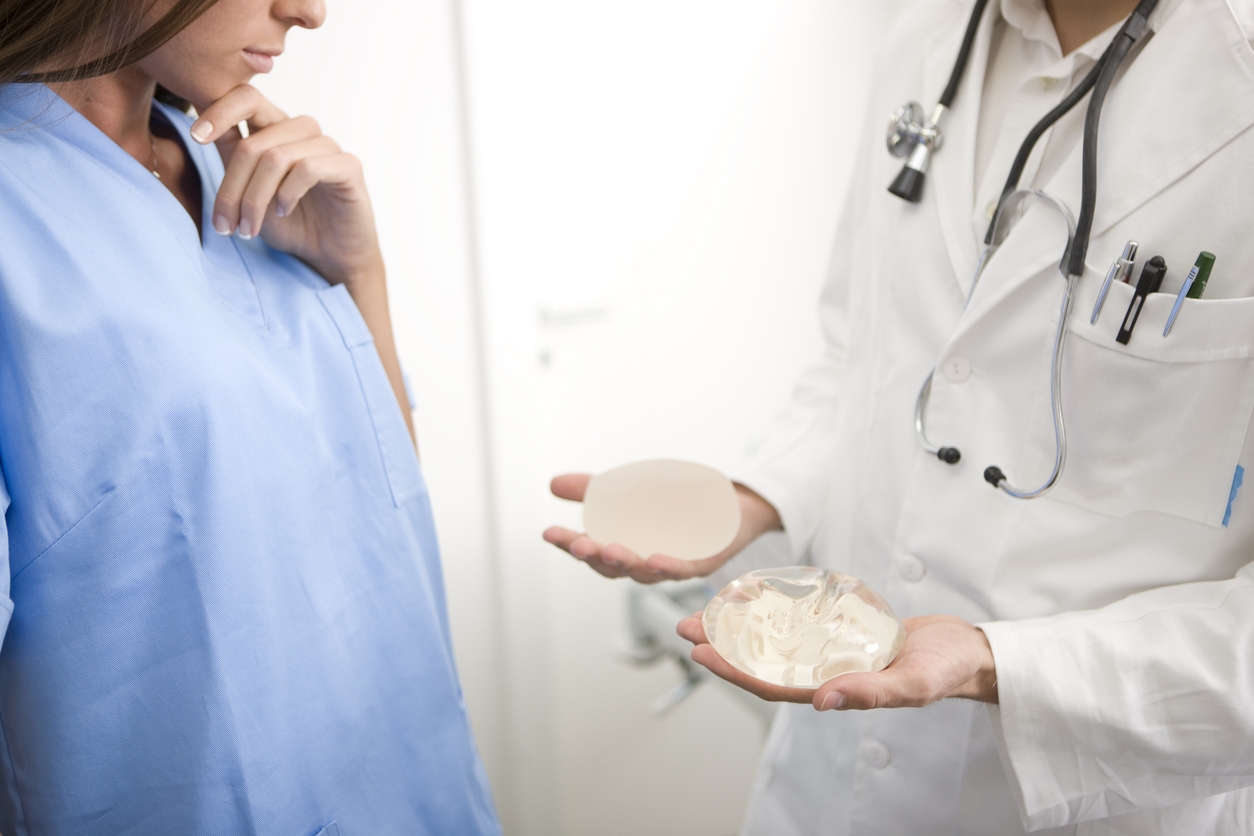
Talk with your surgeon about the results that you desire-.
- Inquire what types of implants are available and discuss the advantages of each.
- Ask your doctor where he or she will make the incisions to best hide the scars. The most common incision site is in the fold under the breast. Another possible location is around the outer edge of the areola. When the procedure is performed properly, it should not affect the sensation in your nipples or any other part of your breasts. Although loss of nipple sensation is rare, it is possible, especially when a very large implant is used. No breast implants or breast enlargement procedures have been linked to breastfeeding problems. Breast enlargement is sometimes done through an incision in the armpit, which reduces the risk of loss of sensation in the nipples and does not leave a scar on or under the breast. However, this procedure is more difficult because the implant must be inserted over a longer distance to its final position in the breast. In rare cases, the implant may done up slightly too high.
Endoscopy has made it easier for doctors to perform this type of breast-enlargement procedure.
The common incision sites are:
1) Under the arm (auxillary):
2) Around the nipple (periareolar):
3) Within the fold under the breast (inframammary):
4) Umbilical or navel (transumbilical): This incision results in a single hidden scar (no breast scars) and no chance of causing difficulty with breastfeeding. Only inflatable implants are used in this procedure. Implants must be inserted entirely deflated and inflated only after they are in place
- The location of the implant-under the chest muscle or over it – is a personal choice. Placing the implants submuscularly can help reduce the chance to get capsular contracture and also visible/palpable wrinkles in an implant, which are related to the thinness of the overlying tissue cover (skin and breast tissue). Besides, implants placed under the chest muscle interfere less with detection of tumors on a mammogram. In some cases, a surgeon may feel that a more natural shape is possible when the implant is placed over the muscle. You and your doctor together can determine the best option for you.
The Surgical procedure
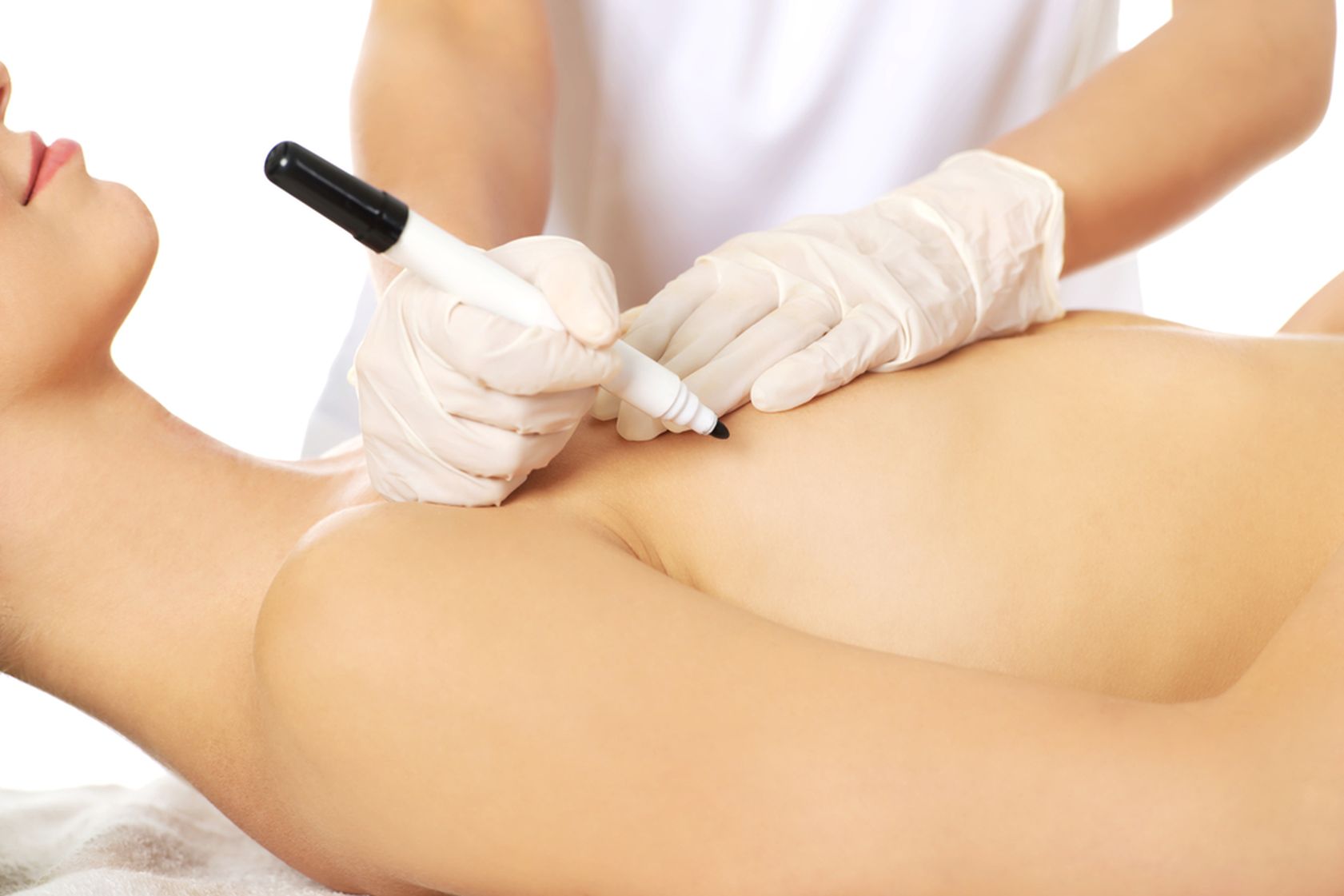
Breast enlargement surgery is performed in an outpatient surgery facility or in a hospital operating room and usually does not require an overnight stay in the hospital.
- You are likely to be given local anesthesia to numb your chest and a sedative to relax you during the procedure. General anesthesia to put you asleep during the surgery is an option. The procedure takes about 11/2 to 2 hours.
- For breast enlargement, the surgeon makes an incision at the predetermined site (in your breast or armpit) and separates the tissues to create a pocket for the implant.
- The newly formed pocket may be rinsed with an antibiotic solution to reduce the risk of infection.
- During the procedure, your surgeon may tilt the position of the operation table to observe the effect of gravity on the position of the breast when your body is upright. The surgery takes 1 to 1.5 hour.
- The surgeon then inserts the implant and closes the incision with stitches. Tape and a gauze bandage may be applied after the incision is closed and you may be dressed in a special bra that provides good support and light pressure to reduce swelling.
Recovery & After care

After breast enlargement surgery, you may feel substantial discomfort or pain, especially if the implant is placed under your chest muscle. If your pain is severe, your doctor can prescribe pain-relieving medication. You can bathe normally soon after the surgery. The stitches will be removed after about a week, but the area will still be swollen and bruised. Each breast may heal at a different rate. Most of the swelling is likely to subside within 6 weeks. The scars will be pink for about 6 weeks and will begin to fade in about 6 months.
Avoid sexual arousal for a week after the procedure because it can increase blood circulation to the breasts and cause swelling. After that, sexual activity without breast contact is fine until your breasts no longer feel sore – about another 2 to 4 weeks.
The patient is requested to have early breast exercise to prevent the breast firmness (capsular contracture). There are two main technique for exercising, which are pressing and squeezing technique. The aim is to maintain the space around the implant as well as prevent the thickness of surrounding capsule (capsular contracture). Only gentle manipulation of the implants is recommended, the proper time should be between 15-20 minutes 2 or 3 times a day. You may adjust your own schedule later if your breast contour improves satisfactorily and there is no resistance while exercising.
Complications
Although breast enlargement is a simpler form of surgery than other cosmetic breast procedures, complications can occur. Many women who have breast implants have them replaced in another procedure at some time in their life, usually because of capsular contraction.

Capsular contraction occurs when the tissue surrounding a breast implant becomes tight, forming a capsule around the implant and causing the breast to feel unusually hard. Some women are not bothered by this hardness; others find it extremely uncomfortable and unattractive. You may feel a firmness in your chest when you hug someone or when you lie on your stomach.
To correct this problem, the surgeon may need to perform a procedure called an open capsulotomy in which he or she reopens the incision and makes a cut in the tissue capsule to relieve the pressure. If this procedure does not provide sufficient relief, the implant and the surrounding scar tissue will be removed. The scar tissue may adhere to the breast tissue, making removal difficult.
Implants that contain saline (salt) solution have a lower rate of capsular contraction than silicone implants.
Various other problems can occur with breast implants. Your nipples may feeloverly sensitive or less sensitive than before; both conditions are likely to improve over time. Implants can sometimes leak. Saline that leaks from an implant is safely absorbed by your body. Although research has not found a link between silicone from breast implants and illness, in most cases in which a silicone implant ruptures or leaks, a surgeon will recommend replacing it with saline-filled implant. If you have silicone implants that are not painful, hard, leaking, or causing you any other problems, you do not need to have them removed.
Infection, as manifested by swelling, tenderness, redness and fever, is an extremely rare complication of breast-enlargement surgery.
If an infection develops, the implant must be removed and the surgically created pocket must be cleansed thoroughly. A new implant can be inserted after about 3 to 6 months.
Hematoma formation, which is manifested by enlargement and discoloration of tissue, may, if happened, need to be removed. Meticulously stop bleeding, surgical tube drainage and postoperative pressure bandage are important to prevent this sort of complication.
Rupture of the implant
For saline filled implant, if the implant shell is ruptured, there is a rapid change in shape of the implant and you absolutely need to change the new one.
For standard silicone gel, if the implant shell is ruptured, the escaping gel is usually contained by the scar envelope in the surgical pocket and may be undetectable except by Magnetic Resonance Imaging (MRI). In case of the high cohesive gel, if the implant shell is ruptured, the gel will normally not escape or migrate from its shell due to a higher resistance to flow.
Implants may interference with Mammography in detection of Cancer-As silicone is opaque to x-ray, an implant may theoretically interfere with the early detection of cancer by mammography as it may obscure part of the breast. Newer techniques of breast compression improve the amount of breast that can be visualized. Alternatively, most surgeons feel that the implant may improve the detection of tumors by palpation.
To obtain a comprehensive packet of information on breast implant issues, request FDA’s publication, “Breast Implants, An Information Update,” by calling the agency’s breast implant information line at 1-800-532-4440. For on-line information, see the Breast Implant Information on this Website.
Disclaimer
The Content is not intended to be a substitute for professional medical advice, diagnosis, or treatment. Always seek the advice of your physician or other qualified health provider with any questions you may have regarding a medical condition.