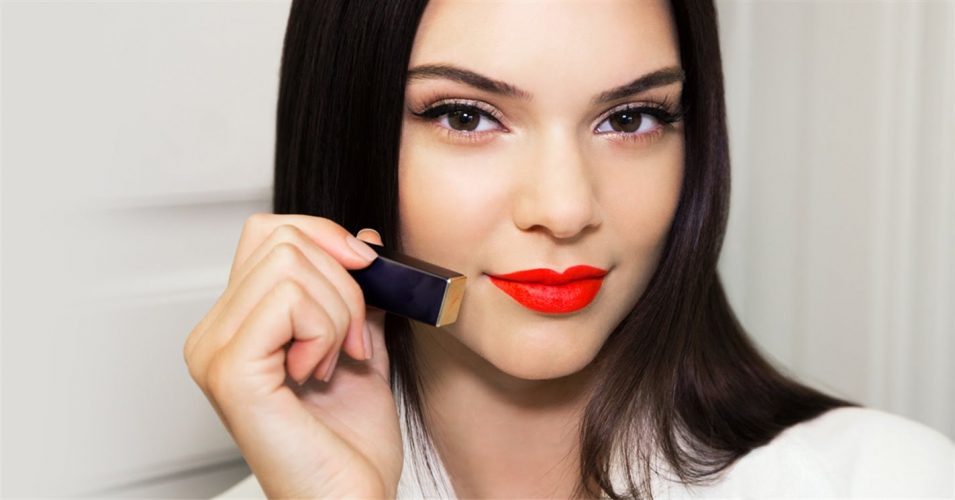
Lipstick provides the final touch to your makeup; without it no look is complete. As your skin tone changes from seasons to seasons, so you should regularly re-assess your lipstick as well as your foundations shade. Lipsticks that work best are those that have some of your skin’s natural tones in their colour such as a blue-pinks or yellow- browns. A corresponding lip pencil is a valuable investment too because when your outline your lips before colouring them in, lipstick and particularly the intense shades- will not bleed into the fine lines around your mouth. NEVER apply a liner that’s darker to your lipstick in an effort to make the liner stand out.
You need a narrow, flat ended brush, a selection of finely sharpened lip pencils, lipgloss and lipstick (either the conventional tube lipstick or the cream type with a sponge-tip applicator. Before heading for lip make-up, study the shape of your lips, identify the defects, if any, and decide on what you want to achieve and then proceed.
 Steps to Applying a Lipstick
- Outlining With Lip Liner
To apply lip liner, rest the elbow of your working hand on a flat and steady surface or on the palm of your other hand and trace quickly and lightly around your lips, when you get near to the corners of your mouth fade the line out by marking it more lightly. If you like you can cover your entire mouth with lip liner it acts as a good lipsticks base.
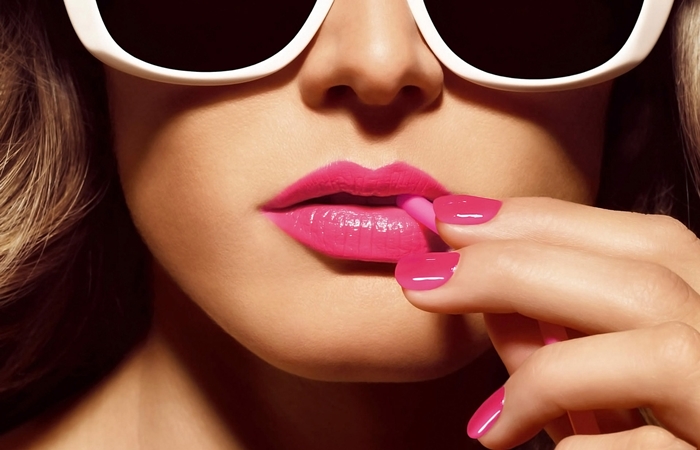
- Priming The Lips With A Lip Balancer
Fill in the lips with a special base or balancer to even out the skin tones. If your lips are of an even colour, use a face powder as a base.
- Filling Up With Lipstick
Afterwards, apply lipsticks preferably using a brush (it helps to stabilize the colour).
|
Finding a suitable colour : Most important things for right colour choosing are skin colour, hair colour and shape of your lips. For light skin and blonde hair: all shades of orange, pink, purple. For dark skin and dark hair: all shades of red, violet. For light skin and dark hair: all shades of brown and beige. For red hair women: coral-red, brown and bronze colours. |
- Blotting Off:
Fold a clean tissue and place it between your lips. Press the lips lightly together to remove the excess colour and to help seal the remainder, so that it stays on the lips rather than moving onto every glass you use. Apply a second coat of lipstick (if desired or for evening makeup). Don’t apply more than three layers or your lips will look frighteningly thick.
- Final Lip Gloss Application:
Finally finish with a lip gloss to get a gleaming look. However, women with extrafull lips, should use lip gloss very sparingly.
Suit Your Lips
Make-up, if done with care can serve as a great way to highlight the lips.
1.Small Mouth With Small Lips:
These are easily corrected by taking the lip liner pencil outside the natural lip line. Work slowly and steadily to form a perfect shape. Fill in with primer and finally with the lipstick. A highlight of frosting on the upper lip would also create an impression of fullness.
2.Large Mouth With Full Lips:
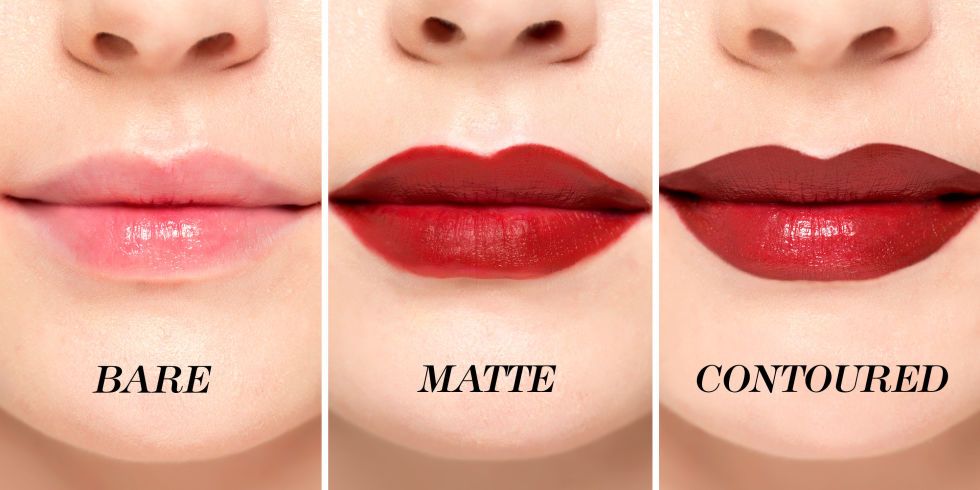
Apply liquid foundation makeup to the entire mouth, then outline with a dark shade of lipstick just inside the natural contours of the mouth. Then apply lipstick of a lighter shade carefully and accurately within this outline. Subdued shades work well for this kind of mouth.Use medium toned lip colours and avoid dark browns, plums, electric brights or pale shimmer shades.
3.Full Upper Lip:
Apply fluid foundation makeup to the upper lip. Outline just inside its natural contour and apply a dark shade of lipstick. Then outline the lower lip just outside its natural contour and emphasize by filling in with a lighter shade of lipstick.
4.Full Lower Lip:
Outline upper lip just outside its natural contour. Apply a light shade of lipstick and in the center add a touch of lip gloss. Apply fluid foundation makeup to the lower lip. Outline just inside its natural contour. Then fill in with a darker shade of lipstick, using a lip brush.
5.Wide Mouth:
Cover the corners of the mouth with foundation makeup or a cover stick. Apply lipstick with a lip brush, stopping a few millimeters before the corners of the mouth are reached.
Related Links
Disclaimer
The Content is not intended to be a substitute for professional medical advice, diagnosis, or treatment. Always seek the advice of your physician or other qualified health provider with any questions you may have regarding a medical condition.