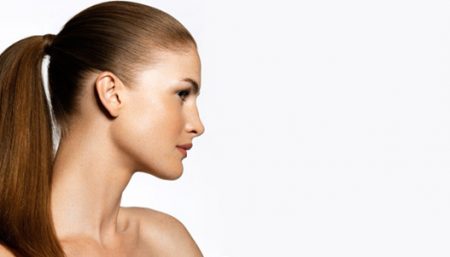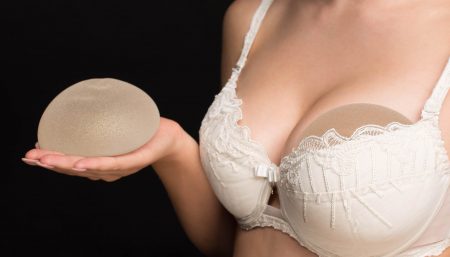
(1) DEEP HORIZONTAL LINES ON THE FOREHEAD
Solution
A “forehead lift” (also known as a “brow lift”) can be done to pull up and tighten skin in this area to make the lines less prominent.
The surgical cut is made 1 cm behind the hairline, running from ear to ear. The skin of the forehead is then lifted upward and stretched, the excess cut off; the underlying muscles-whose tautness has caused the wrinkles-are cut to weaken them; and the incised skin edges are sutured, the scar going into the new hairline.
The overall effects is to lift both, the forehead as well as the eyebrows.
Solution
The muscle in the forehead (whose laxity causes the lines) is cut and tightened. The procedure leaves fine scars in the area between the eyebrows. Doctor’s such as Dr. Angelo Cuzalina also suggest.
Alternatively, “filler” injections of collagen or auto (your own) fat can plump out the lines, making them less noticeable.
|
(1) EYE BAGS: A result of the aging process, they are caused by a two-in-one decline: the skin loses its elasticity and stretches; and globules of fat herniated through the weakened layer of tissue. This causes the puffiness in the upper and lower lids that we call ‘ bags’. Solution A cosmetic procedure known as blepharoplasty, in which the surgeon cuts away the excess of loose skin and the protruding fat then sutures the eyelid, making it taut and smooth again. The scars get hidden in the natural folds of the eyelids. In the younger patient who does not have too much skin laxity, and whose problem is limited to a protrusion of fat, the surgeon may go through the conjunctiva (membrane) of the eye, pick out the fat and put in a couple of stitches. This procedure (known as conjunctival blepharoplasty) can be done only for the lower lids. Cautions/Risks This is surgery that calls for finesse and delicate precision. The lower eyelids are particularly vulnerable to a heavy-handed approach: removing too much skin can result in a tension in this area that makes it difficult for the eye to adjust to the upward gaze.
Solutions A difficult problem to address. Fat has been tried as a filler, but results are not very effective.
Solutions They cannot be eliminated, but in older skin that are wrinkled and loose, they can be minimized: The surgeon stretches and cuts off the excess skin. The skin under the eyes becomes smoother and the dark area smaller in size. Solutions The first is the so-called “eyebrow lift”. The surgeon makes a small incision just above the eyebrow, cuts away an ellipse of skin and sutures the cut area, pulling the eyebrow higher up. The scar gets hidden in the eyebrow line. The second approach is to lift the eyebrows as part of another procedure, the “forehead lift“. |
 DARK CIRCLES
|
This is a frequently-seen familial tendency, characterized by a large, deep conchal bowl that pushes the ear out from the head at an exaggerated angle. Solution Surgery which places permanent sutures in the back of the ear, literally pinning them back to the head. The scars are generally hidden behind the ears. Cautions/Risks
This is an inherited deformity in which the hard outer rim of the ear has not properly formed. As a result, the top of the ear flops down like that of a rabbit-hence the alternative name for this aberration: “lop-ear deformity”. Solution Surgery involves creating a fold in the cartilage of the upper ear which will keep it propped up; this is done by putting in (permanent) stitches in this cartilage and tying them up.
These are a consequence of the natural aging process. Solution The excess can be trimmed, and a stitch or two can pull back lobes that may have jutted outward. |
|
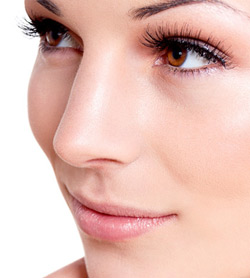
Solution Nasal surgery (known as rhinoplasty) can trim the excess and then mould the nose into its final shape. It can take from 1 to 2 hours and is done under local anesthesia combined with sedation, or under general anesthesia in the case of a highly-strung patient. The surgery is carried out within the nasal cavity and/or the mouth so that scars are not visible. Cautions/Risks
—-Haemorrhage, which is easily treatable —-Infection, which is rare, occurring only if operating conditions are less than optimal or if the surgeon has not carefully “cleaned up” the area before surgery. —-Poor healing, which generally cannot be predicted in advance. Dark skins are however more prone to scarring; and those with circulatory problems are likely to suffer from temporary or lasting discoloration. (2) PROBLEM OF DEFICIENCY IN THE NASAL AREA, INCLUDING
Solutions A short bridge calls for the addition of something that’s solid and possesses strength-either bone from a hip or rib or a hard silastic implant. If the tip (which is composed of cartilage) is small, you need to add something pliable or cartilaginous. This can be either the curved cartilage of the ear or a soft silastic implant. CAUTIONS/RISKS
(3) ELONGATED/DROOPY NOSE ARISING FROM LAXITY OF THE SKIN AS A RESULT OF AGING. Solution A surgical incision is made at the root of the nose (i.e. the place where it joins the forehead), and about 3 mm of skin is excised. Then the remaining skin is lifted upward and sewn into place (a “nose life” as it were). The scar is hidden by glasses which you need after 45 anyway. |
|
Injections of auto-fat, taken other areas of your body —- preferably an area like the abdomen which has thick, globuly fat —- can fill out hollow cheeks. Solution Caution/Risks The surgeon has to be very precise and careful in suctioning out fat from the face where the layer lies more thinly than in, say the buttocks or the thighs. Over-correction (vacuuming out too much fat) can leave difficult-to-treat grooves. Solution Inserting a “malar” (cheekbone) implant, made of silicone and custom-shaped to suit the contours of your face, can provide greater definition to cheekbones. Most commonly, it is inserted through the mouth. Cautions/Risks
(4) NASO-LABIAL LINES (Laugh Lines) These are lines that set in with age, running from each side of the nose down to the angle of the mouth. Solution Filler injections of auto-fat or collagen. If a face-lift is going to be done anyway, such injections may not be required in addition; this is because the pulling-up and tightening of the skin that takes place in a face-lift will itself smooth out laugh lines (though it cannot obliterate them). Cautions/Risks A test for a possible reaction to synthetic collagen must be carried out four weeks before it is injected. |
|
|
Very early sags that make it seem as if your jawline is disappearing are caused by gravity taking its toll on the flesh as a result of the weakening of the platysma muscle (which extends from the jaw to the neck), combined with the download shift of fat (which lies just below the skin.) Solution The excess of fat can be trimmed with liposuction, re-defining the jaw line. The entry point for the canula is behind the ears, where the scars of surgery then lie hidden. Solution Liposuction, going in again from behind the ears. (3) RECEDING CHIN Solution
|
 DOUBLE CHIN
|
EXTENSIVE SAGGING, DROOPS AND CREASES ON THE FACE AND NECK Solution He then undermines the skin of the face and neck, lifts it from the under-surface, pulls and stretches it upward and back, and cuts away the excess. Liposuction may be done to remove any excess of underlying fat; and a couple of stitches are put into the deeper structures to tighten them. The platysma muscle in the neck is trimmed and tightened to provide firmer support for the surface skin. The trimmed skin is finally sutured in place. The scars are largely hidden in hair-bearing skin or behind the ear. The scar in front of the ear is successfully hidden by a suitable hairstyle in women: it is not so easily dealt with in men, though growing sideburns may help. CAUTIONS/RISKS
|
Disclaimer
The Content is not intended to be a substitute for professional medical advice, diagnosis, or treatment. Always seek the advice of your physician or other qualified health provider with any questions you may have regarding a medical condition.