Skin whitening, skin lightening and skin bleaching refers to the practice of using chemical substances in an attempt to lighten skin tone or provide an even skin complexion by lessening the concentration of melanin. In recent times, the market has been flooded with several chemicals that have been shown to be effective in skin whitening.
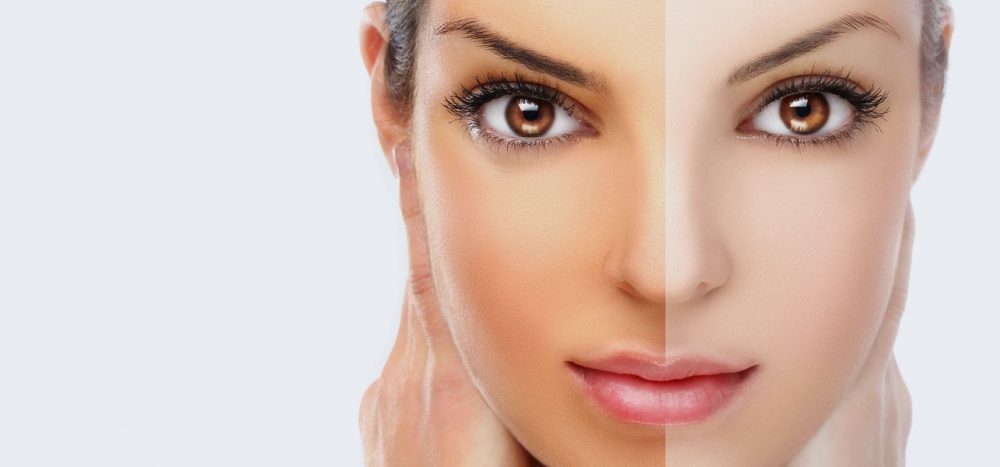
A person’s skin color depends on melanin, which is a type of pigment made in melanocyte cells. Exposure to sunlight can cause the melanocytes to increase their production of melanin. This can result in considerable darkening of the skin. In some cases, such sun damage shows up in the form of brown colored age spots.
The following are a sampling of current skin lightening ingredients on the market.
- Cinnamomum subavenium. At a conference held in April 2011 by the American Chemical Society (ACS), Hui-Min Wang, PhD, of Kaohsiung Medical University in Taiwan, reported that scientists at the Kaohsuing Medical University in Taiwan that chemicals derived from the evergreen bush Cinnamomum subavenium, used in traditional Chinese medicine, provide safer and more effective skin whitening benefits than current actives. Dr. Wang and his colleagues have applied for patents in the United States, Japan and Taiwan.
- Hydroquinone. It works to lighten skin by inhibiting tyrosinase, which is responsible for catalyzing melanin production (it prevents the conversion of dopa to melanin). Hydroquinone has also been shown to be toxic to melanocytes, the cells in our skin that produces pigment or melanin. Hydroquinone has been banned in Europe and Japan, and is highly regulated in Asia. The sale of over-the-counter skin bleaching creams containing hydroquinone was banned in South Africa in 1992. In the US, 2% hydroquinone can be bought over-the-counter, while higher 4% concentrations require a doctor’s prescription. In Canada, 2% or 4% hydroquinone can be bought without a prescription. While using, hydroquinone, avoid prolonged sun exposure, tanning booths, and sunlamps. Use a sunscreen and wear protective clothing on the treated areas of skin when outdoors.
- Retinol: This product is a global skin lightener; however, it can cause irritation in clients depending on frequency of use and skin type. Tretinoin, which is the active ingredient in Retin-A and Renova. If your skin is too sensitive to use Retin-A, retinol is an excellent alternative. The skin responds well to skin care products with retinol because vitamin A has a molecular structure that’s tiny enough to get into the lower layers of skin, where it finds collagen and elastin. Retinol is proven to improve mottled pigmentation, fine lines and wrinkles, skin texture, skin tone and color, and your skin’s hydration levels.
- Kojic acid – Discovered in 1989, KA has a similar effect as hydroquinone with none of hydroquinone’s bad rap. Studies have shown that KA, derived from a Japanese mushroom, is effective as a lightening agent by inhibiting melanin (skin’s pigment) production. It is important KA products must be left on for few seconds for absorption into the skin to work, before washing off.
- Ascorbic acid (vitamin C)– In healthy adults, Vitamin C raises glutathione levels in the red blood cells and lymphocytes. Glutathione helps determine the balance of light and dark pigments (pheomelanin and eumelanin) in our skin. Taking high doses of Vitamin C (1,000 – 3,000 mgs) can help to lighten skin over time. There are many skin care products on the market today that boast vitamin C derivatives as an ingredient (magnesium ascorbyl phosphate or ascorbyl palmitate, for example), but L-ascorbic acid is the only useful form of vitamin C in skin care products. Vitamin C is the only antioxidant proven to stimulate the synthesis of collagen as well, which is essential since your body’s natural collagen production decreases as you age. Sun exposure accelerate the decrease in collagen. Studies have shown that vitamin C helps to minimize fine lines, scars, and wrinkles.
Scientists have found out that the way our skin balances between its lighter pigments (pheomelanin) and darker pigments (eumelanin) depends on glutathione, L-cysteine and the TYRP1 enzyme. Since Vitamin C has been scientifically proven to boost gluthathione levels in the blood, we can say that Vitamin C helps to lighten skin color |
- Licorice extract– The main active ingredient found in licorice extract for skin bleaching is glabridin. Glabridin inhibits pigmentation by preventing tyrosinase activation. It is nontoxic to melanocytes, preventing permanent discoloration nor is it toxic to surrounding keratinocytes. In fact, licorice extract has long been purported to have anti-inflammatory properties. To be effective, it has to be used in high concentrations. Licorice is really a multifunctional skin care ingredient. Skin whitening is just one of its beneficial properties. It has also been shown to protect skin from externals such as bacteria. While it also helps to shields the skin from the suns harmful rays thus helping to keep skin looking younger and hyper-pigmentation from reoccurring. It works great in odds spots and sensitive spots such as under skin lightening as well as anal and vaginal skin lightening.
- Arbutin – Derived from the leaves of bearberry, cranberry, mulberry or blueberry shrubs, and also present in most types of pears, Arbutin has melanin-inhibiting properties for skin lightening. It dramatically reduces pigmentation especially liver spots and freckles, and is one of the safest skin whitening ingredients. Used externally, Arbutin does not have toxicity or any unpleasant odor. Its three main effects on skin are whitening, anti-aging and UVB/ UVC filter.
- Papain – A pure natural active proteolytic enzyme found in papaya; used in exfoliants to dissolve dead skin cells. Known to exfoliate, whiten and soften skin, papain improves the skin’s collagen health while repairing it. In soap form, it aids in the exfoliation of dead skin. It is also an alpha hydroxy acid, that works like a sort of enzymatic exfoliant. Through purification technology, toxin-free papain is extracted from the fruit Papaya which is a type of vegetable protease. It is widely used in medical application, food and cosmetic industries.
- Sodium Lactate – Sodium lactate is a great humectant that provides powerful moisture retention in the skin, and also gives the benefit of skin lightening. Widely used in cosmetics, sodium lactate is present in human skin and is used effectively in skin care products to supplement it for moisture and skin conditioning. Besides moisturization and skin lightening, sodium lactate also helps in rejuvenating aging skin.
- Tyrostat – Tyrostat is extracted from a plant and has a scientific name rumex occidentalis extract that is native to the northern Canadian prairie region. It has a strong inhibitory effects on the tyrosinase enzyme, which is present in both human skin and plant tissue. Tyrosinase is responsible for the formation of the red-brown pigmentation responsible for one’s skin color. If this is reduced, the formation of unwanted pigmentation is achieved and therefore effectively lightens the skin. Regarded as one of the best all-natural skin whitening bio-actives in the world, Tyrostat is natural, very potent and safe.
In a study, when Vitamin C (2,000 mg) and natural Vitamin E (1,000 IU) were given to 20 men and women, their resistance to sunburn increased by 20% after just 8 days. They had lower levels of inflammation and skin damage. |
Consult with a board certified plastic surgeon or your dermatologist to learn which products are best suited for your skin type. If you seek the help of an aesthetician, make sure you consult with a medical aesthetician. They are trained and will consult with the doctor when determining which prescribed medication you need.
Disclaimer
The Content is not intended to be a substitute for professional medical advice, diagnosis, or treatment. Always seek the advice of your physician or other qualified health provider with any questions you may have regarding a medical condition.