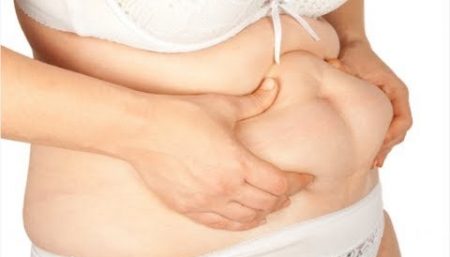
As women age, fat is more likely to build around the midsection, rather than the hips and thighs. Too much belly fat can increase your risk for heart disease, diabetes, and cancer. Now an important new study links belly fat to early death. Researchers followed about 360,000 Europeans enrolled in one of the largest, longest health studies in the world. They found that people with the most belly fat had about double the risk of dying prematurely as people with the least amount of belly fat. Death risk increased with waist circumference, whether the participants were overweight or not.
Specifically:
- Men and women with the largest waists (more than 40 inches for men and 35 inches for women) had roughly double the risk of premature death as men and women with the smallest waists (less than 34 inches for men and 28 for women).
- Each 2-inch increase in waist circumference was associated with close to a 17% increase in mortality in men and a 13% increase in women.
- Waist-to-hip ratio also strongly predicted mortality.
The most important result of the study is the finding that not just being overweight, but also the distribution of body fat, affects the risk of premature death.
Since visceral fat is buried deep in your abdomen, it may seem like a difficult target for spot reduction. As it turns out, visceral fat responds well to a regular exercise routine and a healthy diet. Fortunately, there are simple ways to fight belly fat. Besides, there’s a growing body of research showing that the fastest way to burn off the fat from your belly is with a combination of weight-training and aerobic exercise.
- Move it to lose it. Any type of activity will help fight the bulge. By getting your heart rate up, you’re helping your metabolism burn excess fat around your midsection.
 Some evidence for this comes from a six-month study of thirty obese women. They were assigned to one of three groups: a control group, an aerobic exercise group and a combined exercise group. The aerobic group did one hour of cardiovascular exercise (60-70% maximum heart rate) six days a week. The combined exercise program involved weight training (3 days a week, Monday, Wednesday, Friday) and aerobic exercise (3 days a week, Tuesday, Thursday, Saturday).
Here’s what the combined exercise program looked like:
- Monday — Weight training (60 minutes)
- Tuesday — Aerobic exercise (60 minutes)
- Wednesday — Weight training (60 minutes)
- Thursday — Aerobic exercise (60 minutes)
- Friday — Weight training (60 minutes)
- Saturday — Aerobic exercise (60 minutes)
- Sunday — Off
As you can see in the table below, the combined exercise group lost almost three times more abdominal subcutaneous fat and 13% more visceral fat than the aerobic-only group.
Location |
Aerobic |
Combined |
Abdominal subcutaneous fat |
– 23.1 cm3 |
– 61.8 cm3 |
Abdominal visceral fat |
– 82.6 cm3 |
– 93.0 cm3 |
Forget about doing hundreds of crunches, sit-ups, or any of the various “drawing in the belly button” exercises. They’re virtually useless for most people when it comes to losing belly fat. Remember, belly fat is stored energy. To get rid of it, you need to burn more energy (calories) than you eat.And these exercises don’t burn enough calories to make much of a difference to the appearance of your waist and stomach.
- Quantity Always Counts. “Cut calories—and lose belly fat,” says Dr. David Katz, director of the Yale University Prevention Research Center. “The notion that you’re going to eat a specific food and mobilize belly fat, usually it’s a bit of a gimmick. [When] ‘calories-in’ fall below ‘calories-out,’ you will lose weight.”
- Cut out trans fat.
If you haven’t heard by now, trans fat is bad for you. In fact, research has shown that diets rich in trans fat can cause a redistribution of fat tissue into the abdomen and lead to a higher body weight even when the total dietary calories are controlled - Replace soda with water.
Stop drinking sugary sodas and save yourself from those extra calories. Diet soda isn’t that much better. As some studies have found, diet soda can be connected with weight gain. Water is the best option because it is calorie-free and can subside hunger. For water with a delicious taste, try PUR® filtered water. PUR water filters reduce contaminants, giving you clean water. - Eat low-fat yogurt. Research has shown that eating low-fat yogurt once a day can help reduce belly fat. The calcium in yogurt helps maintain healthy bones and muscles—and the more muscle you have, the more fat you’ll burn.
- Get on the ball. Start strengthening your abdominal muscles with a stability ball. There are simple exercises to help tighten and flatten your middle, without putting pressure on your lower back. Just by sitting on the ball properly, you’ll be contracting your abdominal muscles and fighting belly fat.
- Finally, be consistent. To lose belly fat, eating right and exercising regularly needs to become a habit, not just something you do when you can be bothered or when you “have the time.” If your current schedule makes it difficult to find the time for exercise, change it. Get out of bed earlier. Turn off the TV. Stop wasting time on Facebook.
- Mother Nature Rules. “The way to get rid of body fat in specific places is to have different parents,” says Adam Drewnowski, director of the Center for Public Health Nutrition at the University of Washington. “You have no control where it goes.” While you can’t change your genes, you can stay extra vigilant about gaining weight if you know your family tends to be of the apple-shaped variety. And even if belly fat isn’t a family legacy, everyone tends to gain weight around the waist as they get older, so you will probably have to work harder to keep that belly flat later in life. That’s particularly true for women after menopause.
- Hormone therapy and belly fat. Although there are good reasons for some women to try hormone replacement therapy (HRT) after menopause, fending off belly fat isn’t one of them. It’s true that some studies have demonstrated that postmenopausal women who take HRT are less likely to accumulate abdominal fat than are postmenopausal women who forgo HRT. Other studies, however, found no difference. Meanwhile, questions about the risks and benefits of HRT persist. Talk to your doctor in detail about the risks and potential benefits of hormone therapy before trying it.
Related Links
- Body Fat and Women
- Visceral Fat: A major health concern in Postmenopausal Women
- The Secret To Well Toned Abdominals Muscles
- Improving your metabolism
- Understanding Trans fatty acids
- Identifying High fat foods
- Sliming down naturally with food
- Top 10 to Gain Quick Results from a Weight Training Program
Disclaimer
The Content is not intended to be a substitute for professional medical advice, diagnosis, or treatment. Always seek the advice of your physician or other qualified health provider with any questions you may have regarding a medical condition.