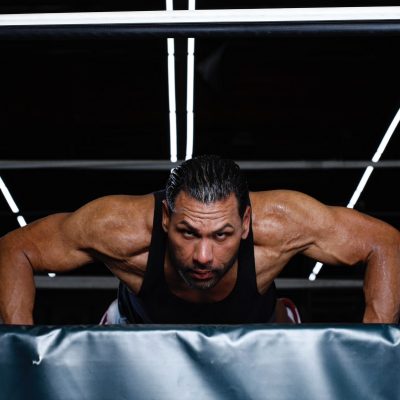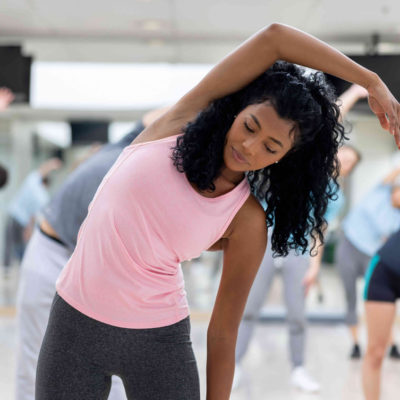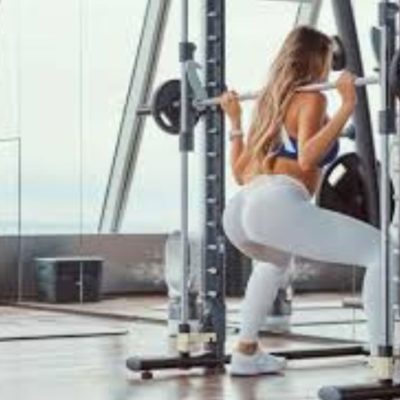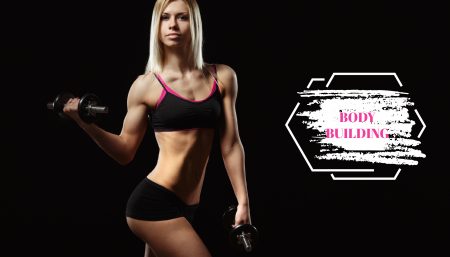
Most women avoid taking up bodybuilding for they don't want to look like Arnold Schwarzenegger. Women Fitness brings you all the information on how by observing the habits, training, and eating pattern of
a bodybuilder you can work wonders for yourself and jump-start your weight loss program.
The key to any successful diet and exercise program is to burn off the fat while maintaining muscle and density-mass, which is a constant challenge for bodybuilders on diets.
|
|
Article of the Week
21 May 2013
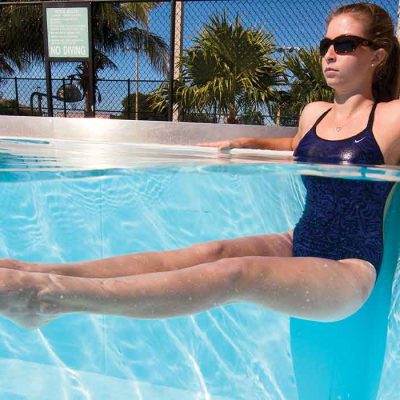
Hydration is an important aspects of training, regardless of what season of the year it is. Hydration becomes all the more important when training in a warm weather.
More>
Recent Articles
-
21 May 2013
One of our greatest fears as we get older is that we will break a hip, an event that can cause permanent disability, depression, and the need for long-term care. Women are twice as likely as men to suffer a hip fracture, partly because we have a greater risk for osteoporosis, a condition that weakens bones.
-
10 May 2013
Traditionally, resistance training often is performed separately from aerobic training — typically on two or three nonconsecutive days each week. The American College of Sports Medicine (ACSM) recommends 8 to 12 repetitions of a resistance training exercise for each major muscle group at an intensity of 40% to 80% of a one-repetition max (RM) depending on the training level of the participant.
-
April, 29 2013
Plyometric training is specific work to enhance explosive power. In other words, it involves a lot of jumping. Plyometric training is used for sports that require short bursts of power such as tennis, basketball, or skiing, but it's also a good exercise for anyone who wants to increase her power.
-
April, 22 2013
Having a shapely upper body is just as important as having shapely legs, especially in summers.
Overweight, sagging arms or chest are unattractive and a sign of premature ageing. Strong arms look sexy and are a great asset in carrying all the load ! Proper attention should be given to the pectoral muscles for a firmer bust line.
-
April, 20 2013
One of the fundamental principles of Pilates involves learning how to engage and control the muscles of the pelvic floor and internal abdominals (think vagina!!!). Pilates, especially on the Reformer, is an amazing way to get in shape and get a rocking hard body. Celebrities such as Madonna, Charlize Theron, and Jamie Leigh Curtis swear by it.
-
Apr, 06 2013
As a complete workout on their own or a supplement to free weights and machines, strength bands are the ultimate tool for customizing workouts and isolating muscles. And the portable bands and tubing make the perfect travel workout.
-
Mar, 21 2013
A recent study looked at how drinking cold water affects hermoregulation and performance
-
Mar, 12 2013
An email survey issued by the American Academy of Orthopaedic Surgeons on Zumba related injuries had doctors, saying that they're regularly seeing Zumba students complaining of ankle sprains, ankle fractures, torn meniscus, overuse injuries and more.
-
30 January 2013
In physically inactive people there is a loss of about [-0.5%] of lean muscle mass every year between age 25 and 60, and a corresponding decline in muscle strength. From age 60 on, the rate of loss doubles, to about 1%. It doubles again at age 70; again at age 80, and then again at age 90.
-
10 January 2013
Cardio & strength training workouts are indispensable to an effective training program and general good health. By definition, cardio workouts can be any exercise—jogging, running, biking, swimming, elliptical machine, stairs, even jumping rope—that raises and maintains your heart rate over a predetermined amount of time.
-
05 November 2012
By exercising the pectorals, there is no doubt, you can augment the overall volume of your bustline. Weight training develops lean muscle tissue. Adding strength training develops the underlying chest muscle and will add more shape to your upper body, creating those eye-pleasing and sexy curves.
-
25 September 2012
Arghh, the dull pain from sore muscles, is a repeated complain from
women involved in fitness training! Hard exercise causes muscle damage. If you
looked under a microscope at your sore muscles after a hard workout you would
see torn and ruptured individual muscle cells, and breakdown of the membranes
between them. High intensity exercise causes muscle soreness.
-
29 August 2012
If you find yourself too busy to make it to the gym 5-6 times per week or you
feel that your body is over trained and you need a refreshing change, the total
body workout may be just the thing you need.
-
14 August 2012
A
traditional Japanese bean based fermented food is becoming popular worldwide. It
possess a salty taste with a texture similar to nut butter, though the specifics
vary depending upon the ingredients and length of fermentation. The mixture is
aged from one month to three years.
-
08 August 2012
The pelvic floor is a large hammock of muscles
stretching from side to side across the floor of the pelvis. It is attached to
your pubic bone in front, and to the the tail end of your spine behind. The
openings from your bladder, your bowels and your womb all pass through your
pelvic floor. Your muscles near your pelvis are very important to
stretch.
-
03 August 2012
Consistent and productive exercise is nothing less
than - hard work. It’s all about commitment, adhering to a schedule, planning
daily exercises and diets, executing all of it and finally coming to grips with
the fact that changes to your body are normally slow and subtle.
-
30 July 2012
Functional strength training simply means training our bodies to better
perform the types of movements we use for everyday life. When you isolate body
parts, as you sometimes do with traditional strength training, you end up
training your muscles but not your movements.
-
23 July 2012
There are two primary muscle groups on the back of the lower legs - the
gastrocnemius and the soleus muscles. The soleus is a wide, flat muscle that
lies beneath the heart shaped gastrocnemius. Both muscles contract to extend the
feet and toes, but the soleus can only fully contract when your leg is bent to
at least a 30-degree angle.
Track Your Progress
Helpline
|
|